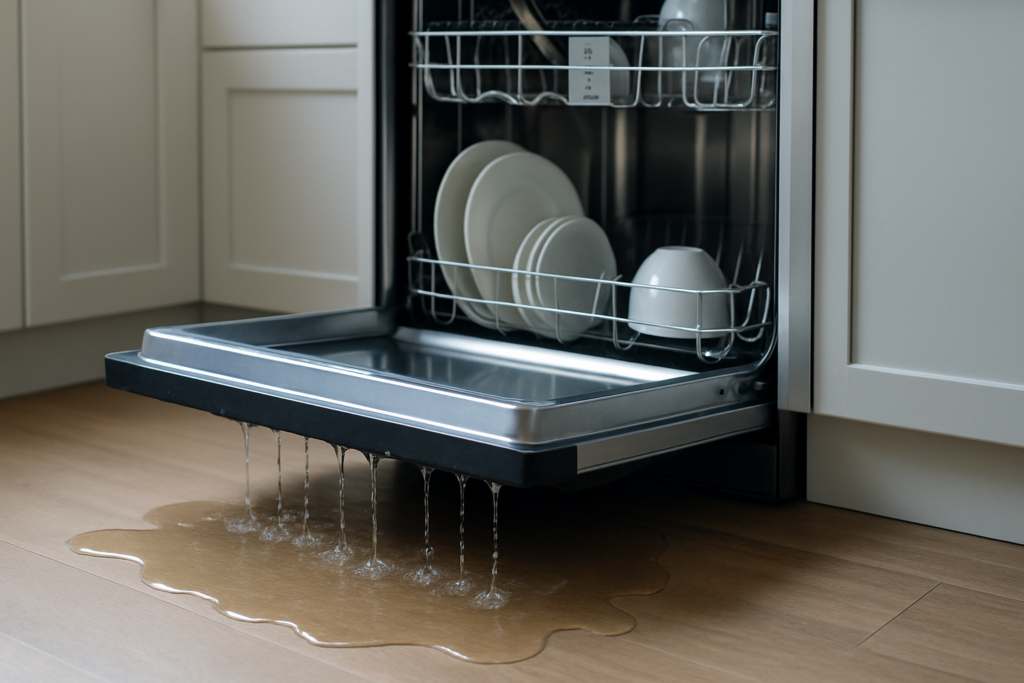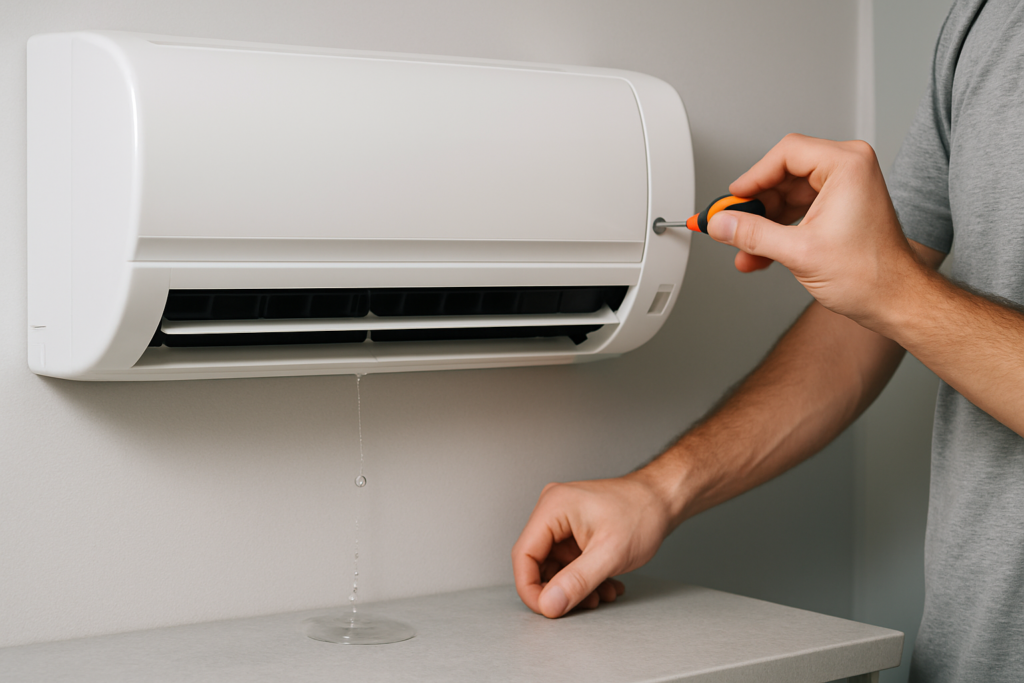
There’s nothing quite like the sinking feeling you get when you spot a puddle of water forming around your air conditioner. One day it’s cooling your home perfectly, and the next, it’s turning your floor into a small lake. Before you panic and call an expensive repair service, you should know that most AC water leaks are fixable with a little troubleshooting and some basic tools.
Water leaking from your air conditioner isn’t just annoying. It can damage your floors, encourage mold growth, and signal that your unit isn’t working as efficiently as it should. Let’s walk through the most common causes and how to fix them yourself.
The Clogged Drain Line Problem
Your AC doesn’t just cool air. It also removes moisture from it, which is why you see that condensation dripping outside. This water normally flows through a drain line and exits your home harmlessly. But when that drain line gets clogged with algae, mold, or dirt, the water backs up and leaks out wherever it can find an opening.
You can usually spot a clogged drain line if water is pooling near your indoor unit or if you notice the drain pan is full. The fix is surprisingly simple. First, locate your drain line (it’s typically a PVC pipe coming out of your indoor unit). Turn off your AC and find the access point on the drain line.
Mix one cup of bleach with one cup of water and slowly pour it into the drain line access point. Let it sit for 30 minutes, then flush with water. For stubborn clogs, a wet/dry vacuum can work wonders. Attach it to the end of the drain line outside and run it for a few minutes to suck out the clog.

AC Drain Line Cleaning Kit
These kits include everything you need to clear clogs and prevent future buildup.
Dirty Air Filters Causing Freeze-Ups
Here’s something most people don’t realize: a dirty air filter can actually cause water leaks. When your filter is clogged with dust and debris, it restricts airflow over the evaporator coils. This causes the coils to get too cold and freeze up. When the ice eventually melts, you get more water than your drain system can handle.
Check your air filter right now. If you can’t see light through it when you hold it up, it needs replacing. Most filters should be changed every 30 to 90 days, depending on usage and whether you have pets.
Replacing an air filter takes about 30 seconds. Just slide out the old one and slide in a new HVAC air filter with the airflow arrow pointing in the right direction. If your coils are already frozen, turn off your AC and let them thaw completely before restarting. This can take several hours.
Damaged or Rusted Drain Pan
The drain pan sits under your indoor AC unit to catch condensation. Over time, especially in older units (10+ years), these pans can rust through or crack. You’ll typically see this with water leaking directly under the unit even when the drain line is clear.
To check your drain pan, turn off your AC and remove the access panel on your indoor unit. Look for visible rust holes, cracks, or signs of corrosion. If you spot damage, you have two options. For small cracks or holes, you can use a water sealant or epoxy as a temporary fix. But honestly, if your drain pan is failing, you’re better off replacing it.
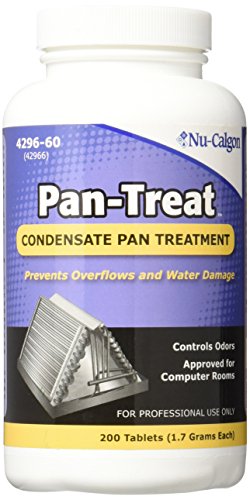
AC Drain Pan Tablets
These tablets prevent algae and slime buildup in your drain pan and line, stopping clogs before they start.
Drain pan replacement varies widely depending on your unit type. Some pans slide right out, while others require partial disassembly of the unit. If you’re not comfortable with this level of repair, this is a good time to call a professional. A new drain pan typically runs between parts and labor, but it beats water damage to your home.
Low Refrigerant Levels
When your AC is low on refrigerant, the pressure in the system drops. This causes the evaporator coils to get too cold, which leads to the same freeze-and-thaw cycle that dirty filters cause. You might also notice your AC isn’t cooling as well as it used to, or you hear a hissing sound near the unit.
Refrigerant issues aren’t a DIY fix. The refrigerant itself is regulated, and you need EPA certification to handle it legally. Plus, if your system is low on refrigerant, it means there’s a leak somewhere that needs to be found and repaired. Just adding more refrigerant without fixing the leak is like inflating a tire with a nail in it.
Call an HVAC technician for this one. They’ll locate the leak, repair it, and recharge your system to the correct levels. While you’re waiting for the tech, you can check if low refrigerant might be the issue by looking for ice on the refrigerant lines or the outdoor unit.
Broken Condensate Pump
If your AC is in a basement or attic where gravity can’t drain the condensate naturally, you probably have a condensate pump. This small pump pushes the water up and out of your home. When the pump fails, water backs up and leaks.
You can test your condensate pump by pouring water into the reservoir. You should hear the pump kick on and move the water out. If nothing happens, the pump might be dead. Check that it’s plugged in and the circuit breaker hasn’t tripped first.
Condensate pumps can fail due to age, debris, or a stuck float switch. Sometimes cleaning out the reservoir fixes the problem. Other times, you’ll need a new pump. Fortunately, condensate pumps are relatively affordable and you can install one yourself with basic tools.
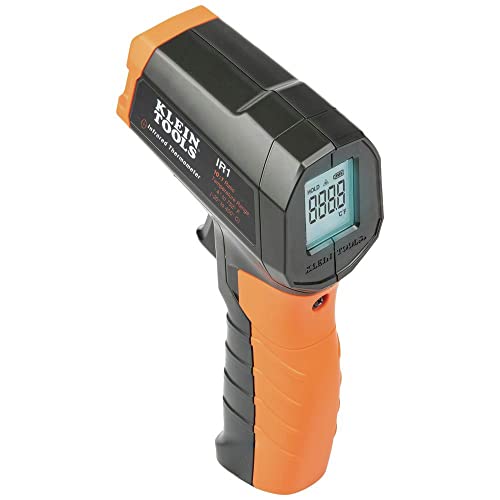
Digital Thermometer Infrared
Great for checking temperature differentials across your AC coils to diagnose problems.
Prevention Tips to Stop Future Leaks
Once you’ve fixed your leak, you’ll want to prevent it from happening again. Regular maintenance is your best defense against water leaks and other AC problems.
Change your air filters regularly. Set a reminder on your phone if you need to. Every 60 days is a good baseline for most homes. Pour a cup of vinegar down your drain line every few months to prevent algae buildup. This simple step prevents most drain line clogs.
Schedule annual professional maintenance before cooling season starts. A tech will clean your coils, check refrigerant levels, inspect the drain system, and catch small problems before they become big ones. Most HVAC companies offer maintenance plans that include priority service and discounts on repairs.
Keep the area around your indoor and outdoor units clear. Good airflow prevents many AC problems, including the freeze-ups that cause water leaks.
Frequently Asked Questions
Is it normal for my AC to produce some water outside?
Yes, absolutely. Seeing water dripping from the drain line outside your home is completely normal. Your AC removes humidity from the air, and that moisture has to go somewhere. A properly working unit can produce 5 to 20 gallons of condensate per day, depending on humidity levels and how hard the system is working. You only need to worry when water appears inside your home or pools around the indoor unit.
Can I run my AC if it’s leaking water?
You shouldn’t run your AC if it’s actively leaking water inside. Continuing to run it can cause water damage to your floors, walls, and ceilings. It can also lead to mold growth and further damage to the AC unit itself. Turn off the system, clean up the water, and identify the source of the leak before running it again. If the problem is frozen coils, you need to let them thaw completely anyway.
How much does it cost to fix an AC water leak?
The cost varies widely depending on the cause. Cleaning a clogged drain line or changing a filter costs almost nothing if you do it yourself. A service call for drain line cleaning typically runs competitively priced to competitively priced. Replacing a condensate pump might competitively priced to competitively priced with labor. Refrigerant leaks are the most expensive, potentially ranging from competitively priced to competitively priced depending on the location of the leak and how much refrigerant is needed. Many simple leaks can be fixed for under competitively priced if you catch them early.
This article contains affiliate links. We may earn a small commission at no extra cost to you.