Picking the wrong vacuum cleaner is one of those purchases that haunts you for years. You either end up wrestling with a machine that’s too heavy for your stairs, watching pet hair dance around your supposedly “pet-friendly” vacuum, or dealing with a canister that dies after six months of regular use.
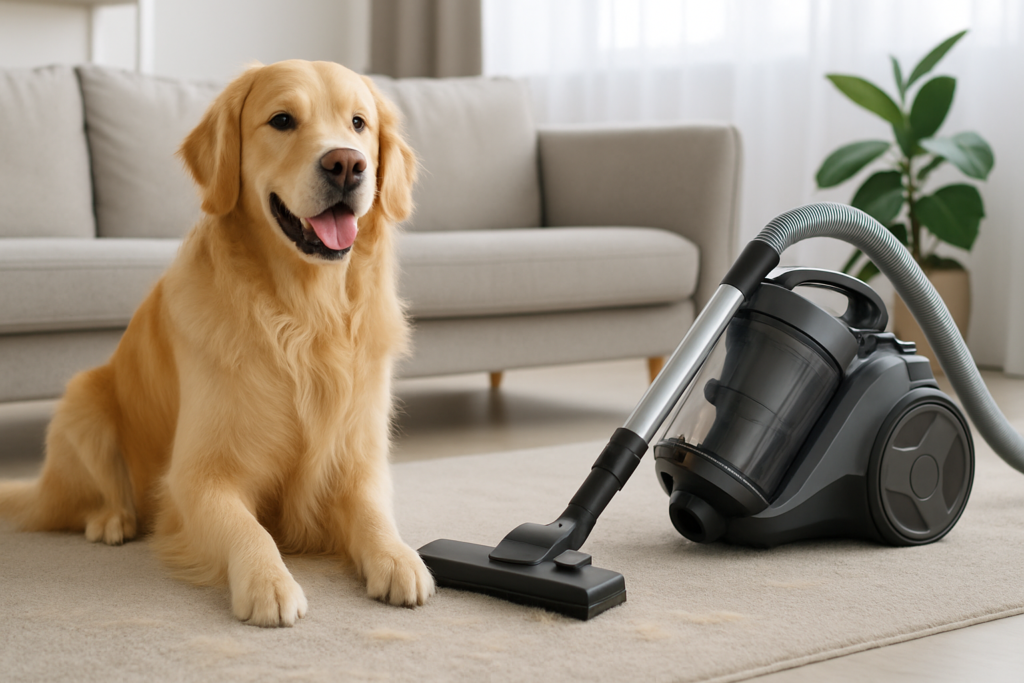
Your home has specific cleaning needs, and the vacuum that works perfectly in your neighbor’s ranch-style house might be completely wrong for your three-story townhome with two golden retrievers. The key is matching your vacuum’s features to your actual living situation, not just buying whatever’s on sale or has the most five-star reviews.
This guide walks you through a systematic approach to choosing the right vacuum based on your home’s unique characteristics. We’ll cover everything from flooring types to pet situations, helping you avoid the common mistakes that lead to buyer’s remorse.
Start With Your Home’s Layout
Before you even think about suction power or filtration systems, consider how you’ll actually use this vacuum in your space. A massive upright might excel on carpets, but it won’t do you much good if you can’t haul it up two flights of stairs without throwing out your back.
Small Apartments and Condos
Living in under 1,000 square feet changes everything about vacuum selection. Storage space is premium, and you don’t need industrial-strength cleaning power for a few rooms.
Stick vacuums excel in smaller spaces. They store easily in narrow closets, handle both hard floors and area rugs effectively, and you can grab them quickly for spot cleaning. The Tineco Pure One S12 and similar lightweight models work well for apartments with mixed flooring.
Tineco Pure One S12 Cordless Vacuum
Perfect apartment vacuum with excellent maneuverability and compact storage
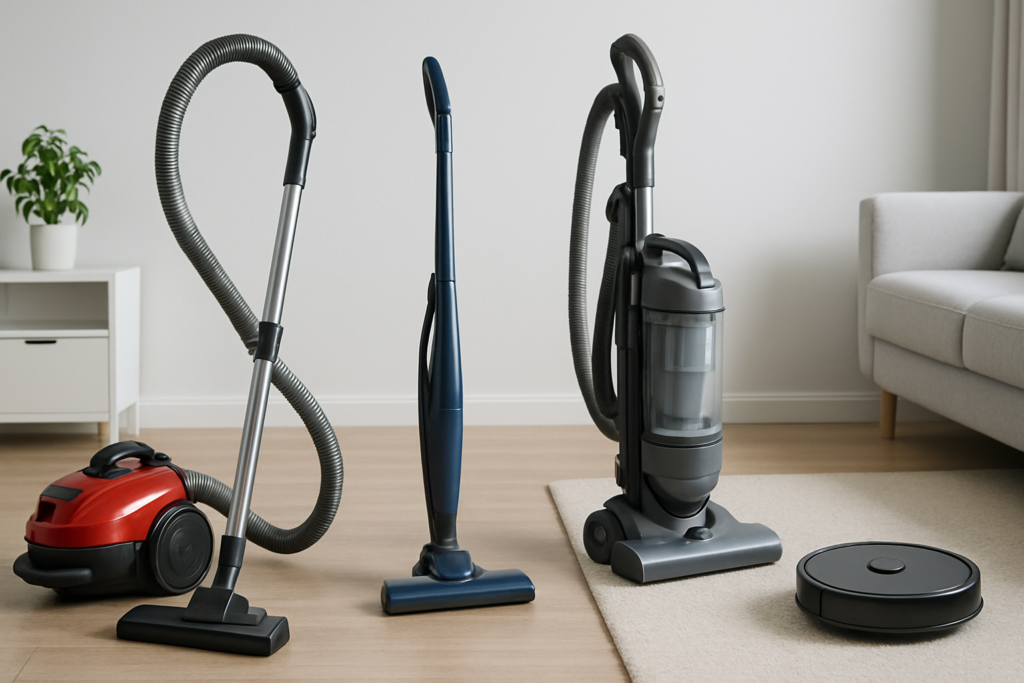
Canister vacuums also work well in small spaces if you have mostly hard floors. They’re typically lighter than uprights and easier to store in tight spaces.
Multi-Story Homes
Stairs change the entire vacuum equation. You need something you can actually carry between floors without dreading cleaning day.
Consider getting two lighter vacuums instead of one heavy unit. A stick vacuum for upstairs and a more powerful machine for your main floor often works better than trying to haul a 20-pound upright up and down stairs regularly.
If you prefer one machine, prioritize weight and portability. Look for uprights under 15 pounds or canister models with long hoses that let you keep the main unit at the bottom of stairs while cleaning above.
Large Homes (2,500+ sq ft)
Big homes need vacuums with staying power. Battery life becomes crucial for cordless models, and you’ll want larger dust bins to avoid constant emptying.
Upright vacuums typically handle large areas most efficiently. They cover more ground per pass and usually have larger dirt compartments. The trade-off is less maneuverability around furniture.
Central vacuum systems make sense for very large homes, especially during construction or major renovations. You get maximum power with minimal effort, though installation costs are significant.
Match Your Flooring Types
Your floors dictate which vacuum features matter most. The perfect carpet cleaner might scratch your hardwood, while a hard floor specialist won’t pull embedded dirt from thick carpeting.
Primarily Hard Floors
Hardwood, tile, laminate, and vinyl need different treatment than carpeting. You want strong suction without aggressive brush action that can scatter debris or scratch surfaces.
Look for vacuums with adjustable suction and brush roll controls. Many models let you turn off the rotating brush entirely for hard floors. Canister vacuums traditionally excel here because they rely more on suction than agitation.
Soft roller heads work particularly well on hard floors. They create a seal against the surface while gently agitating debris without flinging it around.
Wall-to-Wall Carpeting
Deep carpeting requires aggressive brush action and strong suction to pull dirt from the fibers. Upright vacuums typically outperform other styles on thick carpets.
Check the brush roll design. Metal brush bars with stiff bristles work best for deep pile carpets. Some models offer adjustable height settings to optimize cleaning for different carpet thicknesses.
Bagged vacuums often provide more consistent suction on carpets as the bag doesn’t restrict airflow the way a filling bagless canister can.

Shark Navigator Lift-Away Professional
Excellent carpet performance with versatile lift-away design for stairs and furniture
Mixed Flooring
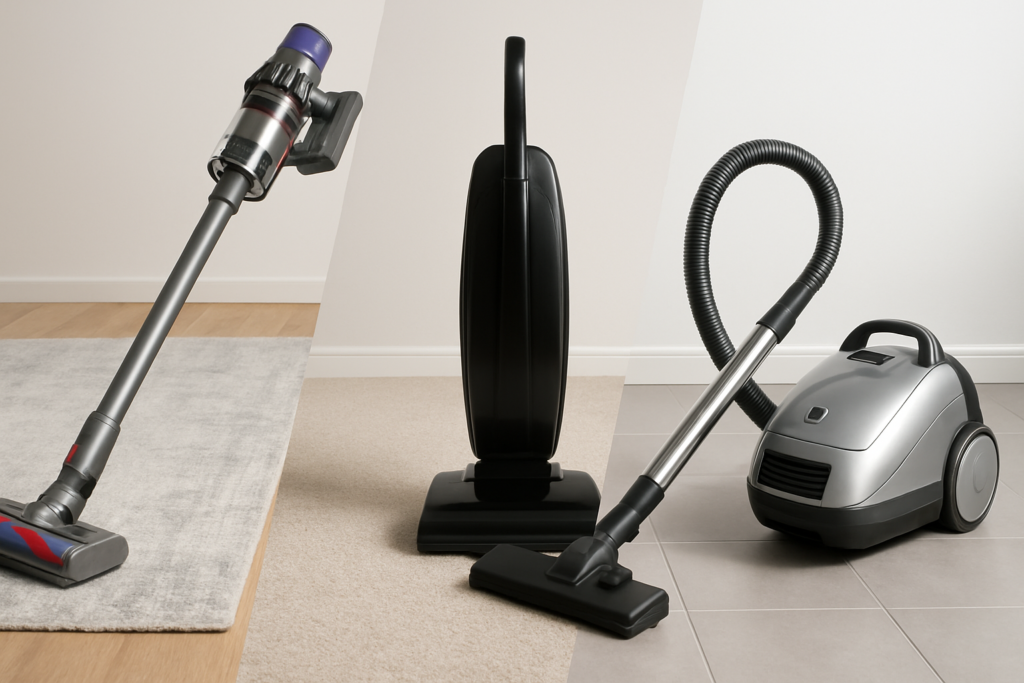
Most homes have both hard floors and carpeted areas. You need a vacuum that transitions smoothly between surfaces without manual adjustments.
Automatic height adjustment is valuable here. The vacuum senses the floor type and adjusts brush height and suction accordingly. Many mid-range and premium models include this feature.
Convertible designs work well for mixed flooring. Stick vacuums that convert to handhelds or uprights with detachable canisters give you flexibility for different cleaning tasks.
Factor in Pet Ownership
Pets add layers of complexity to vacuum selection. You’re dealing with hair that weaves into carpet fibers, dander that triggers allergies, and the occasional accident that requires immediate cleanup.
Heavy Shedding Breeds
Golden retrievers, German shepherds, and other heavy shedders require specialized tools. Standard brush rolls often wrap with hair and lose effectiveness quickly.
Look for tangle-free brush designs or models with easy brush roll removal for cleaning. Some vacuums include rubber fins or spiral brush patterns that resist hair wrapping.
Motorized pet tools make a significant difference. These attachments have their own brush rolls for furniture and stairs where pet hair accumulates heavily.
Multiple Pets
Two or more pets multiply the cleaning challenge. You need larger dirt capacity and more frequent filter changes.
Bagless models let you see when the canister is full, which helps with frequent emptying. However, bagged models often contain odors better if you have multiple pets.
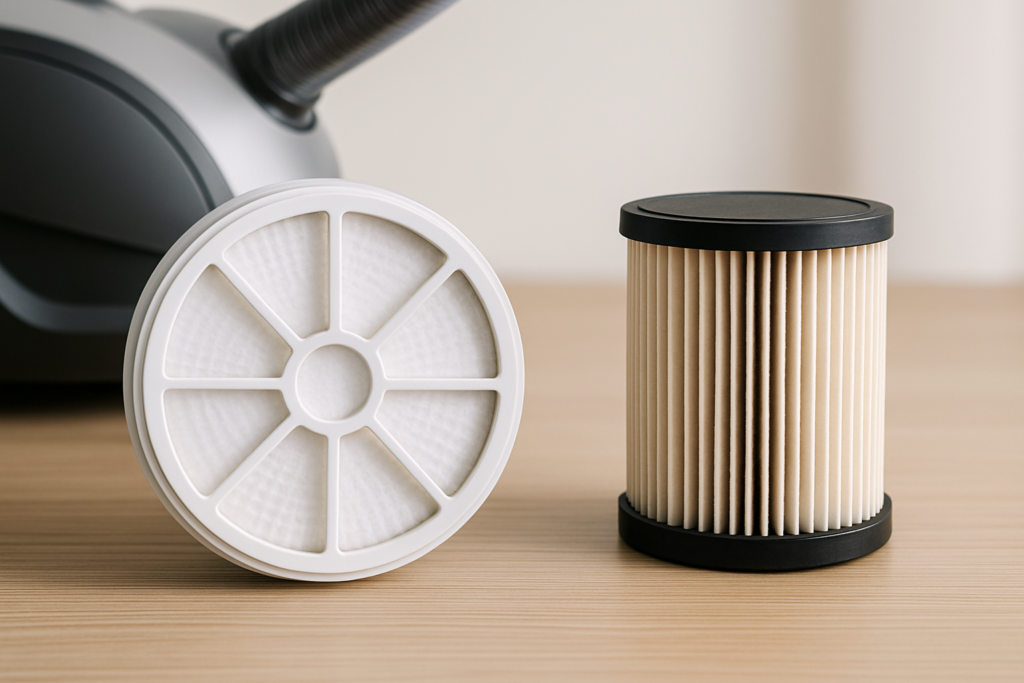
HEPA filtration becomes more important with multiple pets to control dander and allergens effectively.
Cats vs Dogs
Cat hair is finer and more static-prone than dog hair. It clings to fabric surfaces and requires different cleaning approaches.
For cats, prioritize strong suction and effective filtration. The hair is harder to see but gets everywhere, including inside electronics and HVAC systems.
Dog owners need more focus on brush design and hair management since dog hair is more visible and tends to wrap around brush rolls more aggressively.
Address Allergy Concerns
Allergies turn vacuum selection into a health decision. The wrong machine can actually make indoor air quality worse by recirculating allergens instead of capturing them.
HEPA Filtration Requirements
True HEPA filters capture 99.97% of particles 0.3 microns and larger. This includes most common allergens like pollen, dust mites, and pet dander.
Not all “HEPA-style” or “HEPA-type” filters meet true HEPA standards. Look for certification numbers and specific filtration ratings when allergies are a concern.
Sealed system design matters as much as filter quality. Air should pass through the filter, not around it through gaps in the housing.
Bagged vs Bagless for Allergies
Bagged vacuums generally better contain allergens during disposal. You remove the sealed bag without exposing yourself to collected dust and debris.
Bagless models require you to empty the canister, which can release allergens back into the air. However, some bagless designs minimize this with bottom-release mechanisms and sealed canisters.
Consider your sensitivity level and disposal preferences when choosing between bagged and bagless designs.
Consider Physical Limitations
Vacuum weight and maneuverability matter more as we age or deal with physical limitations. The most powerful machine won’t help if you can’t use it comfortably.
Weight and Maneuverability
Upright vacuums typically weigh 12-25 pounds. Anything over 20 pounds becomes difficult for many people to maneuver, especially on stairs.
Canister vacuums separate the motor weight from the cleaning head, making them easier to push around furniture. However, you’re pulling the canister behind you, which some find awkward.
Stick vacuums offer the best weight advantage, typically weighing 5-10 pounds. The trade-off is usually shorter battery life and smaller dirt capacity.
Cord vs Cordless Considerations
Cordless vacuums eliminate the hassle of plugging and unplugging, which helps if bending is difficult. However, you need to remember to charge them and work within battery limitations.
Corded models provide unlimited runtime but require outlet access and cord management. Consider your home’s outlet placement and whether dragging cords bothers you.
Dyson V8 Animal Cordless Vacuum
Lightweight cordless option with excellent pet hair performance and easy maneuverability
Decision Tree for Quick Selection
Use this decision tree to narrow down your vacuum type quickly based on your primary needs:
Start here: What’s your biggest cleaning challenge?
- Pet hair everywhere: Look for uprights with tangle-free brushes or cordless stick vacuums with motorized pet tools
- Allergies/asthma: Prioritize bagged models with sealed HEPA systems
- Heavy carpets: Choose powerful uprights with adjustable brush height
- Mostly hard floors: Consider canister vacuums or stick models with soft rollers
- Storage space: Stick vacuums or compact canisters work best
- Physical limitations: Lightweight cordless models or canister vacuums
- Large home: Powerful uprights or consider central vacuum systems
Secondary considerations:
- Multiple floors = prioritize portability
- Frequent quick cleanups = cordless convenience
- Deep weekly cleaning = corded power
- Tight budget = basic uprights or canister models
Feature Prioritization by Home Type
Different homes need different vacuum strengths. Here’s how to prioritize features based on your specific situation:
Apartment Living
Most Important: Compact storage, lightweight design, versatility for mixed surfaces
Nice to Have: Cordless convenience, quiet operation for neighbors
Skip: Extra-large dirt bins, heavy-duty carpet features
Family Homes with Kids
Most Important: Large dirt capacity, easy cleanup, durability
Nice to Have: Quick-access tools for spills, washable filters
Skip: Delicate hard floor attachments, complex maintenance
Empty Nesters
Most Important: Lightweight design, quiet operation, low maintenance
Nice to Have: Premium filtration, quality attachments
Skip: Extra-large capacity, heavy-duty pet features
Pet Households
Most Important: Tangle-free brushes, strong suction, effective filtration
Nice to Have: Odor control features, easy brush cleaning
Skip: Delicate brush rolls, minimal filtration systems
Bissell Pet Hair Eraser Lift-Off
Specialized pet vacuum with tangle-free brush roll and powerful suction for embedded pet hair
Common Buying Mistakes to Avoid
Learning from others’ mistakes can save you time and money. These are the most frequent vacuum buying errors:
Buying too much power for your needs. Commercial-grade suction isn’t necessary for most homes and often costs more while being harder to maneuver.
Ignoring maintenance requirements. Some models need frequent filter changes or complex cleaning procedures that become annoying over time.
Focusing only on initial cost. Cheap vacuums that break quickly or need expensive replacement parts cost more long-term than quality models.
Not testing maneuverability. A vacuum that’s awkward to push around furniture won’t get used regularly, no matter how well it cleans.
Overlooking storage space. Measure your storage area before buying. A vacuum that doesn’t fit in your closet will clutter your living space.
Budget Considerations
Vacuum prices vary dramatically, but more expensive doesn’t always mean better for your specific needs.
Budget models under competitively priced can work well for small spaces with minimal carpeting. They typically lack advanced features but handle basic cleaning adequately.
Mid-range vacuums offer the best value for most households. You get reliable performance, decent filtration, and useful attachments without premium pricing.
Premium models justify their cost through superior build quality, advanced filtration, and specialized features. They make sense for large homes, severe allergies, or heavy pet situations.
Factor in ongoing costs like replacement bags, filters, and belts when comparing models. Some “cheap” vacuums have expensive consumables that add up over time.
Testing Before You Buy
Online reviews help, but nothing replaces hands-on testing when possible.
Visit stores and actually push different models around. Pay attention to how they feel going forward, backward, and turning around furniture.
Test the weight by carrying models a short distance. What feels fine for 30 seconds might be exhausting during a full cleaning session.
Check how easy it is to switch between attachments and adjust settings. Complex controls become frustrating during regular use.
Listen to the noise level. Some powerful vacuums are surprisingly quiet, while others are uncomfortably loud.
Frequently Asked Questions
How often should I replace my vacuum cleaner?
Quality vacuums typically last 5-8 years with regular maintenance. Replace yours when repairs cost more than half the price of a new model, when suction becomes consistently weak despite cleaning, or when parts are no longer available. Heavy use households might need replacement sooner, while light use can extend lifespan beyond 8 years.
Do expensive vacuums really clean better than budget models?
Not necessarily for all situations. Expensive vacuums typically offer better build quality, advanced filtration, and specialized features, but a budget model might clean just as well for simple needs. The key is matching features to your specific requirements rather than assuming higher price equals better performance for your home.
Should I choose bagged or bagless for my home?
Bagged vacuums better