There’s nothing quite as frustrating as pulling clothes out of your washing machine only to find them still cold and soapy. A washing machine that won’t heat water can leave you with dingy whites, stubborn stains, and the nagging feeling that your laundry isn’t really clean. Before you call a repair technician or start shopping for a new appliance, you should know that most heating issues can be diagnosed and fixed without spending a fortune.
The heating system in your washer consists of just a few key components, and when one fails, it’s usually pretty easy to identify the culprit. Let’s walk through the most common reasons your washing machine isn’t heating up and what you can do about it.
The Heating Element: Your Washer’s Powerhouse
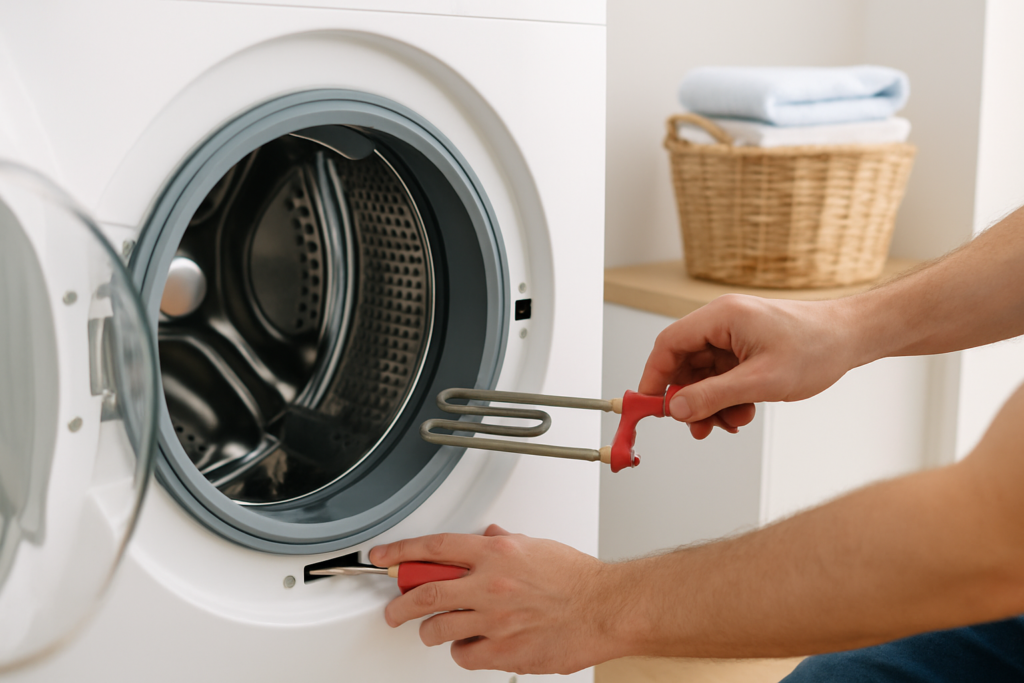
The heating element is the metal component that actually warms the water in your machine. It works just like the element in an electric kettle, using electrical resistance to generate heat. Most front-load washers and many top-loaders have these elements located at the bottom or back of the drum.
When a heating element fails, it’s usually because it has developed a break in the wire or has corroded over time. Hard water areas are particularly tough on heating elements because mineral deposits build up on the surface, causing hot spots that eventually burn through the metal.
You can test your heating element with a multimeter. Unplug your machine, locate the element (check your manual if you’re not sure), and disconnect the wires. Set your multimeter to the lowest resistance setting and touch the probes to the element’s terminals. A working element should show between 20 and 50 ohms. If you get no reading at all, the element is broken and needs replacing.

Washing Machine Heating Element
Replacement heating elements are model-specific, so check your washer’s manual before ordering
Thermostat Troubles: When Temperature Control Goes Wrong
Your washing machine doesn’t just heat water indefinitely. A thermostat monitors the water temperature and tells the heating element when to turn off. Most machines have at least two thermostats: one that controls the maximum temperature and a safety cut-out that prevents overheating.
When a thermostat fails, it usually fails in the “open” position, meaning it never signals the heating element to turn on. You might notice that your machine fills with water and starts the cycle normally, but the water never gets warm.
Testing a thermostat is similar to testing a heating element. With the machine unplugged and the thermostat removed, use a multimeter to check for continuity. A room-temperature thermostat should show continuity (a reading close to zero). If it doesn’t, you’ve found your problem.
Some thermostats are designed to reset when they cool down, while others are one-time devices that need replacing after they trip. Check which type you have before assuming you need a new one. Sometimes just letting the machine cool down completely for a few hours will reset the thermostat.
Control Board and Wiring Issues
Modern washing machines are controlled by circuit boards that manage every function, including heating. A faulty control board might fail to send power to the heating element even when everything else is working perfectly.
Before you assume the worst, check all the wiring connections to your heating element and thermostats. Vibration during the spin cycle can work connections loose over time. Look for burned or corroded connectors, which are common in older machines.
Testing the control board itself requires some electrical knowledge. You’ll need to check if power is reaching the heating circuit when the machine calls for heat. If you’re not comfortable working with live electrical circuits, this is when you might want to call a professional.
Control boards are expensive parts, often costing as much as a third of what a new machine would cost. Before replacing one, make absolutely sure it’s the problem. Double-check every other component first.
Water Flow and Pressure Problems
Here’s something many people overlook: your washing machine needs adequate water flow to heat properly. If the water inlet filters are clogged, the machine might not fill to the correct level, and some models won’t even attempt to heat if they detect low water pressure.
Turn off the water supply to your machine and unscrew the inlet hoses. You’ll see small mesh filters where the hoses connect to the machine. Pull these out carefully and rinse them under running water. You’d be surprised how much sediment can build up, especially if you have well water or aging pipes.

Multimeter
Essential for diagnosing electrical issues in any appliance, and you’ll use it for years to come
While you have the hoses off, check them for kinks or internal blockages. A partially blocked hose can restrict flow enough to cause problems. Replace any hoses that look deteriorated or are more than five years old.
DIY Repair or Call a Pro?
Replacing a heating element or thermostat is actually pretty simple on most washing machines. You’ll need basic tools like screwdrivers and pliers, plus that multimeter for testing. Many elements can be accessed without even moving the machine, though you might need to tip it back or remove a panel.
The whole job typically takes 30 minutes to an hour once you have the parts. YouTube has model-specific repair videos for almost every washer made in the last 20 years, which can walk you through the exact steps for your machine.
When should you call a professional? If the control board is the issue, if you’re not comfortable testing electrical components, or if your machine is still under warranty. Some manufacturers will void the warranty if they find evidence of DIY repairs, so check your paperwork first.
Also consider the age of your machine. If it’s more than 10 years old and needs major repairs, you might be better off putting that money toward a new, more efficient model. Newer washers use significantly less water and energy, which can offset the cost over time.
Frequently Asked Questions
How can I tell if my washing machine is actually heating the water?
The simplest test is to start a hot water cycle and wait about 15 minutes, then carefully open the door or lid and feel the water. It should be noticeably warm to hot. You can also use a thermometer to check the temperature. Most machines heat water to between 130-150°F on the hottest setting. If the water is barely warm or the same temperature as your cold water supply, you have a heating problem.
Can I still use my washing machine if the heating element is broken?
Yes, you can continue using your machine on cold water cycles without any issues. Modern detergents work well in cold water for most everyday laundry. However, you’ll struggle with heavily soiled items, greasy stains, and sanitizing tasks that require hot water. Items like bedding, towels, and work clothes usually benefit from hot water washing.
Why does my washer heat sometimes but not always?
Intermittent heating usually points to a failing thermostat or a loose electrical connection. As components heat up and cool down, they expand and contract slightly. A connection that works when cold might fail when warm, or vice versa. This can also happen with heating elements that are partially broken. Check all connections first, then test the thermostat and element when the problem is occurring if possible.
This article contains affiliate links. We may earn a small commission at no extra cost to you.