You’ve probably noticed something strange in your kitchen. Your range hood turns on, the lights work, maybe the fan even runs, but there’s no heat coming out. This can be confusing because most people assume range hoods don’t actually heat anything. Here’s where the confusion starts: some range hoods, particularly recirculating models with warming features or combo units, do have heating elements. Others might feel warm simply from the heat rising from your cooktop.
Understanding what’s actually supposed to happen with your specific range hood is the first step in troubleshooting. Let’s break down the common reasons why your range hood might not be providing the heat you expect and how to fix each issue.
Understanding Range Hood Heating Elements
Not all range hoods are created equal when it comes to heating. Traditional ducted range hoods simply extract air and don’t produce heat at all. Any warmth you feel is just the hot air from your stove being pulled through the system before it’s vented outside.
Some modern range hoods, particularly high-end models or combo microwave-hood units, do include heating elements. These might be warming lamps designed to keep food hot or actual heating coils. Microwave-hood combinations have microwave heating functionality that operates independently from the ventilation system.
If your unit has a heating element that’s stopped working, the problem usually lies in one of three areas: the heating element itself has failed, the thermostat isn’t functioning properly, or there’s an electrical connection issue. You’ll need to identify which type of heating component your model has before you can diagnose the problem effectively.
Thermostat and Temperature Control Failures
The thermostat in a range hood with heating capabilities controls when the heating element turns on and off. When this component fails, you might notice that the heating function doesn’t activate at all, or conversely, it might not shut off when it should.
Testing a thermostat requires a multimeter to check for continuity. Turn off the power to your range hood at the circuit breaker before attempting any diagnostics. Remove the cover panel (usually held by a few screws) and locate the thermostat, which typically looks like a small cylindrical component with two wire terminals.
Set your multimeter to the ohms setting and touch the probes to each terminal. A functioning thermostat should show continuity (a reading close to zero ohms) when it’s supposed to be calling for heat. If you get an infinite reading (OL on most digital multimeters), the thermostat is likely faulty and needs replacement.
Replacement thermostats are specific to your range hood model. Check your owner’s manual for the exact part number. Most manufacturers sell these components directly, or you can find them through appliance parts retailers.
Blocked Airflow and Circulation Issues
Even if your range hood has a functioning heating element, blocked airflow can make it seem like nothing’s working. Grease buildup on filters is the most common culprit. When filters are clogged, air can’t circulate properly, and any heat generated gets trapped inside the unit instead of dispersing into your kitchen.
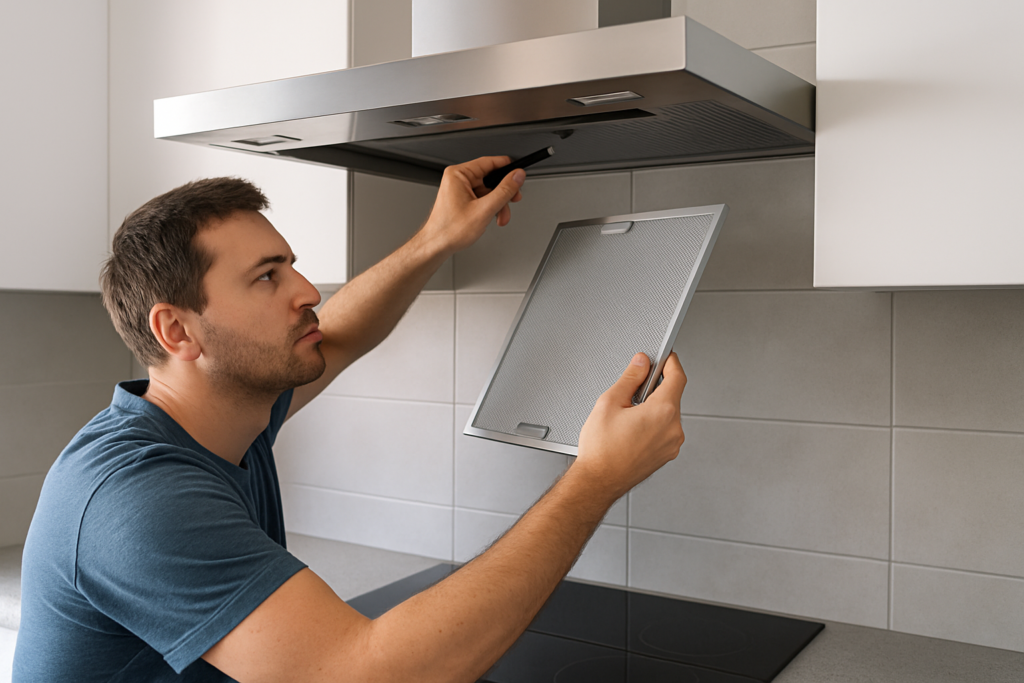
Pull out your range hood filters and hold them up to a light. If you can’t see light passing through easily, they need cleaning or replacement. Metal mesh filters can be cleaned in your dishwasher or soaked in a degreasing solution. Charcoal filters in recirculating hoods can’t be cleaned and must be replaced every 3-6 months depending on cooking frequency.

Range Hood Grease Filters
Universal filters that fit most standard range hoods and improve airflow dramatically
Don’t forget to check the ductwork if you have a vented system. Disconnect the duct where it meets the range hood and use a flashlight to inspect inside. You’re looking for grease accumulation, debris, or any obvious blockages. A blocked duct creates back pressure that reduces airflow and can cause heating elements to overheat and fail prematurely.
For recirculating hoods, the internal baffle system can also accumulate grease over time. These baffles direct airflow through the charcoal filters and back into the room. Remove them according to your manual’s instructions and clean them with hot, soapy water every few months.
Electrical Component Diagnosis
Heating elements fail over time, especially if they’re frequently used. The element itself might burn out, or the wiring connections can become loose or corroded. This is particularly common in range hoods installed above gas cooktops, where moisture and heat cycles are more extreme.
To test a heating element, you’ll again need that multimeter. After confirming the power is off, locate the heating element (consult your manual for its exact location). Disconnect the wires from the element’s terminals and test for continuity between the terminals. A functioning element should show some resistance, typically between 10-50 ohms depending on the wattage rating.
An infinite reading means the element has an open circuit and needs replacement. A reading of zero or very close to zero might indicate a short circuit, which is dangerous and requires immediate replacement.
Check all wire connections while you have the unit open. Look for any signs of burning, melting, or corrosion on wire terminals. These are clear indicators of electrical problems. Tighten any loose connections and replace any damaged wiring. Use wire connectors rated for the temperature and current your range hood requires.

Electrical Multimeter
Essential tool for diagnosing any electrical appliance issue safely and accurately
Control Board and Switch Problems
Modern range hoods use electronic control boards to manage all functions, including heating elements. When a control board fails, you might see multiple symptoms: buttons that don’t respond, displays that flicker, or specific functions like heating that simply don’t work.
Diagnosing a control board requires careful visual inspection. Remove the control panel cover and look for obviously burned components, bulging capacitors, or cracked solder joints. Sometimes you can smell burnt electronics if a component has failed recently.
Testing individual components on a control board requires advanced electronics knowledge. For most homeowners, if you suspect the control board, replacement is the practical solution. Control boards are available through the manufacturer or appliance parts suppliers. Make sure you get the exact board for your model number, as they’re not interchangeable.
Before replacing an expensive control board, verify that the problem isn’t actually a failed switch or button. The mechanical switches that activate when you press buttons can wear out over time. These are usually cheaper and easier to replace than the entire control board.
When to Call a Professional
Some range hood repairs are absolutely DIY-friendly. Cleaning filters, replacing light bulbs, and even swapping out a thermostat are manageable for anyone comfortable with basic tools. Other repairs cross into territory where professional help makes more sense.
Call a professional if you’re dealing with complex electrical work, especially if your range hood is hardwired into your home’s electrical system rather than plugged into an outlet. Working with 120V or 240V household current requires expertise and proper safety equipment.
Gas range installations also warrant professional attention. If your range hood problem is somehow related to your gas cooktop (for instance, inadequate ventilation causing safety concerns), you need a qualified technician. Gas appliances aren’t something to experiment with.
Additionally, if you’ve already replaced multiple components without solving the problem, a professional can provide diagnostic expertise that saves you money in the long run. Throwing parts at a problem gets expensive quickly.
Preventive Maintenance Tips
Most range hood heating problems are preventable with regular maintenance. Clean your grease filters monthly if you cook daily, or at minimum every three months for light use. Set a recurring reminder on your phone because it’s easy to forget.
Wipe down the exterior and interior surfaces of your range hood weekly. Grease that builds up on surfaces can eventually migrate into electrical components, causing failures. A simple wipe with a degreasing cleaner takes two minutes and prevents bigger problems.
Replace charcoal filters on schedule if you have a recirculating hood. These filters can’t be cleaned, and trying to extend their life beyond the recommended period just reduces efficiency and puts strain on the motor and heating elements.
Test all functions of your range hood monthly. Turn on the lights, run the fan at different speeds, and activate any heating features. Catching a problem early, when components are just starting to fail, is easier and cheaper than dealing with complete failure.
Frequently Asked Questions
Can I use my range hood if the heating element is broken?
Yes, you can still use the ventilation function even if the heating element isn’t working. The fan and lights will operate normally. The heating element is a separate system in most models. However, you should still plan to repair it to restore full functionality and potentially for safety reasons if there’s an electrical fault.
How long do range hood heating elements typically last?
Heating elements in range hoods generally last 5-10 years with normal use. Heavy use, particularly if you cook at high temperatures frequently, can shorten this lifespan. Poor ventilation that causes the element to overheat can also reduce longevity. Regular maintenance of filters and proper airflow helps maximize the element’s life.
Why does my range hood smell like burning when I turn on the heat?
A burning smell when you first use the heating element after a long period is normal. This is just dust or grease burning off. If the smell persists beyond 10-15 minutes or occurs regularly, you likely have grease buildup on the element itself or nearby components. Clean the unit thoroughly. If the smell continues, turn off the unit and inspect for damaged wiring or components that might be overheating.
Is it worth repairing an old range hood or should I replace it?
This depends on the age and overall condition of your range hood. If the unit is less than 7 years old and only needs a simple repair like a heating element or thermostat replacement, repair makes sense. For units older than 10 years, especially if you’re facing control board replacement or multiple component failures, investing in a new model often makes more financial sense. New range hoods are also more energy-efficient and offer better performance.
This article contains affiliate links. We may earn a small commission at no extra cost to you.