As an Amazon Associate I earn from qualifying purchases. This article contains affiliate links.
A pile of identical cleaning cloths makes it hard to remember which one wiped the bathroom and which one belongs in the kitchen. Assigning colors to jobs can make that decision easier, especially when several people share the cleaning.
Color is a reminder, not a cleaning process. Your system still needs separate storage, appropriate laundering, and a clear rule about when a cloth leaves service.
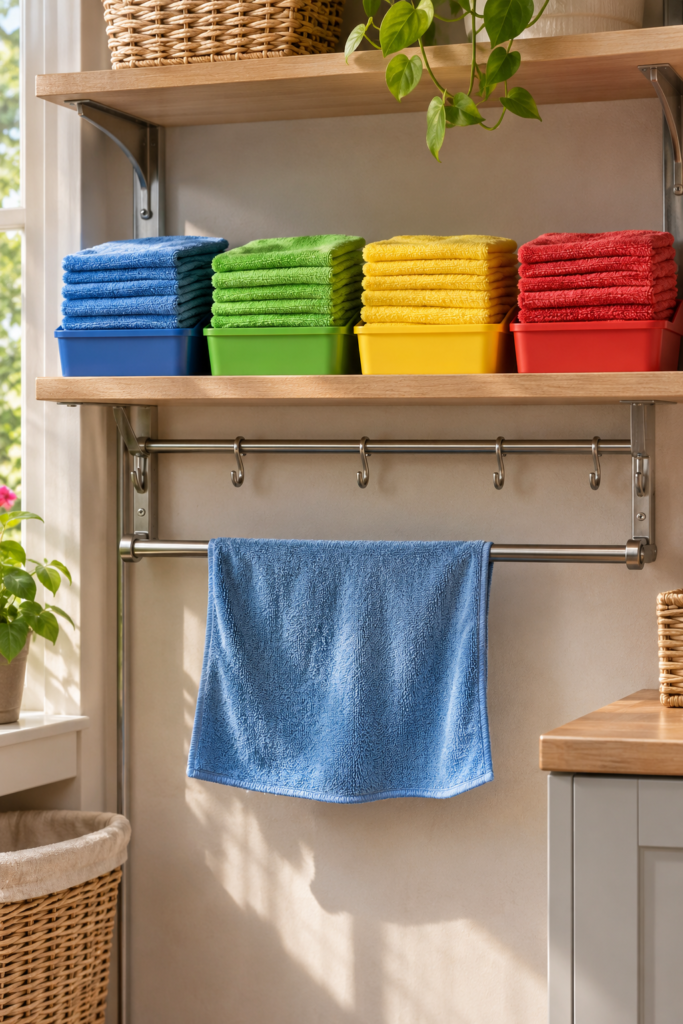
Choose a color chart your household can remember
Start with the cloths you already own. You can use colored storage labels or clearly marked task containers if replacing everything would be wasteful. Pick a small number of groups and write the meaning beside the clean-cloth storage.
| Color | Assigned task | Storage reminder |
|---|---|---|
| Blue | Glass and mirrors | Keep the finishing cloth free from grit. |
| Green | Kitchen surfaces | Keep separate from bathroom and pet-cleaning cloths. |
| Yellow | General dusting and appropriate household surfaces | Check surface and cloth compatibility. |
| Red | Bathroom fixtures | Reserve a separate marked cloth or tool for the toilet. |
This is an example, not a universal household standard. Add words or symbols to the containers so the system doesn’t depend on color vision. Everyone should be able to identify a task group without guessing.
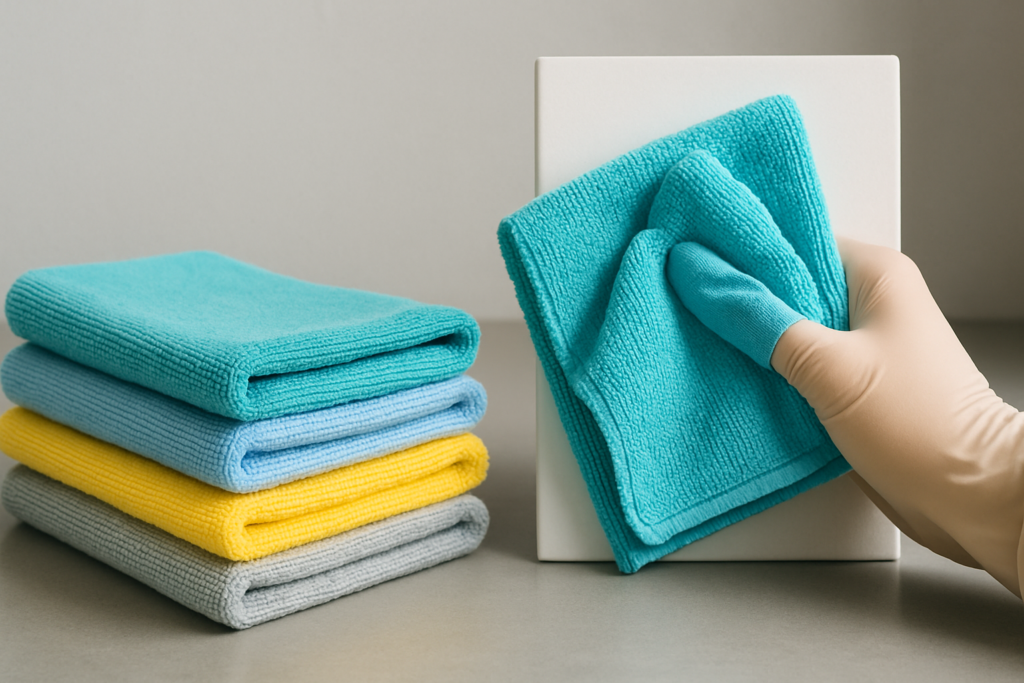
Multicolor microfiber cloth pack
Choose clearly different colors and care instructions you can follow. Check the cloth and surface guidance before using any material on a delicate finish. Opens Amazon search results.
Make clean storage easy to recognize
Put fully clean, dry cloths in a dedicated basket or drawer. Separate the task groups with dividers or small containers and keep them away from used equipment. Don’t store a damp cloth folded among the clean stack.
Keep the clean stock near your main cleaning kit, but give cleaning chemicals their own suitable storage. Leave products in their original labeled packaging and follow storage directions. Our minimalist cleaning kit guide can help you decide what needs to be within reach.
Count how many cloths your household uses between laundry sessions, then keep a small reserve. An enormous multipack isn’t useful if you can’t tell which pieces have been used. Add stock only after you’ve tested the routine.
Define what happens after each task
Take a fresh, appropriate cloth for the job. Keep toilet cleaning separate, and don’t carry the same cloth from a bathroom or pet mess to kitchen surfaces. Follow the cleaner’s directions, including any required contact time, rinsing, or disposable-material instructions.
Remove a visibly dirty cloth from service. For contamination that calls for special handling, follow the relevant public-health and product guidance rather than assuming ordinary laundering is sufficient. Wash your hands after handling dirty cleaning materials.
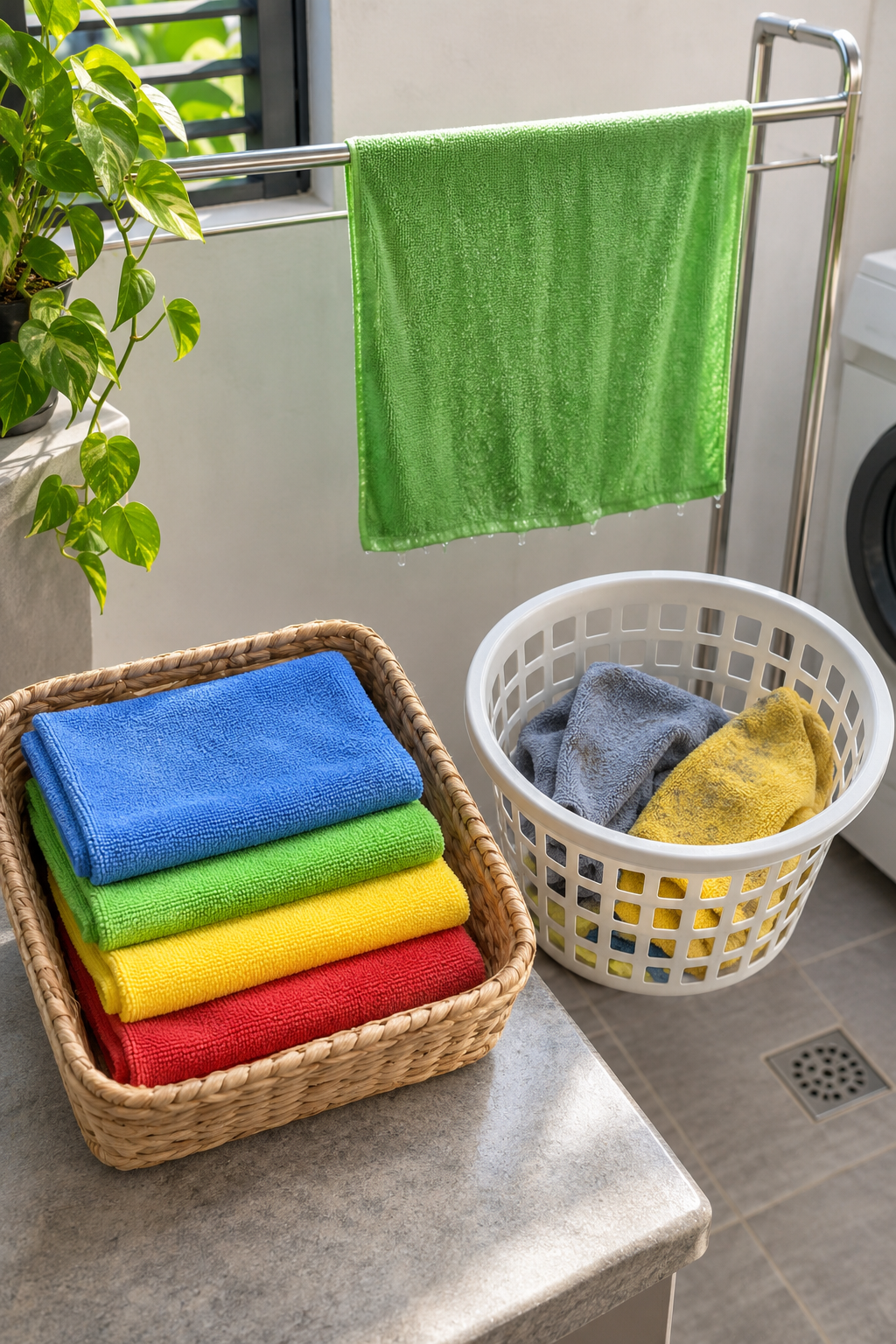
For routine cloths whose care instructions allow it, provide a place to rinse, wring, and hang them open between appropriate uses. Keep damp used cloths away from the clean stock. A drying rail or rack needs enough spacing for airflow.
Small ventilated laundry basket
Use a separate container for used cloths. Match its size to your washing routine and provide an appropriate place for damp cloths to dry first. Opens Amazon search results.
Follow the cloth maker’s wash instructions
Temperature, detergent, bleach compatibility, and drying limits vary. Check the label for your specific cloth. Our laundry symbol cheat sheet can help you read common care marks. Don’t boil a generic microfiber product or use a high dryer setting just because another brand permits it.
For example, E-Cloth’s care guidance warns against fabric softener and dryer sheets and describes different care needs for some of its products. Use that guidance for the relevant E-Cloth product, and the appropriate maker’s instructions for other brands.
Wash used cloths promptly enough that your container doesn’t become a long-term holding area. Select a suitable process for the task and contamination involved. Dry the cloths fully before returning them to their assigned sections.
Our microfiber cloth guide explains cloth selection in more detail. Keep a note of each product’s care instructions when removing packaging so you can check them later.
Make the system easy to reset
- Restock the clean groups after the laundry is fully dry.
- Check that the used-cloth container is empty and clean as needed.
- Remove worn pieces that no longer suit their task.
- Keep the task chart visible to everyone who cleans.
- Change a confusing color assignment before it becomes a household habit.
Separate retired cloths clearly if you keep them for a different suitable job. A worn bathroom cloth shouldn’t drift back into the kitchen group because its original color still matches.
Common questions
Can color coding disinfect a surface?
No. It helps you identify cloth assignments. Cleaning and disinfection depend on the appropriate product, method, surface compatibility, and label instructions.
Do you need four colors?
No. Use as many clearly identified task groups as your household needs. A smaller system you can maintain is better than a complicated chart nobody follows. Keep toilet and other high-contamination tasks distinctly separated regardless of the number of colors.
Article images are AI-generated illustrations.