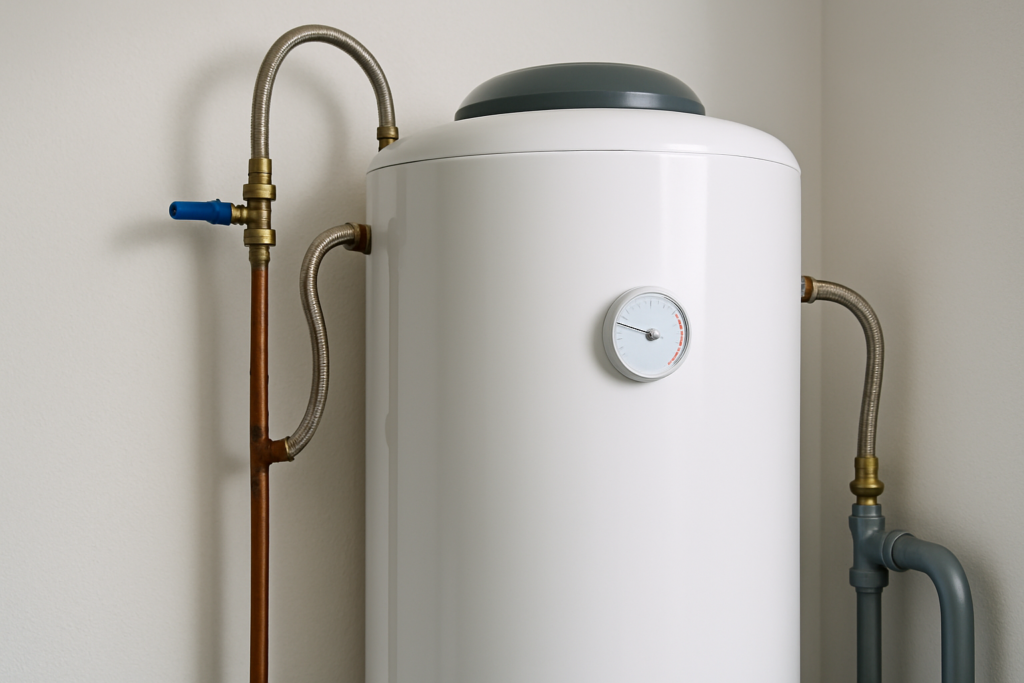
There’s nothing quite like the sinking feeling you get when you realize your water heater hasn’t shut off in hours. You can hear it running constantly, your energy bill is climbing, and you’re worried something might be seriously wrong. The good news is that a constantly running water heater usually points to a handful of fixable issues, most of which you can diagnose yourself.
Let’s walk through the most common culprits and what you can do about them before calling in a professional.
The Thermostat Might Be Set Too High (Or Broken)
Your water heater’s thermostat controls when the heating element kicks on and off. When it’s functioning correctly, it tells the heater to stop once the water reaches your set temperature. But when it malfunctions or gets set incorrectly, your heater will keep running in an endless attempt to reach an impossible goal.
Start by checking your thermostat setting. Most manufacturers recommend 120°F for safety and efficiency, though some people prefer 130-140°F. If yours is cranked up to 150°F or higher, your heater will run much longer than necessary trying to maintain that temperature.
To test if your thermostat is actually broken, try turning it down to 110°F and wait a few hours. If the heater still runs constantly, you’ve likely got a faulty thermostat that needs replacement. Electric water heaters typically have two thermostats (one for each heating element), and either one failing can cause continuous operation.

Water Heater Thermostat
Replacing a faulty thermostat is one of the most cost-effective fixes for a constantly running water heater
A Failing Temperature Sensor Creates False Readings
Your water heater relies on temperature sensors to know when the water has reached the right heat level. When these sensors go bad, they send incorrect readings to the thermostat, which then tells the heating element to keep working.
This problem is sneaky because everything else might be functioning perfectly. The sensor just can’t accurately detect the water temperature anymore. You might notice your water feels plenty hot (or even too hot), but the heater keeps running anyway.
Testing the sensor requires a multimeter to check its resistance at different temperatures. Most sensors should read around 10,000 ohms at 77°F, but this varies by model. Check your manufacturer’s specifications. If the readings are way off, you’ll need to replace the sensor assembly.
On many modern water heaters, the sensor is integrated with the thermostat, which means you’ll replace both components together. This actually works in your favor since you’re addressing two potential failure points at once.
Sediment Buildup Makes Your Heater Work Overtime
Here’s something most homeowners don’t think about until it becomes a problem. Minerals in your water slowly settle at the bottom of the tank, forming a thick layer of sediment over time. This layer acts like an insulator between the heating element and the water, forcing your heater to run longer to heat the same amount of water.
If you’ve never flushed your water heater and you’ve had it for more than a year, sediment is almost certainly contributing to your problem. In areas with hard water, this buildup happens even faster.
Flushing your water heater is simpler than it sounds. Turn off the power (or gas), attach a garden hose to the drain valve, and let several gallons run out until the water looks clear. You should do this annually as preventive maintenance. For heavily neglected tanks, you might need to flush multiple times or use a water heater descaler solution first.
The Heating Element Itself Could Be Failing
Electric water heaters use one or two heating elements that literally create heat to warm your water. When an element starts to fail, it might stay energized continuously instead of cycling on and off as needed. This keeps your water heater running without ever reaching the cutoff point.
You can test heating elements with a multimeter set to measure resistance. A typical residential element should read between 10-16 ohms. If you get a reading of infinity or zero, the element has failed and needs replacement.

Water Heater Element
Heating elements are wear items that eventually need replacement, usually every 8-10 years depending on water quality
Replacing a heating element isn’t terribly difficult if you’re comfortable with basic plumbing and electrical work. You’ll need to drain the tank partially, disconnect the wiring, unscrew the old element, and install the new one with a fresh gasket. Just make absolutely certain the power is off at the breaker before touching anything.
Gas Water Heaters Have Their Own Airflow Issues
If you have a gas water heater, poor combustion airflow can cause it to run constantly while never heating water efficiently. The burner needs proper air intake and exhaust ventilation to operate correctly. When vents get blocked by debris, bird nests, or just accumulated dust, the safety sensors might cause the unit to cycle inefficiently.
Check your exhaust vent for any obstructions. Look at the air intake vents near the bottom of the unit too. You’d be surprised how often a stray box or storage item gets placed in front of these vents, choking off the air supply.
The flame itself tells you a lot. A healthy gas water heater flame should be mostly blue with just a bit of yellow at the tips. If you’re seeing a lot of yellow or orange, you’ve got incomplete combustion, which means airflow problems or a dirty burner assembly that needs cleaning.
You might also want to inspect the thermocouple, which is the safety device that shuts off gas flow if the pilot light goes out. A failing thermocouple can cause erratic behavior in the heating cycle.
When to Call a Professional
While many water heater problems are DIY-friendly, some situations call for professional help. If you smell gas around your water heater, shut off the gas supply immediately and call your utility company or a plumber. Don’t mess around with gas leaks.
Similarly, if you’ve tried the basic troubleshooting steps and your heater still runs constantly, you might be dealing with a more complex electrical issue or a failing tank that’s leaking internally. Internal tank leaks are particularly sneaky because the water often evaporates before you see puddles, but the heater keeps running to replace the water volume.
Water heaters typically last 8-12 years. If yours is approaching or past that age and having multiple problems, replacement might make more financial sense than continued repairs.
Frequently Asked Questions
How much does it cost in electricity when my water heater runs constantly?
A constantly running electric water heater can add competitively priced-150 to your monthly electricity bill depending on your local rates and the size of your tank. A 50-gallon tank typically uses 4,500 watts when heating. If it’s running 12-16 hours a day instead of the normal 3-4 hours, you’re looking at a significant increase. This doesn’t even account for the accelerated wear on components, which will lead to earlier replacement.
Can a water heater explode if it runs constantly?
While rare, yes, a malfunctioning water heater can become dangerous. Modern units have temperature and pressure relief valves designed to prevent explosions, but these safety devices can also fail. If your water heater is running constantly and the water is scalding hot, or if you notice the relief valve constantly releasing water or steam, shut off power to the unit immediately and call a professional. Never ignore a hissing or rumbling water heater.
Why does my water heater run more in winter?
Cold incoming water temperatures in winter mean your heater works harder to bring water up to temperature. This is completely normal. If your water heater is in an unheated garage or basement, it’s also fighting heat loss to the surrounding cold air. However, “working harder” shouldn’t mean running literally all the time. If your heater never shuts off even in winter, you still have an underlying problem that needs attention. Consider adding an insulation blanket to help reduce heat loss during colder months.
This article contains affiliate links. We may earn a small commission at no extra cost to you.