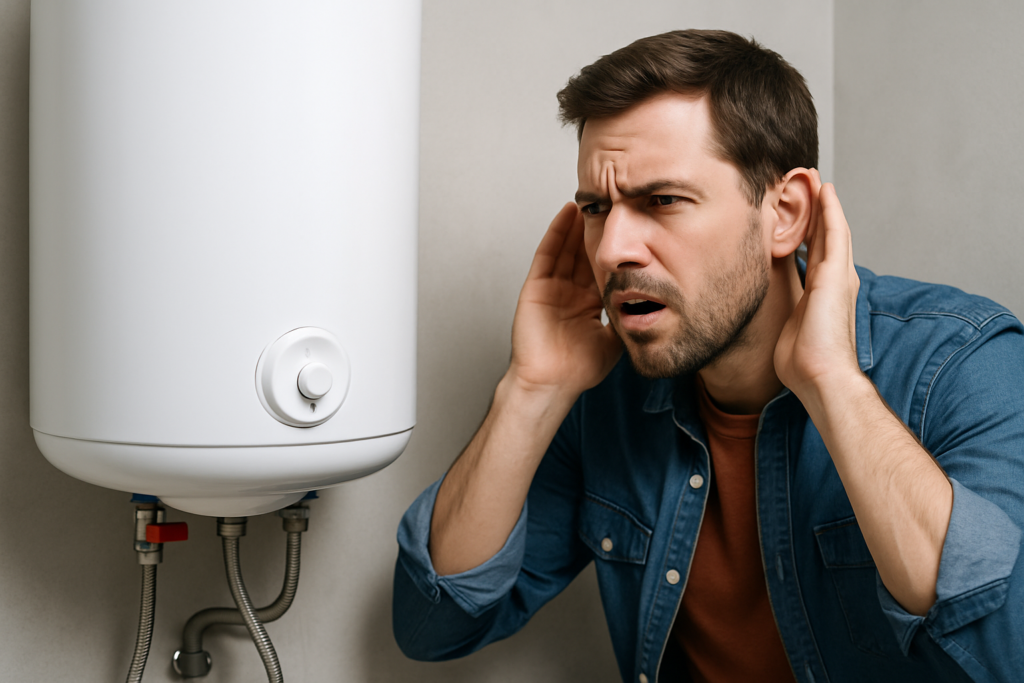
There’s nothing quite like the sound of a water heater throwing a tantrum at 2 AM. Those bangs, pops, and rumbles coming from your utility closet aren’t just annoying. They’re your water heater telling you something’s wrong. The good news is that most noisy water heaters aren’t about to explode, but they do need attention before a small problem becomes an expensive repair.
Understanding what causes these sounds and which components might need fixing can save you hundreds of dollars in emergency plumber calls. Let’s break down the most common culprits and what you can actually do about them.
Sediment Buildup: The Number One Noise Maker
If your water heater sounds like it’s boiling popcorn, you’re dealing with sediment accumulation at the bottom of the tank. Over time, minerals from hard water settle and harden into a crusty layer. When your heating element fires up, water gets trapped under this sediment and literally boils, creating those popping and crackling sounds.
This isn’t just a noise issue. That sediment layer forces your heater to work harder, increasing energy bills and reducing the tank’s lifespan. The heating element also takes a beating because it’s constantly fighting through mineral deposits to heat your water.
The fix is flushing your tank. Attach a garden hose to the drain valve at the bottom of your heater and drain several gallons until the water runs clear. You should do this annually if you have hard water, or every two years with softer water. If sediment has solidified, you might need to drain the entire tank and use a water heater flush kit with a wand attachment to break up the deposits.

Water Heater Flushing Kit
A complete kit makes annual maintenance simple and prevents sediment-related damage
Failing Heating Elements Create Humming and Buzzing
Electric water heaters have one or two heating elements that can vibrate as electricity passes through them. A low humming sound is usually normal, but if it’s gotten noticeably louder or turned into a harsh buzzing, your element is probably on its way out.
Loose mounting bolts on the element can amplify vibrations. Before replacing anything, try tightening the element bolts. You’ll need to turn off power at the breaker and use an element wrench to carefully tighten the hex nut. Don’t overtighten or you’ll crack the porcelain lining inside the tank.
If tightening doesn’t help, the element itself has likely corroded or developed a short. Replacement elements are specific to your heater’s voltage and wattage, so check your water heater’s label before buying. Most residential units use 240V elements rated between 3,800 and 5,500 watts. Installing a new water heater element is a manageable DIY job if you’re comfortable working with electrical components after shutting off power.
Rumbling and Knocking From Water Pressure Issues
Loud banging sounds when you turn off a faucet, known as water hammer, indicate pressure problems in your plumbing system. This happens when fast-moving water suddenly stops and creates a shock wave that rattles your pipes and water heater.
Your home should have water hammer arrestors installed near major fixtures, especially washing machines and dishwashers. These small devices act as shock absorbers for your plumbing. You can install screw-on arrestors at accessible locations like under sinks or behind the washing machine without cutting into walls.
Check your home’s water pressure with a simple gauge that screws onto an outdoor spigot. Residential water pressure should stay between 40 and 60 PSI. Anything over 80 PSI will stress your water heater and create noise. If pressure is too high, install a pressure regulator on your main water line.

Water Pressure Gauge
An essential diagnostic tool that helps you identify pressure problems before they damage your water heater
Temperature and Pressure Relief Valve Problems
A hissing or sizzling sound near the temperature and pressure relief valve (TPR valve) means it’s doing its job, but might be doing it too often. This valve releases excess pressure to prevent tank explosions. Occasional discharge is normal, but constant hissing signals a problem.
First, check if your thermostat is set too high. Water heaters should be set to 120°F for safety and efficiency. Anything higher creates excessive pressure. If the temperature is correct but the valve still hisses, the valve itself might be faulty or have mineral buildup preventing a proper seal.
TPR valves are critical safety devices and aren’t expensive. If yours is older than five years or won’t stop leaking after temperature adjustment, replace it. This is one component where you don’t want to take chances. Make sure you install a TPR valve rated for your tank’s BTU output and pressure rating.
When to Call a Professional
Some water heater noises indicate serious problems that need professional help. A loud bang followed by cold water usually means a heating element has completely failed or the tank has developed a major crack. Similarly, a constant roaring sound like a blowtorch might indicate a gas valve issue on gas heaters, which requires immediate attention.
If you’ve flushed the tank, checked pressure, and replaced obvious components but still hear concerning noises, bring in a licensed plumber. Water heaters typically last 8 to 12 years. If yours is approaching that age and making multiple types of noise, replacement might be more cost-effective than repairs.
Watch for water pooling around the base of your heater. Combine that with strange noises, and you’re looking at a tank that’s rusting through from the inside. No repair will fix that.
Frequently Asked Questions
How often should I flush my water heater to prevent noise?
Flush your water heater at least once per year if you have moderately hard water. Homes with very hard water should flush every six months. Set a reminder on your phone for the same time each year. Regular flushing prevents the sediment layer from hardening into a solid mass that’s difficult to remove and causes those popping noises.
Can a noisy water heater explode?
Modern water heaters have multiple safety features that prevent explosions, including TPR valves and temperature controls. However, ignoring persistent noises, especially hissing from the relief valve or excessive rumbling, can lead to dangerous pressure buildup. The bigger risk is tank failure and flooding rather than explosion, but both scenarios are expensive and avoidable with proper maintenance.
Is it normal for a brand new water heater to make noise?
Some noise is normal during the first few weeks as a new water heater settles in. You might hear gurgling as air works its way out of the system or minor popping as factory oils burn off the heating elements. These sounds should decrease and disappear within two weeks. Loud banging or constant hissing from a new installation indicates incorrect installation, improper water pressure, or a defective component that should be addressed under warranty.
This article contains affiliate links. We may earn a small commission at no extra cost to you.