You know that feeling when you’re trying to cook dinner and you’re opening every cabinet door looking for the one spice you need? Or when you’re digging through a drawer full of utensils, searching for the can opener while your pasta water boils over? A disorganized kitchen doesn’t just look messy, it actively steals your time and makes cooking feel like a chore.
The truth is, most kitchen organization advice focuses on making things look pretty rather than actually improving your workflow. Pretty pantries with matching jars are nice, but they won’t help you get dinner on the table faster. What you need are systems that put the right tools and ingredients exactly where you need them, when you need them.
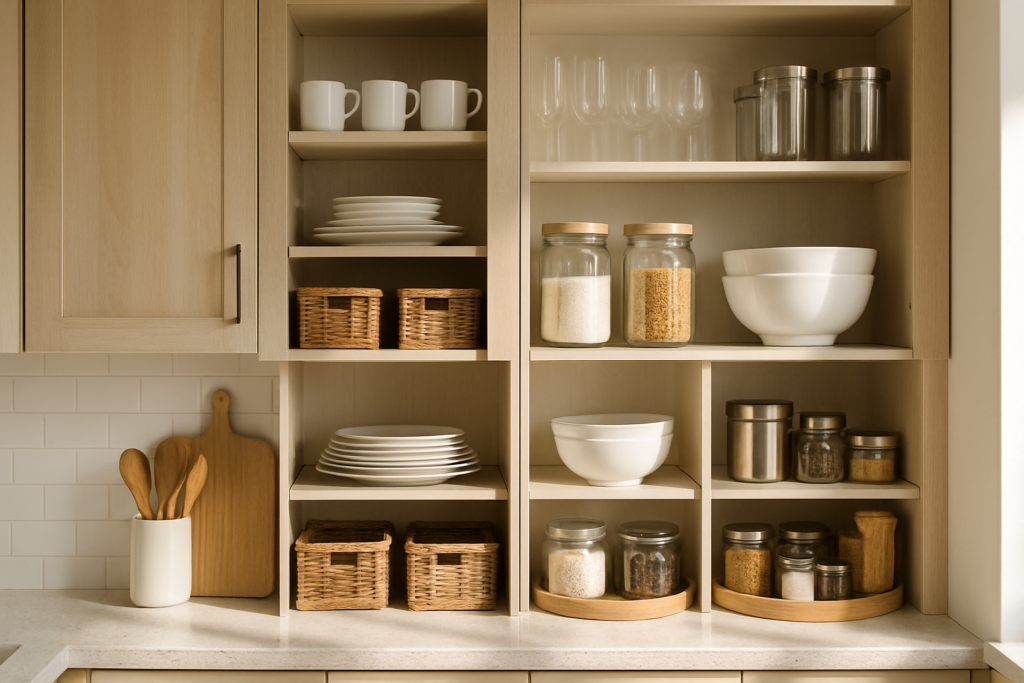
These 20 organization hacks are designed to cut your prep time, reduce frustration, and make your kitchen work better for the way you actually cook. Each one focuses on workflow optimization and practical solutions that busy home cooks swear by.
Zone-Based Organization
1. Create a Coffee Station
Stop running around the kitchen every morning gathering coffee supplies. Designate one area near your coffee maker for everything you need: mugs, filters, coffee, sugar, and stirring spoons. Use a coffee station organizer or a simple tray to keep everything contained.
Include a small container for used coffee pods if you use a single-serve machine, and keep a damp cloth nearby for quick cleanup. This single change can save you 5-10 minutes every morning and eliminate the pre-coffee scramble.
2. Build a Baking Command Center
Baking requires precision, and hunting for ingredients mid-recipe is a disaster waiting to happen. Create a dedicated baking zone with flour, sugar, baking powder, vanilla, and measuring tools all in one area.

OXO Good Grips 3-Piece Mixing Bowl Set
These nesting bowls save space and have non-slip bases for easier mixing
Store measuring cups and spoons in a container right in this zone, not scattered in different drawers. Keep parchment paper, cooling racks, and your most-used baking pans nearby too.
3. Design a Smoothie Station
Morning smoothies become much more appealing when everything you need is in one spot. Near your blender, store protein powder, frozen fruit portions, and add-ins like chia seeds or flax.
Pre-portion frozen fruits in individual bags during your weekly prep, and keep them in a designated freezer bin. Store your blender cups or travel mugs in the same cabinet so you can grab and go.
Strategic Placement for Efficiency
4. Position Tools by Their Function
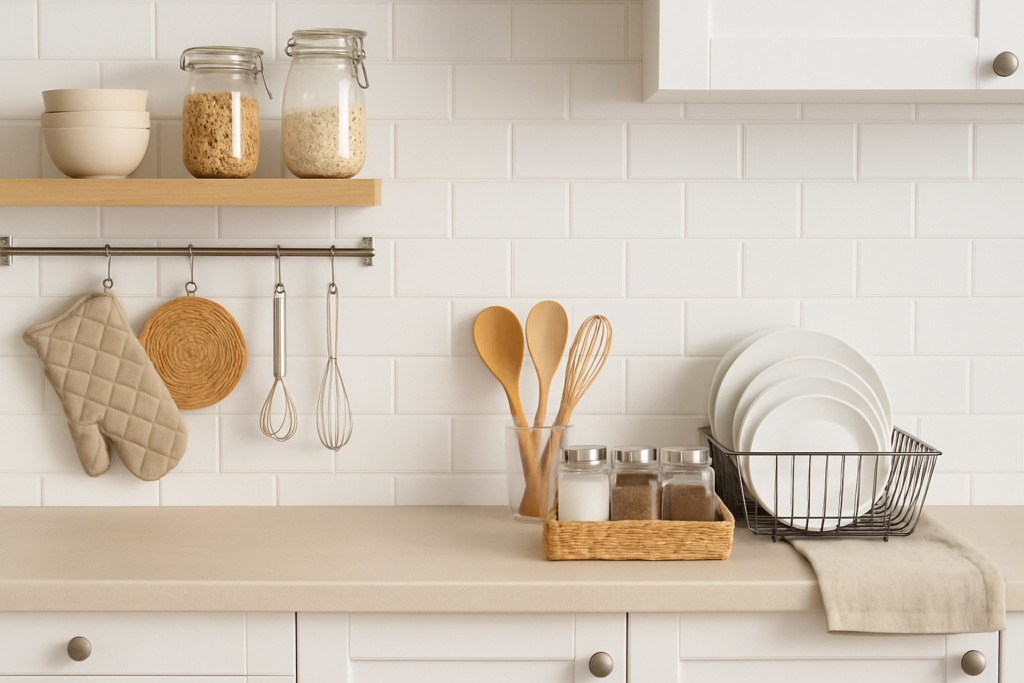
Your most-used cooking utensils should live within arm’s reach of your primary cooking area. Keep wooden spoons, spatulas, and tongs in a crock right next to the stove, not across the kitchen in a drawer.
Store pot holders and trivets in the drawer closest to your oven, not in a random kitchen drawer. When you’re pulling something hot out of the oven, you don’t want to hunt for protection.
5. Keep Knives Where You Prep
Your knife block shouldn’t sit on a counter far from where you actually chop vegetables. Position it within easy reach of your main prep area, whether that’s an island or a specific counter section.
Consider a magnetic knife strip mounted on the backsplash above your prep space for even easier access. This also frees up valuable counter space that a traditional block would occupy.
6. Store Cutting Boards Vertically
Stacking cutting boards in a cabinet means you always need the bottom one. Use a vertical cutting board organizer or repurpose a file folder organizer to store them upright.
Bambüsi Bamboo Cutting Board Set with Stand
This set includes different sized boards with a space-saving vertical storage stand
Place this system in a cabinet near your prep area or right on the counter if you use cutting boards daily. You’ll be able to grab the exact size you need without moving anything else.
Prep Time Reduction Strategies
7. Pre-portion Snack Items
Buy nuts, crackers, and other snacks in bulk, then immediately portion them into individual containers or bags. This prevents overeating, makes packing lunches faster, and keeps you from digging through large packages.
Use clear containers so family members can see what’s available at a glance. Label them with contents and dates to maintain freshness and avoid waste.
8. Create Spice Blends in Advance
Instead of reaching for six different spice jars every time you cook, pre-mix your favorite combinations. Make a big batch of taco seasoning, Italian herb blend, or your signature chicken rub.
Store these blends in small jars with clear labels. This single step can cut several minutes off your cooking time and ensure consistent seasoning every time.
9. Prep Vegetables Immediately After Shopping
When you get home from grocery shopping, wash and chop frequently used vegetables right away. Store them in clear containers so you can see what’s ready to use.
Focus on items you use most often: onions, bell peppers, carrots, and celery. Having these ready to go makes weeknight cooking much faster and increases the likelihood you’ll actually use them before they spoil.
Space-Saving Storage Solutions
10. Use the Inside of Cabinet Doors
Cabinet doors are prime real estate that most people ignore. Install narrow shelves or racks on the inside of doors to store spices, cleaning supplies, or small items that create clutter elsewhere.
The inside of your sink cabinet door is perfect for storing dish soap, sponges, and scrubbers. Upper cabinet doors can hold spices or small bottles of oil and vinegar.
11. Install Pull-Out Drawers in Deep Cabinets
Deep lower cabinets become black holes where items disappear forever. Pull-out drawer systems bring everything forward so you can see and reach items in the back.
Simple Houseware 2-Tier Sliding Cabinet Basket Organizer
These sliding drawers maximize deep cabinet storage and make everything easily accessible
Install these in cabinets where you store pots and pans, small appliances, or bulk pantry items. The investment pays off quickly in reduced frustration and better use of space.
12. Maximize Vertical Space with Stackable Containers
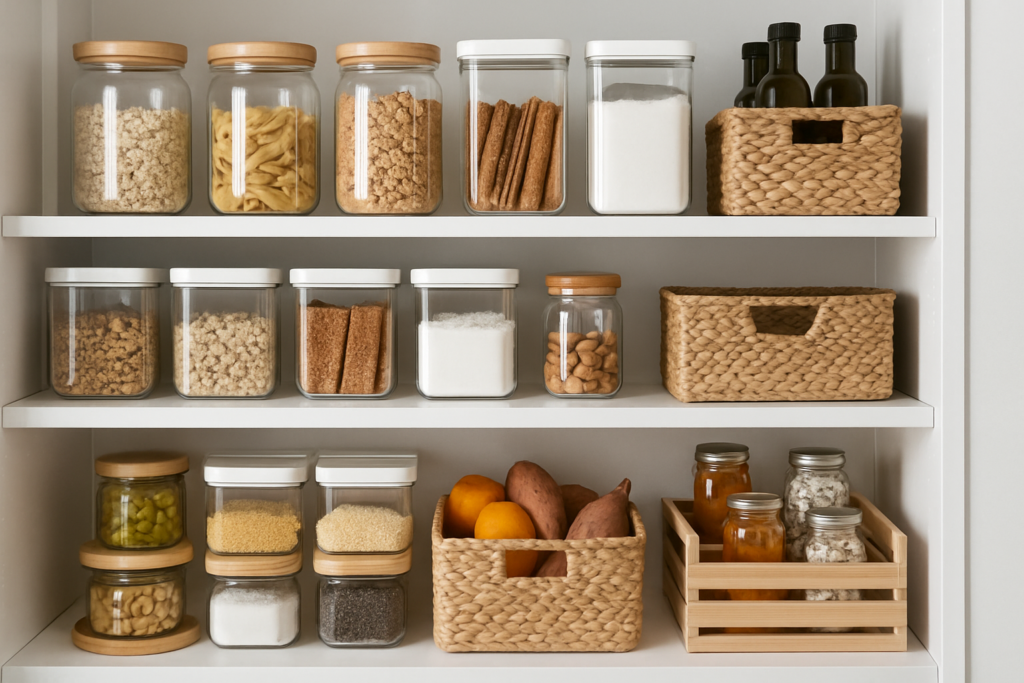
Cereal boxes, pasta boxes, and other packages waste space with their irregular shapes. Transfer these items to airtight stackable containers that make the most of your cabinet height.
Choose containers with square or rectangular shapes rather than round ones to eliminate wasted space. Clear containers let you see contents and quantity at a glance, preventing overbuying or running out unexpectedly.
13. Use Tension Rods for Cleaning Supplies
Install a tension rod under your kitchen sink and hang spray bottles from it by their triggers. This keeps them organized, prevents tipping, and makes the space under your sink much more functional.
You can use the same concept in other areas: tension rods inside pantries can hold small bags or packages, and they work great for organizing pot lids vertically.
Workflow Optimization Hacks
14. Keep a Designated Spot for Kitchen Linens
Dish towels, pot holders, and aprons should have a specific home that’s easily accessible while cooking. A drawer near the stove or sink works perfectly, or use hooks on the side of a cabinet or island.
Avoid storing kitchen linens with regular linens in other parts of the house. When you need a clean dish towel while cooking, you don’t want to leave the kitchen to find one.
15. Create a Meal Planning Station
Designate a small area for meal planning materials: cookbooks, recipe printouts, shopping list pad, and pens. Keep this near where you’ll actually do the planning, whether that’s at the kitchen table or a counter.
Include a magnetic notepad on the refrigerator for running grocery lists. When you use the last of something, write it down immediately rather than hoping you’ll remember later.
16. Set Up Assembly-Line Lunch Making
Store all lunch-making supplies in one area: containers, bags, napkins, and utensils. Keep this separate from your regular dinnerware so you’re not competing with dinner cleanup while making tomorrow’s lunches.
Dedicate one shelf in your refrigerator to lunch components: pre-portioned fruits, cut vegetables, sandwich meats, and drinks. This makes morning lunch assembly much faster.
Smart Storage for Small Items
17. Organize Drawer Chaos with Dividers
Kitchen drawers quickly become jumbled messes without proper organization. Use adjustable drawer dividers to create specific spaces for different categories of items.
Joseph Joseph DrawerStore Kitchen Drawer Organizer
This expandable organizer has angled compartments that make utensils easier to identify and grab
Group similar items together: all measuring tools in one section, all serving utensils in another. This prevents the frustrating dig-through-everything-to-find-one-item scenario.
18. Use Lazy Susans in Corner Cabinets
Corner cabinets are notoriously difficult to organize because items in the back become unreachable. A lazy Susan brings everything to you with a simple spin, making these spaces actually functional.
Use lazy Susans for items you access regularly but don’t need every day: oils and vinegars, condiments, or baking extracts. Choose one with raised edges to prevent items from sliding off.
19. Create a Command Center for Small Appliances
Small appliances that live on counters create clutter, but storing them in cabinets makes them inconvenient to use. Create an appliance garage with roll-up doors, or designate one area of counter space specifically for your most-used devices.
Keep frequently used appliances plugged in and easily accessible. Store less-used items like the waffle maker or food processor in cabinets, but keep their accessories with them so you don’t hunt for parts.
20. Implement a One-Touch Rule
Every item in your kitchen should be accessible with one touch, meaning you don’t have to move something else to reach it. This applies to everything from spices to pots to cleaning supplies.
When you find yourself regularly moving items to reach something else, it’s time to reorganize. The most frequently used items should be the most accessible, while occasional-use items can be stored in less convenient spots.
Frequently Asked Questions
How do I maintain kitchen organization once I’ve set it up?
The key is to make putting things back easier than leaving them out. Label everything clearly, give every item a specific home, and involve the whole family in maintaining the system. Spend 5 minutes each evening resetting your kitchen to its organized state. This prevents small messes from becoming overwhelming reorganization projects.
What should I do if my kitchen is too small for zones?
Even tiny kitchens can benefit from zone thinking, just on a smaller scale. Create micro-zones within single cabinets or drawers. For example, designate one drawer section for coffee supplies and another for tea items. Use vertical space aggressively with stackable containers and door-mounted storage. Focus on multipurpose solutions that serve more than one function.
How often should I reorganize my kitchen systems?
Review your kitchen organization seasonally or whenever your cooking habits change significantly. What works for busy weeknight cooking might not work when you’re doing more holiday baking. Pay attention to items that consistently end up in the wrong place, as this usually indicates your system needs adjustment rather than more discipline.
Should I invest in expensive organization products?
Start with simple, budget-friendly solutions to test what works for your specific needs and habits. Once you’ve identified which organizational concepts make the biggest difference in your kitchen workflow, then consider investing in higher-quality versions of those solutions. Many effective kitchen organization hacks use repurposed items or basic storage containers rather than specialized products.
This article contains affiliate links. We may earn a small commission at no extra cost to you.