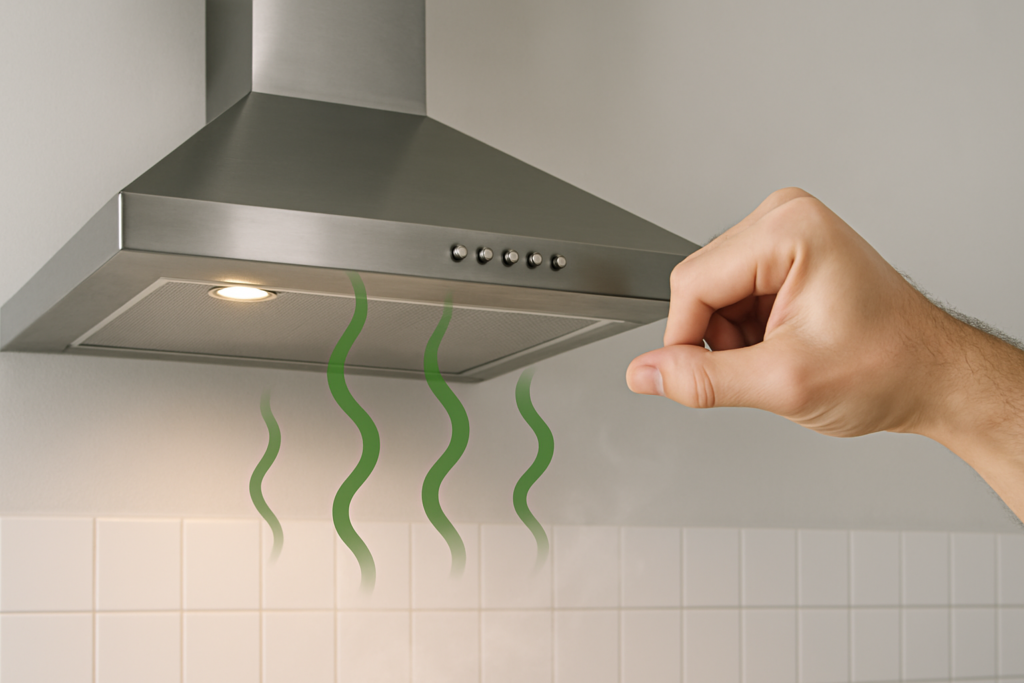
You’re cooking dinner, turn on your range hood, and instead of fresh air circulation, you get hit with a wave of unpleasant odor. It’s not just annoying. It defeats the entire purpose of having ventilation in the first place.
The good news is that most range hood smells come from a few common culprits, and they’re all fixable. Let’s break down what’s causing that stench and how to eliminate it for good.
The Main Sources of Range Hood Odors
Your range hood pulls in grease, steam, smoke, and cooking particles every single day. When those substances build up without proper cleaning, they start to smell. Think about it: old grease doesn’t just sit there quietly. It oxidizes, goes rancid, and creates that distinctive stale cooking smell.
The filters are usually the biggest offenders. Mesh or baffle filters trap grease before it reaches your ductwork, but they can only hold so much before they become saturated. Once they’re clogged, they start emitting odors instead of blocking them.
Ductwork issues can also cause problems. If you have a ducted range hood (one that vents outside), trapped moisture or debris in the ducts can create musty smells. Sometimes you’ll even get backflow odors from outside making their way in through gaps or a faulty damper.
Recirculating hoods use charcoal filters instead of venting outside. These filters absorb odors, but they have a limited lifespan. Once they’re spent, they can’t absorb anything new, and they might even release old smells back into your kitchen.
How to Clean Your Range Hood Properly
Start with the filters because that’s where most of the gunk accumulates. Metal mesh and baffle filters are dishwasher-safe, but hand washing gives better results. Fill your sink with hot water, add a few squirts of dish soap and half a cup of baking soda, then let the filters soak for 15-20 minutes.
After soaking, scrub them with a brush to remove stubborn grease deposits. A degreaser spray can help with particularly tough buildup. Rinse thoroughly and let them air dry completely before reinstalling.

Range Hood Filter
If your current filter is beyond cleaning or damaged, replacing it entirely is often the fastest solution.
For charcoal filters in recirculating hoods, there’s no cleaning option. You need to replace them every 3-6 months depending on how often you cook. Mark your calendar or set a phone reminder because it’s easy to forget.
Don’t stop at the filters. Wipe down the entire interior and exterior of the hood with a degreasing cleaner. Pay special attention to the fan blades and housing where grease splatters accumulate. You might need to remove the fan cover to access these areas properly.
Dealing with Ductwork and Ventilation Issues
If you’ve cleaned everything and still smell odors, your ductwork might be the problem. Check the damper (the flap that prevents outside air from coming in when the hood isn’t running). A broken or stuck damper lets in outside smells, especially noticeable near restaurant exhaust vents or if neighbors are cooking.
You can test the damper by turning on the hood and holding a tissue near the vent outlet outside. It should flap open when the fan runs and close when you turn it off. If it doesn’t close properly, you’ll need to repair or replace it.
For persistent duct odors, you might need professional duct cleaning. Grease can accumulate deep in the ductwork over years of use, creating a smell that regular filter cleaning won’t fix. This is especially important if you cook frequently or do a lot of high-heat frying.
What if the smell is coming from the vent when it’s off?
This usually indicates a damper issue or negative air pressure in your home. When other exhaust fans run (bathroom fans, dryer vents), they can create negative pressure that pulls air backward through your range hood vent. Installing a spring-loaded backdraft damper can solve this problem by creating a tighter seal.
How often should I clean my range hood filters?
For light cooking, clean metal filters monthly. If you cook daily or do a lot of frying, clean them every two weeks. Charcoal filters in recirculating hoods need replacement every 3-6 months and can’t be cleaned. Set reminders on your phone because it’s easy to forget until the smell becomes noticeable.
Prevention Is Easier Than Deep Cleaning
Once you’ve eliminated the odor, keep it from coming back with regular maintenance. A quick wipe-down of visible surfaces after heavy cooking sessions takes two minutes and prevents grease buildup.
Run your range hood for a few minutes after you finish cooking. This clears out lingering steam and particles before they settle and harden. Many newer models have automatic shut-off timers that handle this for you.
Using high-quality filters makes a noticeable difference in how long they stay effective. Cheaper filters often have larger gaps that let more grease through, meaning more frequent cleaning and faster buildup in your ductwork.
Your range hood works hard to keep your kitchen air clean. Give it a little regular attention, and it’ll keep doing its job without making your kitchen smell like a greasy spoon restaurant.
This article contains affiliate links. We may earn a small commission at no extra cost to you.