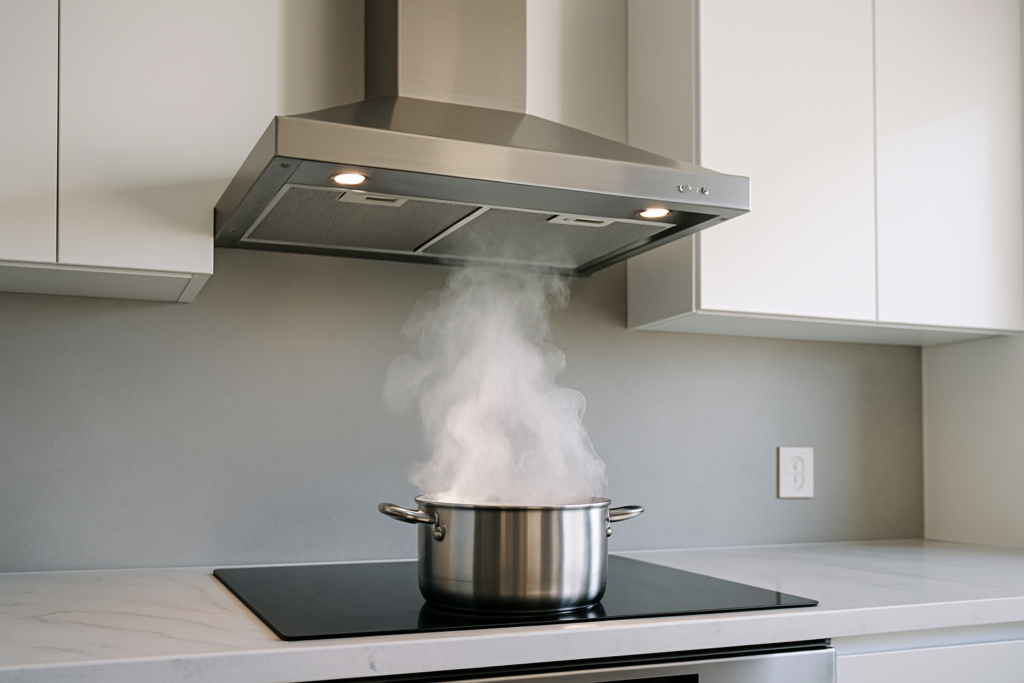
You installed a range hood to keep your kitchen cool and smoke-free, but lately it’s not doing its job. The air feels stagnant, cooking odors linger, and the heat just hangs around. Before you call a repair technician or start shopping for a replacement, you should know that most range hood cooling issues come down to three fixable problems.
Let’s walk through the most common culprits and how you can get your range hood working properly again.
Airflow Restrictions Are Killing Your Performance
The number one reason range hoods lose their cooling power is blocked airflow. Grease, dust, and cooking debris build up faster than you’d think, especially if you cook frequently.
Start with the filters. Metal mesh filters can get completely clogged with sticky grease residue. Pull them out and hold them up to a light. If you can’t see through them easily, they’re blocking airflow. You can clean metal filters by soaking them in hot water with dish soap and baking soda for 15 minutes, then scrubbing with a soft brush.
Baffle filters are slightly better at preventing buildup, but they still need regular cleaning. Most manufacturers recommend cleaning filters every month if you cook daily. For charcoal filters in ductless hoods, there’s no cleaning option. Replace them every three to six months depending on usage.

Range Hood Grease Filters
Replacement filters are essential for maintaining proper airflow and cooling performance
Check your ductwork next. Flexible ducts can sag or get crushed, creating bottlenecks. Rigid metal ducts are better but can accumulate grease buildup inside over time. The duct run should be as short and straight as possible. Every 90-degree elbow reduces airflow by about 10-15%. If your duct route resembles a maze, that’s likely part of your problem.
External vents can get blocked by bird nests, debris, or damper flaps that stick closed. Go outside and make sure the vent cap opens freely when the hood is running. A stuck damper is an easy fix that makes a massive difference.
Dirty or Frozen Coils in Recirculating Models
If you have a ductless recirculating range hood, it relies on coils to cool and filter the air before pushing it back into your kitchen. These coils can’t work properly when they’re covered in grime.
Turn off the power and remove the front panel to access the coils. You’ll probably find a layer of dust mixed with grease. Use a soft brush or vacuum with a brush attachment to clean them gently. For stubborn buildup, a coil cleaning spray designed for appliances works well. Let everything dry completely before reassembling.
In rare cases with high-end models that have actual cooling elements, the coils can frost over if the system is running constantly or the ambient temperature is too low. This is more common in commercial-grade units. Letting the unit rest for a few hours usually solves temporary icing issues.
When the Fan Motor Is the Problem
Sometimes the motor itself is wearing out. Fan motors have a lifespan of 10-15 years with regular use. Listen carefully when it’s running. Grinding, squealing, or rattling sounds indicate bearing failure. The motor might still spin, but at reduced speed, which cuts cooling efficiency dramatically.
You can test fan speed by holding a tissue near the intake. It should be pulled in strongly. Compare this to when the unit was new if you remember. Many range hoods have multiple speed settings controlled by capacitors. A failed capacitor means your “high” setting actually runs at medium or low speed.

Range Hood Cleaning Kit
A specialized cleaning kit helps you maintain all components for optimal cooling performance
Compressor Issues in Advanced Units
High-end range hoods with actual refrigeration-style cooling (rare but they exist) have compressors similar to air conditioners. These are the least common but most expensive to fix.
Compressor problems announce themselves clearly. The unit runs but produces no cool air, or it cycles on and off every few minutes. You might hear clicking sounds as the compressor tries to start but fails. These symptoms point to refrigerant leaks, failed compressor motors, or electrical issues.
Check if your model is still under warranty before attempting anything. Compressor replacement typically costs 60-70% of a new unit’s price, making replacement more economical unless you have a premium model. A qualified HVAC technician should handle any compressor diagnostics since refrigerant systems require special tools and licensing to service legally.
Frequently Asked Questions
How often should I clean my range hood for optimal cooling?
Clean your filters monthly if you cook daily, or every two months for light use. Deep clean the entire unit including fan blades and internal surfaces every six months. Heavy-duty degreasers make this job much easier. Regular maintenance prevents 90% of cooling problems before they start.
Can I upgrade my range hood’s fan to improve cooling?
Technically yes, but it’s complicated. You need to match the motor size to your ductwork capacity and electrical supply. Most range hoods are designed with the optimal fan for their size. Instead of upgrading the fan, focus on improving ductwork and ensuring proper CFM rating for your cooking style. For serious cooking, a hood rated at 400-600 CFM handles heat much better than standard 200 CFM models.
This article contains affiliate links. We may earn a small commission at no extra cost to you.