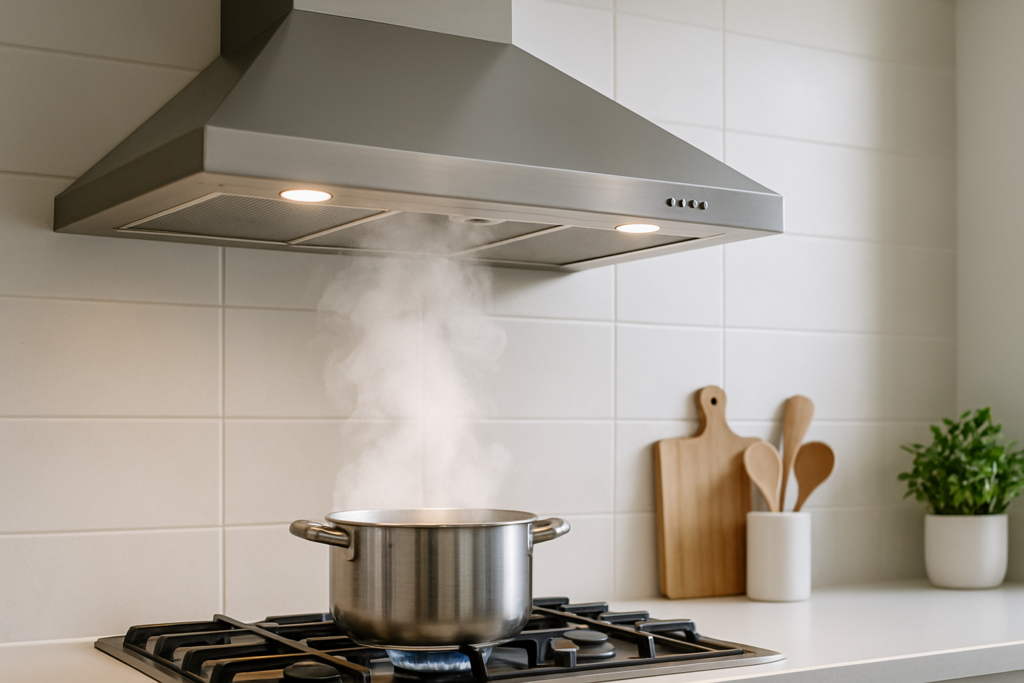
You wake up in the middle of the night to a familiar humming sound. Again. Your range hood is running at full blast even though you haven’t cooked anything since dinner hours ago. Or maybe it kicks on randomly throughout the day, cycling endlessly despite nobody being near the stove. This isn’t just annoying; it’s wasting energy and putting unnecessary wear on your appliance.
A range hood that won’t stop running usually points to one of three culprits: a faulty thermostat, a malfunctioning sensor, or blocked airflow that’s triggering your hood’s safety features. The good news is that most of these problems are fixable without calling a repair tech. Let me walk you through what’s actually happening and how to get your kitchen back to normal.
Understanding Your Range Hood’s Control System
Modern range hoods aren’t just simple on-off switches anymore. Most models include temperature sensors, humidity detectors, or automatic modes that detect cooking activity. When these systems work correctly, they’re incredibly convenient. When something goes wrong, they can make your hood behave like it has a mind of its own.
The control board acts as the brain of your range hood. It receives input from various sensors and decides when the fan should run, how fast it should spin, and when to shut off. A glitch in any part of this system can cause continuous operation.
Many homeowners don’t realize their range hood even has these features. You might have an automatic mode enabled that you didn’t know existed, or a sensor that’s become overly sensitive over time.
The Thermostat Problem
Range hoods with thermostats are designed to detect heat from your cooktop and adjust fan speed accordingly. When the thermostat fails or becomes miscalibrated, it can “think” your stove is constantly hot, keeping the fan running indefinitely.
Thermostats typically fail in one of two ways. They either stick in the closed position (telling the hood there’s always heat present) or become hypersensitive to ambient temperature. A thermostat that’s too sensitive might trigger from your dishwasher’s heat, afternoon sun warming your kitchen, or even your refrigerator’s compressor running nearby.
You can test this yourself. Turn off your range hood completely and let your kitchen cool down for several hours. Then turn the hood back on to its manual low setting. Does it immediately jump to high speed or refuse to turn off? That’s a strong indicator of thermostat failure.
Replacing a range hood thermostat isn’t terribly difficult if you’re comfortable with basic electrical work. You’ll need to access the control panel, disconnect the old thermostat (usually held by two wires and a mounting bracket), and install the replacement. Just make sure to shut off power at your circuit breaker first.

Range Hood Temperature Sensor
Most universal sensors fit multiple brands and are easier to replace than you’d think
Sensor Malfunctions That Cause Constant Running
Beyond thermostats, many range hoods include humidity sensors, grease sensors, or air quality detectors. These are particularly common in higher-end models from brands like Broan, Zephyr, and Bosch. When these sensors fail, they can report false readings that keep your fan running.
Humidity sensors are especially prone to problems. They’re designed to detect steam and moisture from cooking, but they can become coated with grease residue over time. This coating interferes with their ability to read actual humidity levels, causing them to constantly signal that moisture is present.
Air quality sensors face similar issues. They detect particles and gases in the air, but cooking grease can gum up the sensing element. Once contaminated, they may permanently read poor air quality, keeping your fan in overdrive.
Before replacing sensors, try cleaning them. Most sensors are accessible from inside the hood’s canopy. Use a soft cloth dampened with isopropyl alcohol to gently clean the sensor surface. Avoid harsh chemicals or abrasive materials that could damage sensitive components. Let everything dry completely before powering the hood back on.
Blocked Airflow and Safety Features
Your range hood might be running constantly because it’s struggling to move air properly. When airflow is restricted, many hoods compensate by running longer or at higher speeds to meet their programmed ventilation targets.
The most common airflow restriction comes from clogged filters. Grease filters should be cleaned monthly in heavy-use kitchens, but most people forget about them for months or even years. When filters become saturated with grease, they block airflow and trigger extended run times.
Remove your filters and hold them up to the light. Can you see through the mesh? If not, they need cleaning or replacement. Metal baffle filters can go right in your dishwasher. Aluminum mesh filters need to be soaked in hot water with degreaser, then scrubbed gently.

Range Hood Filter
Replacement filters are inexpensive and can solve constant-running issues caused by restricted airflow
Check your ductwork too, especially if you have a vented (not recirculating) range hood. Birds’ nests, accumulated grease in the duct, or a stuck damper can all restrict airflow enough to cause problems. You might need to access your ductwork from outside where it exits your home.
Recirculating hoods use charcoal filters that can’t be cleaned and must be replaced every 3-6 months. A saturated charcoal filter creates significant back-pressure, forcing your hood to work harder and run longer than necessary.
Control Board and Switch Issues
Sometimes the problem isn’t with sensors or thermostats but with the control board itself or even a stuck physical switch. Electronic control boards can develop issues from power surges, moisture exposure, or simply age-related component failure.
A control board displaying erratic behavior might run your fan constantly, ignore button presses, or cycle randomly between speeds. Look for visible signs of damage like burnt components, corrosion, or bulging capacitors on the board. Any of these indicate the board needs replacement.
Physical switches and touchpads can also stick in the “on” position. This is more common with older mechanical switches but can happen with electronic touch controls too. Grease buildup around buttons is usually the culprit. Clean around all controls with isopropyl alcohol and a cotton swab.
For touch-sensitive control panels, moisture or grease on the surface can create phantom touches. The panel thinks you’re constantly pressing buttons when you’re not. A thorough cleaning of the control panel surface often resolves this.
The Auto Mode Trap
Here’s something that catches many people off guard: your range hood might be functioning exactly as designed. Many modern range hoods have an automatic or “smart” mode that you may have accidentally activated.
In auto mode, the hood monitors cooking activity and air quality, adjusting its operation accordingly. Depending on sensitivity settings and what the sensors detect, this can mean running for extended periods that seem excessive to you but are normal for that mode.
Check your control panel for an “Auto,” “A,” or similar indicator light. Consult your owner’s manual to learn how to disable this mode or adjust its sensitivity. Some models require holding down specific button combinations to access these settings.
Certain range hoods also feature a delayed shut-off function that continues running for 10-30 minutes after you’ve finished cooking to clear residual smoke and odors. This is normal operation, though it can feel like the hood won’t turn off if you’re not expecting it.
Step-by-Step Troubleshooting Process
Let’s put together a systematic approach to diagnosing your constantly running range hood. Start with the simplest solutions and work toward more complex repairs.
First, check for auto mode or smart features that might be enabled. Turn off the hood completely and restart it in manual mode if available. This rules out software or programming issues right away.
Second, clean or replace all filters. This takes 15 minutes and solves a surprising number of range hood problems. Don’t skip this step even if your filters don’t look that dirty. Grease buildup isn’t always visible but still restricts airflow.
Third, inspect and clean all sensors and the control panel. Use isopropyl alcohol and let everything dry completely. This addresses contamination issues that cause false readings.
Fourth, test the thermostat if your model has one. Let the kitchen cool completely, then monitor whether the hood responds appropriately to actual temperature changes versus running constantly regardless of conditions.
Fifth, examine the control board for visible damage and test all switches for proper function. Replace the control board if you see burnt components or if nothing else has resolved the issue.

Range Hood Control Board
Make sure to match your exact model number when ordering a replacement control board
Finally, check your ductwork and exterior vent if applicable. Make sure the damper moves freely and nothing is blocking the vent opening outside your home.
When to Call a Professional
Most range hood issues fall within DIY repair territory, but some situations call for professional help. Electrical work beyond simple component replacement should be left to licensed electricians, particularly if you’re uncomfortable working with household voltage.
Complex ductwork issues might require HVAC professionals, especially if ducts run through walls or ceilings in ways that make access difficult. They have specialized tools to inspect and clean ductwork without tearing into your home’s structure.
If your range hood is still under warranty, attempting repairs yourself may void that coverage. Check your warranty terms before proceeding with any fixes. The manufacturer might provide free repairs or replacement parts for defective components.
Frequently Asked Questions
Can a constantly running range hood cause a fire?
While the fan motor itself is unlikely to ignite, a hood running constantly through clogged, grease-saturated filters does create a fire risk. Grease buildup combined with the motor’s heat can potentially ignite. This is why regular filter cleaning is so important. Clean your filters monthly and never let grease accumulate on any part of your range hood.
How much electricity does a range hood use when running constantly?
A typical range hood fan uses between 65 and 300 watts depending on the speed setting. Running constantly at medium speed for a month could add 50-100 kWh to your electric bill. That translates to roughly competitively priced-15 per month in most areas, though costs vary by local electricity rates. Beyond the expense, constant operation significantly shortens your motor’s lifespan.
Will unplugging my range hood reset it?
Unplugging your range hood (or turning off its circuit breaker) for 10-15 minutes can reset the control board and clear temporary glitches. This works similarly to rebooting a computer. After power is restored, see if normal operation resumes. This won’t fix hardware failures like broken sensors or thermostats, but it can resolve software-related issues or stuck relays.
Why does my range hood run for a while after I turn it off?
Many range hoods include a delay timer that continues running for 5-30 minutes after you press the off button. This feature ensures complete removal of cooking odors and moisture. Check your owner’s manual to see if your model has this feature and whether it’s adjustable. This is normal operation, not a malfunction, though it can be disabled on most models if you prefer.
This article contains affiliate links. We may earn a small commission at no extra cost to you.