Opening your oven to a blast of unpleasant odor can quickly kill your appetite. Whether it smells like burning plastic, old grease, or something you can’t quite identify, oven odors are one of those household annoyances that seem to strike at the worst possible moment. Usually right before dinner guests arrive.
The good news is that most oven smells have simple causes and even simpler fixes. Let’s identify what’s making your oven stink and how to get rid of it for good.
Common Causes of Oven Odors
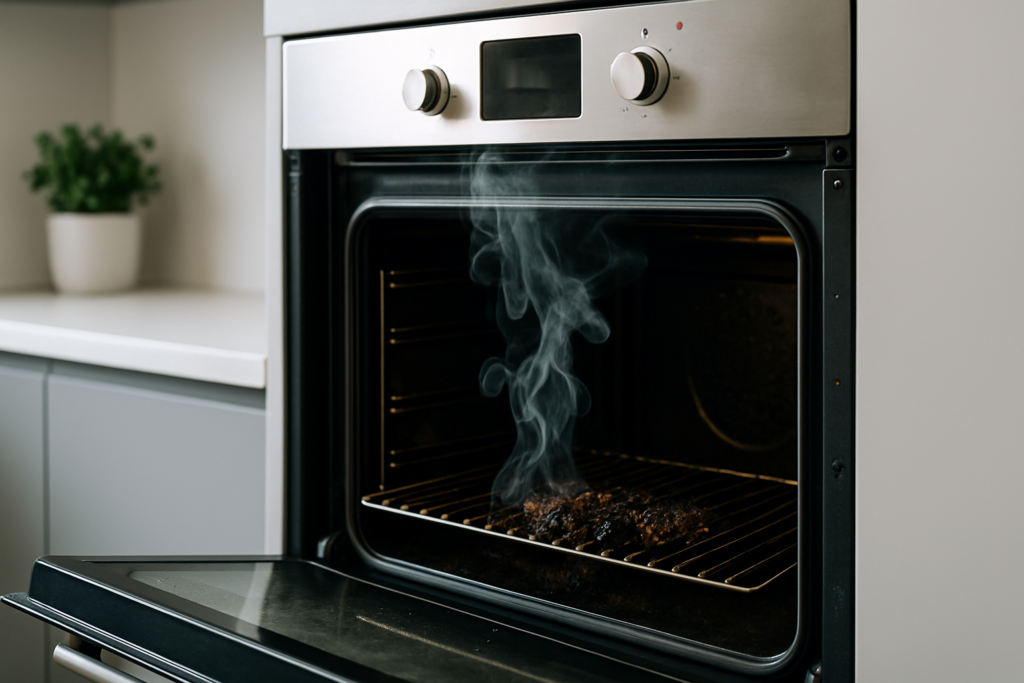
Most oven smells fall into a few predictable categories. Burned food residue is the most common culprit. Every time something bubbles over or splatters during cooking, it leaves behind a layer of residue that burns repeatedly with each use. Over time, these layers build up and create increasingly intense odors.
A new oven smell is completely different and actually normal. Manufacturers coat oven interiors with protective oils and chemicals during production. When you first heat your new oven, these coatings burn off and create a chemical or plastic-like smell. Run your new oven empty at 400°F for 30 minutes to an hour to clear this out before cooking anything.
Faulty heating elements can also produce burning smells. When an oven heating element starts to fail, it may short out or overheat, creating an electrical burning smell. You’ll often see visible damage like blistering or breaks in the element itself.
Sometimes food particles fall onto the heating element directly. A single sesame seed sitting on a red-hot coil can stink up your entire kitchen. Check both the bottom element and the broiler on top.

Oven Cleaner Spray
A quality degreaser makes quick work of baked-on residue and grease.
How to Deep Clean Your Oven
For mild to moderate buildup, remove the racks and make a paste from baking soda and water. Spread this paste across all interior surfaces, avoiding the heating elements. Let it sit overnight, then wipe it away with a damp cloth. The baking soda neutralizes odors while lifting away grime.
For stubborn, baked-on grease, you’ll want a commercial oven cleaner. Apply it according to package directions, making sure your kitchen is well-ventilated. These cleaners are powerful and effective, but the fumes can be intense. Wear gloves and consider running a fan.
Don’t forget the oven door. Grease and food particles accumulate between the glass panels and around the seal. Wipe down the door gasket with warm, soapy water. For between the glass panels, you may need to partially disassemble the door depending on your oven model.
Clean your oven racks separately. Soak them in hot water with dish soap in your bathtub or a large utility sink. After 30 minutes of soaking, scrub with a heavy-duty scrub brush to remove buildup.
Preventing Future Odors
Prevention beats cleaning every time. Place a sheet of aluminum foil or an oven liner on the bottom rack below whatever you’re cooking. This catches drips before they burn onto the oven floor. Just make sure not to cover the bottom heating element directly or block any vents.

Oven Thermometer
An accurate thermometer helps you avoid overcooking and the smoking that comes with it.
Wipe up spills immediately after the oven cools. Waiting even a day or two makes the job ten times harder. Keep a dedicated oven cleaning cloth or sponge handy so you can quickly address messes.
Run your oven’s self-cleaning cycle every few months if you have one. This incinerates food residue at extremely high temperatures. Remove the racks first unless your manual says they’re self-clean safe. Expect some smoke and smell during the cycle, so open windows and run your exhaust fan.
When to Call a Professional
Sometimes the smell indicates a real problem. Persistent electrical or burning plastic smells that don’t improve with cleaning suggest a wiring issue or damaged component. Turn off your oven and call an appliance repair technician.
Gas ovens require extra caution. Any sulfur or rotten egg smell could indicate a gas leak. Don’t attempt to light the oven or investigate yourself. Leave your home immediately and call your gas company from outside.
Frequently Asked Questions
Why does my oven smell like burning plastic when I turn it on?
This usually means something plastic has melted inside your oven. Check for forgotten plastic utensils, packaging materials, or even oven rack covers that can’t handle the heat. Remove any foreign objects and run the oven empty at 350°F for 20 minutes with windows open to burn off residue. In a brand new oven, this smell comes from factory coatings burning off and will disappear after the first few uses.
How often should I deep clean my oven?
Clean your oven every three to six months depending on how often you use it. Heavy users who cook daily should clean quarterly. Light users can stretch it to twice a year. Between deep cleans, wipe down the interior monthly and address spills immediately. Regular maintenance prevents the hardcore buildup that creates persistent odors.
This article contains affiliate links. We may earn a small commission at no extra cost to you.