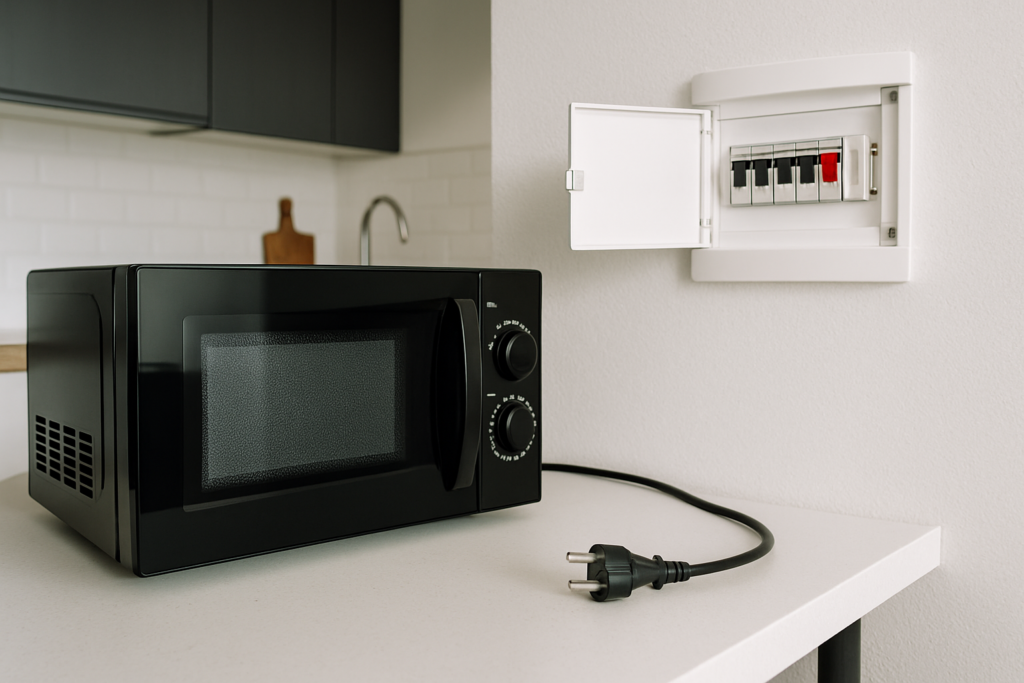
There’s nothing quite as frustrating as having your microwave trip the circuit breaker mid-reheat. One second you’re warming up last night’s leftovers, the next you’re standing in a darkened kitchen wondering what just happened. This isn’t just an inconvenience. It’s often a warning sign that something’s wrong with either your microwave or your home’s electrical system.
Most people assume their microwave is broken when this happens, but the reality is more nuanced. Sometimes it’s the microwave itself, sometimes it’s your home’s wiring, and sometimes it’s simply a matter of too many appliances sharing the same circuit. Understanding the cause helps you fix the problem correctly and safely.
Understanding Electrical Load and Circuit Capacity
Your typical household microwave draws between 600 and 1,200 watts of power during operation. When you factor in the inefficiency of the transformer and magnetron, the actual electrical draw from your wall outlet can exceed 1,500 watts for a powerful microwave. That translates to roughly 12-15 amps on a standard 120-volt circuit.
Most kitchen circuits are rated for either 15 or 20 amps. You might think a 15-amp circuit would handle a 12-amp microwave just fine, but circuits aren’t meant to run at full capacity continuously. Electricians generally recommend using no more than 80% of a circuit’s rated capacity for continuous loads. That means a 15-amp circuit should only handle about 12 amps safely over extended periods.
Here’s where things get tricky. If you’re running your microwave on the same circuit as your refrigerator, coffee maker, or toaster, you’re asking for trouble. A coffee maker alone can pull 8-12 amps. Add your microwave to that equation, and you’ve exceeded your circuit’s safe capacity. The breaker trips because it’s doing exactly what it’s designed to do: protecting your home from electrical overload.
When the Microwave Itself Is the Problem
Sometimes the issue isn’t about sharing circuits or overloading. Sometimes your microwave has developed an internal fault that causes it to draw excessive current or create a short circuit condition. These problems typically develop gradually as components age and deteriorate.
Faulty Magnetron
The magnetron is the heart of your microwave. It’s the component that generates the electromagnetic waves that heat your food. When a magnetron begins to fail, it can draw significantly more current than normal, especially during startup. You might notice the breaker trips within the first few seconds of operation, or you might hear unusual buzzing or humming sounds before the trip occurs.
Magnetron failure is particularly common in microwaves that are 5-7 years old or older. The high-voltage components inside degrade over time, and internal arcing can develop. This creates irregular current draw that your circuit breaker interprets as a fault condition.
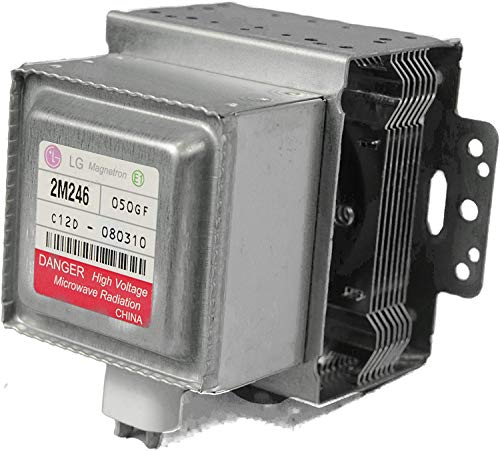
Microwave Magnetron Replacement
Essential component if you’re comfortable with appliance repair, though professional installation is often recommended due to high-voltage concerns
Capacitor Problems
The high-voltage capacitor in your microwave stores electrical energy and releases it to power the magnetron. When capacitors fail, they can short circuit or leak, causing massive current spikes that immediately trip your breaker. Unlike gradual magnetron failure, capacitor problems often appear suddenly.
A failing capacitor might also cause your microwave to continue running even after you open the door or press stop. This is extremely dangerous and requires immediate attention. Never attempt to repair capacitor issues yourself unless you’re trained in appliance repair. Even when unplugged, capacitors can store lethal charges for extended periods.
Damaged Door Switches
Your microwave has multiple safety switches in the door latch mechanism. These switches prevent the microwave from operating when the door is open. When these switches fail or become misaligned, they can cause erratic electrical behavior. You might experience intermittent tripping, or the microwave might trip the breaker only when you close the door in a certain way.
Door switch problems are often accompanied by other symptoms like the microwave not starting consistently, the light staying on when the door is open, or unusual clicking sounds from the door area. Replacing microwave door switches is relatively simple for most models, but you need to ensure you get the correct replacement parts for your specific make and model.
Electrical Wiring Issues in Your Home
Sometimes your microwave isn’t the problem at all. Faulty wiring, degraded outlets, or incorrectly sized breakers can all cause nuisance tripping. These problems are particularly common in older homes or homes where DIY electrical work was performed without proper permits or inspections.
Worn or Loose Outlet Connections
The outlet where you plug in your microwave takes a beating over time. The constant insertion and removal of the plug, combined with the high current draw, can loosen the internal connections. Loose connections create resistance, which generates heat and can cause arcing. Your circuit breaker detects this irregular current flow and trips to protect the circuit.
You can sometimes spot this problem by examining the outlet face. Look for brown or black discoloration around the slots, which indicates overheating. The plug itself might also show signs of heat damage or pitting on the prongs. If you notice either of these signs, stop using that outlet immediately and have it replaced by a qualified electrician.
Undersized or Faulty Circuit Breaker
Not all circuit breakers are created equal. A breaker that’s been tripping repeatedly can become “weak” and start tripping at lower currents than its rating. Additionally, some older homes have breakers that were undersized for modern appliances. A 15-amp breaker might have been adequate when the house was built, but modern high-wattage microwaves need more capacity.
Circuit breakers also have thermal and magnetic trip mechanisms that can fail independently. A breaker might trip due to heat buildup even when the actual current draw is within acceptable limits. This often happens when multiple moderate loads are running simultaneously for extended periods.
Shared Neutral Wiring
In some older electrical installations, multiple circuits share a neutral wire. This configuration, called a multiwire branch circuit, can cause problems when high-draw appliances like microwaves are involved. The shared neutral can become overloaded even when individual circuit breakers aren’t tripped, leading to voltage imbalances and nuisance trips.
This is a complex wiring issue that requires professional diagnosis and correction. If your breaker trips seem random or if multiple circuits trip simultaneously, shared neutral problems might be the culprit.
How to Diagnose the Specific Cause
Start by testing whether the problem is isolated to your microwave or related to the circuit. Unplug the microwave and plug it into a different outlet on a different circuit. Use an extension cord rated for at least 15 amps if necessary. Run the microwave through several heating cycles.
If the microwave works fine on a different circuit, your original circuit is likely overloaded or has wiring problems. If the microwave trips breakers on multiple circuits, the microwave itself has internal faults.
Next, check what else is on the same circuit as your microwave. Turn off the tripped breaker and note which other outlets and appliances lose power. You might discover your microwave shares a circuit with your refrigerator, dishwasher, or other high-draw appliances. This information is critical for determining whether you need electrical upgrades or microwave repairs.
Use a plug-in circuit analyzer to check the outlet. These inexpensive devices can detect reversed polarity, missing ground connections, and other wiring faults. You can find a reliable circuit tester that will help identify basic wiring problems.

Outlet Circuit Analyzer
Simple plug-in device that instantly shows common wiring faults without requiring any electrical knowledge
Practical Solutions and Fixes
Once you’ve identified the cause, you can move forward with the appropriate solution. The fixes range from simple adjustments to professional electrical work, depending on what you’ve discovered.
For Circuit Overload Issues
The simplest solution is to redistribute your appliances across different circuits. Move your coffee maker, toaster, or other countertop appliances to outlets on different circuits. Keep your microwave on a circuit with minimal other loads. Ideally, your microwave should have a dedicated 20-amp circuit, but that’s not always practical in existing homes.
Another option is to reduce the power setting on your microwave. Running at 70-80% power instead of 100% reduces the current draw and can prevent tripping while still adequately heating your food. It takes slightly longer, but it’s better than constantly resetting your breaker.
For Microwave Component Failures
Replacing internal components like magnetrons, capacitors, or door switches is possible if you’re mechanically inclined and understand the safety risks. However, microwaves contain high-voltage components that can be lethal even when unplugged. Unless you have specific training in appliance repair, professional service is the safer choice.
Before committing to repairs, consider the age and value of your microwave. If your unit is more than 7-10 years old, replacement might be more economical than repair. Modern microwaves are more energy-efficient and often include better safety features. You can compare current options for countertop microwaves to see what’s available in your budget range.
For Wiring and Electrical System Issues
Electrical wiring problems require professional attention. Hire a licensed electrician to inspect your circuit, test the breaker, and examine the outlet connections. They can determine whether you need a new dedicated circuit, breaker replacement, or outlet repairs.
Adding a dedicated 20-amp circuit for your microwave is often the best long-term solution. This eliminates sharing issues and provides adequate capacity for modern high-wattage microwaves. While this requires professional installation and can involve opening walls to run new wire, it’s often worth the investment in terms of reliability and safety.
When to Call a Professional
Some situations absolutely require professional help. Don’t attempt DIY fixes if you notice any of the following warning signs:
- Burning smells coming from the microwave or outlet
- Visible scorching or melting on the outlet, plug, or breaker
- Sparks or arcing when plugging in or operating the microwave
- The microwave continues running after you stop it or open the door
- Multiple circuits tripping simultaneously
- Warm or hot breaker switches in your panel
These symptoms indicate serious electrical faults that pose fire and shock hazards. Disconnect the microwave immediately and contact either an electrician (for wiring issues) or an appliance repair technician (for microwave faults).
Even if you don’t see obvious danger signs, electrical problems can be subtle and dangerous. When in doubt, professional diagnosis is money well spent. A qualified electrician can use specialized testing equipment to identify problems that aren’t visible to the untrained eye.
Frequently Asked Questions
Why does my microwave only trip the breaker sometimes?
Intermittent tripping usually indicates a component that’s failing gradually or a circuit that’s right on the edge of its capacity. The magnetron might be drawing excessive current only during certain phases of its operation, or you might be running other appliances simultaneously sometimes without realizing it. Temperature can also play a role. Electrical components behave differently when hot, so you might experience tripping more often during summer months or after the microwave has been running for a while.
Can I just replace the breaker with a higher-rated one?
Absolutely not. Never replace a 15-amp breaker with a 20-amp breaker unless the wire gauge in that circuit is rated for 20 amps. The breaker exists to protect the wire from overheating and causing fires. If you upgrade the breaker without upgrading the wire, you’re removing a critical safety feature. Your wire could overheat and start a fire inside your walls without tripping the breaker. Always consult an electrician before changing breaker sizes.
How can I tell if my microwave’s magnetron is failing?
Common signs include longer heating times, uneven heating patterns, loud buzzing or humming during operation, burning smells, and of course, tripping breakers. You might also notice the microwave seems to work harder than it used to, or the exterior gets unusually hot during use. If your microwave is taking twice as long to heat food as it did when new, magnetron degradation is a likely cause. Unfortunately, confirming magnetron failure typically requires testing with specialized equipment.
Is it normal for the breaker to trip during the first few seconds of microwave operation?
Microwaves do draw a surge of current during startup as the magnetron and other components initialize. However, a properly functioning microwave on an appropriately sized circuit shouldn’t trip the breaker during this startup surge. If tripping occurs consistently during startup, you either have a circuit capacity problem or a failing component in the microwave. Check whether other appliances on the same circuit are running when you start the microwave. If the microwave trips the breaker even when it’s the only device on the circuit, internal component failure is likely.
This article contains affiliate links. We may earn a small commission at no extra cost to you.