You reach for your lunch, pop it in the microwave, hit start, and then notice something’s off. The light’s on, the timer’s counting down, but that familiar hum of the turntable spinning is completely absent. Your food sits there motionless while the microwave runs.
This is one of the most common microwave problems homeowners face, and the good news is that it’s often fixable without replacing the entire unit. Let’s walk through the three main culprits behind a non-spinning microwave turntable and what you can do about each one.
The Drive Motor Has Failed
The turntable motor (also called the drive motor) is what actually powers the rotation. Over time, these motors wear out from constant use, especially if you’re running your microwave multiple times a day.
You can test if the motor is the problem by listening carefully when the microwave runs. If you hear a humming or buzzing sound but no rotation, the motor is probably trying to work but can’t. If there’s complete silence where the motor should be, it’s likely dead.
Replacing a turntable motor isn’t terribly complicated if you’re comfortable with basic appliance repair. You’ll need to unplug the microwave, remove the bottom panel, disconnect the old motor, and install the new one. Most microwave turntable motors are universal or model-specific, so check your microwave’s make and model before ordering.

Microwave Turntable Motor Replacement
Essential replacement part for most major microwave brands when your turntable stops spinning
The Drive Belt Is Worn or Broken
Some microwaves use a small rubber belt to connect the motor to the turntable mechanism. These belts can crack, stretch, or snap completely after years of use.
To check the belt, you’ll need to access the underside of the microwave. Remove the bottom panel and look for a small rubber loop connecting the motor shaft to the turntable coupler. If it’s broken, stretched out, or looks cracked and dry, replacement is your answer.
Drive belts are inexpensive and easy to replace once you’ve got access to them. Just slip off the old belt and stretch the new one into place. Make sure you get the right size for your microwave model, as they vary between manufacturers.
The Turntable Coupler or Guide Is Damaged
Sometimes the problem isn’t electrical at all. The plastic coupler that sits underneath the glass plate and connects it to the motor shaft can crack or wear down. The roller guide wheels that support the turntable can also break.
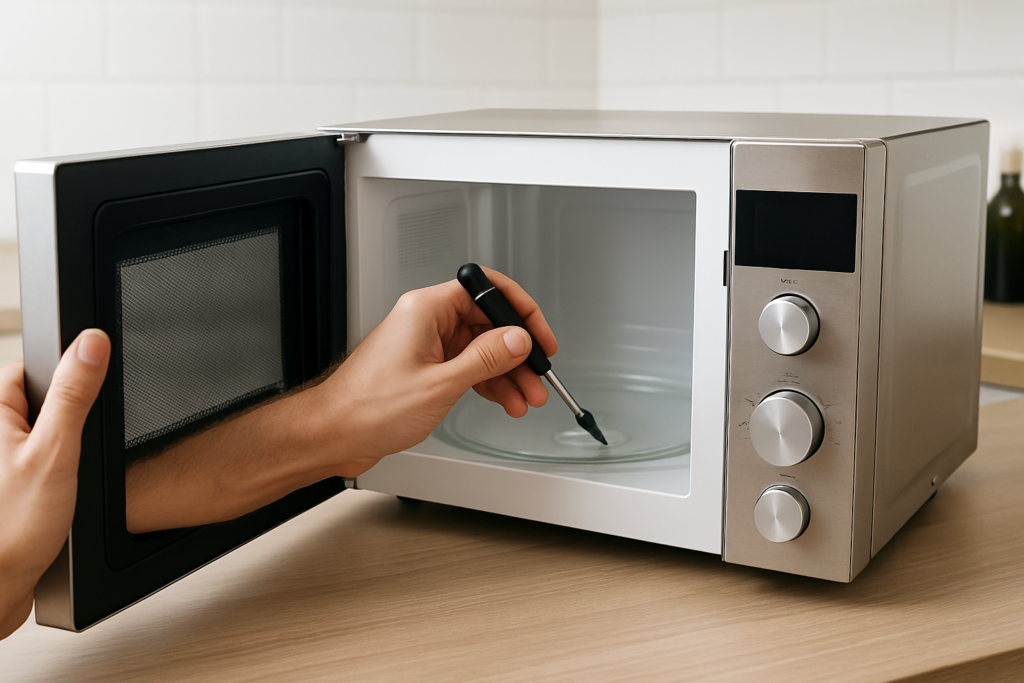
This is the easiest diagnosis. Simply remove the glass turntable plate and the plastic support underneath. Inspect the coupler (the three-pronged plastic piece) for cracks or worn edges. Check the roller guide for broken wheels or a warped track.
Both of these parts are widely available and simple to replace. Just make sure you match the replacement to your microwave’s brand and size. You can find microwave turntable couplers and roller guides for most major brands.
Microwave Turntable Support and Coupler Kit
Often includes both the roller guide and coupler, covering the most common non-mechanical failures
When to Call a Professional
While many turntable issues are DIY-friendly, some situations call for professional help. If you’re not comfortable working around electrical components, don’t risk it. Microwaves contain high-voltage capacitors that can hold a charge even when unplugged.
Also, if your microwave is still under warranty, attempting repairs yourself will likely void it. Check your warranty status before breaking out the screwdriver.
Frequently Asked Questions
Can I use my microwave if the turntable doesn’t spin?
Yes, your microwave will still heat food, but the results won’t be great. Without rotation, you’ll get hot and cold spots throughout your food. You’ll need to manually rotate dishes halfway through cooking to get even heating. This works in a pinch, but it’s not ideal for long-term use.
How much does it cost to fix a microwave turntable?
Replacement parts like couplers and roller guides are quite affordable. Motors and belts fall into a moderate price range. If you hire a technician, expect to pay for both the part and labor, which might make replacing the entire microwave more economical depending on its age and condition.
This article contains affiliate links. We may earn a small commission at no extra cost to you.