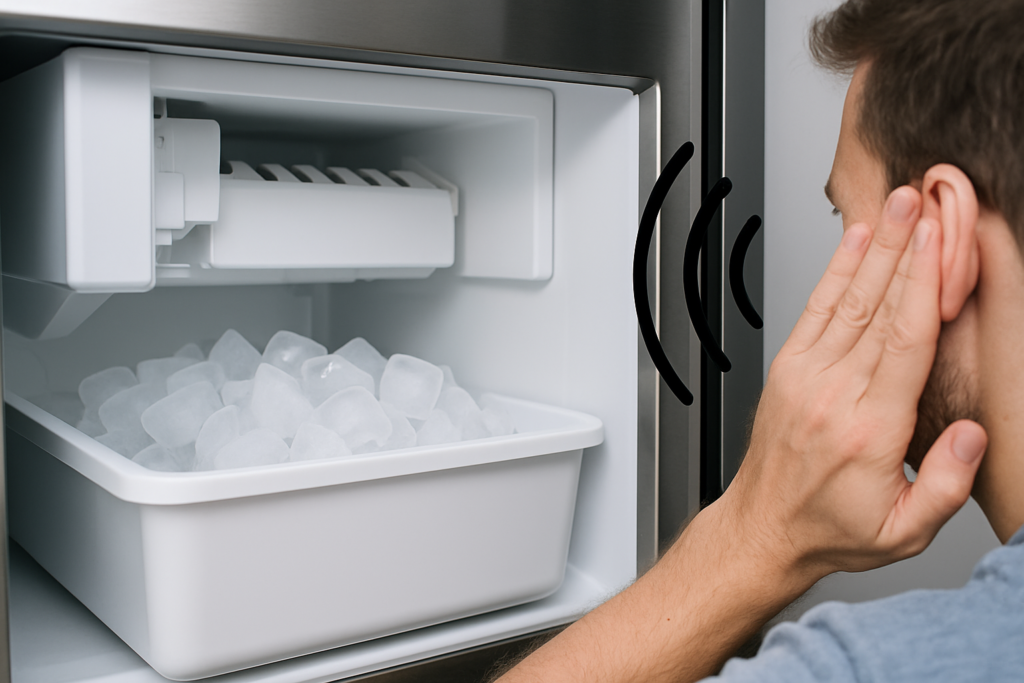
There’s nothing quite like the sound of a peaceful kitchen being shattered by a loud, grinding ice maker at 2 AM. If your ice maker has started making noises that sound like a dying robot, you’re not alone. Most ice maker noises point to specific mechanical issues, and the good news is that many of them are fixable without calling in a repair technician.
Understanding what’s causing the racket is the first step to getting your kitchen back to its quiet, ice-producing glory. Let’s break down the most common culprits and what you can do about them.
The Water Inlet Valve: Your First Suspect
When your ice maker starts making a loud buzzing or humming sound, the water inlet valve is usually the troublemaker. This valve controls water flow into your ice maker, and when it gets clogged with mineral deposits or starts to fail mechanically, it creates that annoying buzz.
You’ll typically hear this noise when the ice maker is trying to fill with water. If the buzzing lasts more than 15 seconds or happens every cycle, the valve is likely struggling. Low water pressure can also cause the valve to buzz as it tries unsuccessfully to pull water through.
Check your home’s water pressure first. It should be at least 20 PSI for the ice maker to function properly. If pressure is fine but the noise persists, you’ll need to replace the inlet valve. This part is usually located at the back of your refrigerator where the water line connects.

Ice Maker Water Inlet Valve
These universal valves fit most refrigerator models and can stop that annoying buzzing sound.
Fan Motor Issues and Ice Buildup
A grinding, squealing, or scraping noise often points to the evaporator fan motor or ice buildup around the fan blades. The fan is responsible for circulating cold air throughout your freezer, and when ice accumulates on the blades or the motor bearings start to wear out, you’ll hear it.
To diagnose this, open your freezer and listen carefully. If the noise gets louder when you open the door, it’s almost certainly the fan. You might also notice frost or ice buildup on the back wall of your freezer.
Start by defrosting your freezer completely. Unplug the unit and leave the door open for several hours. This often solves the problem if ice buildup was the culprit. If the noise returns after defrosting, the fan motor itself needs replacement.
Replacing a fan motor isn’t terribly complicated, but you’ll need to access the back panel inside your freezer. Most motors are held in place with a few screws and a wire harness connector.
The Ice Maker Motor and Gearbox
A clicking, clunking, or grinding sound that happens in cycles usually means the ice maker module itself is having trouble. The motor and gearbox inside the ice maker work together to harvest ice cubes and eject them into the bin.
Over time, these plastic gears can strip or wear down, creating that characteristic grinding noise. You might also hear this if ice cubes are stuck in the mechanism or if the harvest cycle is trying to push out frozen-together cubes.
First, check for jammed ice cubes in the maker itself. Turn off the ice maker, remove any stuck ice, and turn it back on. If the noise continues and happens during the harvest cycle (when cubes drop), the module likely needs replacement.

Ice Maker Assembly Replacement
A complete ice maker assembly replaces all the internal components in one go.
Water Line and Fill Problems
A rattling or knocking sound, especially during the fill cycle, often indicates water hammer or a loose water line. Water hammer occurs when water flow stops abruptly, creating a shock wave that rattles the pipes.
Check that the water line running to your refrigerator is properly secured. It should be fastened to the wall or floor and not vibrating freely when water flows through it. Loose mounting screws on the refrigerator itself can also amplify these sounds.
Installing a water hammer arrestor on the line can eliminate the knocking. These small devices absorb the shock wave and are easy to install on standard water lines.
Another possibility is that the fill tube (the small plastic tube that directs water into the ice mold) is frozen or partially blocked. You can thaw this with a hair dryer on low heat, being careful not to melt any plastic components.
When to Replace vs. Repair
Not every noisy ice maker is worth fixing. If your refrigerator is over 10 years old and the ice maker has never been replaced, you might be better off installing a complete new unit rather than replacing individual components.
Calculate the cost of parts and your time. A water inlet valve is inexpensive and takes 30 minutes to replace, making it an obvious fix. But if you’re looking at replacing the motor, gearbox, and valve, a complete ice maker replacement kit makes more sense.
For built-in ice makers, you can also find the exact model number on the data plate inside your refrigerator (usually on the side wall or ceiling). Ordering the manufacturer’s specific replacement ensures proper fit and function.
Keep in mind that aftermarket parts are typically more affordable than OEM parts and work just as well for most repairs. Just verify compatibility with your refrigerator model before ordering.
Frequently Asked Questions
Why does my ice maker make noise but not produce ice?
This typically means the water inlet valve is buzzing but not getting enough water pressure to open properly, or the valve is completely failed. Check your home’s water supply valve to ensure it’s fully open, and verify that the water line isn’t kinked. If water pressure is adequate but no ice forms, replace the inlet valve.
Is it normal for an ice maker to make some noise?
Yes, ice makers naturally make some operational sounds. A gentle hum during the fill cycle, a soft click when the harvest cycle starts, and the tumbling sound of ice dropping into the bin are all normal. However, loud grinding, continuous buzzing, or banging noises indicate a problem that needs attention.
Can I run my refrigerator with a noisy ice maker turned off?
Absolutely. You can turn off the ice maker using the on/off switch (usually located on the unit itself or controlled through your refrigerator’s panel) without affecting your refrigerator’s cooling performance. This is actually a good troubleshooting step to confirm the noise is coming from the ice maker and not another component like the compressor or condenser fan.
This article contains affiliate links. We may earn a small commission at no extra cost to you.