You flip the switch on your garbage disposal, hear a brief hum, and then everything goes dark. The breaker has tripped again. This isn’t just annoying, it’s a sign that something’s wrong with either your disposal unit or the electrical circuit powering it.
Before you start worrying about expensive electrician bills, you should know that most garbage disposal breaker trips have identifiable causes. Some you can fix yourself in minutes, while others might need professional attention. Let’s break down what’s happening and how to solve it.
Understanding Electrical Load and Circuit Capacity
Your garbage disposal typically draws between 5 to 8 amps during normal operation. Most disposals are installed on a dedicated 15 or 20-amp circuit, which should handle this load easily. When the breaker trips, it means the current draw exceeded what the circuit can safely handle.
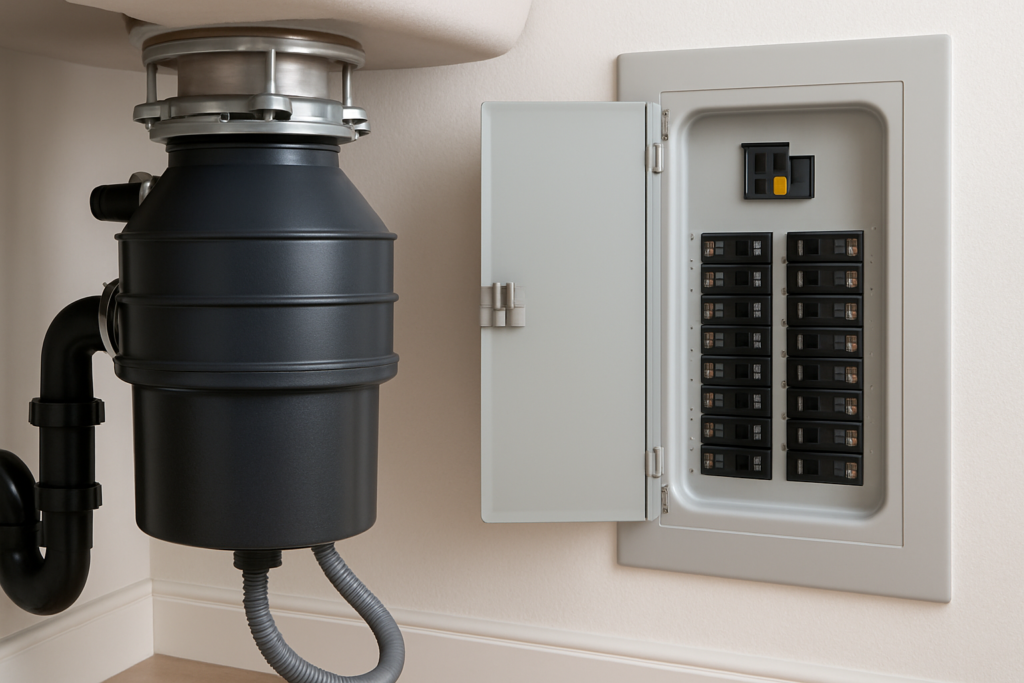
Check your breaker panel and identify which breaker controls your disposal. It should be labeled, though many older homes have unlabeled panels. If your disposal shares a circuit with other appliances, that’s your first problem. Running the dishwasher or a high-wattage appliance at the same time can push the combined load over the limit.
A dedicated circuit for your garbage disposal isn’t just recommended, it’s required by most modern electrical codes. If you’re constantly tripping breakers because multiple appliances share one circuit, you’ll need to have an electrician install a separate line.
When the Motor Is Failing
A failing motor is one of the most common culprits behind repeated breaker trips. As motors age, their internal components wear down. Bearings deteriorate, windings degrade, and the motor works harder to do the same job. This increased effort translates to higher amperage draw.
You can often tell if the motor is struggling by listening carefully. A healthy disposal has a clean, consistent hum. A motor on its last legs will sound strained, make grinding noises, or hum loudly without the flywheel spinning properly.
If your disposal is more than 10 years old and tripping breakers regularly, replacing the unit is probably more cost-effective than troubleshooting. Modern disposals are more energy-efficient and less likely to cause electrical issues.

InSinkErator Evolution Excel Garbage Disposal
Top-rated model with a powerful motor and sound insulation that handles electrical loads efficiently
Jammed Flywheel and Overload Conditions
Sometimes the issue isn’t electrical at all. When something jams the disposal’s flywheel, the motor can’t turn. It keeps trying, drawing more and more current until the breaker does its job and cuts power. This is actually the breaker protecting your motor from burning out.
Before you reset that breaker, turn off the disposal switch and look down the drain with a flashlight. You might see a spoon, a small bone, or other debris wedged in the grinding chamber. Never put your hand down there. Instead, use tongs or pliers to remove the obstruction.
Most disposals have a hex-shaped socket on the bottom for manual rotation. You’ll need an Allen wrench, usually 1/4 inch, to turn the motor shaft by hand. Insert the wrench into the socket and work it back and forth to free up the flywheel. Many disposals come with this wrench, but if you’ve lost yours, you can pick up a garbage disposal wrench set that includes the Allen wrench and a jam-buster tool.

Garbage Disposal Gator Wrench and Tool Set
Complete kit with Allen wrench and jam-clearing tools for quick fixes
After clearing the jam, press the red reset button on the bottom of the disposal unit. This thermal overload protector trips when the motor overheats. Give it 10 minutes to cool down before resetting.
Wiring Problems You Can’t Ignore
Faulty wiring creates resistance, and resistance generates heat. When connections loosen or wires degrade, they can’t carry current efficiently. This forces the circuit to work harder and can trip the breaker even when the disposal itself is functioning normally.
Turn off the breaker and remove the access plate on your disposal. Check the wire connections where your home’s electrical cable connects to the unit. Look for any signs of burning, discoloration, or corrosion. The wire nuts should be tight, and the wires should be firmly secured.
While you’re inspecting, check the switch that controls your disposal. Wall switches wear out, especially the spring-loaded momentary switches some people prefer for disposals. A failing switch can create arcing and inconsistent power delivery that confuses the circuit.
If you notice any damaged insulation, exposed copper, or burnt connections, stop here. This is electrical work that requires a licensed electrician. The risk of fire or shock isn’t worth trying to save a few dollars.
Testing and Troubleshooting Steps
Start with the simplest solution. Reset the breaker and the disposal’s reset button. Try running the disposal without any water or debris. If it trips immediately, you’ve got an electrical fault in the motor or wiring.
If it runs fine empty but trips when grinding food, you’re likely overloading the unit. Cut back on how much you’re trying to grind at once. Garbage disposals work best with a steady stream of small amounts, not a sink full of scraps dumped in at once.
Check the actual amperage draw if you have access to a clamp meter. With the disposal running normally, you should see readings in the 5 to 8 amp range. Anything consistently above 10 amps indicates a problem. Sudden spikes to 15 amps or higher mean the motor is laboring or the unit is jammed.
Test the GFCI if your disposal is protected by one. Sometimes the problem isn’t the breaker but a sensitive ground fault interrupter that’s doing exactly what it should. Press the test button, then reset it. A GFCI that won’t reset or trips instantly needs replacement.
When to Replace vs. Repair
Repairs make sense for newer units with simple problems like jams or loose connections. If your disposal is under five years old and has been reliable until recently, troubleshooting is worth your time.
Replacement becomes the better option when you’re dealing with an aging motor, frequent jams, or electrical issues that keep recurring. Factor in the cost of your time and potential electrician calls. A quality disposal will last 10 to 15 years with proper care.
Consider upgrading to a higher horsepower model if your current unit struggles with normal use. A 3/4 HP or 1 HP disposal handles tougher jobs without straining, which means less electrical stress and fewer breaker trips. Models like the Waste King Legend series offer excellent performance and reliability.
Frequently Asked Questions
Why does my disposal trip the breaker only sometimes?
Intermittent tripping usually indicates a motor that’s on the edge of failure or a loose electrical connection. The problem occurs when conditions align, like when the motor is under load or a poor connection creates enough resistance. Temperature can also play a role, as electrical components behave differently when hot versus cold. This type of inconsistent behavior typically gets worse over time until the unit fails completely.
Can I use a higher amperage breaker to stop the tripping?
Never upgrade to a higher amperage breaker without consulting an electrician. Breakers are sized to match the wire gauge in your walls. A 15-amp breaker protects 14-gauge wire, while 20-amp breakers protect 12-gauge wire. Installing a larger breaker on undersized wire creates a serious fire hazard because the wire can overheat before the breaker trips. Fix the actual problem instead of bypassing the safety mechanism.
How do I know if the problem is the disposal or the electrical circuit?
Unplug the disposal and plug a different high-wattage appliance into the same circuit, like a hair dryer or space heater. Run it for several minutes. If the breaker trips with a different device, your circuit has issues. If other appliances work fine but only the disposal trips the breaker, the problem is in the disposal itself. You can also test the disposal on a different circuit using an extension cord rated for the amperage, though this should only be a diagnostic test, not a permanent solution.
This article contains affiliate links. We may earn a small commission at no extra cost to you.