Keeping tile floors clean can feel like a never-ending battle, especially when you’re dealing with stubborn stains, dingy grout, and different tile materials that each have their own cleaning requirements. Whether you have ceramic tiles in your kitchen, porcelain in your bathroom, or natural stone throughout your home, using the wrong cleaner can leave streaks, damage surfaces, or simply fail to deliver the sparkling results you want.
The key to successful tile cleaning lies in choosing the right products for your specific tile type and knowing which cleaners will tackle dirt without harming sealed surfaces. We’ve tested commercial cleaners and DIY solutions to bring you eight proven options that deliver professional-quality results without breaking the bank.
Best Commercial Tile Floor Cleaners
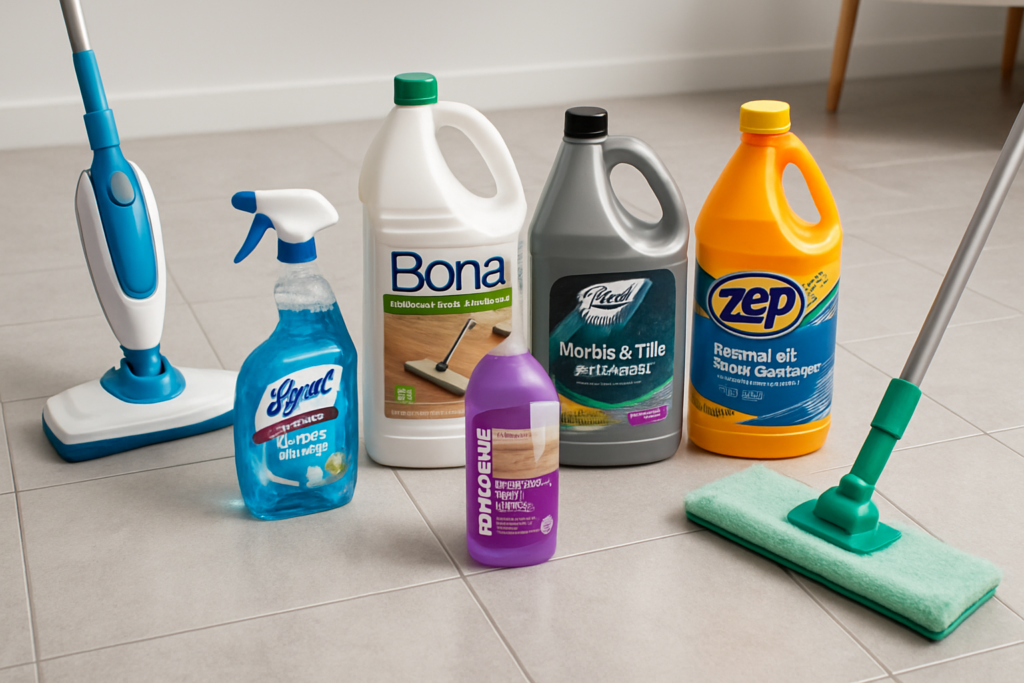
Bona Stone, Tile & Laminate Floor Cleaner
This pH-neutral formula works exceptionally well on all hard surface floors without leaving residue. Bona’s cleaner is specifically designed to protect sealed surfaces while cutting through everyday dirt and grime. It dries quickly and doesn’t require rinsing, making it perfect for busy households.
Bona Stone Tile Laminate Floor Cleaner
pH-neutral formula that’s safe for all tile types and dries residue-free
Zep Commercial Neutral Floor Cleaner
Professional cleaners rely on Zep for good reason. This concentrated formula can be diluted for regular mopping or used at full strength for deep cleaning. It’s safe for ceramic, porcelain, and sealed natural stone tiles. One gallon makes up to 64 gallons of cleaning solution, offering excellent value.
Black Diamond Stoneworks Limestone and Travertine Floor Cleaner
Natural stone tiles require special care, and this cleaner delivers. It’s specifically formulated for limestone, travertine, marble, and other natural stone surfaces. The non-acidic formula won’t etch or dull your stone tiles while effectively removing soap scum and water spots.
Black Diamond Stoneworks Natural Stone Floor Cleaner
Specially formulated for natural stone tiles without risk of etching or dulling
Top DIY Tile Cleaning Solutions
White Vinegar and Water (For Ceramic and Porcelain Only)
Mix equal parts white vinegar and warm water for an effective, budget-friendly cleaner. This solution cuts through soap residue and light stains on ceramic and porcelain tiles. Never use this on natural stone, marble, or limestone as the acid will cause permanent damage.
Dish Soap and Warm Water
Sometimes simple is best. A few drops of Dawn dish soap in a bucket of warm water creates a gentle cleaner that’s safe for all tile types. This method works particularly well for kitchen floors with grease buildup.
Baking Soda Paste
For stubborn stains, mix baking soda with just enough water to form a thick paste. Apply it to stained areas, let it sit for 10 minutes, then scrub gently with a soft brush. This abrasive-free method works on all tile types and won’t scratch surfaces.
Grout Cleaning Champions
CLR Bath & Kitchen Cleaner
This calcium, lime, and rust remover excels at brightening dingy grout lines. Apply it directly to grout, wait five minutes, then scrub with an old toothbrush. It’s particularly effective on bathroom grout with soap scum buildup.
Oxygen Bleach Powder
Unlike chlorine bleach, oxygen bleach powder is color-safe and won’t damage colored grout. Mix it with water to create a paste, apply to grout lines, and scrub after 15 minutes. This method safely whitens grout without harsh fumes.
CLR Bath Kitchen Cleaner
Specifically targets calcium and lime buildup that makes grout look dingy
Cleaning Tips for Different Tile Types
Ceramic and porcelain tiles are the most forgiving and can handle most cleaning products, including mild acidic solutions. Always sweep or vacuum before mopping to prevent scratching from loose debris.
Natural stone tiles like marble, limestone, and travertine require pH-neutral cleaners only. Acidic products will permanently etch these surfaces. Test any new cleaner in an inconspicuous area first.
Textured tiles trap more dirt but require gentle scrubbing to avoid wearing down the texture. Use a soft-bristled brush and avoid harsh abrasives.
Frequently Asked Questions
How often should I deep clean my tile floors?
Deep clean tile floors monthly in high-traffic areas and every two to three months in low-traffic spaces. Regular weekly mopping with appropriate cleaners will keep your tiles looking their best between deep cleans.
Can I use steam cleaners on all tile types?
Steam cleaning is generally safe for ceramic and porcelain tiles with properly sealed grout. However, avoid steam on natural stone tiles as the heat and moisture can damage some sealers and cause stone to crack or discolor.
This article contains affiliate links. We may earn a small commission at no extra cost to you.