There’s nothing quite as frustrating as your air conditioner shutting down on the hottest day of summer, especially when it keeps tripping the circuit breaker. This isn’t just an annoyance. It’s often a warning sign that something’s wrong with either your AC unit or your home’s electrical system.
Understanding why your breaker trips can save you from costly repairs, potential fire hazards, and those uncomfortable nights without cool air. Let’s break down the most common causes and what you can do about them.
Electrical Overload: Your AC Is Drawing Too Much Power
Your air conditioner is one of the biggest power consumers in your home. Most central AC units draw between 15 and 60 amps, depending on their size. When the electrical load exceeds what your circuit breaker can handle, it trips as a safety mechanism.
This often happens when your AC compressor starts up. That initial surge can be 3-5 times the normal running current. If your breaker is borderline for your unit’s needs, or if other appliances share the same circuit, you’re setting yourself up for repeated trips.
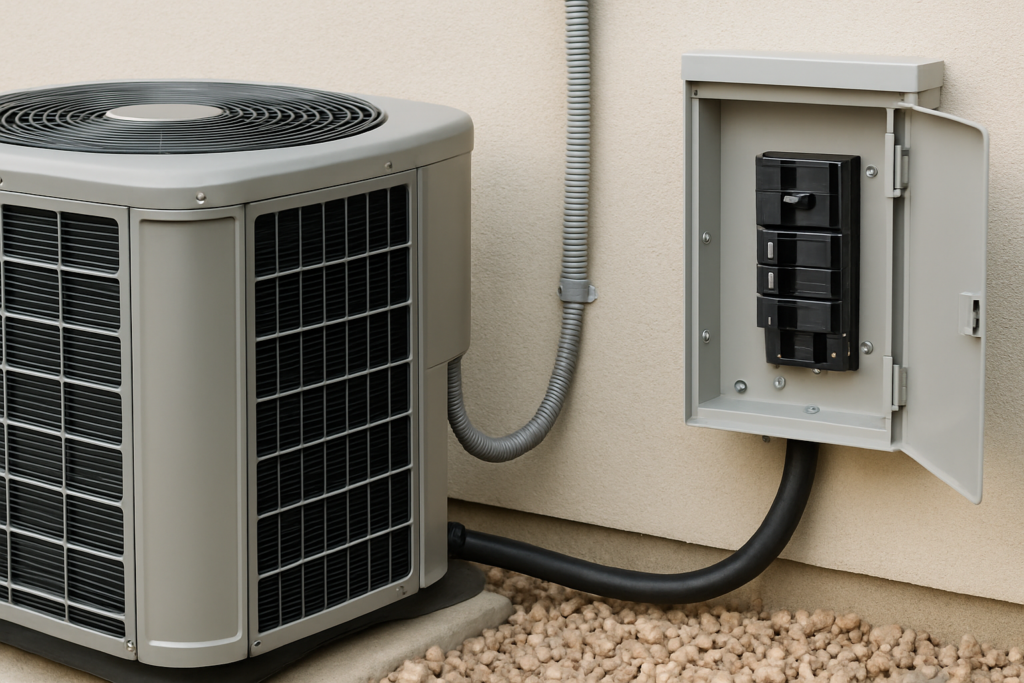
Check your breaker box to see what amperage your AC circuit is rated for. A 3-ton central air unit typically needs a dedicated 30-amp breaker, while a 5-ton unit might need 50 amps. If your unit is on a shared circuit or an undersized breaker, you’ll need an electrician to upgrade your electrical panel.
Failing Capacitor or Compressor Motor
The capacitor is essentially the battery that gives your compressor the jolt it needs to start. When capacitors begin to fail, they cause the motor to draw excessive current during startup, which trips the breaker. You might notice the AC tries to start, makes a humming sound, then shuts off.
Capacitors typically last 10-20 years but can fail sooner in hot climates or with frequent use. This is one of the most common AC issues, and fortunately, it’s relatively inexpensive to replace.

Air Conditioner Capacitor
Replacement capacitors are available if you’re comfortable with basic HVAC repairs, though professional installation is safer
A failing compressor motor itself is a more serious problem. As motors age, their windings can short out or seize, causing massive electrical draws that immediately trip breakers. You can sometimes hear grinding or clicking sounds before total failure. Unfortunately, compressor replacement often costs enough that replacing the entire outdoor unit makes more financial sense.
Dirty Air Filters and Coils Force Your System to Work Harder
When airflow is restricted, your AC has to work significantly harder to cool your home. A clogged air filter makes your blower motor strain, while dirty condenser coils force your compressor to run longer and hotter. Both scenarios increase electrical consumption.
Replace your air filters every 30-90 days depending on usage and household conditions. If you have pets or allergies, lean toward monthly changes. The outdoor condenser coils should be cleaned at least annually, preferably before cooling season starts.
You can clean the outdoor unit yourself with a garden hose and a coil cleaner solution. Spray from the inside out to push debris away from the fins. Just make sure to turn off power at the breaker first.
Wiring Problems and Loose Connections
Damaged wiring or loose connections create resistance, which generates heat and increases current draw. This is particularly dangerous because it can lead to electrical fires, not just tripped breakers.
Look for signs of overheating at your breaker box. Discoloration, burning smells, or a hot breaker switch are red flags. Inside the AC unit, rodents sometimes chew through wiring insulation, or connections vibrate loose over time.
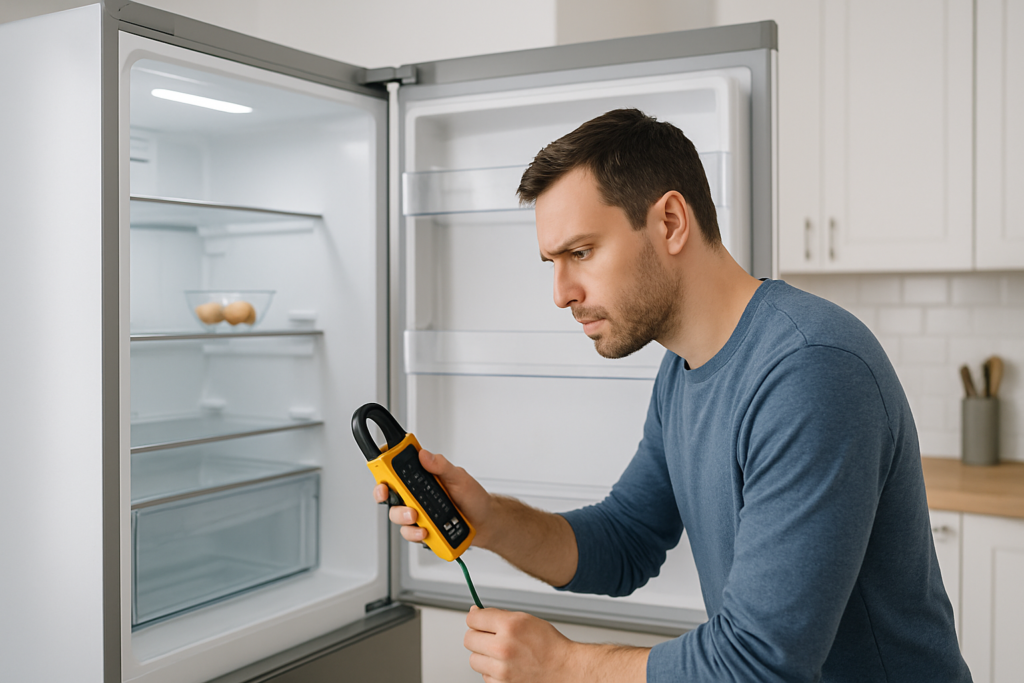
Electrical issues should always be handled by a licensed electrician or HVAC technician. They can use thermal imaging cameras and multimeters to identify problem areas that aren’t visible to the naked eye. Don’t attempt DIY repairs on high-voltage electrical systems unless you have proper training.
Sometimes the issue is as simple as a breaker that’s worn out from age. Breakers aren’t designed to last forever, and repeated tripping actually weakens them further. An electrician can test whether your breaker itself needs replacement.
Frequently Asked Questions
How do I know if my AC breaker is the right size?
Check the data plate on your outdoor condenser unit. It will list the minimum circuit ampacity (MCA) and maximum overcurrent protection (MOP). Your breaker should match or slightly exceed the MCA but never exceed the MOP rating. Most residential units need between 15 and 60 amps. If these numbers don’t match what’s in your breaker box, you need an electrician to assess your setup.
Can I just keep resetting the breaker when my AC trips it?
Absolutely not. Circuit breakers trip to protect your home from electrical fires and equipment damage. Repeatedly resetting a tripping breaker without fixing the underlying problem can lead to overheated wiring, melted insulation, or a house fire. If your breaker trips more than once, leave it off and call a professional to diagnose the issue. Your safety is worth more than a few uncomfortable hours.
This article contains affiliate links. We may earn a small commission at no extra cost to you.