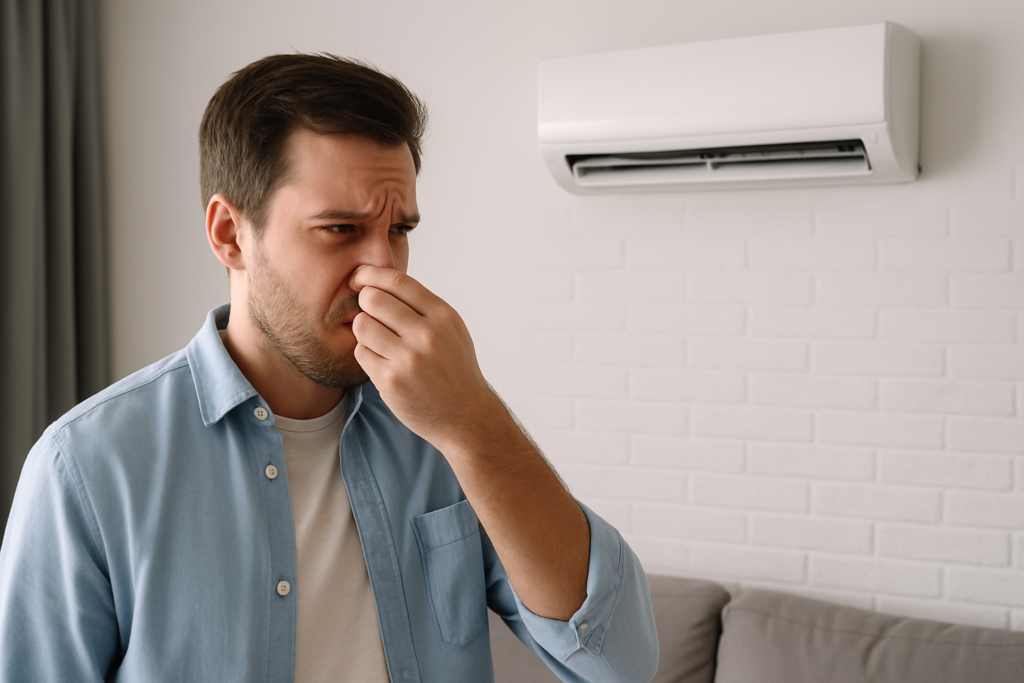
Walking into a room and getting hit with a funky smell from your air conditioner isn’t just unpleasant. It’s often a sign that something needs attention. The good news is that most AC odors have identifiable causes and can be fixed without calling in a professional. Let’s break down what’s causing that smell and how to eliminate it for good.
From musty mildew to burning electrical smells, each odor tells a different story about what’s happening inside your unit. Understanding these signals helps you address problems before they turn into expensive repairs.
The Musty, Moldy Smell
This is the most common AC odor you’ll encounter. That damp basement smell means moisture is accumulating somewhere in your system, creating the perfect environment for mold and mildew growth.
Your air conditioner naturally produces condensation as it cools the air. When drainage systems get clogged or humidity levels are high, water collects in the drip pan, evaporator coils, or ductwork. Within 24 to 48 hours, mold spores start multiplying.
The evaporator coil is usually the main culprit. This component sits in a dark, damp environment inside your indoor unit. When dust and debris accumulate on the coil’s surface, they trap moisture and provide food for mold. Every time your AC runs, it blows air across these contaminated coils and spreads spores throughout your home.
Check your drain line first. Locate the PVC pipe coming from your indoor unit and make sure water flows freely when the AC is running. A clogged drain line causes water to back up into the drip pan, where it sits and becomes stagnant.
To clean the drain line, turn off your AC and locate the access point (usually a T-shaped vent with a PVC cap). Pour a cup of white vinegar or bleach solution down the line to kill mold and clear minor clogs. For stubborn blockages, use a wet/dry vacuum to suction out debris from the outdoor end of the drain line.

Air Conditioner Coil Cleaner Spray
Specialized foaming cleaners dissolve buildup on evaporator coils without requiring a rinse
Clean your evaporator coils at least once a year. You’ll need to remove the access panel on your indoor unit to reach them. Spray the coils with a no-rinse coil cleaner, which foams up and drips into the drain pan, carrying away dirt and mold. Replace your air filter monthly during peak use to prevent dust from reaching the coils in the first place.
Burning or Electrical Smells
A burning odor from your AC demands immediate attention. This smell often indicates electrical problems or mechanical failures that could damage your system or create fire hazards.
When you first turn on your AC after months of sitting idle, a brief dusty burning smell is normal. Accumulated dust on the heat exchanger or heating elements burns off during the first few cycles. This should disappear within 15 to 30 minutes.
Persistent burning smells point to more serious issues. Worn motor bearings create friction and heat, producing a hot metal or burning rubber smell. Overheating motors also emit this odor, especially when the fan struggles to turn due to debris or mechanical problems.
Electrical shorts create a distinct acrid smell, different from burning dust. Loose wiring connections, failed capacitors, or damaged circuit boards can all produce this odor. A failing capacitor, which provides the electrical jolt needed to start your compressor and fan motors, often swells or leaks oil before completely failing.
Turn off your AC immediately if you smell burning plastic or electrical odors that don’t quickly dissipate. Check your air filter first since a severely clogged filter restricts airflow and causes the system to overheat. Replace the filter and see if the problem resolves.
Inspect visible wiring for signs of damage, melted insulation, or scorch marks. Look at the capacitor (the cylindrical component on top of your outdoor unit) for bulging, leaking, or rust. These issues require professional repair, but identifying them early prevents more extensive damage.
Rotten Egg or Sewage Odors
This particularly unpleasant smell usually indicates a dead animal somewhere in your ductwork or AC unit. Small rodents, birds, or insects sometimes make their way into these spaces and can’t find their way out.
Check accessible parts of your ductwork first, especially near vents. Small animals often get trapped close to registers. Birds occasionally build nests in outdoor units during spring and summer months.
A sewage smell can also mean your drain line connects improperly to your home’s plumbing. Some AC drain lines tie into plumbing vent stacks or floor drains. When the P-trap dries out, sewer gases back up through the AC drain. Running water through nearby drains or pouring water directly into the AC drain pan often solves this problem.
For stubborn sewage odors with no apparent source, check your drip pan. Standing water in the pan can develop a sulfurous smell, especially if bacteria colonies grow in the stagnant water. Clean the pan with a bleach solution and ensure proper drainage.
Dirty Sock Syndrome
This oddly specific name describes a specific type of bacterial growth that creates a smell remarkably similar to sweaty gym socks. Unlike typical mold and mildew odors, dirty sock syndrome has a sharper, more pungent quality.
The bacteria responsible for this smell thrive on the evaporator coil, particularly on systems that run in both heating and cooling modes. When the AC switches from cooling to fan-only or heating mode, moisture trapped on the coil creates an ideal bacterial breeding ground.
Geographic location plays a role here. Homes in humid climates or areas with frequent temperature swings experience this problem more often. The smell typically appears when you first turn on the AC and may fade as the system runs.
Deep cleaning the evaporator coil usually eliminates dirty sock syndrome. Standard coil cleaners work, but products specifically formulated for bacterial growth prove more effective. Apply the cleaner generously and let it sit for the recommended time before rinsing or allowing it to drain away.

UV Light Air Purifier for HVAC
Installing UV lights near your evaporator coil continuously kills bacteria and mold spores, preventing recurring odors
Some HVAC technicians recommend installing UV lights in your air handler. These lights emit ultraviolet radiation that kills bacteria and mold on contact. While this adds to your system cost, it prevents recurring problems in homes prone to dirty sock syndrome.
Chemical or Paint Thinner Smells
Chemical odors coming from your AC often originate from outside sources rather than the unit itself. Your air conditioner draws in outdoor air, and if someone nearby is painting, using solvents, or running equipment with strong fumes, your AC will circulate these odors indoors.
Check for obvious external sources first. Construction projects, lawn treatments, or automotive work in nearby garages often explain temporary chemical smells. Close windows and doors near these activities and run your AC on recirculation mode if available.
Refrigerant leaks create a sweet chemical smell, often compared to chloroform. This odor signals a serious problem requiring immediate professional attention. Refrigerant exposure causes health issues, and leaking systems lose cooling capacity rapidly.
A strong chemical smell coming from supply vents might indicate you’re smelling the adhesive used in new ductwork or recently installed insulation. These odors typically fade over several weeks as volatile organic compounds off-gas.
Preventive Maintenance to Stop Odors Before They Start
Regular maintenance prevents most AC odors from developing in the first place. Creating a simple routine takes less time than dealing with a smelly system later.
Replace your air filter every 30 to 90 days depending on usage, pets, and air quality. Check the filter monthly and replace it when you can’t see light through it clearly. High-quality MERV 11 filters capture more particles but need more frequent replacement since they trap more debris.
Pour a cup of white vinegar down your condensate drain line monthly. This simple step prevents algae and mold growth that leads to clogs and odors. During peak cooling season, increase this to twice monthly.
Keep your outdoor unit clean and clear. Remove leaves, grass clippings, and debris from around the unit. Trim vegetation back at least two feet on all sides to ensure proper airflow. Spray the fins gently with a hose to remove dirt buildup, but avoid pressure washers that can bend the delicate fins.

HVAC Condensate Drain Line Cleaning Kit
These kits include specialized brushes and tablets that make routine drain line maintenance quick and effective
Schedule professional maintenance annually before cooling season starts. Technicians clean coils thoroughly, check refrigerant levels, inspect electrical connections, and catch small problems before they become major repairs. This service typically costs less than emergency repairs and extends your system’s lifespan significantly.
Consider running your AC fan for 15 to 20 minutes after cooling cycles end. This dries out the evaporator coil and prevents moisture accumulation. Many modern thermostats have a “circulate” setting that automatically runs the fan periodically without cooling.
When to Call a Professional
Some AC odor problems require professional diagnosis and repair. Knowing when to call for help saves time and prevents damage.
Electrical or burning smells that persist after changing the filter need professional attention. These issues often involve components you can’t easily access or safely repair yourself. Continuing to run a system with electrical problems risks fire or complete system failure.
Refrigerant leaks always require certified technicians. EPA regulations require proper handling and disposal of refrigerants. Technicians use specialized equipment to locate leaks, repair them, and recharge the system to manufacturer specifications.
Extensive mold growth throughout ductwork goes beyond DIY cleaning capabilities. Professional duct cleaning services use powerful vacuums and specialized tools to remove contamination from your entire duct system. They also identify sources of moisture intrusion that caused the mold growth.
Recurring odors despite your cleaning efforts indicate deeper problems. Hidden mold in wall cavities, incorrectly sized equipment, or chronic drainage issues need professional assessment. A qualified HVAC technician can diagnose these problems and recommend permanent solutions.
Frequently Asked Questions
Why does my AC smell worse when I first turn it on?
Bacteria and mold that accumulated on your evaporator coil while the system sat idle get stirred up when air starts flowing again. The smell usually fades after 10 to 15 minutes of operation. Running the fan periodically during off-seasons helps prevent this buildup.
Can a smelly air conditioner make me sick?
Mold and bacteria circulating from your AC can trigger allergies, asthma, and respiratory irritation. While not every musty smell indicates dangerous mold species, prolonged exposure to mold spores causes health issues for sensitive individuals. Clean moldy components promptly and improve drainage to prevent recurrence.
How often should I clean my AC coils?
Clean evaporator coils annually at minimum. Homes with pets, high dust levels, or humidity may benefit from twice-yearly cleaning. Outdoor condenser coils should be cleaned each spring before cooling season and again in fall if surrounded by trees or vegetation that shed debris.
Will an air purifier eliminate AC odors?
Portable air purifiers help reduce airborne mold spores and odors but don’t address the source of the problem. You still need to clean contaminated components and fix drainage issues. HVAC-integrated solutions like UV lights or whole-home air purifiers installed in ductwork prove more effective for system-wide odor control.
This article contains affiliate links. We may earn a small commission at no extra cost to you.