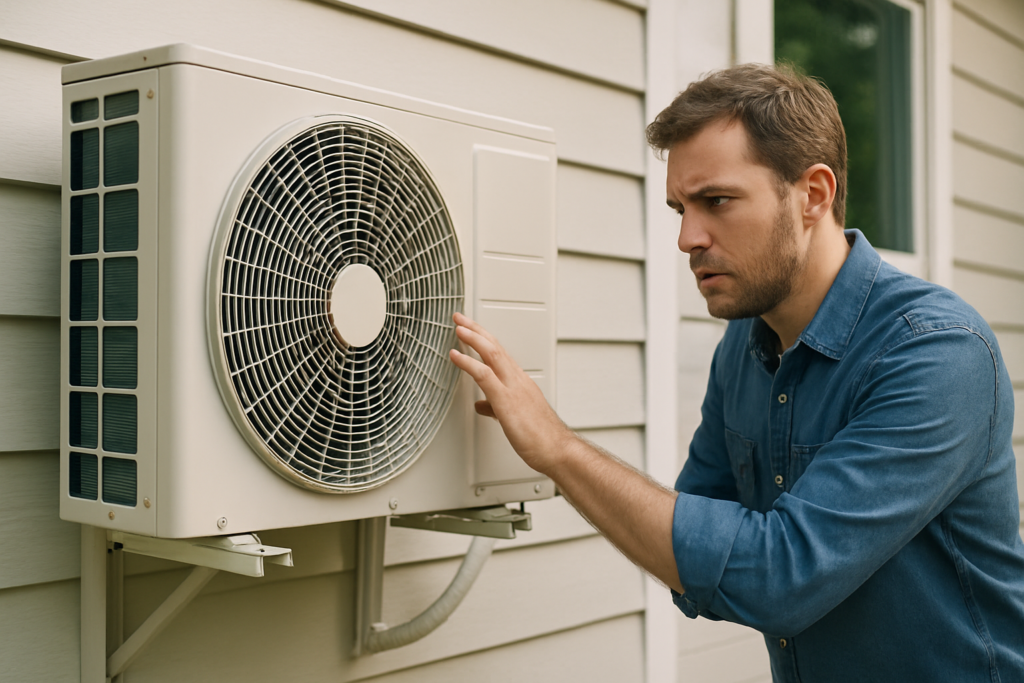
There’s nothing worse than hearing your air conditioner run nonstop while your energy bill climbs higher each month. You’d expect the unit to cycle on and off throughout the day, but instead it’s working overtime without ever taking a break. Even more frustrating is when all that constant running doesn’t actually keep your home cool enough.
The good news is that a constantly running AC usually points to a handful of common problems, most of which you can diagnose yourself. Let’s break down the main culprits and what you can do about them.
Your Thermostat Settings Might Be the Problem
Before you start worrying about expensive repairs, check your thermostat settings. This sounds simple, but it’s the most common cause of nonstop AC operation.
If your thermostat’s fan setting is on “ON” instead of “AUTO,” the fan will run continuously even when the AC isn’t actively cooling. Switch it to AUTO mode so the fan only runs during cooling cycles. You’ll notice the difference immediately, both in sound and energy consumption.
Another issue is setting the temperature too low. If you’re asking your AC to maintain 65 degrees on a 95-degree day, it’s going to struggle. The system has limits, typically cooling about 15-20 degrees below outdoor temperature. Set a more realistic target around 72-78 degrees.
Older mechanical thermostats can also drift out of calibration over time. A programmable thermostat upgrade can solve this issue while giving you better control over your cooling schedule.
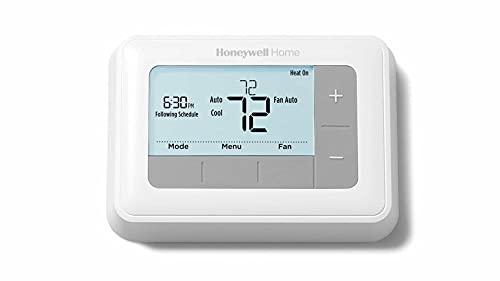
Honeywell Home T5 Programmable Thermostat
A reliable upgrade that prevents constant running with accurate temperature sensing and flexible scheduling options
Dirty Air Filters Restrict Airflow
When was the last time you changed your air filter? If you can’t remember, you’ve found your problem. A clogged filter forces your AC to work harder and run longer to push air through your system.
Check your filter right now. Hold it up to the light. If you can’t see light passing through easily, it needs replacing. During cooling season, you should swap out standard filters every 30-60 days, depending on usage and household factors like pets or allergies.
Don’t assume expensive pleated filters are always better either. Super-thick filters with high MERV ratings can actually restrict airflow too much for some systems. Check your AC manual for the manufacturer’s recommended MERV rating, usually between 8-11 for residential units.
Stock up on replacement filters and set a phone reminder to change them monthly. This simple habit prevents bigger problems down the line.
Temperature Sensor Issues Cause False Readings
Your AC relies on sensors to know when to cycle off. If these sensors malfunction, your system keeps running because it thinks the house hasn’t reached the target temperature yet.
The main sensor sits inside your thermostat. If furniture, lamps, or direct sunlight affect the area around your thermostat, it might read warmer than your actual room temperature. Make sure nothing blocks airflow around the thermostat and it’s not mounted on an exterior wall that gets hot.
Some systems also have a sensor near the evaporator coil. This sensor can get knocked out of position during maintenance or shift over time. When it’s not making proper contact with the coil, it sends incorrect temperature data. You’ll need an HVAC tech to reposition or replace this sensor.
Faulty wiring connections to the thermostat can also create sensor problems. Look for any visible corrosion or loose wires at the thermostat mounting plate. Turn off power at the breaker before investigating.
Refrigerant Leaks and Low Charge
An AC unit low on refrigerant will run constantly trying to cool your home but never quite getting there. You might notice ice forming on the refrigerant lines or reduced airflow from your vents.
Refrigerant doesn’t get “used up” like gas in a car. If levels are low, you have a leak somewhere in the system. Adding more refrigerant without fixing the leak just wastes money and refrigerant.
This isn’t a DIY fix. You need a licensed HVAC technician to locate the leak, repair it, and properly recharge the system. EPA regulations require certification to handle refrigerant, and you need specialized equipment to do it correctly.
Watch for signs like hissing sounds near the outdoor unit, ice on copper lines, or warm air from vents despite the system running. These all point to refrigerant issues that need professional attention.
Capacitor and Compressor Problems
The capacitor gives your AC compressor the electrical boost it needs to start up. When capacitors begin failing, the compressor struggles to cycle properly. It might stay running continuously or short-cycle repeatedly.
You can visually inspect the capacitor if you’re comfortable opening the outdoor unit’s access panel (power off first). Look for bulging, leaking, or rust. A failing capacitor is one of the most common AC repairs, and replacement is relatively inexpensive when caught early.

AC Compressor Capacitor
Keep a spare on hand if you’re handy with electrical work, though professional installation is recommended for safety
Compressor issues are more serious. If the compressor itself is failing, it may run continuously without actually compressing refrigerant effectively. Listen for unusual noises like grinding, clicking, or chattering from the outdoor unit. Compressor replacement is expensive, sometimes making more sense to replace the entire outdoor unit depending on the system’s age.
Ductwork Leaks Waste Cooled Air
Your AC might be working perfectly fine, but if 20-30% of your cooled air escapes through duct leaks, the system will run constantly trying to compensate. This is especially common in older homes or poorly installed ductwork.
Check accessible ductwork in your attic, basement, or crawlspace for disconnected sections, visible gaps, or damaged insulation. You can temporarily seal small gaps with foil duct tape (not regular duct tape, which fails quickly).
Pay attention to rooms that never seem to cool properly. This often indicates duct problems serving those specific areas. A professional duct sealing service uses pressure testing to find all the leaks and seal them with mastic or specialized tape.
When to Call a Professional
Some fixes are simple enough to handle yourself, but others require professional help. Don’t mess with refrigerant, electrical components beyond basic thermostat wiring, or anything involving the compressor unless you have proper training.
Call an HVAC tech if you’ve checked the obvious issues (thermostat settings, air filter, airflow obstructions) and the system still runs constantly. Get multiple quotes for major repairs, and ask about the age of your system. Units over 15 years old might make more financial sense to replace than repair.
Regular maintenance prevents many of these issues. Schedule annual tune-ups before cooling season starts. A tech will check refrigerant levels, clean coils, test capacitors, and catch small problems before they become expensive failures.
Frequently Asked Questions
How long should my AC run per hour?
On a typical summer day, your AC should run about 15-20 minutes per hour in moderate temperatures. During extreme heat, it might run 30-40 minutes per hour. If it never shuts off for at least a few minutes each hour, something’s wrong. The outdoor temperature makes a big difference, but continuous operation without any breaks indicates a problem.
Will a constantly running AC break down faster?
Yes, continuous operation puts excessive wear on the compressor, fan motors, and other components. Parts designed to cycle on and off throughout the day will fail sooner under constant stress. You’ll also see significantly higher energy bills. Address the underlying problem quickly to avoid premature system failure and wasted energy costs.
Can an oversized AC unit cause constant running?
Actually, an oversized unit typically causes the opposite problem: short cycling. The unit cools the space too quickly, shuts off, then starts again moments later. This is also problematic and reduces efficiency. Constant running usually points to an undersized unit, low refrigerant, or one of the airflow/sensor issues described above. Proper sizing during installation prevents both problems.
This article contains affiliate links. We may earn a small commission at no extra cost to you.