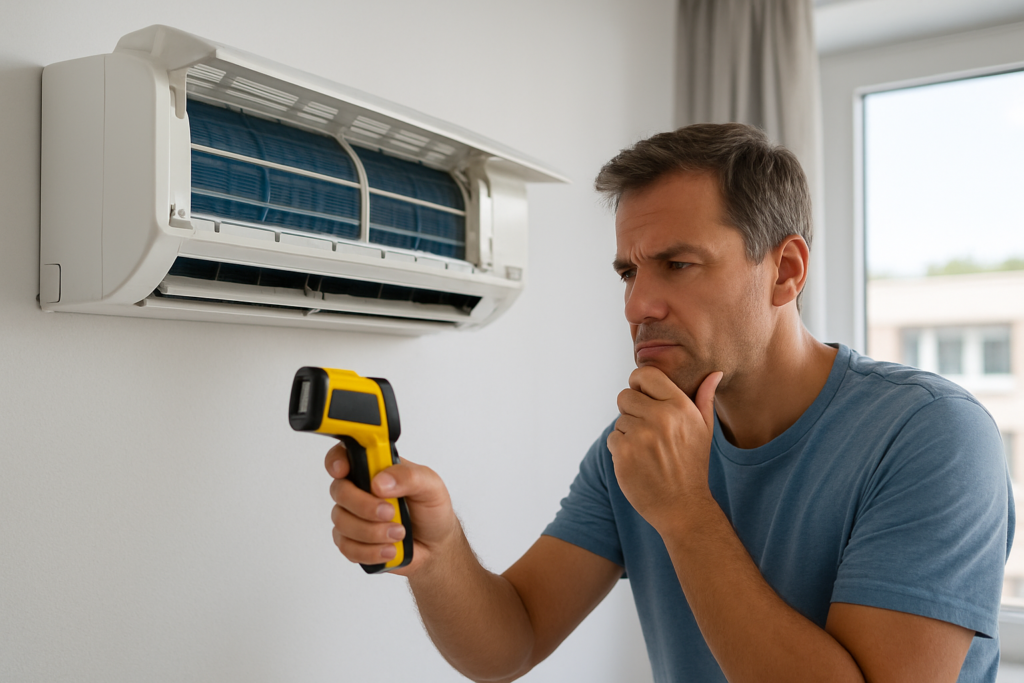
There’s nothing worse than cranking up your air conditioner on a scorching summer day only to realize it’s blowing warm air or barely cooling at all. Before you panic and call an expensive repair service, you should know that many cooling issues have simple fixes you can handle yourself.
Most AC problems fall into three main categories: restricted airflow, dirty or frozen coils, and compressor failures. Understanding what’s causing your system to underperform can save you hundreds of dollars in unnecessary service calls. Let’s break down each issue and show you exactly how to get your AC running like new again.
Airflow Restrictions: The Most Common Culprit
About 80% of air conditioning problems stem from poor airflow. When your AC can’t move air efficiently through your home, it struggles to cool effectively, runs longer cycles, and drives up your energy bills.
Start with your air filter. A clogged filter is the single most common reason for reduced cooling performance. You should check it monthly during heavy use seasons and replace it every 30-90 days depending on your household. Homes with pets, smokers, or allergy sufferers need more frequent changes.
Pull out your current filter and hold it up to a light. If you can’t see light passing through easily, it’s restricting airflow and needs immediate replacement. A quality HVAC air filter keeps your system running efficiently without breaking the bank.

HVAC Air Filter Multi-Pack
Stock up with a multi-pack so you always have clean filters ready when you need them
Beyond filters, check your vents and registers throughout your home. Furniture, curtains, and rugs commonly block airflow without you realizing it. Make sure every vent has at least 12 inches of clearance on all sides. Closed vents in unused rooms actually hurt your system’s efficiency rather than help it, so keep them open.
Your outdoor condenser unit needs attention too. Leaves, grass clippings, and debris can accumulate around the fins and restrict airflow. Turn off power to the unit at your breaker box, then use a garden hose to gently spray the fins from inside out. Never use a pressure washer, as it will bend the delicate aluminum fins.
Dirty or Frozen Evaporator Coils
Your evaporator coils sit inside your indoor air handler and absorb heat from your home’s air. When these coils get dirty or freeze up, your cooling capacity plummets.
Dirty coils develop an insulating layer of dust and grime that prevents efficient heat transfer. This often happens gradually over years, so you might not notice the declining performance until it becomes severe. Most manufacturers recommend professional coil cleaning every 1-3 years, but you can inspect them yourself.
Turn off your AC and remove the access panel on your air handler. You’ll see an A-shaped assembly of thin metal fins. If they look dusty or have visible buildup, they need cleaning. A no-rinse coil cleaner makes this job much easier for homeowners without professional equipment.
Frozen coils are a different beast entirely. You’ll notice ice buildup on the copper refrigerant lines or the coils themselves. This happens for several reasons: restricted airflow from a dirty filter, low refrigerant levels, or a malfunctioning blower fan.
When you discover frozen coils, turn off your AC immediately and switch your thermostat to fan-only mode. This helps thaw the ice without causing additional damage. The thawing process takes 2-8 hours. Once thawed, check your air filter first. If it’s clean and the coils freeze again, you likely have a refrigerant leak that requires professional repair.
Compressor and Capacitor Issues
Your compressor is the heart of your AC system, pressurizing refrigerant and pumping it through the coils. When it fails, your entire system stops cooling. Compressor problems often announce themselves with unusual noises: grinding, squealing, or clicking sounds that weren’t there before.
Before assuming your compressor is dead, check the capacitor. This small cylindrical component provides the electrical jolt needed to start your compressor and fan motors. Capacitors fail more frequently than compressors and cost far less to replace.
Walk outside when your AC should be running. If the condenser fan isn’t spinning but you hear humming, a failed capacitor is the likely cause. You can test this by turning off the AC, then gently pushing one of the fan blades with a stick (never your hand). If the fan starts spinning and keeps going, your capacitor needs replacement.

AC Capacitor Kit
Having a replacement capacitor on hand can save you during an emergency breakdown in the middle of summer
Replacing a capacitor involves working with high-voltage electricity, so only attempt this if you’re comfortable with electrical work. Otherwise, this is a quick and relatively inexpensive fix for a professional.
True compressor failure is more serious. If your compressor won’t run even with a new capacitor, or if it’s making horrible grinding noises, replacement might competitively priced-competitively priced for parts and labor. At that price point, many homeowners consider replacing the entire outdoor unit or even the whole system if it’s over 10 years old.
Refrigerant Leaks and Low Charge
Your AC doesn’t consume refrigerant like a car consumes gas. It’s a closed system that recirculates the same refrigerant for years. When levels drop, you have a leak somewhere that needs fixing.
Low refrigerant causes several symptoms: ice on the refrigerant lines, warm air from vents, hissing sounds near the indoor or outdoor unit, and longer run times. Your AC might run constantly without reaching your target temperature.
You can’t fix refrigerant leaks yourself. Federal regulations require EPA certification to handle refrigerants. A professional will need to locate the leak, repair it, evacuate the system, and recharge it to manufacturer specifications. Simply adding more refrigerant without fixing the leak is a waste of money and illegal in many areas.
One thing you can check: your refrigerant lines where they enter your home. These copper lines should have foam insulation covering them. Damaged or missing insulation causes condensation and reduced efficiency. Replace damaged insulation with new foam pipe insulation to improve performance.
Thermostat and Control Problems
Sometimes your AC isn’t actually broken at all. Thermostat issues can mimic serious cooling problems while being incredibly simple to fix.
First, check your thermostat’s battery if it has one. Many programmable thermostats give subtle low-battery warnings that are easy to miss. Dead batteries cause erratic behavior or complete system shutdown.
Make sure your thermostat is set to “Cool” mode (not “Heat” or “Off”) and that your target temperature is at least 5 degrees below the current room temperature. This sounds obvious, but it’s a surprisingly common oversight, especially in households where multiple people adjust the settings.
Your thermostat’s location matters too. If it’s installed near a window, lamp, or other heat source, it will read temperatures incorrectly and short-cycle your system. Similarly, a thermostat in direct sunlight or near a cold air vent gets false readings that prevent proper cooling.

Digital Programmable Thermostat
Upgrading to a modern programmable thermostat improves both comfort and efficiency while preventing temperature-related issues
Dust accumulation inside your thermostat can also cause problems. Remove the faceplate (most just pull off) and gently blow out any dust with compressed air. While you’re there, check that all wire connections are tight and not corroded.
Frequently Asked Questions
How often should I have my AC professionally serviced?
Annual maintenance is ideal, scheduled in spring before cooling season begins. A professional tune-up includes tasks you can’t easily do yourself: checking refrigerant levels, testing electrical components, measuring airflow, and cleaning internal parts. This preventive maintenance catches small problems before they become expensive failures and keeps your system running efficiently. Most HVAC technicians offer maintenance plans that include priority service and discounts on repairs.
Why does my AC cool fine during the day but struggle at night?
This counterintuitive problem usually indicates an undersized system or refrigerant issue. During the day, your AC runs constantly and maintains temperature through sheer runtime. At night when temperatures drop, your system should cycle on and off normally. If it struggles during milder conditions, it’s working harder than it should due to low refrigerant, dirty coils, or insufficient capacity for your home’s size. Schedule a professional evaluation to diagnose the root cause.
Can I run my AC if it’s not cooling properly?
It depends on the problem. If you have frozen coils, running your AC causes additional damage and should be avoided until the ice thaws completely. For most other issues like dirty filters or blocked vents, running the system won’t cause harm but wastes energy and money. When you hear unusual noises (grinding, squealing, banging), shut down immediately to prevent catastrophic damage. For simple reduced cooling without other symptoms, you can continue running it while you troubleshoot, but address the issue promptly to avoid higher energy bills.
This article contains affiliate links. We may earn a small commission at no extra cost to you.