There’s nothing quite like relaxing in a cool home on a sweltering summer day, until your air conditioner starts making sounds like a dying animal or a helicopter landing on your roof. Those strange noises aren’t just annoying. They’re your AC unit’s way of telling you something’s wrong.
Most loud AC noises point to specific mechanical problems, and catching them early can save you from a complete system breakdown in the middle of a heat wave. Let’s break down what those sounds mean and how you can fix them before you’re sweating through another summer night.
Rattling or Clanking: Loose Parts and Debris
A rattling noise usually means something has come loose inside your unit. This could be anything from mounting bolts to internal components like the fan blades or motor mounts. Sometimes it’s as simple as debris like leaves, twigs, or rocks that got sucked into the outdoor condenser unit.
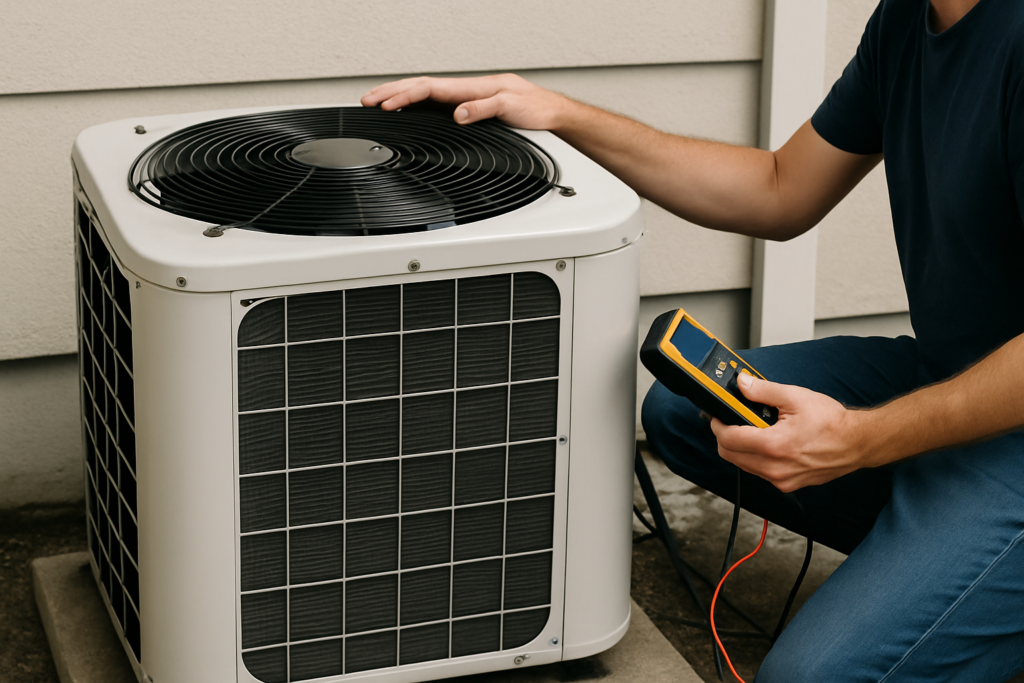
Start by turning off your AC and inspecting the outdoor unit. Remove any visible debris from around and inside the unit (be sure to disconnect power first). Check if the top panel or side panels are secure. If they’re loose, tighten the screws. A good screwdriver set designed for HVAC work makes this easier.
If the rattling continues after you’ve cleared debris and tightened panels, you might have loose fan blades or a failing motor mount. Fan blades can become unbalanced over time, especially if one gets bent. You can carefully straighten minor bends with pliers, but if a blade is cracked or severely damaged, you’ll need to replace the entire fan assembly.

AC Fan Motor
Essential replacement part when bearings wear out and cause rattling or grinding sounds
Screeching or Squealing: Belt and Bearing Problems
High-pitched screeching sounds typically indicate problems with belts or bearings. Older AC systems use belts to connect the motor to the blower, and these belts can slip, crack, or fray over time. When they do, they create that unmistakable squealing noise.
If your system still uses belts (many newer units don’t), inspect them for signs of wear. Look for cracks, fraying edges, or glazing (a shiny, smooth appearance). A worn belt needs replacement before it breaks completely. You can find replacement blower belts easily, but make sure you get the exact size for your model.
Bearing problems are trickier. The motor bearings or blower bearings can dry out and start grinding against metal. This creates a squealing or shrieking noise that gets worse over time. Some bearings can be lubricated with motor oil through ports on the motor housing, but many modern sealed bearings need complete replacement when they fail.
Buzzing or Humming: Electrical Issues
A buzzing sound often points to electrical problems. The most common culprit is a failing capacitor. Your AC has one or two capacitors that give the motors the electrical boost they need to start up. When these components start to fail, they create a buzzing or humming sound, and your AC might struggle to start or not start at all.
Capacitors are relatively inexpensive parts, but they store electrical charge even when the unit is off, making them dangerous to handle. If you’re comfortable working with electrical components and have a multimeter, you can test the capacitor yourself. Otherwise, this is a job best left to professionals.

Air Conditioner Capacitor
Common failure point that causes buzzing sounds and starting problems, but requires safe electrical knowledge to replace
Another source of buzzing is loose wiring or a failing contactor relay. The contactor is the component that controls the flow of electricity to your compressor and condenser fan motor. When contacts get pitted or corroded, they can create arcing and buzzing sounds. You’ll find the contactor inside the outdoor unit’s electrical panel.
Clicking Sounds: Thermostat and Relay Issues
Some clicking is normal. You’ll hear a click when your thermostat signals the AC to turn on or off. But constant, rapid clicking indicates a problem with the control board, thermostat, or the contactor relay.
Start by checking your thermostat. Make sure it’s level and securely mounted. Sometimes a loose thermostat can cause rapid cycling and excessive clicking. Replace the batteries if it’s battery-powered. If the clicking comes from the outdoor unit, the contactor might be failing to engage properly.
A defective capacitor can also cause clicking. The compressor tries to start, the contactor clicks to send power, but the compressor can’t get going without proper capacitance. This creates a rapid clicking pattern as the system repeatedly tries and fails to start.
Banging or Thumping: Compressor Problems
Loud banging or thumping noises are serious red flags. These sounds often come from the compressor, which is the heart of your AC system and the most expensive component to replace.
A banging sound could mean loose internal compressor parts, often called “slugging.” This happens when liquid refrigerant gets into the compressor instead of vapor, causing the pistons to slam against the liquid. This can destroy a compressor quickly.
Another cause is a failing compressor mount. The compressor sits on rubber grommets that absorb vibration. When these wear out, the compressor can bang against the unit’s frame. Replacing worn compressor isolation mounts can eliminate the noise and extend your compressor’s life.
If the compressor itself has internal damage, replacement is usually the only option. Since compressor replacement costs nearly as much as a new AC unit for older systems, this is when you need to decide whether to repair or replace the entire system.
Hissing or Bubbling: Refrigerant Leaks
A hissing sound often indicates a refrigerant leak. The refrigerant inside your AC system is under high pressure. When it escapes through even a small hole, it creates a hissing noise. You might also notice your AC isn’t cooling as well as it used to.
Refrigerant leaks require professional repair. The EPA requires certification to handle refrigerants, and you’ll need specialized equipment to locate the leak, repair it, and recharge the system. Don’t ignore this problem. Running an AC low on refrigerant can damage the compressor.
A bubbling or gurgling sound might indicate a refrigerant leak or a clogged condensate drain line. Check your condensate drain line first since that’s an easier fix. Pour a mixture of water and bleach down the drain line to clear minor clogs. For stubborn clogs, you might need a wet/dry shop vacuum to suck the blockage out from the other end.
Preventive Maintenance to Avoid Future Noises
Most AC noises are preventable with regular maintenance. Change your air filter every 1-3 months depending on usage and home conditions. A clogged filter makes your system work harder, putting stress on components and creating more noise.
Clean your outdoor condenser unit at least once a year. Spray it down with a garden hose to remove dirt, grass clippings, and debris that block airflow. Keep vegetation trimmed back at least two feet from all sides of the unit.

AC Coil Cleaner
Professional-grade cleaner that removes built-up grime from condenser coils to improve efficiency and reduce strain on components
Schedule professional maintenance annually, preferably in spring before cooling season starts. A technician will check refrigerant levels, test the capacitor, lubricate moving parts, and catch small problems before they become expensive failures. This single service call can prevent most of the noise problems discussed here.
Keep an eye (and ear) on your system throughout the season. Catching unusual sounds early means simpler, cheaper repairs. Most AC components give you warning signs before they fail completely.
Frequently Asked Questions
Can I run my AC if it’s making loud noises?
It depends on the noise. Mild rattling from loose panels won’t damage your system, but screeching, banging, or grinding sounds indicate serious problems. Running your AC with these symptoms can turn a simple repair into a complete system failure. Turn off your unit and call a technician for anything beyond minor rattling.
How much does it cost to fix a noisy air conditioner?
Repair costs vary widely based on the problem. Simple fixes like tightening loose parts or cleaning debris might cost nothing if you do it yourself. Capacitor replacement typically runs competitively priced-300. Belt replacement is similar. Major repairs like compressor replacement can competitively priced-2,500 or more, at which point replacing the entire system might make more sense.
Why does my AC make noise only when starting up?
Startup noises are often related to the capacitor or compressor. The capacitor provides extra power to get the motor spinning, and a weak capacitor creates groaning or humming sounds during startup. Hard starting (when the compressor struggles to begin) also causes noise and usually points to capacitor failure or low refrigerant.
Is it normal for my AC to make some noise?
Yes, every AC makes some noise during normal operation. You’ll hear the fan running, the compressor cycling on and off, and some whooshing air sounds. What’s not normal is sudden changes in noise level or new sounds that weren’t there before. Your ears know what your system normally sounds like, so trust your instincts when something sounds off.
This article contains affiliate links. We may earn a small commission at no extra cost to you.