There’s nothing quite like the panic that sets in when you turn on your air conditioner during a hot day and absolutely nothing happens. No hum, no cool air, no signs of life whatsoever. Before you start mentally calculating the cost of a new unit or scrolling through HVAC repair numbers, take a breath. Most AC units that won’t turn on have fixable issues that don’t require a professional service call.
I’m going to walk you through the most common reasons your air conditioner refuses to start and show you how to troubleshoot each one. Some of these fixes take less than five minutes, and you might be surprised at how often the solution is simpler than you’d expect.
Check Your Power Supply First
This sounds almost too obvious, but power issues account for a huge percentage of AC units that won’t start. Your air conditioner actually has multiple potential failure points in its electrical supply chain.
Start with your thermostat. If it’s battery-powered, dead batteries can prevent it from sending the signal to your AC unit. Replace them and see if that brings everything back to life. Even if the display looks fine, weak batteries can cause communication problems.
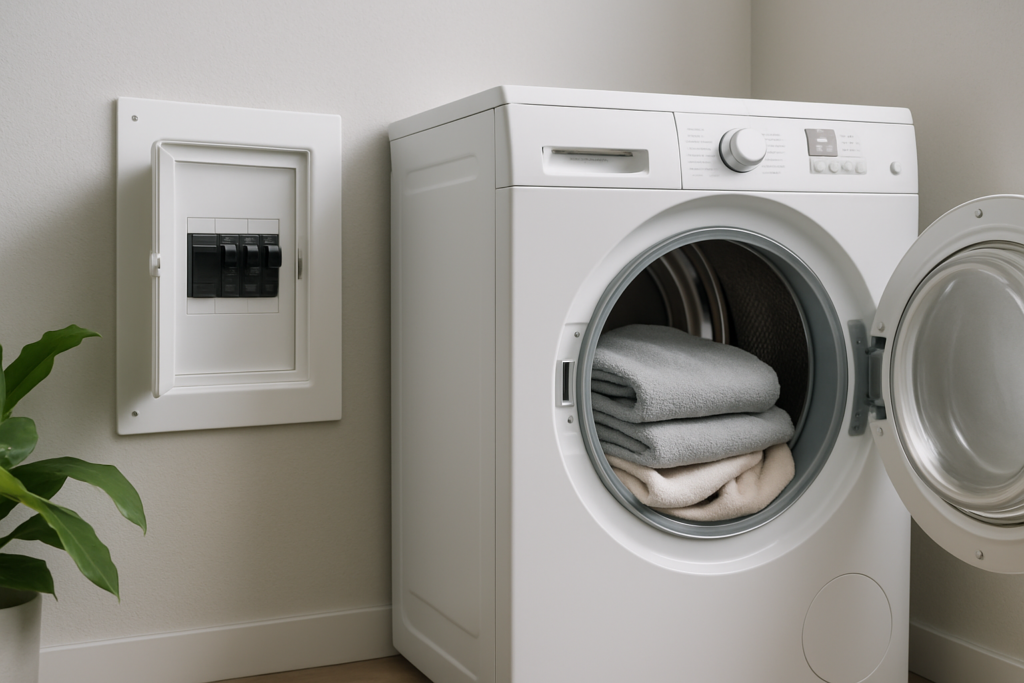
Next, check your circuit breaker panel. Look for any tripped breakers that control your HVAC system. You’ll typically have two breakers for central AC: one for the indoor air handler and one for the outdoor condenser unit. A tripped breaker won’t always be in the fully “off” position. Sometimes it sits in the middle, so flip it all the way off and then back on.
Don’t forget about the outdoor disconnect box near your condenser unit. This gray metal box mounted on your house contains a shutoff switch or pull-out fuse block. Make sure it’s in the “on” position and that any fuses inside aren’t blown. You can spot a blown fuse by the broken metal strip visible through the glass.
The Reset Button Solution
Many air conditioners have a safety reset button, usually red or yellow, located on or near the outdoor condenser unit. This trips when the system detects an overload or overheating situation.
Find this button on the outdoor unit (check near the refrigerant lines or on the side panel). Press it firmly and listen for a click. Wait about 30 minutes before trying to restart your AC to give the compressor time to decompress and the internal components time to reset.
If the reset button keeps popping back out after you press it, you’ve got a bigger problem on your hands. This usually indicates a short circuit, failed compressor, or another serious electrical issue that needs professional attention. Don’t keep pressing it repeatedly, as this can damage your system further.
Blown Fuses and Capacitor Failures
The capacitor is one of the most common failure points in an AC system. This small cylindrical component stores electrical energy and provides the jolt needed to start your compressor and fan motors. When it fails, your AC simply won’t start.
You can sometimes identify a bad capacitor visually. Turn off all power to your AC unit at the breaker and the outdoor disconnect. Remove the access panel on your condenser unit (usually held by screws). Look for a cylindrical component about the size of a soda can. If it’s bulging at the top, leaking oily residue, or shows any signs of burning, it’s failed.

AC Capacitor
Replacement capacitors are readily available and relatively easy to install if you’re comfortable with basic electrical work.
Replacing a capacitor yourself is possible if you’re comfortable working with electrical components, but remember that capacitors store electrical charge even when power is off. You need to discharge them properly before touching anything. If you’re not confident, this is a repair worth calling in a professional for. They can usually replace it in about 30 minutes.
Similarly, the contactor (the relay that controls power to your compressor and condenser fan) can fail. You’ll see this as a black box with wires connected to it inside your condenser unit. Burned or pitted contacts indicate failure. A failed contactor will prevent your outdoor unit from receiving power even when the thermostat calls for cooling.
Thermostat Problems Beyond Dead Batteries
Your thermostat might have power but still fail to communicate properly with your AC system. Check that it’s actually set to “cool” mode and that the temperature setting is lower than the current room temperature. I’ve seen countless service calls that ended with this embarrassingly simple fix.
Try removing the thermostat from its wall plate and checking the wire connections. Loose wires are surprisingly common, especially if you’ve recently replaced your thermostat. Each wire should be firmly secured under its terminal screw.
Older mechanical thermostats can fail due to dust buildup or worn components. If you’ve got an ancient round dial thermostat, upgrading to a modern digital model might solve your problem. A basic programmable thermostat can improve both reliability and efficiency.
When to Call a Professional
Some AC problems require specialized tools, refrigerant certification, or expertise that goes beyond DIY troubleshooting. Call a professional if you’ve checked everything above and your unit still won’t start.
You should also get professional help if your compressor makes a humming sound but won’t start, if you smell burning odors, or if your reset button won’t stay in. These indicate problems with the compressor motor, electrical shorts, or seized components that need expert diagnosis.
Refrigerant leaks also require professional service. If your AC turns on but doesn’t cool, and you notice ice buildup on the refrigerant lines, you likely have a leak. Only EPA-certified technicians can legally handle refrigerant.
Before the technician arrives, write down everything you’ve observed: strange sounds, when the problem started, what you’ve already checked, and any error codes on your thermostat. This information helps them diagnose faster and can save you money on labor costs.
Prevention Tips to Avoid Future Problems
Regular maintenance prevents most of the issues that cause AC units to fail. Change or clean your air filter every 1-3 months depending on use. A clogged filter forces your system to work harder and can lead to overheating that trips safety switches.
Keep your outdoor condenser unit clear of debris, grass clippings, and leaves. Maintain at least two feet of clearance around it. Use a garden hose to gently rinse the fins clean once or twice a season. Just make sure to turn off power to the unit first.

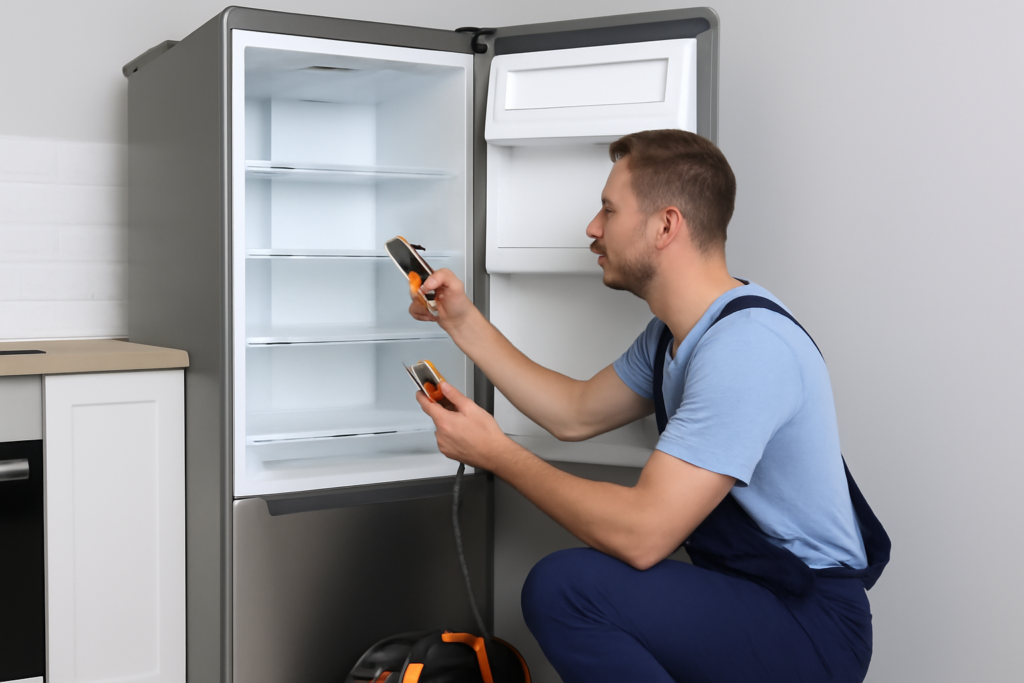
Multimeter
A basic multimeter helps you test capacitors, check for power at various points, and diagnose electrical issues yourself.
Schedule professional maintenance annually, ideally in spring before cooling season starts. A tech will check refrigerant levels, test electrical components, clean coils, and catch small problems before they become expensive failures. This single service call can prevent most of the issues that leave you sweating on a hot day.
Consider investing in a surge protector designed for HVAC systems. Power surges from lightning or grid fluctuations can damage sensitive electronic components in modern AC units. A quality surge protector provides insurance against these failures.
Frequently Asked Questions
Why does my AC turn on but then shut off after a few seconds?
This is called short cycling and usually indicates a failing capacitor, dirty air filter, frozen evaporator coil, or refrigerant leak. Start by replacing your air filter and checking for ice buildup on the indoor coil. If the problem persists, you likely need a technician to check your capacitor and refrigerant levels. Short cycling can damage your compressor if left unaddressed, so don’t ignore it.
How long should I wait to restart my AC after it shuts off?
Wait at least 5 minutes, but preferably 15-30 minutes before attempting to restart your air conditioner. This allows the refrigerant pressures to equalize and prevents strain on the compressor. If you’ve pressed the reset button or your AC shut off due to overheating, wait a full 30 minutes. Restarting too quickly can damage the compressor and trip safety switches.
Can a dirty filter really prevent my AC from turning on?
Yes, but usually indirectly. A severely clogged filter restricts airflow, which causes your evaporator coil to freeze. This can trip safety switches that prevent the system from starting. Additionally, the strain from restricted airflow can cause your system to overheat and shut down. While a dirty filter alone typically won’t prevent initial startup, it creates conditions that trigger protective shutoffs. Replace your filter first when troubleshooting any AC problem.
This article contains affiliate links. We may earn a small commission at no extra cost to you.