Your vacuum filter might be the most overlooked component in your cleaning arsenal, yet it’s arguably one of the most important. While most people focus on suction power and attachments when shopping for vacuums, the filter determines what actually gets captured and what gets blown back into your air.
The difference between filter types goes far beyond simple dust collection. HEPA filters can trap particles 300 times smaller than the width of a human hair, while standard filters might let allergens cruise right through. Washable filters promise long-term savings but require consistent maintenance to stay effective.
Understanding these differences helps you make informed decisions about replacement costs, maintenance schedules, and most importantly, the air quality in your home. Let’s break down each filter type and help you choose the right one for your needs.
Understanding Filtration Efficiency Ratings
Filtration efficiency gets measured in different ways, but the most important rating to understand is particle capture percentage. This tells you what portion of particles at specific sizes your filter will trap during normal operation.
MERV Ratings Explained
MERV (Minimum Efficiency Reporting Value) ratings run from 1 to 20, with higher numbers indicating better filtration. Most vacuum filters fall between MERV 6 and MERV 17. A MERV 8 filter captures about 70% of particles between 3.0 and 10.0 microns, while a MERV 13 filter traps over 90% of particles in that same range.
For context, common allergens measure between 0.3 and 10 microns. Dust mites clock in around 10 microns, while pet dander typically ranges from 0.5 to 3 microns. Pollen can be anywhere from 10 to 100 microns.
True HEPA Standards
True HEPA filters must capture at least 99.97% of particles that are 0.3 microns or larger. This specific size represents the “most penetrating particle size” where filters perform least efficiently. Particles smaller or larger than 0.3 microns actually get captured more easily due to different physical mechanisms.
Many manufacturers use terms like “HEPA-type” or “HEPA-style” for filters that don’t meet true HEPA standards. These alternatives might capture 85-95% of particles, which sounds impressive but represents a significant drop in performance compared to true HEPA.
HEPA Filters: Maximum Filtration Power
HEPA filters represent the gold standard for home air filtration. Originally developed for nuclear facilities in the 1940s, they’ve become the preferred choice for anyone serious about indoor air quality.
Construction and Performance
True HEPA filters use a dense mat of randomly arranged fibers, typically made from fiberglass. The fibers create a tortuous path that traps particles through three mechanisms: impaction (particles hit fibers directly), interception (particles follow air streamlines too close to fibers), and diffusion (tiny particles move erratically and contact fibers).
This multi-layered approach explains why HEPA filters excel at capturing both large and microscopic particles. They’ll trap everything from visible dust bunnies down to bacteria and some viruses.
Shark Navigator Professional Upright Vacuum NV356E
Popular model that works excellently with aftermarket HEPA filters for enhanced filtration
Health Benefits
The health advantages of HEPA filtration become most apparent for people with allergies, asthma, or respiratory sensitivities. Studies show HEPA filtration can reduce airborne allergen levels by 50-90% in typical home environments.
Pet owners see particularly dramatic improvements. HEPA filters capture the microscopic pet dander that triggers allergic reactions, not just the visible fur that standard filters handle. They also trap dust mite debris, pollen that gets tracked indoors, and mold spores.
Replacement Costs and Frequency
HEPA filters typically need replacement every 6-12 months, depending on usage and home conditions. Pet owners and people in dusty environments should lean toward the shorter end of that range.
Replacement costs vary significantly by vacuum brand and model. Generic HEPA filters often work well and cost considerably less than OEM options. Check current pricing on Amazon for your specific model to compare options.
Standard Filters: Basic Protection
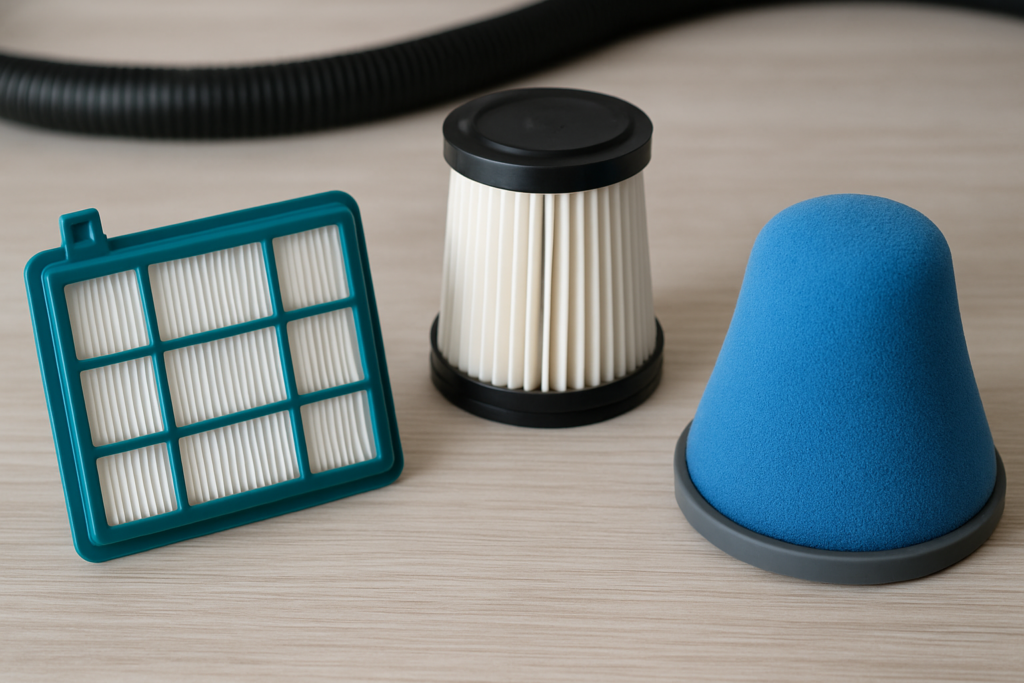
Standard vacuum filters come in various materials and designs, from simple foam barriers to pleated paper constructions. They handle basic dust and debris collection without the precision engineering of HEPA systems.
Types of Standard Filters
Foam filters work well for larger particles but allow smaller allergens to pass through. They’re common in shop vacuums and basic household models. Paper filters offer better fine particle capture and usually feature pleated designs that increase surface area.
Cloth filters fall somewhere between foam and paper in terms of performance. They often last longer than paper versions but may not capture particles as effectively.
Performance Limitations
Most standard filters capture particles down to about 10-30 microns effectively. This means they’ll handle visible dust, dirt, and larger debris without problems. However, allergens, fine dust, and microscopic particles often pass right through.
The trade-off comes in airflow restriction. Standard filters typically allow better airflow than HEPA alternatives, which can mean stronger suction performance for surface cleaning. Your vacuum might pick up visible debris more aggressively with a standard filter.
Bissell CrossWave Pet Pro All in One Wet Dry Vacuum
Versatile option that uses washable filters for both wet and dry cleaning tasks
Best Use Cases
Standard filters make sense for basic household cleaning when allergies aren’t a major concern. They work well in workshops, garages, and other spaces where you’re primarily dealing with larger debris rather than fine particles.
Commercial settings often prefer standard filters for their lower cost and reduced airflow restriction. When you’re vacuuming large areas regularly, the improved suction can translate to faster cleaning times.
Washable Filters: Reusable Convenience
Washable filters promise long-term cost savings and environmental benefits by eliminating the need for regular replacements. However, they require consistent maintenance to perform effectively.
Materials and Design
Most washable vacuum filters use synthetic materials like polyester or specialized foam compounds. Some feature permanent electrostatic charges that help attract particles, while others rely purely on physical filtration.
The durability varies significantly between models. High-quality washable filters can last 2-3 years with proper care, while cheaper versions might start degrading after 6-12 months of regular washing.
Maintenance Requirements
Proper cleaning requires more than a quick rinse. Most washable filters need thorough washing with mild soap, complete air drying (usually 24-48 hours), and regular inspection for damage or wear.
You’ll also need backup filters for continuous vacuum use. While one filter dries, you need another ready to install. This doubles your initial investment but maintains cleaning capability.
Performance Considerations
Clean washable filters can perform nearly as well as their disposable counterparts. However, performance degrades as filters get dirty, and it’s harder to judge when cleaning is needed compared to simply replacing a disposable filter.
The electrostatic properties that help some washable filters attract particles can diminish over time and with washing. This gradual performance loss isn’t always obvious until air quality noticeably decreases.
Popular Vacuum Model Compatibility
Different vacuum brands and models have specific filter requirements. Understanding compatibility helps you make informed purchasing decisions and avoid costly mistakes.
Shark Vacuum Filters
Shark Navigator and Rotator series typically use foam and felt filter combinations. Many models accept aftermarket HEPA upgrades. The Navigator NV351, NV352, and NV356 series share similar filter designs and dimensions.
Shark Rocket ultra-light models use different filter sizes and shapes. Always verify your specific model number before ordering replacements, as Shark frequently updates designs between production runs.
Dyson Filter Options
Dyson vacuums generally use washable lifetime filters that rarely need replacement. The V7, V8, V10, and V11 cordless models each have unique filter designs despite similar appearances.
Older Dyson uprights like the DC07, DC14, and DC25 use replaceable HEPA filters. These models benefit significantly from regular filter replacement every 6-12 months.
Dyson V8 Animal Cordless Vacuum
Features excellent washable filtration and powerful suction for pet hair and allergens
Bissell and Hoover Compatibility
Bissell Pet Hair Eraser and CrossWave models use washable foam filters with optional HEPA upgrades available for some models. The Pet Hair Eraser Turbo uses a different filter size than the standard version.
Hoover WindTunnel series vacuums accept both standard and HEPA filter options. The WindTunnel MAX and WindTunnel 3 use similar but not identical filter dimensions.
Cost Analysis: Initial Investment vs. Long-Term Expenses
Understanding the true cost of different filter types requires looking beyond initial purchase prices to include replacement schedules, maintenance time, and performance impacts.
HEPA Filter Economics
HEPA filters typically cost more upfront but provide superior performance for 6-12 months. Generic options often provide similar filtration at lower costs than OEM filters. Over a five-year period, HEPA filter costs usually range from moderate to premium depending on vacuum model and replacement frequency.
The health benefits can translate to real savings for allergy sufferers through reduced medication needs and fewer doctor visits. These indirect savings are hard to quantify but can be substantial.
Standard Filter Value
Standard filters offer the lowest per-unit cost and often need replacement every 3-6 months depending on usage. While individual filters cost less, more frequent replacement can add up over time.
The reduced filtration effectiveness might require additional air purification systems, which adds to overall air quality costs.
Washable Filter Investment
Washable filters require higher initial investment but can last 2-3 years with proper care. Factor in the time cost of regular cleaning and the need for backup filters during drying periods.
Performance degradation over time might necessitate replacement sooner than expected, especially in high-use or challenging environments.
Miele Complete C3 Marin Canister Vacuum
Premium vacuum with excellent HEPA filtration and reliable long-term performance
Making the Right Choice for Your Home
Selecting the optimal filter type depends on your specific circumstances, health needs, and maintenance preferences. Consider these factors when making your decision.
Health and Allergy Considerations
Households with allergy sufferers, asthma patients, or respiratory sensitivities should prioritize HEPA filtration. The superior particle capture directly translates to cleaner air and reduced symptom triggers.
Pet owners benefit significantly from HEPA filters, especially those with multiple pets or long-haired breeds. The microscopic dander that causes allergic reactions gets captured effectively only by HEPA-level filtration.
Usage Patterns and Maintenance Preferences
Frequent vacuum users might prefer washable filters to avoid constant replacement costs. However, this requires discipline for regular cleaning and proper drying time.
Occasional users often find standard disposable filters more convenient. Replace them when performance drops without worrying about maintenance schedules.
Budget and Value Priorities
Long-term cost considerations favor washable filters for high-usage situations. Short-term budget constraints might point toward standard filters with lower upfront costs.
Consider the total cost of ownership including your time for maintenance, replacement frequency, and any additional air quality equipment needed.
Frequently Asked Questions
How often should I replace my vacuum filter?
HEPA filters typically last 6-12 months, standard filters need replacement every 3-6 months, and washable filters should be cleaned monthly and replaced every 2-3 years. Heavy usage, pet hair, or dusty environments require more frequent attention. Visual inspection helps determine when replacement is needed regardless of timeframes.
Can I wash a disposable HEPA filter to extend its life?
Never wash disposable HEPA filters. Water damages the delicate fiber structure and destroys filtration effectiveness. Washing also risks mold growth inside the filter media. Only filters specifically labeled as washable should be cleaned with water. Disposable filters should be replaced when dirty or clogged.
Do generic filters work as well as OEM filters?
Quality generic filters often perform comparably to OEM options at lower costs. Look for filters that meet the same specifications as your original filter, including HEPA certification if applicable. Check dimensions carefully and read reviews from other users of your vacuum model. Poor-quality generics can damage your vacuum or provide inadequate filtration.
Why does my vacuum lose suction even with a new filter?
Suction loss with new filters usually indicates other maintenance issues. Check for clogs in hoses, full dust bins, or worn seals around filter compartments. Some high-efficiency filters naturally restrict airflow more than basic options. Ensure you’re using the correct filter type and size for your vacuum model.
This article contains affiliate links. We may earn a small commission at no extra cost to you.