As an Amazon Associate I earn from qualifying purchases. This article contains affiliate links.
Pulling a baking sheet from the bottom of a stack is awkward when everything above it has to move first. A suitable vertical rack can make individual pieces easier to reach, but only when the cabinet and cookware fit the layout.
Start with the items you use regularly. Separate flat bakeware, cutting boards, and lids before shopping for an organizer. Each group has a different shape and needs different clearance.
Empty the cabinet and check what deserves the space
Put the contents on a stable work surface. Match lids to pans, identify duplicate sheets, and remove items you’re ready to replace or donate when appropriate. Follow cookware guidance for damaged coatings, warped pieces, and safe disposal.
Choose the everyday pieces first. A roasting pan used twice a year doesn’t need the easiest position while the sheet you use every week sits behind it. Reserve the most accessible part of the cabinet for frequent use.
Clean the empty cabinet according to its finish instructions and let it dry. Check shelf supports and the shelf’s load capacity before moving heavy cookware around. Keep heavy pieces low enough to lift comfortably.
Measure the opening and the inside separately
Measure the door opening, internal width, usable depth, and clear height. Door hinges, a face frame, shelf supports, or a center stile can reduce access even when the cabinet interior looks generous.
Check the tallest baking sheet in its proposed upright position. Include any raised handle or rolled rim. Then measure how far the piece has to lift or tilt to come out of the rack.
| Measurement | Why it matters |
|---|---|
| Clear door opening | The rack and each item must pass through it. |
| Usable internal height | Upright sheets need clearance above their tallest point. |
| Depth with the door closed | Handles and lid knobs must stay behind the door. |
| Rack width and divider spacing | Thick boards and muffin pans need different slots. |
| Shelf load limit | A tidy arrangement can still overload an unsuitable shelf. |
Use cardboard templates to test the footprint and item height. Open and close the door with the mock layout in place. A paper plan won’t catch every issue, but it can reveal an obvious hinge collision before you buy a rack.
Give flat bakeware its own section
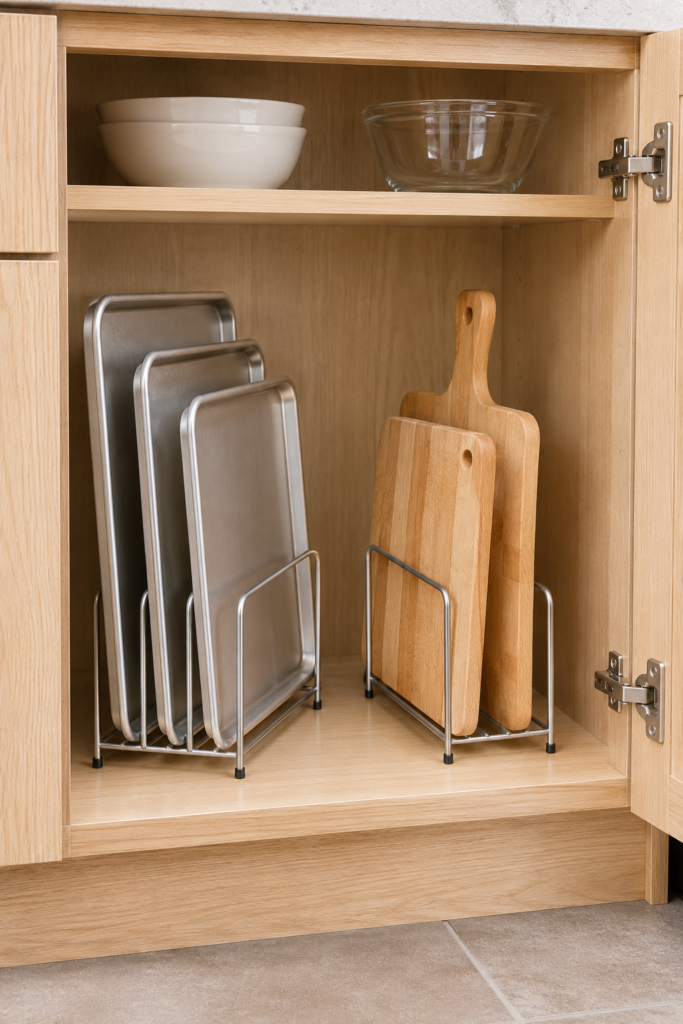
Place a suitable freestanding rack on a stable surface and adjust the dividers for the pieces you own. Leave enough room to grasp each sheet without scraping it against the next one. Don’t force several thick items into a narrow slot.
The YouCopia StoreMore range includes separate designs for bakeware and pans or lids. A bakeware rack is the first design I’d compare for flat sheets and boards, while checking the current product’s dimensions and supported uses.
Adjustable bakeware rack
Compare the rack dimensions and supported items with your cabinet and bakeware. Adjustable dividers let you leave room for thicker boards or muffin pans. Opens Amazon search results.
Don’t assume every divider can hold a heavy cutting board or glass baking dish. Use the rack’s instructions and load limits. Keep fragile or unusually heavy items in another suitable position when the rack isn’t designed for them.
For the rest of the kitchen, our cabinet organization guide can help you group food preparation, cooking, and serving items around where you use them.
Store cutting boards fully dry
A board needs enough room that you can remove it without dragging it across a sharp metal edge. Choose a slot that supports its shape and weight. Don’t use the storage rack as a substitute for an appropriate drying setup.
Follow the board maker’s washing and drying instructions, and store it fully dry. Allow useful separation between boards rather than pressing damp faces together. Our cutting board care guide covers cleaning considerations for different materials.
Large boards sometimes fit better in a dedicated upright slot than among baking sheets. Keep the heaviest board where you can lift it securely with both hands when needed. Avoid balancing it behind smaller pieces.
Give lids room for their handles
Lids take up more space than their flat circular shape suggests. Check the knob depth, handle position, and the rack’s contact points. A securely supported lid should be easy to lift without tipping its neighbors.
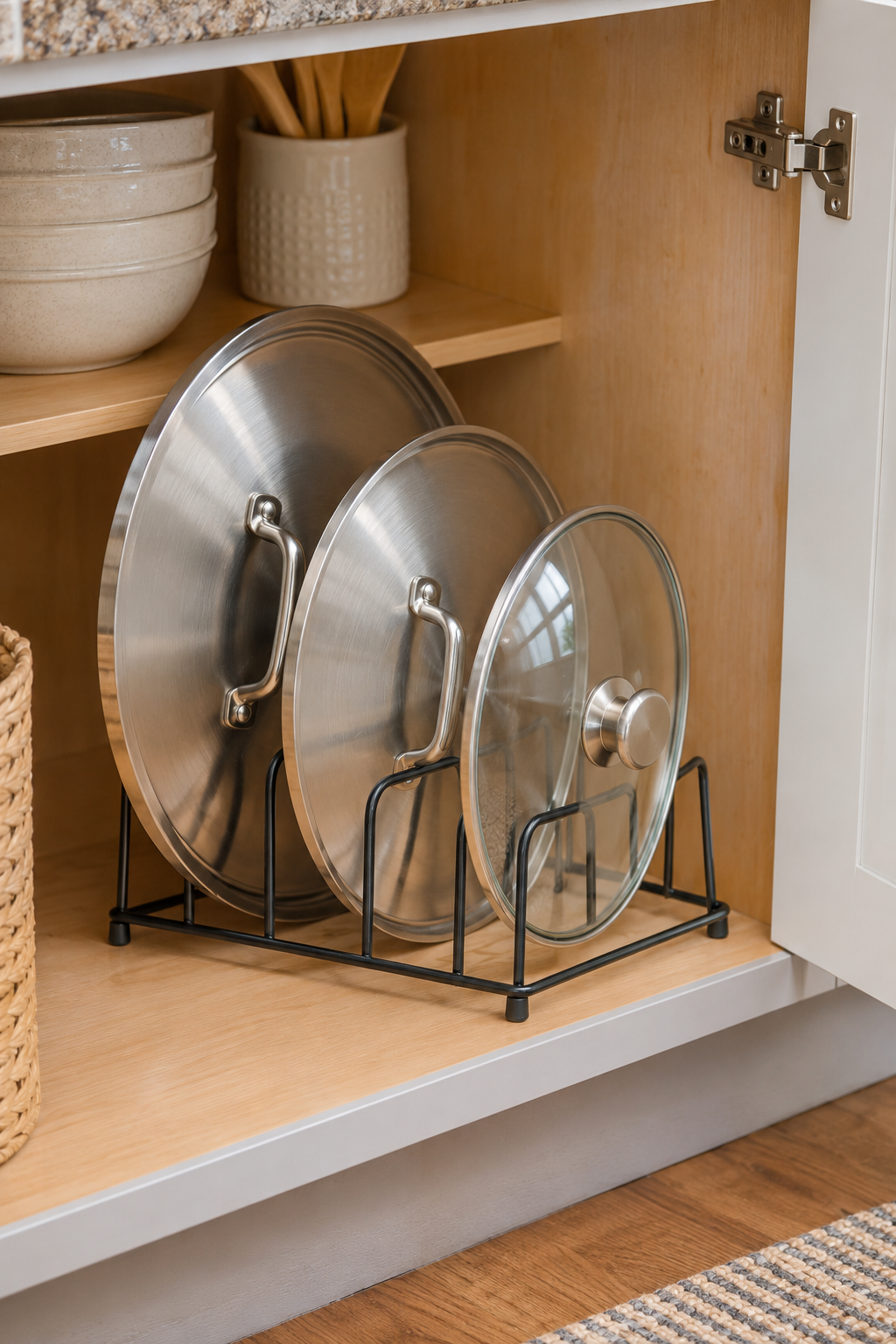
Adjustable pan-lid rack
Check the space around lid knobs and handles. Choose a rack that supports each lid securely and fits behind the closed cabinet door. Opens Amazon search results.
Use adjustable spacing for a mixed collection and keep the most-used lids nearest the front. Try every lid with the door closed, particularly those with long or tall handles. Separate delicate glass lids if contact with another object could damage them.
Cabinet-door mounts need their own checks: appropriate fixings, door construction, loaded weight, and clearance from shelves. Don’t install a door rack simply because the empty door appears to have space. A freestanding organizer is often easier to trial.
Test the setup before adding labels
- Remove and replace each everyday piece with the cabinet fully open.
- Check that the rack stays stable when one side is unloaded.
- Close the door gently and check for contact with handles or dividers.
- Make sure no item has to be wedged or forced into place.
- Use the layout for a week and adjust any awkward slots.
Keep miscellaneous utensils, manuals, and food-storage lids out of this section unless they’ve been assigned an appropriate space. Your kitchen utility drawer can hold small everyday supplies without turning the bakeware cabinet into a catchall.
Common questions
Does vertical storage always save space?
No. It can improve access while using more width, and it needs enough height. Compare a measured layout with your current arrangement rather than assuming upright storage automatically increases capacity.
What should you do in a cabinet that’s too short?
Choose another suitable cabinet, use a rack designed for a different orientation, or keep a smaller controlled stack with appropriate protection. Don’t remove structural parts or overload an adjustable shelf to force the arrangement.
Article images are AI-generated illustrations.