As an Amazon Associate I earn from qualifying purchases. This article contains affiliate links.
Mail piles grow when opening an envelope creates another decision. A bill needs attention, a school form needs signing, and a warranty needs a home. Put those next steps beside one another and you can stop treating every piece of paper as miscellaneous clutter.
Set up three routes: action, file, and recycle. Sensitive material that needs secure disposal goes to a separate appropriate shredding container. Important originals belong in secure long-term storage, not an exposed hallway organizer.
Choose one place where paper enters your routine
Pick a location near where you naturally open the mail. It could be a short section of kitchen counter, a home-office shelf, or a wall pocket away from the front door’s public view. Keep it clear of food preparation, water splashes, and heat.
Use one station per household unless you have a practical reason to split it. Multiple informal piles make it harder to tell which document is current. Give each person a way to identify their action items within the same review process.
Before buying storage, try three labeled folders in a box for a week. You may discover that a small upright organizer fits your habits better than an attractive wall system you walk past every day.
Define the three routes
| Route | What belongs | What happens next |
|---|---|---|
| Action | A form to complete, a bill to check, or something requiring a response. | Record the deadline and complete the next step. |
| File | A document you’ve decided needs keeping. | Move it to the appropriate physical or digital record system. |
| Recycle | Accepted non-sensitive paper you no longer need. | Remove it according to local recycling rules. |
A file pocket is a temporary stop, not your archive. Set a review day so papers don’t sit there for months. Keep the action section separate from items that only need filing.
Before recycling, check whether a document contains personal or financial information. The Federal Trade Commission recommends protecting sensitive records and shredding them when disposing of them. Don’t use an open recycling basket as the holding place for those documents.
Choose wall pockets or desktop trays
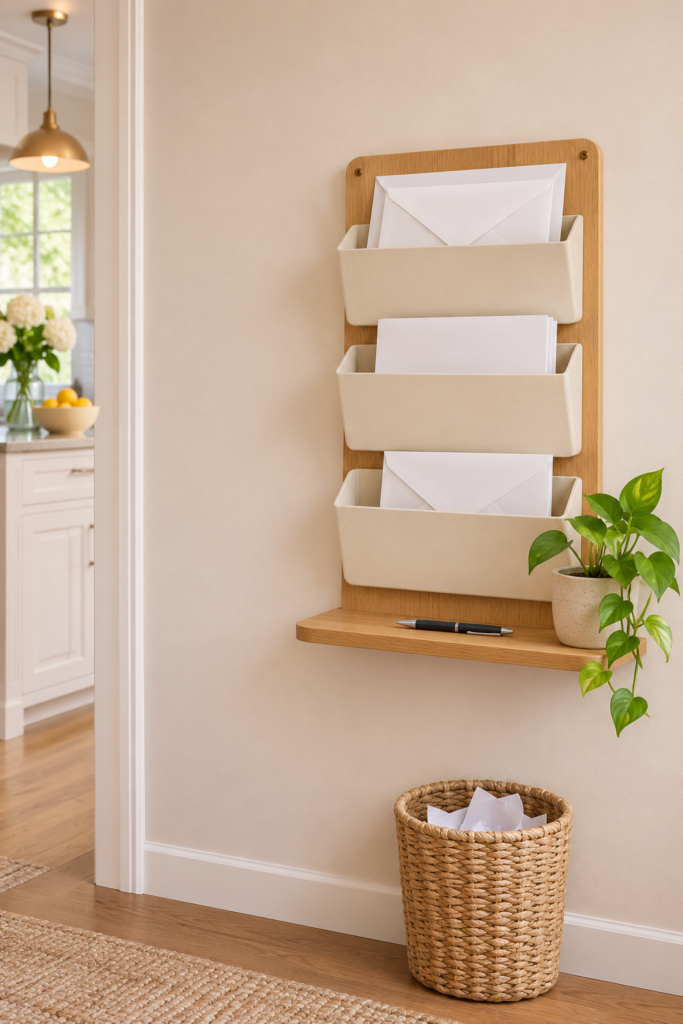
Wall pockets free up a surface and work well when you prefer seeing the category labels at eye level. Choose an appropriate mounting method for the loaded weight and wall construction. Check rental rules before drilling or applying adhesive products.
Three-pocket wall organizer
Check paper size, pocket depth, mounting instructions, and loaded weight. Choose a location that is convenient without displaying sensitive paperwork to visitors. Opens Amazon search results.
Desktop trays are easier to move and usually require less setup. Measure the full footprint and leave room to lift papers out. Place them where they won’t become a platform for bags, keys, and unopened parcels.
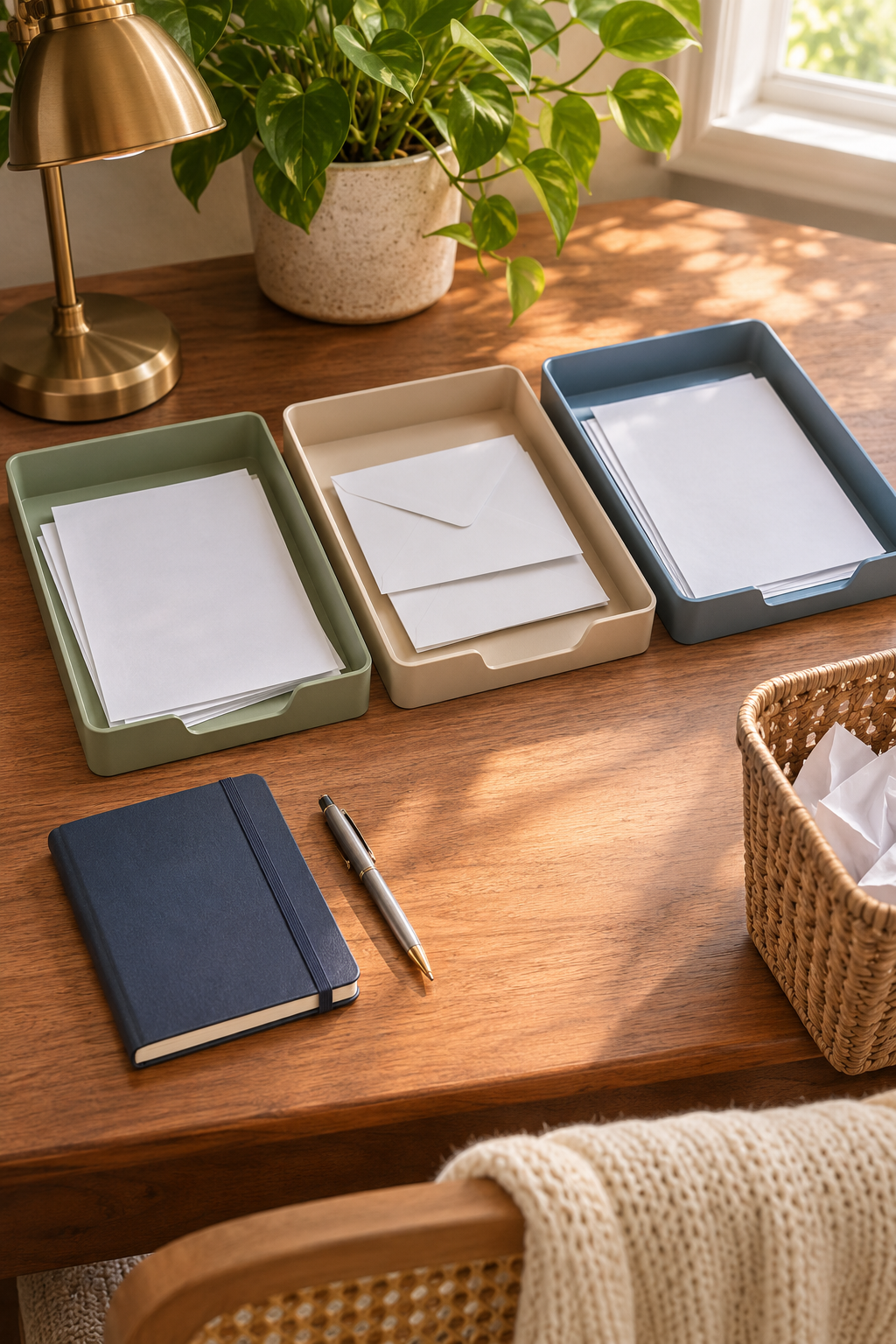
Three-tier desktop letter trays
Choose trays that fit your paper size and leave room to lift documents out. A compact footprint helps keep the station within a defined space. Opens Amazon search results.
A folder for each route can work inside either system. Label the function in plain words. Avoid elaborate categories such as pending review versus pending consideration unless your household can explain the difference immediately.
Make opening the mail a short decision session
- Open the envelope and remove inserts you don’t need to keep.
- Identify whether the document requires an action, storage, or disposal.
- Record a real deadline in your usual calendar or task system.
- Put the paper in its route, with sensitive items handled separately.
- Remove ordinary recycling from the station before walking away.
Keep a pen and your chosen task list nearby. A letter opener or scissors should be stored appropriately, especially around children. Don’t fill the station with every office supply you might someday use.
Use the five-zone kitchen utility drawer for small general supplies rather than hiding paperwork under the tape dispenser. The drawer and mail station should have different jobs.
Review action and filing once a week
Choose a regular slot when you can actually respond to the papers, not just rearrange them. Work through dated actions first, then move completed records to their permanent home. Check that a paper marked handled really has been dealt with.
For anything waiting on somebody else, write a follow-up date and the next step. Keep only the records you need for that task together. A single clear note is more useful than attaching five sticky notes with no dates.
Your home-office organization system can hold the longer-term files. Match retention decisions to the document type and your circumstances. For tax, legal, or financial records, consult the relevant official guidance or adviser rather than applying one disposal rule to everything.
Set a visible capacity limit
Keep enough space to see the front of each folder and remove one paper without disturbing the rest. When a pocket is full, process it before adding another organizer. Extra capacity can postpone the same decisions that created the original pile.
Keep unopened parcels, magazines, school art, and sentimental keepsakes out of the three-zone station unless they’re actively part of a current task. Give those categories separate storage and their own review limits.
At the end of the weekly review, wipe the surface and leave the station ready for incoming paper. You can connect this job to your Sunday reset if that timing works for your household.
Common questions
Can you scan everything and throw away the originals?
No. Some originals need keeping, and retention requirements vary. Decide what the document is before digitizing or disposing of it. Protect digital files with appropriate access controls and backups.
What if one person keeps adding paper without sorting?
Start with one clearly marked incoming slot and a shared review time. Make the next step easy to understand, then adjust the station after a week of actual use. A system that depends on everyone remembering an unwritten rule will be hard to maintain.
Article images are AI-generated illustrations.