A cluttered pantry can turn meal planning into a treasure hunt and grocery shopping into guesswork. You know you bought pasta sauce last week, but where exactly is it hiding behind those boxes of cereal and bags of snacks?
Creating an organized pantry isn’t just about making things look pretty. It saves you time, reduces food waste, and makes cooking more enjoyable. Whether you have a spacious walk-in pantry or just a few cabinets, the right organization system will transform your kitchen storage into a functional space that actually works for your daily routine.
Start with a Smart Categorizing System
The foundation of any organized pantry is a logical categorizing system. Group similar items together and assign each category a dedicated zone. This makes finding ingredients intuitive and helps you avoid buying duplicates.
Create zones for baking supplies, canned goods, snacks, breakfast items, pasta and grains, condiments, and beverages. Place frequently used items at eye level and within easy reach. Keep heavy items like canned goods on lower shelves for safety and convenience.
Consider your cooking habits when planning zones. If you bake regularly, keep all your baking supplies together in one area. Love making quick weeknight pasta dinners? Create a dedicated pasta zone with noodles, sauces, and seasonings all within arm’s reach.
For families with children, establish a snack zone at kid-friendly height. This encourages independence while keeping healthier options front and center.
Container Solutions That Actually Work
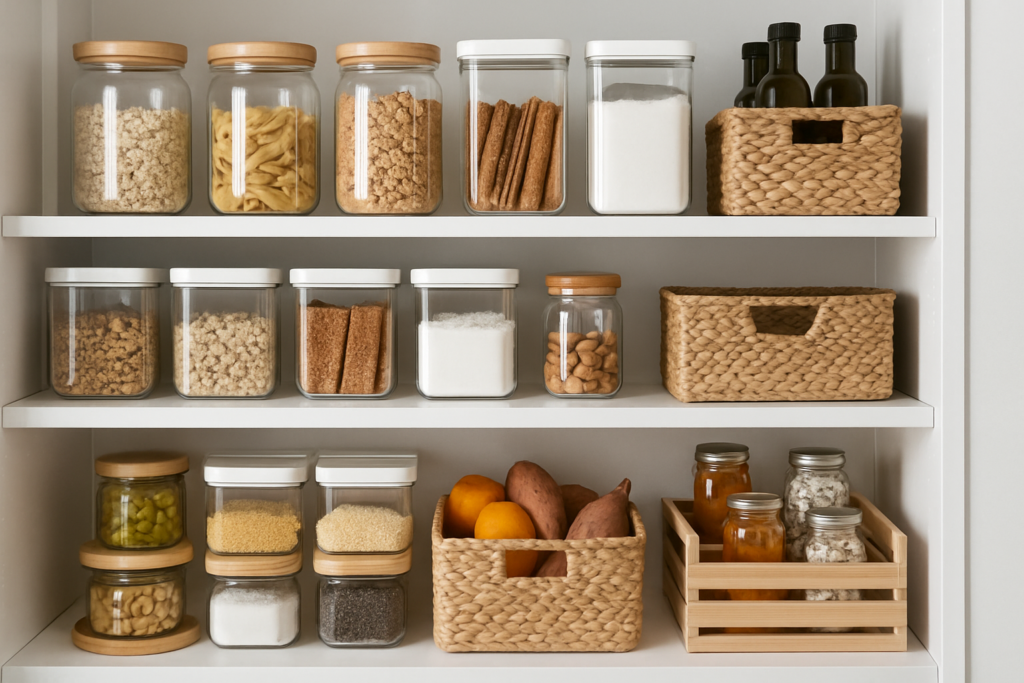
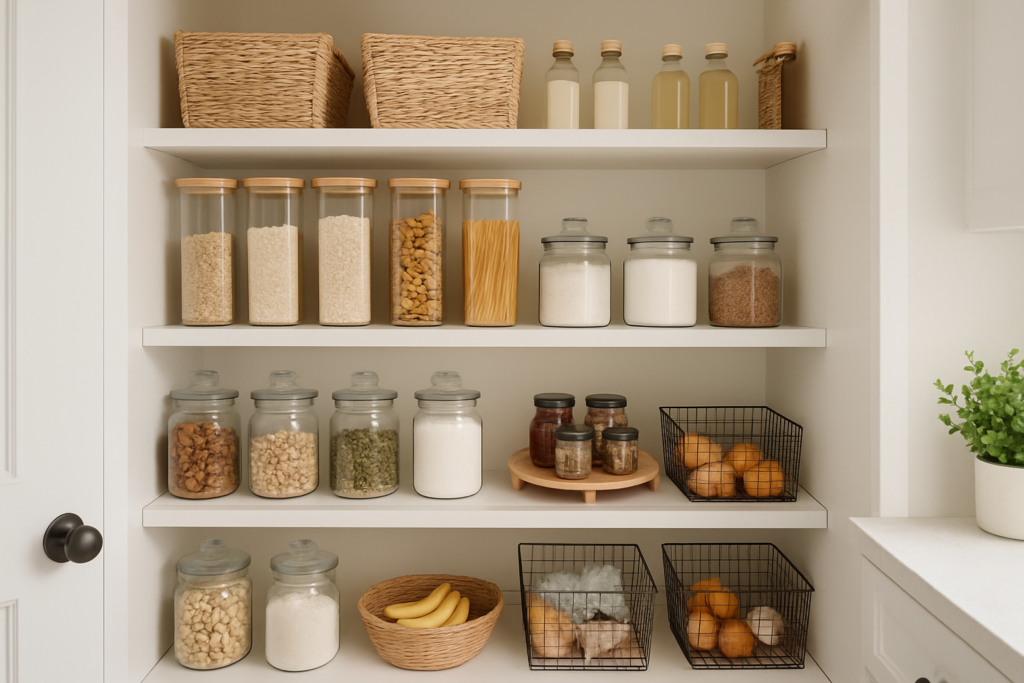
The right containers make all the difference in maintaining an organized pantry. Clear, airtight containers keep food fresh longer while making it easy to see what you have and how much is left.
For bulk items like flour, sugar, rice, and cereal, invest in large airtight food storage containers. Square or rectangular shapes use space more efficiently than round containers.
OXO Pop Containers
These containers have an excellent airtight seal and stackable design that maximizes vertical space.
For smaller items like spices, nuts, and snacks, use medium-sized clear containers. Glass mason jars work beautifully for items you use frequently, while plastic containers are lighter and safer for higher shelves.
Don’t forget about baskets and bins for items that don’t need airtight storage. Wire baskets work well for potatoes, onions, and other produce that needs airflow. Clear plastic bins are perfect for corralling packets of seasoning, tea bags, or individual snack portions.
Labeling Strategies That Keep Everyone on Track
Labels are your secret weapon for maintaining pantry organization long-term. They help family members know exactly where items belong and make it obvious when you’re running low on essentials.
Use a label maker for a clean, professional look, or try chalkboard labels for items that change frequently. Include both the contents and expiration dates on storage containers.
For shelves and zones, create larger labels that clearly mark each area. This is especially helpful for households with multiple cooks or when teaching children to help with kitchen organization.
Brother P-touch Label Maker
This label maker creates durable, professional-looking labels that won’t peel off over time.
Consider color-coding your labels by category. Use one color for baking supplies, another for snacks, and so on. This visual system makes it even easier to maintain your organization over time.
Maximizing Vertical Space Like a Pro
Most pantries have untapped vertical potential. Look up and you’ll likely find several inches of unused space above your current storage.
Install adjustable shelving to customize shelf heights for your specific needs. Tall items like cereal boxes need more clearance, while canned goods can stack efficiently with less space between shelves.
Use stackable shelf organizers to create double-decker storage within existing shelves. These are perfect for canned goods, jars, and boxed items.
Door space is often overlooked but incredibly valuable. Install an over-door organizer for spices, condiment packets, or cleaning supplies. Just make sure the door can still close properly with the added weight.
Wall-mounted racks on the inside of cabinet doors work well for baking sheets, cutting boards, or even small pantry items. Every vertical inch counts when you’re working with limited space.
Walk-in Pantry Organization Ideas
Walk-in pantries offer more space but require strategic planning to avoid becoming catch-all storage rooms. Create distinct zones and use the walls efficiently with a combination of shelving types.
Install floor-to-ceiling shelving along the walls, but vary the shelf depths. Use deeper shelves for bulk items and appliances you don’t use daily. Shallower shelves work better for canned goods and smaller items that can get lost in deep storage.
Add a countertop or workstation if space allows. This gives you room for meal prep and a surface for sorting groceries as you put them away.
ClosetMaid Pantry Cabinet
This freestanding cabinet adds substantial storage without permanent installation.
Consider pull-out drawers for lower shelves. They make it easy to access items stored in the back without having to move everything in front.
Cabinet Pantry Solutions for Small Spaces
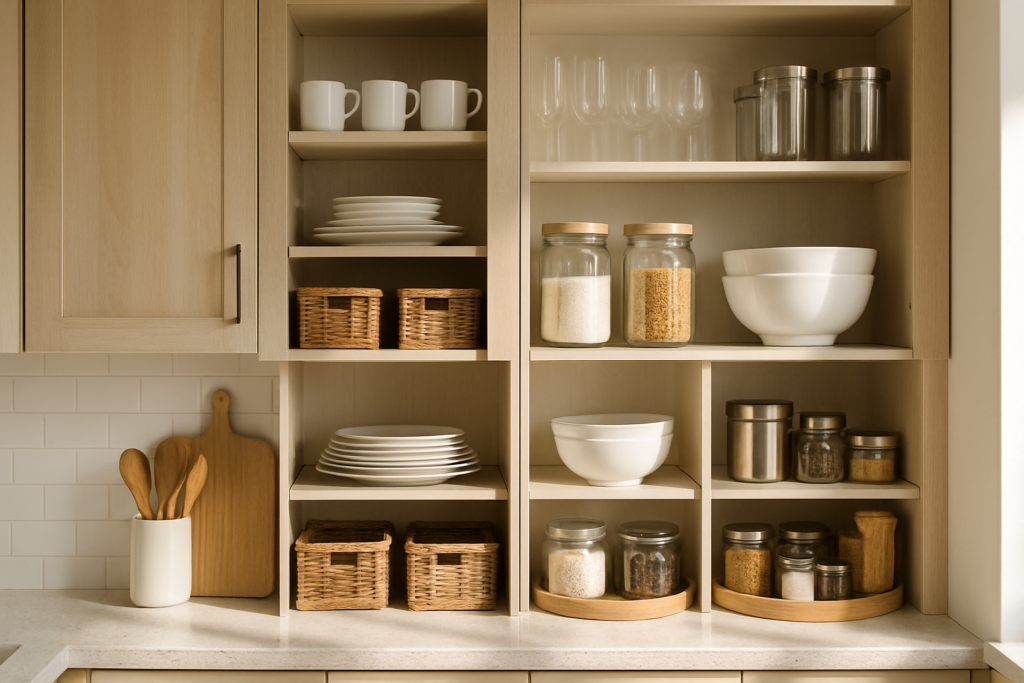
Cabinet pantries require more creative solutions since you’re working with limited depth and height. Focus on accessibility and making every inch count.
Install pull-out shelves or drawers that extend fully. This eliminates the dreaded “lost in the back of the cabinet” problem and makes everything easily accessible.
Use tiered shelf organizers to create multiple levels within a single shelf. This works especially well for canned goods, spice jars, and condiment bottles.
Magnetic strips on the inside of cabinet doors can hold small spice containers or metal lids. Lazy Susans work well in corner cabinets where items tend to disappear.
Think vertically even in cabinets. Stackable bins and containers help you use the full height of the space while keeping categories separate.
Frequently Asked Questions
How often should I reorganize my pantry?
Plan a thorough pantry reorganization every 3-4 months, checking expiration dates and adjusting your system as needed. Do quick maintenance weekly when you put away groceries, and address any organization issues immediately rather than letting them pile up.
What’s the best way to store opened packages?
Transfer opened items to airtight containers whenever possible. For packages that don’t transfer well, use clips to seal them tightly and store in bins to keep them upright and visible. Label containers with the expiration date from the original package.
Should I organize by expiration date or by category?
Organize primarily by category for daily functionality, but use the “first in, first out” rule within each category. Place newer items behind older ones, and check expiration dates during your regular pantry maintenance sessions.
This article contains affiliate links. We may earn a small commission at no extra cost to you.