Nothing ruins a relaxing shower quite like standing in ankle-deep water because your drain has decided to stage a rebellion. Hair, soap scum, and mysterious gunk team up to create blockages that seem impossible to conquer. You’ve probably tried poking at it with a finger or letting hot water run, hoping the problem would magically disappear.
The truth is, not all drain-clearing methods are created equal. Some work like magic, others barely make a dent, and a few might even make things worse. After testing various approaches on countless clogged drains, we’ve ranked five popular methods from least to most effective, so you can skip the trial-and-error frustration.
From simple DIY tricks to professional-grade solutions, here’s what actually works when your shower drain is acting up.
Method #5: Chemical Drain Cleaners (Least Effective)
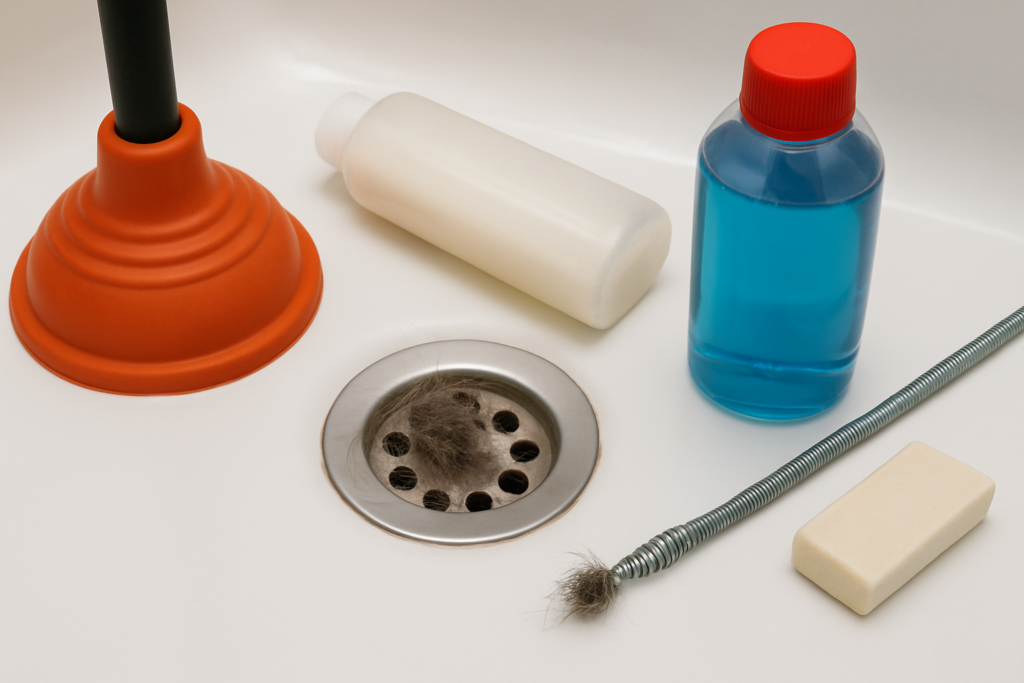
Walk down any grocery store cleaning aisle, and you’ll find bottles promising to dissolve any clog in minutes. These chemical drain cleaners contain harsh ingredients like sodium hydroxide or sulfuric acid that generate heat to break down blockages.
Unfortunately, shower clogs consist mainly of hair and soap buildup, which these chemicals struggle to dissolve effectively. Hair is particularly stubborn because it’s made of keratin, a protein that resists most commercial drain cleaners.
Chemical cleaners also come with serious drawbacks. They can damage older pipes, especially if you have PVC or rubber components in your plumbing system. The toxic fumes pose health risks, and these products are terrible for the environment once they enter the water system.
Safety Warning: Never mix different chemical cleaners, and always ensure adequate ventilation. These products can cause severe burns if they contact skin or eyes.
While chemical cleaners might provide temporary relief for minor soap buildup, they rarely solve hair-based clogs completely. You’ll often find yourself dealing with the same problem within weeks.
Method #4: Enzyme Cleaners (Limited Effectiveness)
Enzyme-based drain cleaners take a biological approach, using naturally occurring enzymes and bacteria to break down organic matter. These products are much safer for your pipes, your health, and the environment compared to chemical alternatives.
The main advantage of enzyme cleaners is their gentleness. They won’t corrode pipes or create toxic fumes, making them safe to use regularly as preventive maintenance. Some people swear by monthly enzyme treatments to keep drains flowing smoothly.
However, enzyme cleaners work slowly and aren’t powerful enough for significant blockages. They excel at breaking down soap scum and organic buildup but struggle with dense hair clogs. You’ll typically need to wait 6-8 hours or overnight for results, and even then, stubborn clogs often remain.
Think of enzyme cleaners as maintenance tools rather than emergency solutions. They’re excellent for preventing clogs but won’t rescue you when you’re already dealing with standing water.
Method #3: Manual Removal (Moderate Effectiveness)
Sometimes the most basic approach yields surprisingly good results. Manual removal involves removing the drain cover and pulling out visible hair and debris with your hands, tweezers, or needle-nose pliers.
This method works best when the clog is relatively shallow and accessible. You can often grab significant hair clumps that have accumulated just below the drain cover. It’s free, requires no special tools, and gives you immediate feedback on what you’re dealing with.
Start by removing the drain cover if possible. Most shower drains have covers that unscrew or pop off with gentle prying. Wear rubber gloves and prepare yourself for some unpleasant sights and smells.
The limitation of manual removal is reach. You can only access clogs near the surface, while deeper blockages remain untouched. Hair often wraps around drain components several inches down, well beyond what your fingers can reach.
Manual removal works great as a first step or in combination with other methods. Clear out what you can see, then move on to more powerful solutions for deeper clogs.
Method #2: Drain Snakes and Hair Removal Tools (High Effectiveness)
Drain snakes and specialized hair removal tools represent a major step up in effectiveness. These long, flexible tools can reach deep into your drain to grab or break up clogs that manual removal can’t touch.
Traditional drain snakes feature a coiled metal cable that you feed into the drain while turning a handle. The rotating action helps break through blockages and allows you to pull out debris. For shower drains specifically, plastic hair removal tools with barbed edges work exceptionally well.
The FlexiSnake Drain Weasel has become popular because it’s designed specifically for hair clogs. Its micro-hooks grab onto hair strands and pull them out intact, often removing impressive amounts of buildup in one go.

Drain Snake Hair Removal Tool
These plastic tools with barbed edges excel at grabbing and removing hair clogs from shower drains
Using these tools requires some technique. Feed the snake slowly into the drain, rotating as you go. When you feel resistance, work the tool back and forth to grab onto the clog. Pull steadily rather than yanking, as sudden force can break the tool or push the clog deeper.
Most drain snakes and hair removal tools are reusable and cost-effective. They work on contact, giving you immediate results without waiting for chemicals to work. The main downside is the mess factor, but disposable gloves and paper towels make cleanup manageable.
For recurring hair clogs, investing in a quality drain snake pays for itself quickly. These tools can handle most residential shower drain blockages with minimal effort.
Method #1: Professional Hydro Jetting and Auger Services (Most Effective)
When DIY methods fall short, professional plumbers bring heavy-duty equipment that can handle any clog. The two most effective professional methods are hydro jetting and motorized drain augers, both of which deliver results that home solutions simply can’t match.
Hydro jetting uses high-pressure water streams (typically 3,000-4,000 PSI) to blast through clogs and clean pipe walls thoroughly. This method removes not just the current blockage but also buildup that would cause future clogs. It’s like giving your drain pipes a complete reset.
Professional-grade motorized augers are much more powerful than consumer drain snakes. These machines can cut through the toughest blockages and reach much deeper into your plumbing system. Plumbers also have specialized cameras to inspect pipes and identify the exact location and nature of clogs.
The main advantages of professional service include guaranteed results, proper diagnosis of underlying issues, and prevention of pipe damage. Experienced plumbers know how to clear clogs without harming your plumbing system, something that’s harder to ensure with DIY approaches.
Professional services make financial sense for persistent clogs, multiple blocked drains, or when you suspect deeper plumbing issues. The cost typically reflects the thoroughness and long-lasting results you get.
Professional Drain Auger
For serious clogs, these motorized augers provide professional-level power for homeowners
Environmental and Safety Considerations
Your choice of drain clearing method impacts both your immediate environment and the broader ecosystem. Chemical drain cleaners pose the greatest environmental risk, as they introduce toxic substances into water systems that treatment plants struggle to remove completely.
These chemicals can harm aquatic life and contaminate groundwater. Even after treatment, trace amounts often persist in wastewater discharge. The manufacturing and disposal of these products also contribute to environmental damage.
Enzyme cleaners and physical removal methods are much more environmentally friendly. Enzymes break down into harmless byproducts, while manual and mechanical methods don’t introduce any chemicals into the water system.
From a safety standpoint, avoid mixing any chemicals, even seemingly harmless ones. Store all drain cleaning products away from children and pets. Always wear protective equipment when handling any drain cleaning tools or chemicals.
Professional services often use environmentally responsible methods. Many companies have moved away from harsh chemicals in favor of mechanical cleaning and eco-friendly solutions.
Prevention Tips to Avoid Future Clogs
The best clog is the one that never forms. Simple preventive measures can dramatically reduce how often you deal with blocked shower drains.
Install a drain hair catcher or strainer. These inexpensive devices catch hair before it enters your drain system. Clean them after each shower to maintain effectiveness. The TubShroom and similar products fit inside drains and trap hair while allowing water to flow freely.
Rinse your drain weekly with hot water to help dissolve soap buildup. Use the hottest water your tap produces and let it run for 30-60 seconds. This simple habit prevents gradual accumulation of soap scum and oils.
Brush your hair before showering to remove loose strands that would otherwise wash down the drain. This reduces the amount of hair entering your plumbing system significantly.
Consider monthly enzyme treatments as preventive maintenance. While enzyme cleaners aren’t effective against existing major clogs, they excel at preventing buildup when used regularly.
When to Call a Professional
Some situations require professional intervention regardless of your DIY skills. Multiple drains backing up simultaneously often indicates a main line blockage that requires professional equipment to resolve.
Persistent clogs that return quickly after clearing suggest deeper issues in your plumbing system. Tree roots, pipe damage, or structural problems need professional diagnosis and repair.
Sewage odors coming from drains indicate potentially serious plumbing problems that could affect your health. Don’t attempt DIY fixes when sewer gases are present.
Water backing up in multiple fixtures when you use the shower points to main line issues. This situation can cause expensive damage if not addressed promptly by professionals.
Frequently Asked Questions
How often should I clean my shower drain?
Clean your shower drain weekly by removing visible hair and debris, and rinse with hot water. Perform a deeper cleaning monthly using enzyme cleaners or a drain snake for preventive maintenance. This schedule prevents most major clogs from forming.
Can I use a drain snake on all types of shower drains?
Most drain snakes work on standard shower drains, but some specialized drain designs may require specific tools. Check your drain type before purchasing equipment. Plastic hair removal tools work on virtually all residential shower drains, while metal augers may not fit smaller openings.
Are chemical drain cleaners ever worth using?
Chemical drain cleaners rarely provide lasting solutions for shower clogs and can damage pipes over time. They’re most effective on grease clogs in kitchen sinks but struggle with hair-based shower blockages. Stick to mechanical removal methods or enzyme cleaners for shower drains.
What should I do if water won’t go down at all?
Complete blockages require immediate action to prevent water damage. Start with manual removal to clear surface debris, then use a drain snake or hair removal tool. If these methods don’t restore flow, contact a professional plumber to avoid potential pipe damage from continued pressure.
This article contains affiliate links. We may earn a small commission at no extra cost to you.