Nothing kills the beauty of a tiled space quite like dingy, discolored grout lines. You’ve scrubbed with a toothbrush, tried various cleaners, and maybe even considered ripping out the whole floor. Before you reach that extreme, there are proven methods that can restore your grout to its original brightness.
The key is understanding which cleaning approach works best for your specific situation. Different types of stains, grout materials, and levels of discoloration require different strategies. Let’s explore five effective methods that actually work, plus prevention tips to keep your grout looking fresh longer.
Method 1: Steam Cleaning for Deep Sanitization
Steam cleaning offers one of the most effective ways to clean grout without harsh chemicals. The high-temperature steam penetrates deep into porous grout lines, loosening embedded dirt and killing bacteria and mold.
You’ll need a steam cleaner with grout attachments. Focus the steam nozzle directly on the grout lines and move slowly along each section. The combination of heat and moisture will soften stubborn stains, making them easier to wipe away.
Steam works particularly well on mildew and soap scum buildup. After steaming each section, immediately wipe with a clean microfiber cloth to remove the loosened debris. For heavily soiled areas, you may need to make multiple passes.
McCulloch MC1275 Heavy-Duty Steam Cleaner
This model includes specialized grout cleaning attachments and generates consistent high-temperature steam.
Method 2: Oxygen Bleach for Gentle Whitening
Traditional chlorine bleach can damage grout over time, but oxygen bleach provides effective whitening without the harsh side effects. Unlike chlorine bleach, oxygen bleach won’t weaken grout or cause discoloration on colored grout lines.
Mix oxygen bleach powder with warm water according to package directions. Apply the solution to grout lines and let it sit for 15-20 minutes. The oxygen bleach will break down stains and organic matter without the toxic fumes associated with chlorine products.
Scrub gently with a stiff-bristled grout brush after the solution has had time to work. Rinse thoroughly with clean water and dry the area completely. This method works exceptionally well on mildew stains and general discoloration.
Method 3: Baking Soda Paste for Abrasive Action
Baking soda creates a mildly abrasive paste that can scrub away surface stains without damaging grout. This method costs pennies and uses ingredients you likely already have at home.
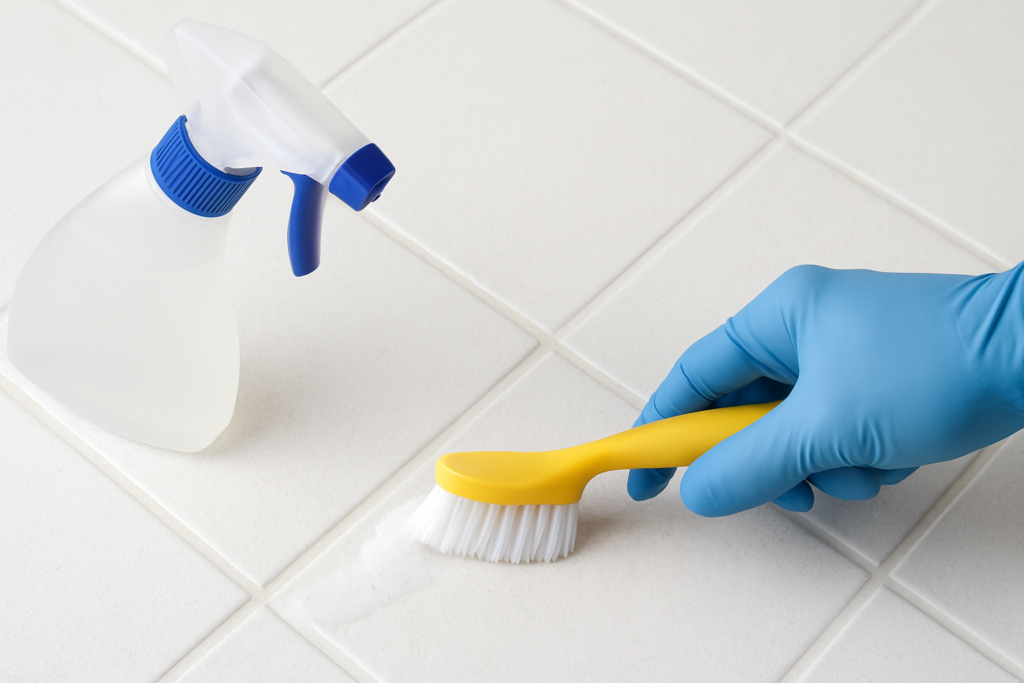
Combine three parts baking soda with one part water to form a thick paste. For extra cleaning power, substitute white vinegar for half the water. Spread the paste over grout lines and let it sit for 10-15 minutes.
Scrub with a firm brush, applying moderate pressure. The baking soda’s abrasive action will lift stains while its alkaline properties help break down acidic buildup. Rinse thoroughly and wipe clean with a damp cloth.
This method works best on light to moderate staining. For heavily discolored grout, you may need to repeat the process or combine it with another cleaning method.
Method 4: Commercial Grout Cleaners for Tough Stains
When household remedies aren’t enough, commercial grout cleaners can tackle the most stubborn discoloration. These products contain concentrated cleaning agents designed specifically for grout restoration.
Look for cleaners that specify they’re safe for your grout type. Some products work better on sanded grout, while others are formulated for unsanded varieties. Always test in an inconspicuous area first.
Apply the cleaner according to manufacturer instructions and allow adequate dwell time. Most commercial cleaners require 10-30 minutes of contact time to work effectively. Use appropriate ventilation and wear gloves when working with these stronger formulations.
Ultimate Grout Cleaner
This acid-free formula works on both sanded and unsanded grout without damaging surrounding tiles.
Method 5: Professional-Grade Equipment Rental
For large areas or severely stained grout, consider renting professional cleaning equipment. Many home improvement stores rent high-powered steam cleaners and grout cleaning machines.
These machines combine hot water extraction with specialized brushes that agitate grout lines while simultaneously removing loosened debris. The results often match what professional cleaning services achieve.
Rental costs are typically reasonable for day-long use, making this option cost-effective for whole-house projects. The equipment comes with detailed instructions and works much faster than manual cleaning methods.
Prevention Tips for Long-Term Grout Health
Regular maintenance prevents the heavy buildup that requires intensive cleaning. Wipe down tiled surfaces after each use, especially in showers and around kitchen sinks.
Weekly cleaning with a mild cleaner keeps soap scum and mineral deposits from accumulating. A simple mixture of dish soap and warm water works well for routine maintenance.
Proper ventilation significantly reduces mold and mildew growth. Run bathroom fans during and after showers, and ensure kitchen areas have adequate airflow during cooking.
Address spills immediately, especially acidic substances like wine, coffee, or citrus juices. These can permanently stain grout if left to penetrate.
When to Seal or Replace Grout
Grout sealing creates a protective barrier that repels stains and moisture. Apply sealer to clean, dry grout every 1-2 years, or when water no longer beads on the surface.
Use a penetrating grout sealer rather than a surface coating for better durability. Apply with a small brush or applicator bottle, wiping away excess from tile surfaces immediately.
Consider grout replacement when cleaning methods no longer work effectively. Cracked, crumbling, or permanently discolored grout should be removed and replaced to maintain both appearance and water protection.
Aqua Mix Sealer’s Choice Gold
This penetrating sealer provides excellent stain resistance without changing grout appearance.
Frequently Asked Questions
How often should I deep clean my grout?
Deep clean grout every 3-6 months depending on usage and exposure to moisture. High-traffic areas like shower floors may need monthly attention, while backsplashes can often go longer between deep cleanings.
Can I use bleach on colored grout?
Avoid chlorine bleach on colored grout as it can cause fading or discoloration. Stick to oxygen bleach or pH-neutral cleaners that won’t alter the grout’s original color.
Why does my grout keep getting dirty so quickly?
Unsealed grout absorbs moisture, soap, and oils, leading to rapid re-soiling. Apply a quality grout sealer after cleaning to create a protective barrier that makes future cleaning much easier.
This article contains affiliate links. We may earn a small commission at no extra cost to you.