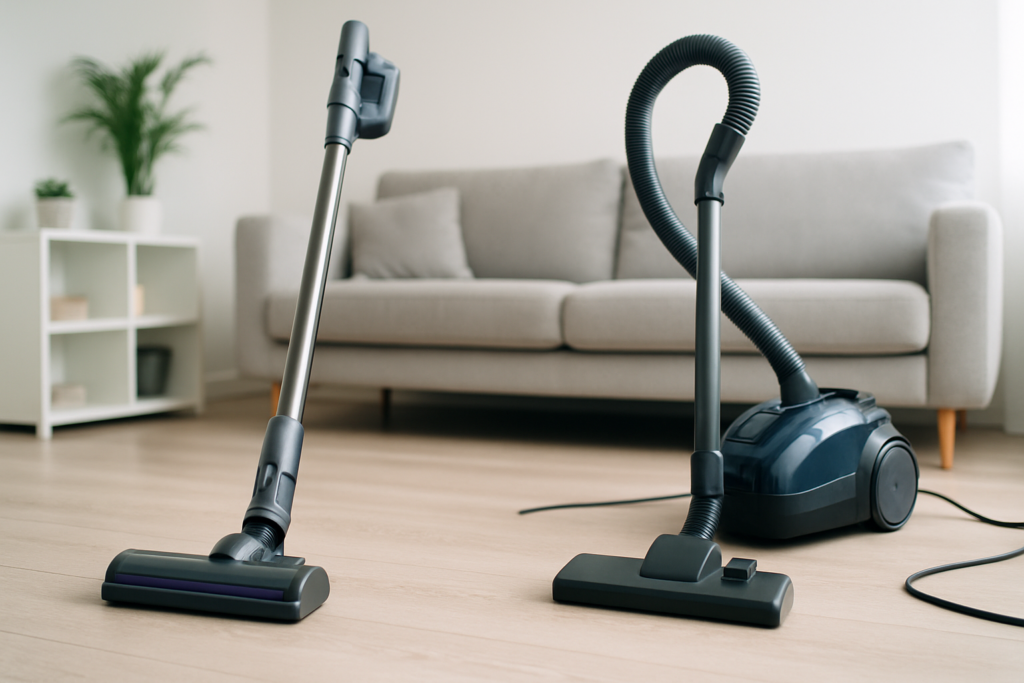
Choosing between a cordless and corded vacuum feels like it should be simple, but the decision gets complicated fast. You’re not just picking between plugging in or going wireless. You’re choosing between two fundamentally different cleaning experiences, each with real tradeoffs that affect how you actually use the thing.
I’ve tested both types extensively, and the right choice depends entirely on your home’s size, your flooring type, and how you actually clean. Let me break down what matters so you can skip the buyer’s remorse.
Suction Power: The Numbers Don’t Tell the Whole Story
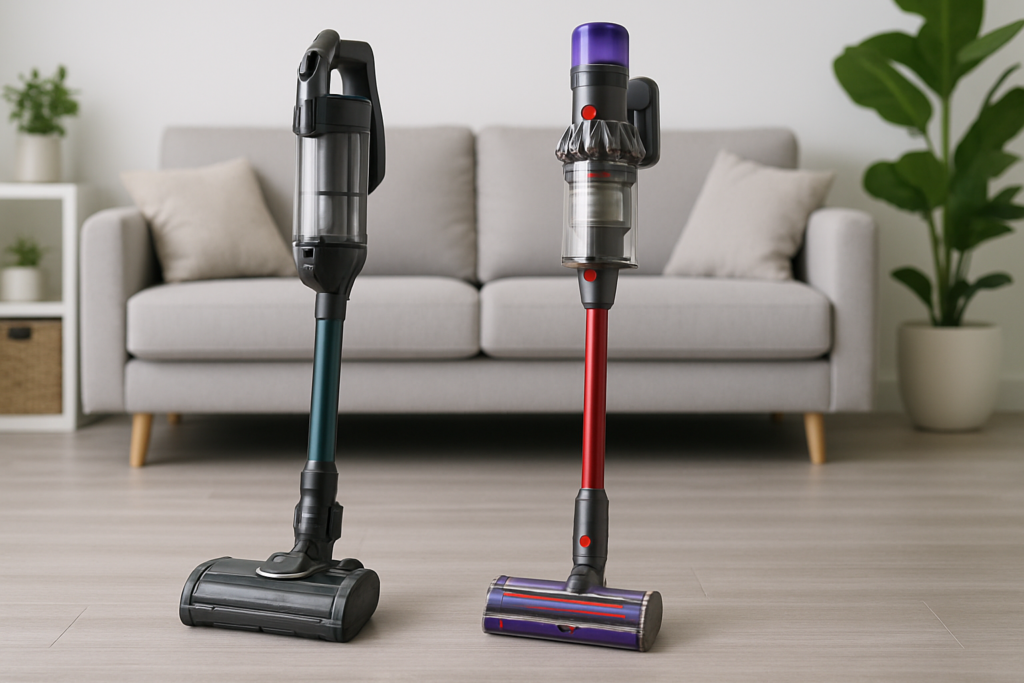
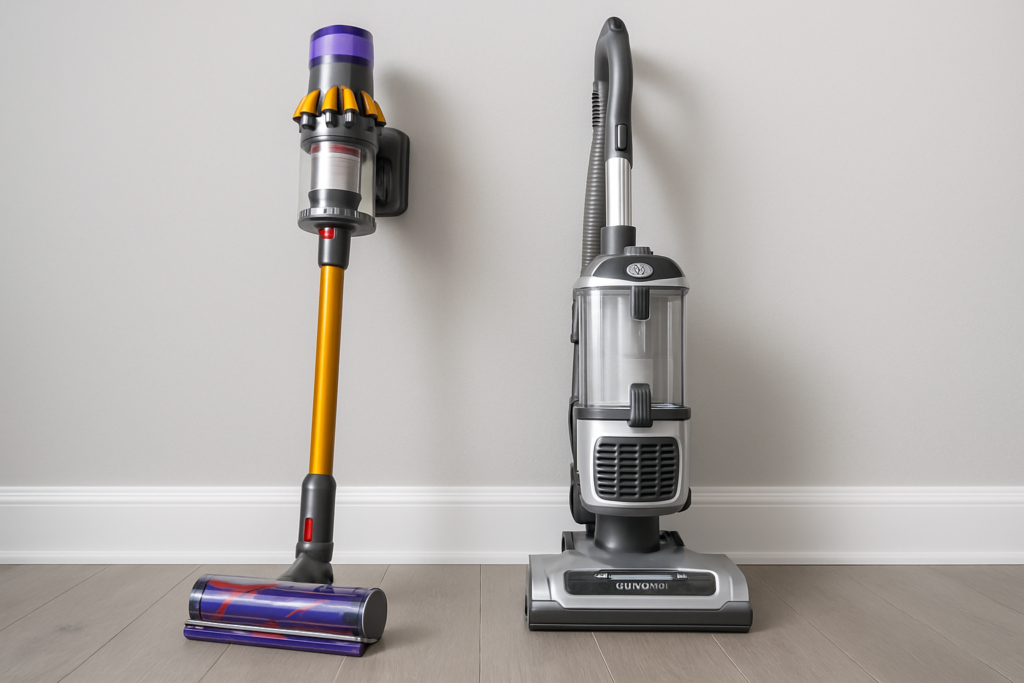
Corded vacuums win the raw power battle, and it’s not even close. A typical corded upright like the Shark Navigator delivers around 1,200 watts of consistent power. Compare that to cordless models like the Dyson V15, which tops out at about 230 air watts in boost mode.
But here’s what the spec sheets miss: you rarely need maximum suction for everyday cleaning. I’ve found that cordless vacuums handle hardwood floors, tile, and low-pile carpets just fine on their standard settings. The suction difference only becomes obvious on thick carpets or when you’re dealing with ground-in dirt.
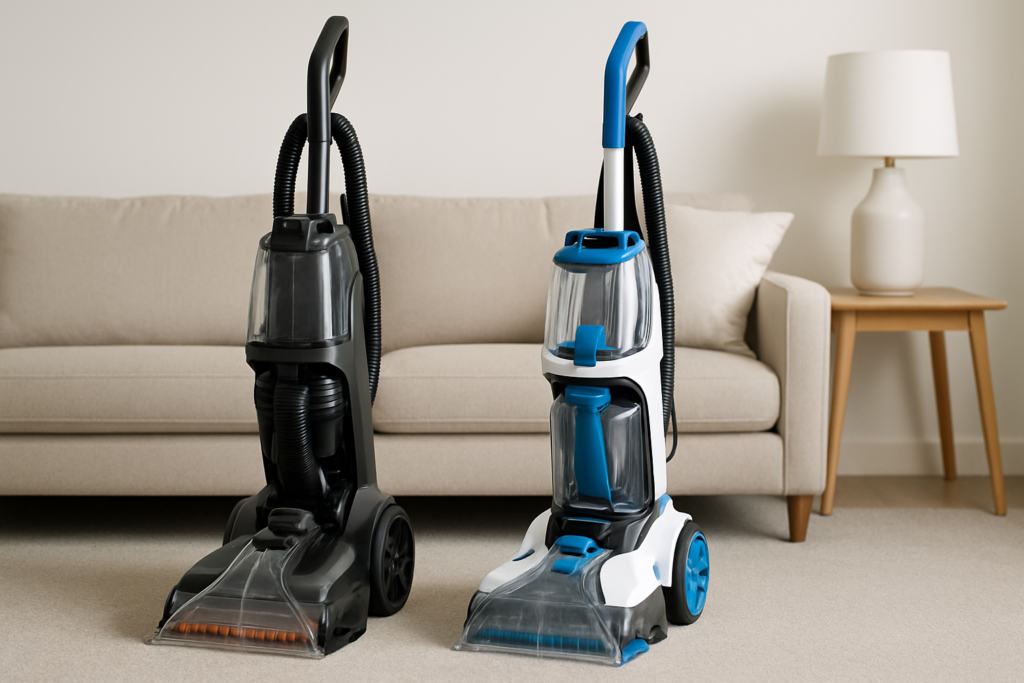
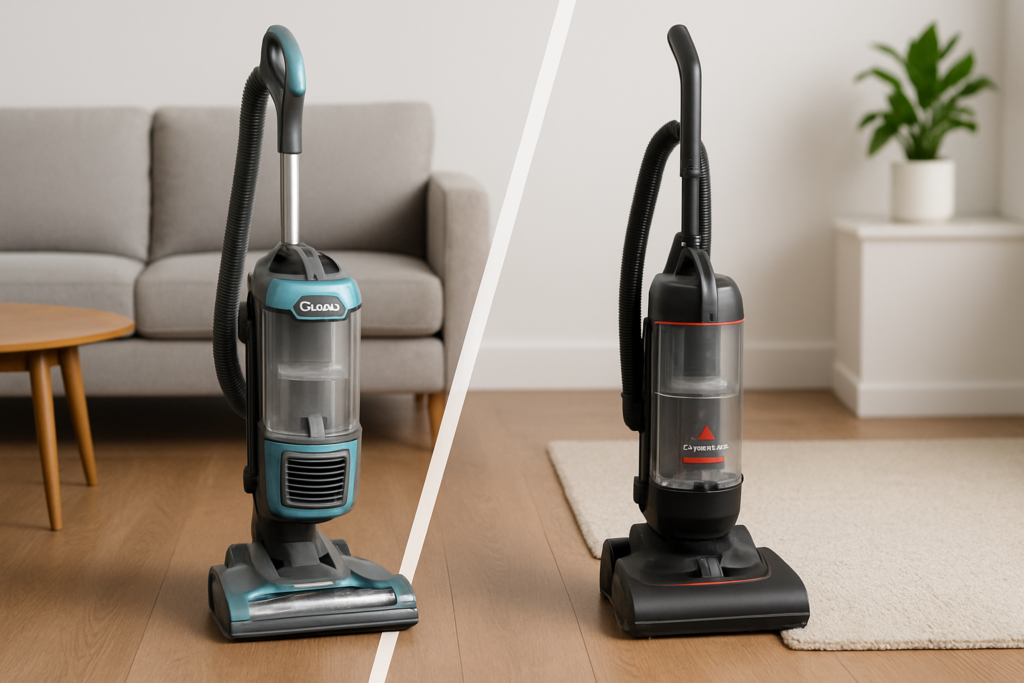
The real advantage of corded power shows up with pet hair on plush carpets. My corded Bissell CleanView pulls up embedded fur that my Dyson V11 leaves behind, even in max mode. If you’ve got multiple pets and wall-to-wall carpeting, that sustained power matters.
Cordless models compensate with better brush roll designs and focused airflow. The Shark Vertex cordless actually outperforms some corded competitors on hard floors because the entire design optimizes for efficiency rather than brute force.
Runtime and Battery Life Reality Check
Most cordless vacuums advertise 60 minutes of runtime. What they don’t mention upfront is that you’ll get maybe 10-12 minutes on the highest power setting. The 60-minute claim applies to the lowest suction mode, which you probably won’t use for actual vacuuming.
For a realistic cleaning session, expect 20-30 minutes from a quality cordless vacuum in normal mode. That’s enough for most apartments and small homes (under 1,500 square feet), but you’ll run out of juice halfway through a larger house.
Battery degradation is the silent killer of cordless vacuums. After about 2-3 years of regular use, that 30-minute runtime drops to 20 minutes, then 15. Eventually, you’re looking at a competitively priced+ battery replacement or buying a whole new vacuum.
Corded vacuums obviously don’t have this problem. You can vacuum for three hours straight if you want (though your arm might disagree). This unlimited runtime matters if you’re the type who deep cleans in marathon sessions or if you’re tackling a large multi-level home.
One practical solution: some cordless models like the Tineco Pure One S12 come with removable batteries. Buy a spare battery and you can hot-swap mid-clean, effectively doubling your runtime.
Convenience and Maneuverability
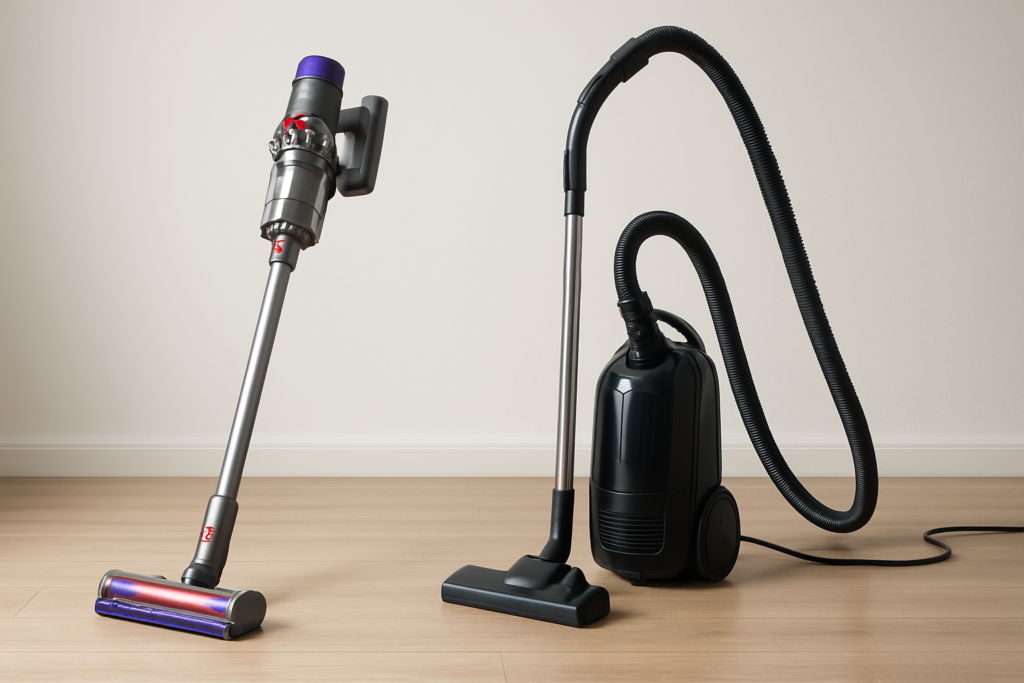
Cordless vacuums change how you clean because there’s zero friction to just grab them and go. Crumbs under the kitchen table? You’re cleaning them in 30 seconds flat. Corded vacuums require you to find an outlet, unwind the cord, and commit to actually vacuuming.
This convenience factor is massive for spot cleaning and quick pickups. I vacuum high-traffic areas 3-4 times more often now with my cordless compared to when I only had a corded model. The psychological barrier of plugging something in is surprisingly real.
Stairs are another area where cordless units dominate. Carrying a lightweight 5-pound stick vacuum up and down beats wrestling with a 15-pound upright and its tangling cord every single time.
That said, the cord isn’t as annoying as you’d think for whole-house cleaning sessions. Modern corded vacuums have 30-foot cords and you can cover most rooms from a central outlet. You do have to switch outlets between rooms, but you’re moving the vacuum anyway.
Weight distribution matters here too. A corded upright’s weight sits on the floor and rolls around. You’re mainly just steering. A cordless stick vacuum’s weight is in your hand, which gets fatiguing after 15-20 minutes of continuous use.
Maintenance Requirements
Both types need regular filter cleaning, but cordless vacuums add battery maintenance to your to-do list. You need to avoid letting the battery fully discharge, and storing them in extreme temperatures (like a garage) kills battery life faster.
Emptying the dustbin happens more frequently with cordless models because they have smaller capacity. Most hold around 0.5 liters compared to 1-2 liters for corded uprights. Expect to empty a cordless vacuum 2-3 times when cleaning a full house.
Filter maintenance is actually easier on many cordless models. Units like the LG CordZero have washable filters that dry quickly. Some corded vacuums use HEPA filters that need replacement every 6-12 months, adding ongoing costs.
Brush roll tangles affect both types equally. You’ll be cutting hair and threads out of the roller every few weeks regardless of which type you choose. Some newer models like the Shark Stratos have self-cleaning brush rolls that help with this.
Long-Term Cost Analysis
The upfront cost difference has narrowed considerably. Quality cordless vacuums from Dyson, Shark, and Tineco range from mid to high-tier pricing, while decent corded uprights start lower but premium models cost just as much.
Battery replacement is where cordless ownership gets expensive. Dyson batteries cost a significant amount to replace after 3-4 years. Other brands are slightly cheaper but still represent a substantial additional cost. Factor this into your total cost of ownership.
Corded vacuums typically last longer overall. I’ve seen Shark and Bissell corded models run strong for 7-10 years with basic maintenance. The lack of a battery as a single point of failure makes them inherently more durable.
Replacement parts availability matters too. Corded vacuum parts are more standardized and cheaper. Need a new hose or brush roll? You’ll pay less for corded vacuum parts and find more third-party options.
Energy costs are negligible for both. Even if you vacuum for an hour weekly, a corded vacuum adds maybe a few dollars per year to your electric bill. Cordless charging is even cheaper but the difference is barely worth calculating.
Which Type Should You Choose?
Get a cordless vacuum if you live in a space under 1,500 square feet with mostly hard floors or low-pile carpet. They’re perfect for apartments, condos, and smaller homes where convenience matters more than marathon cleaning sessions.
Cordless also wins if you have multiple levels in your home and vacuum frequently. The ability to grab it for quick cleanups means you’ll actually maintain your floors instead of letting dirt accumulate until you’re motivated enough to break out the corded model.
Go corded if you have a large home (over 2,000 square feet), thick carpeting, or multiple pets. The sustained suction power and unlimited runtime make whole-house deep cleaning much less frustrating. You won’t be racing against a dying battery or doing multiple cleaning sessions.
Corded vacuums also make more sense if you clean less frequently but more thoroughly. Some people prefer one big weekly cleaning session rather than multiple quick pickups, and corded models are built for that approach.
My honest recommendation for most people: get both. Keep a cordless for daily maintenance and quick messes, and have a corded upright for weekly deep cleaning. You can find quality corded uprights for reasonable prices, making a two-vacuum strategy affordable.
Best Models Worth Considering
For cordless, the Dyson V15 Detect remains the benchmark despite competition. It has genuine power, excellent filtration, and a laser that shows dust on hard floors (gimmicky but surprisingly useful). The battery life is average but the cleaning performance justifies the investment.
The Shark Vertex cordless offers similar performance for less money and includes two batteries. It’s slightly heavier but the dual battery setup solves the runtime problem elegantly.
Budget cordless option: the Tineco A11 Master delivers surprising value with multiple attachments and decent runtime. It won’t match Dyson’s suction but works well for light-duty cleaning.
For corded uprights, the Shark Navigator Lift-Away gives you versatility and strong performance. The detachable canister lets you clean stairs and furniture easily while maintaining the power of an upright.
The Bissell CleanView Swivel Pet is a budget-friendly option that punches above its price point on carpets. It’s loud and feels slightly cheap, but the actual cleaning results compete with models costing twice as much.
Frequently Asked Questions
How long do cordless vacuum batteries actually last?
You’ll get 2-4 years of regular use before noticing significant degradation. The battery won’t die completely, but runtime gradually decreases. Premium brands like Dyson tend to last closer to 4 years, while budget brands may show decline after 2 years. Proper charging habits (not storing it fully discharged, avoiding extreme temperatures) can extend battery life.
Can cordless vacuums really deep clean carpets?
High-end cordless models like the Dyson V15 or Shark Vertex can deep clean low to medium-pile carpets effectively in max power mode. However, they struggle with thick, plush carpets compared to corded uprights. For occasional carpet cleaning, they’re fine. For homes with extensive high-pile carpeting, especially with pets, a corded upright still performs better.
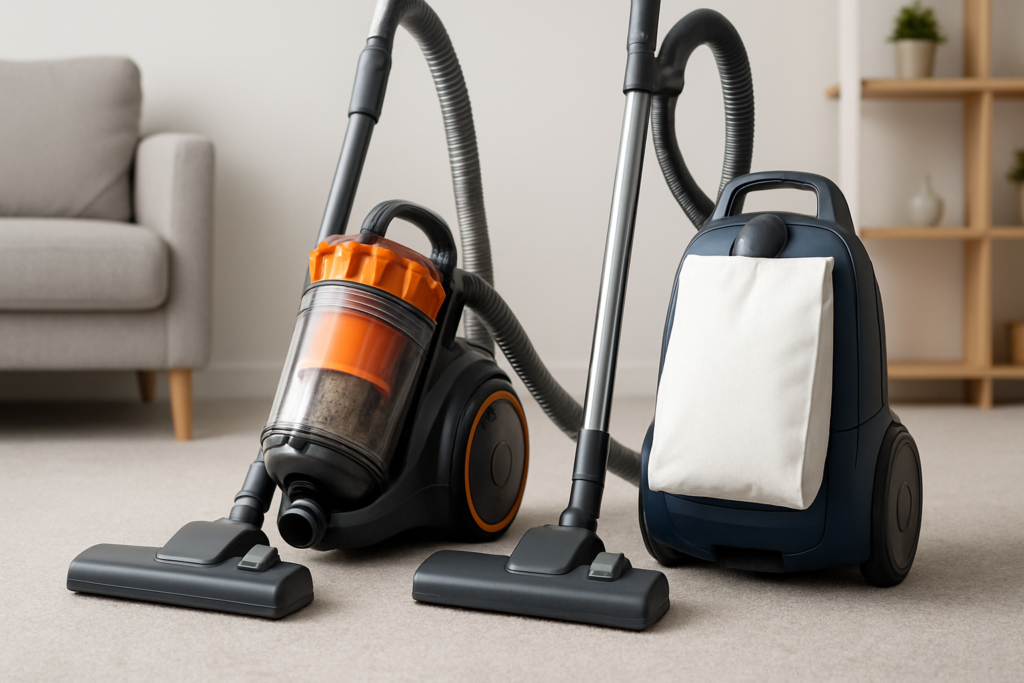
Are bagless vacuums better than bagged ones?
This applies to both cordless (almost always bagless) and corded (available in both). Bagless is more convenient and cost-effective since you’re not buying bags. However, emptying bagless bins exposes you to dust, which bothers allergy sufferers. Bagged vacuums are messier to empty but contain dust better. Most modern cordless vacuums are bagless by design.
What’s the best vacuum for pet hair?
For extensive pet hair, a corded upright with a motorized brush roll wins. The Shark Navigator Lift-Away and Bissell Pet Hair Eraser both excel here. Among cordless options, the Dyson V15 and Shark Vertex cordless handle pet hair well but need more frequent brush roll cleaning and won’t match corded power on thick carpets. The unlimited runtime of corded models also matters when you’re dealing with heavy shedding.