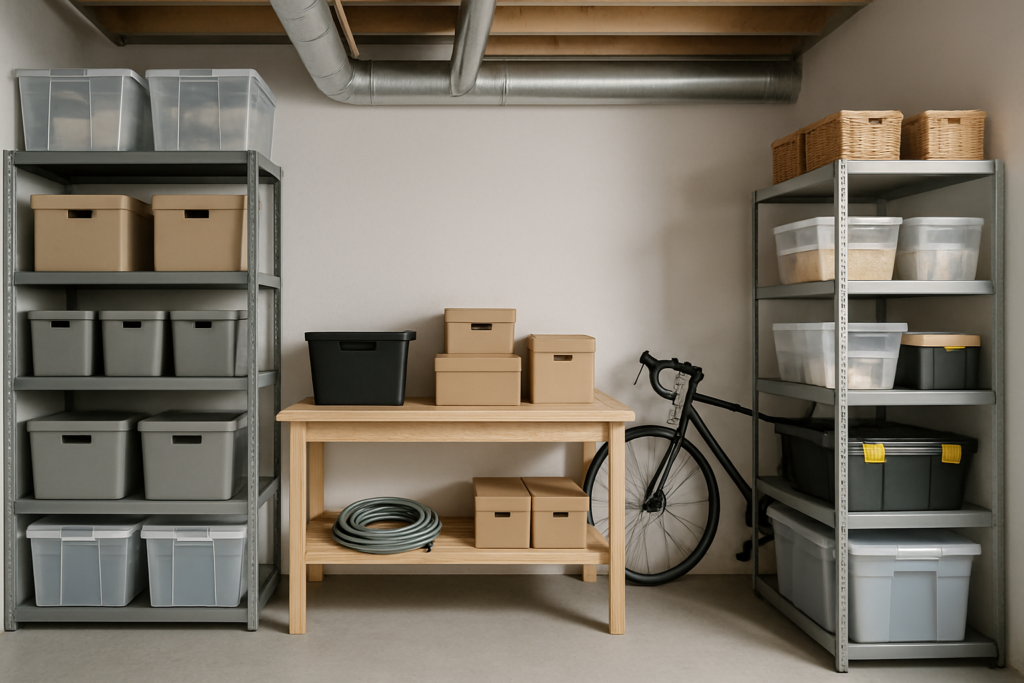
Your basement has incredible storage potential, but right now it probably looks like a dumping ground for everything that doesn’t have a proper home upstairs. Boxes stacked haphazardly, holiday decorations mixed with power tools, and that persistent worry about whether your stored items are slowly deteriorating in the humidity.
Transforming your basement into an organized, functional storage space isn’t just about buying more bins. It requires a strategic approach that addresses moisture control, creates dedicated zones for different item types, and implements storage solutions that can handle the unique challenges basements present.
Start with Moisture Control and Climate Preparation
Before you organize a single box, you need to address the elephant in the room: moisture. Basements are notorious for humidity issues, and no amount of beautiful shelving will help if your belongings are getting damaged by dampness.
Install a reliable dehumidifier and aim to keep humidity levels between 30-50%. You can monitor this with a simple hygrometer. Run the dehumidifier consistently, especially during humid summer months and after heavy rains.
Check for obvious moisture problems like leaks, condensation on pipes, or water stains on walls. Address these issues first, or you’ll be fighting a losing battle against mold and mildew. Consider applying moisture-resistant paint to basement walls and ensure proper ventilation around your storage areas.
Basement Dehumidifier 50 Pint
Essential for maintaining proper humidity levels and protecting stored items from moisture damage
Create Functional Storage Zones
The key to basement organization is creating distinct zones for different categories of items. This prevents the random dumping that leads to chaos and makes it much easier to find what you need.
Seasonal Storage Zone
Dedicate one area specifically for seasonal items like holiday decorations, winter gear, and summer equipment. Use clearly labeled, airtight containers that stack well. Waterproof storage bins are worth the investment for protecting seasonal clothing and decorations.
Store frequently accessed seasonal items at eye level or on lower shelves. Christmas decorations you only use once a year can go higher up, while camping gear you might grab multiple times during summer should be easily accessible.
Workshop and Tools Area
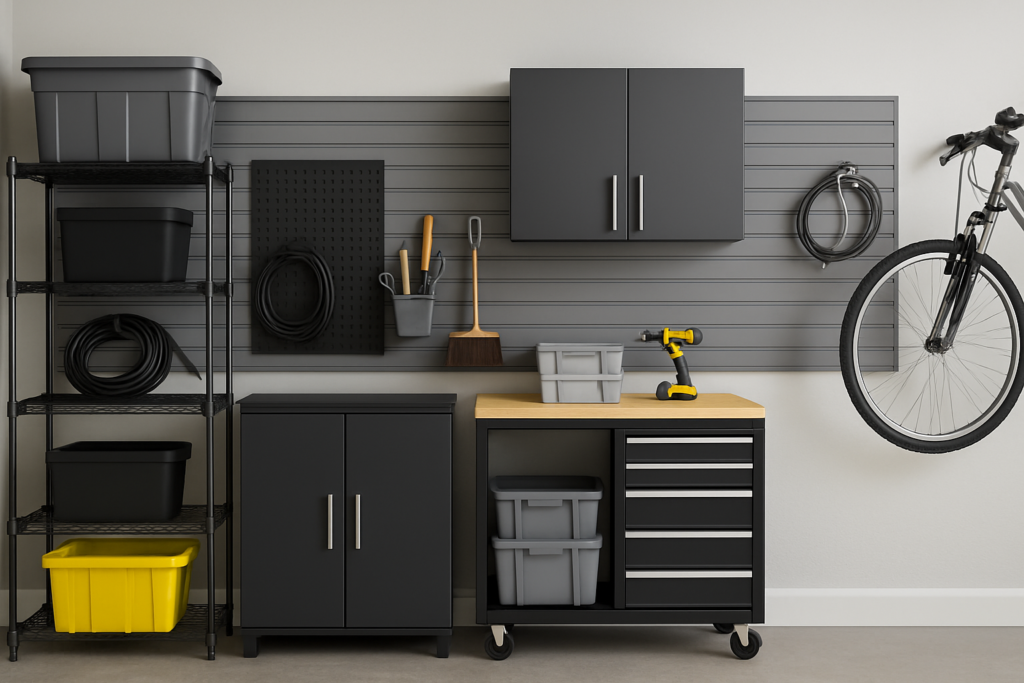
If you use your basement for projects, create a dedicated workshop zone with proper tool storage. Install a sturdy workbench along one wall and use pegboards for frequently used tools. This keeps tools visible and prevents the frustration of digging through boxes to find a screwdriver.
Store power tools in their original cases when possible, and keep them elevated off the concrete floor using shelving or cabinets. Concrete can conduct cold and moisture, which isn’t ideal for metal tools.
Archive and Document Storage
Important documents, photo albums, and memorabilia need special protection in basement storage. Use waterproof document boxes and consider adding silica gel packets for extra moisture protection. Keep these items on higher shelves, away from potential floor flooding.
Smart Shelving Solutions for Basements
The right shelving makes or breaks your basement organization system. You need sturdy options that can handle weight, resist moisture, and adapt to your changing storage needs.
Wire shelving works exceptionally well in basements because it allows air circulation and won’t absorb moisture like wood shelving might. Heavy-duty wire shelving units can support substantial weight and won’t warp in humid conditions.
For heavier items like paint cans, books, or archived files, invest in industrial-grade metal shelving. Look for weight ratings of at least 300 pounds per shelf. These units cost more upfront but will last for decades and handle whatever you throw at them.
Heavy Duty Wire Shelving Unit
Perfect for basement storage with excellent airflow and moisture resistance
Avoid particle board or MDF shelving in basements. These materials can swell, warp, or develop mold when exposed to moisture over time. Solid wood shelving can work if properly sealed, but metal and wire options are generally more reliable.
Utilize Vertical Space Effectively
Most basements have generous ceiling height, so take advantage of vertical storage. Install shelving that goes nearly to the ceiling, but keep safety in mind. You’ll need a sturdy step ladder to access top shelves safely.
Store lightweight, rarely used items up high, and keep heavier or frequently accessed items at waist level. This prevents you from having to lift heavy boxes above your head, which is both difficult and dangerous.
Implement a Labeling System That Actually Works
A good labeling system is what separates organized people from those who just have neat-looking piles. In a basement where you might not visit certain areas for months, clear labeling becomes even more critical.
Use waterproof labels or laminated tags that won’t deteriorate in humid conditions. Waterproof vinyl labels stick well to plastic bins and won’t peel off over time.
Label multiple sides of boxes and bins. You might not always be able to see the front of a container when it’s on a shelf, so side labels ensure you can identify contents from any angle.
Create an Inventory System
For items you don’t access regularly, maintain a simple inventory list. This can be as basic as a notebook or spreadsheet that lists what’s in each numbered box or bin. Take photos of box contents with your phone before sealing them up.
Update your inventory when you add or remove items. This prevents the frustrating experience of searching through multiple containers to find something you know is “somewhere in the basement.”
Label Maker Waterproof
Creates durable, moisture-resistant labels that won’t fade or peel in basement conditions
Protect Your Belongings from Common Basement Hazards
Even with good humidity control, basements present unique storage challenges. Temperature fluctuations, potential flooding, and pests require specific protective measures.
Elevate Everything Off the Floor
Never store items directly on concrete floors. Use pallets, shelving, or even simple wooden blocks to create air space underneath storage containers. This protects against minor flooding and prevents moisture from wicking up from the concrete.
Plastic storage pallets work well for this purpose. They’re lightweight, won’t rot like wood, and provide excellent airflow underneath your stored items.
Choose the Right Storage Containers
Not all storage containers work well in basement conditions. Cardboard boxes might be cheap, but they’re disaster waiting to happen in humid environments. They’ll absorb moisture, attract pests, and eventually fall apart.
Invest in high-quality plastic containers with tight-fitting lids. Look for containers specifically designed for long-term storage, with gaskets that create better seals. Clear containers let you see contents at a glance, reducing the need to open multiple boxes when searching for items.
For clothing and fabric items, vacuum-sealed bags provide excellent protection against moisture and pests. Just make sure to clean items thoroughly before sealing, as trapped odors can become permanent.
Maintain Your Organized Basement
Creating an organized basement is only half the battle. Without regular maintenance, even the best system will deteriorate back into chaos.
Schedule quarterly basement checks. Walk through your storage areas, verify that your dehumidifier is working properly, and look for any signs of moisture problems or pest activity. This is also a good time to retrieve seasonal items and reorganize as needed.
When you bring new items to the basement, take a few extra minutes to store them properly rather than just setting them down temporarily. Those temporary placements have a way of becoming permanent clutter.
Review your storage annually and purge items you no longer need. Basements can become graveyards for belongings we keep “just in case.” Be honest about what you’ll actually use again and donate or dispose of items that are just taking up space.
Frequently Asked Questions
How do I prevent mold and mildew on stored items?
Maintain humidity levels below 50% with a good dehumidifier, ensure proper ventilation, and use moisture-absorbing products like silica gel in storage containers. Clean items thoroughly before storing them, and avoid storing anything damp or dirty. Check stored items periodically and address any moisture issues immediately.
What’s the best way to store Christmas decorations in a basement?
Use sturdy, clear plastic containers with tight-fitting lids to protect decorations from moisture and dust. Wrap fragile ornaments in tissue paper or bubble wrap, and consider specialized ornament storage boxes with dividers. Store artificial trees in tree bags, and keep all decorations elevated off the floor on shelving.
Can I store electronics and appliances in my basement?
Electronics can be stored in basements if you maintain proper humidity and temperature control. Clean items thoroughly before storage, remove batteries that might leak, and use original packaging when possible. Avoid storing electronics directly on concrete floors, and consider using moisture-absorbing packets in storage containers.
How often should I reorganize my basement storage?
Plan a major reorganization annually, typically in spring or fall when you’re swapping seasonal items. Perform quarterly maintenance checks to ensure your dehumidifier is working, labels are intact, and no moisture or pest issues have developed. Address problems immediately rather than letting them accumulate.
This article contains affiliate links. We may earn a small commission at no extra cost to you.