You load the washing machine, add your detergent, press start, and walk away expecting fresh, clean clothes. But when you come back, something feels off. Your clothes aren’t coming out as clean as they should, or maybe you’ve noticed unusual sounds during the cycle. Wait a second… washing machines don’t cool. They heat water for washing. You might be thinking of your refrigerator or freezer, but you said washing machine.
I’m going to assume you meant refrigerator or freezer cooling issues here, since washing machines don’t have cooling systems. Let me cover the most common cooling problems you’ll encounter with refrigerators and freezers, along with practical fixes you can tackle yourself.
Understanding How Your Refrigerator Actually Cools
Before we jump into fixes, you need to understand the basics. Your refrigerator uses a closed loop system with refrigerant that cycles between liquid and gas states. The compressor pumps this refrigerant through coils, creating a heat exchange that pulls warmth out of your fridge and releases it into your kitchen.
When something goes wrong with this process, you’ll notice warmer temperatures, spoiled food, and potentially higher electricity bills. Most cooling problems fall into three categories: airflow issues, dirty coils, or compressor failures. Let’s break down each one.
Airflow Restrictions: The Most Common Culprit
Your refrigerator relies on consistent air circulation to maintain proper temperatures. When airflow gets blocked, cold air can’t reach all areas of the unit, creating warm spots and inconsistent cooling.
Check if you’ve overpacked your fridge. I know it’s tempting to cram everything in after a big grocery run, but blocking the vents prevents cold air from circulating properly. Most refrigerators have vents along the back wall or ceiling of the fresh food compartment. Keep at least two inches of clearance around these areas.
The evaporator fan is another frequent problem spot. This fan circulates cold air from the freezer throughout the refrigerator. You can usually hear it running when the door is open. If it’s silent or making grinding noises, you’ve found your problem.
To test the evaporator fan, open your freezer door and locate the fan (typically behind a panel at the back). Listen for smooth operation. If it’s not running or sounds rough, you’ll need to replace it. This is a DIY-friendly repair if you’re comfortable with basic tools.

Refrigerator Evaporator Fan Motor
A universal replacement fan motor works for most major refrigerator brands and restores proper airflow.
Door Seal Problems
A worn or damaged door gasket lets cold air escape continuously, forcing your compressor to work overtime. You can test your seal with a simple dollar bill test. Close the door on a dollar bill halfway up the door. If you can pull it out easily without resistance, your seal needs replacement.
Look for cracks, tears, or areas where the gasket has pulled away from the door. Sometimes you can clean the gasket with warm soapy water and it’ll seal better, but if it’s damaged, replacement is your only option. Door gaskets are model-specific, so you’ll need your refrigerator’s exact model number when ordering.
Dirty Condenser Coils: The Silent Performance Killer
Your condenser coils release heat from inside the refrigerator to the outside air. When these coils get covered in dust, pet hair, and debris, they can’t dissipate heat efficiently. This makes your compressor work harder and can eventually lead to cooling failure.
Most condenser coils are located either behind the refrigerator near the bottom or underneath the unit behind a front grille. Pull your fridge away from the wall and take a look. If you see a thick layer of dust and grime, that’s your problem.
Cleaning condenser coils takes about 15 minutes. Unplug the refrigerator first for safety. Use a coil cleaning brush or a vacuum with a brush attachment to remove debris. Work gently to avoid bending the delicate fins. Do this twice a year at minimum, or quarterly if you have pets.
After cleaning, you should notice improved cooling within a few hours. Your refrigerator will run more quietly and efficiently too. This simple maintenance step can add years to your appliance’s lifespan.
Compressor Issues: When Things Get Serious
The compressor is the heart of your cooling system. It’s that black cylindrical component usually located at the back bottom of your refrigerator. When it fails, you’re looking at either an expensive repair or replacement of the entire unit.
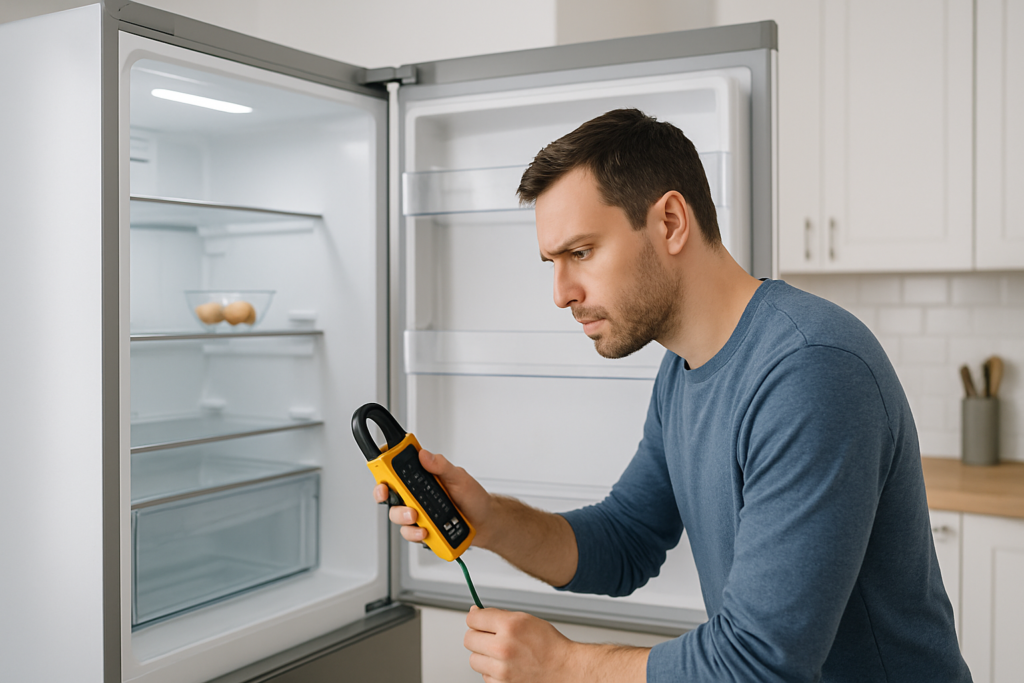
A failing compressor often makes clicking sounds as it tries to start but can’t. You might hear it run for a few seconds, then shut off, then try again repeatedly. This clicking cycle indicates the overload relay is triggering because the compressor is drawing too much current.
Feel the compressor. It should be warm to the touch during operation, but not blazing hot. If it’s extremely hot and clicking on and off, the compressor is likely on its way out. Unfortunately, compressor replacement typically costs more than half the value of a new refrigerator for units over five years old.
The Relay and Capacitor
Before you give up on a compressor problem, check the start relay and capacitor. These small, inexpensive components help the compressor motor start up. When they fail, the compressor won’t run even though it’s perfectly fine.
The start relay typically plugs onto the side of the compressor. Pull it off and shake it. If you hear rattling, it’s failed and needs replacement. These parts are affordable and easy to swap out yourself.

Refrigerator Start Relay
Replacing a faulty start relay can save you from an unnecessary compressor replacement.
Thermostat and Control Board Failures
Sometimes the cooling system itself is fine, but the controls telling it when to run have failed. The thermostat monitors temperature and signals the compressor when to cycle on and off. When it malfunctions, your fridge might run constantly or not at all.
You can test the thermostat by turning it from the coldest to warmest settings while listening for a click. You should hear the compressor kick on or off. If nothing happens, the thermostat control might be dead.
Modern refrigerators use electronic control boards instead of mechanical thermostats. These boards can fail due to power surges or component degradation. If your display is blank or showing error codes, you’ve got a control board issue. Check your owner’s manual for specific error code meanings.
Control board replacement is tricky but doable for someone with basic electrical knowledge. Always unplug the unit first and take photos of wire connections before disconnecting anything. Your refrigerator’s model number will help you find the correct replacement board.
Refrigerant Leaks: Call a Professional
If you’ve checked everything else and your refrigerator still isn’t cooling, you might have a refrigerant leak. You’ll sometimes see frost buildup in unusual places or notice the compressor running constantly without achieving proper temperatures.
Refrigerant work requires EPA certification and specialized equipment. This isn’t a DIY repair. A technician will need to locate the leak, repair it, evacuate the system, and recharge it with the proper amount of refrigerant.
For older refrigerators (10+ years), refrigerant leak repairs often don’t make economic sense. The repair can cost several hundred dollars, and there’s no guarantee another leak won’t develop elsewhere in the aging system. You’ll need to weigh the repair cost against replacement.
Quick Troubleshooting Steps Before Calling For Help
Before you spend money on a service call, run through this checklist. You’d be surprised how many “broken” refrigerators just need basic maintenance.
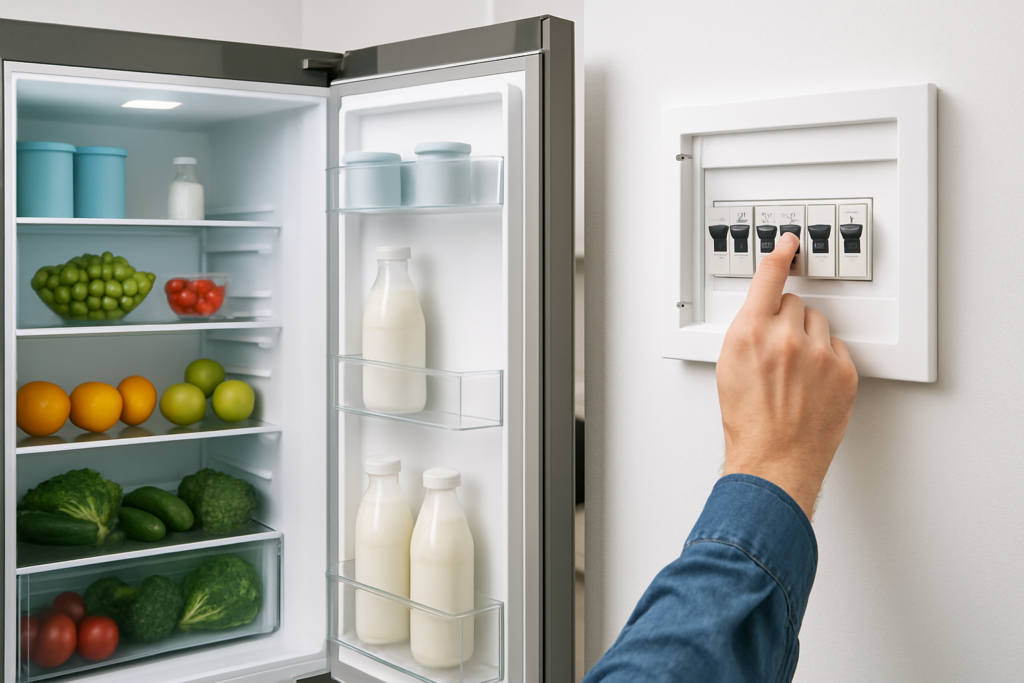
- Verify the unit is plugged in and the outlet has power (test with another device)
- Check that the temperature controls haven’t been accidentally turned down or off
- Clean the condenser coils thoroughly
- Remove any items blocking air vents inside the refrigerator
- Test the door seal with the dollar bill method
- Listen for the evaporator fan running when you open the freezer door
- Make sure there’s adequate space around the refrigerator for heat dissipation (at least 2 inches on all sides)
Give the refrigerator at least 24 hours after making any changes to see if cooling improves. Temperature adjustments take time to stabilize.
When to Repair vs. Replace
Here’s my honest take on the repair vs. replace decision. If your refrigerator is less than five years old and the repair costs under 50% of a new unit’s price, repair it. The manufacturer’s warranty might even cover parts or labor.
For refrigerators between 5-10 years old, it depends on the problem. Compressor replacement rarely makes sense, but fixing a relay, fan, or thermostat is usually worth it. These repairs extend the life of an otherwise functional appliance.
If your refrigerator is over 10 years old and needs major repairs, replacement is typically the better choice. Modern refrigerators are significantly more energy-efficient. Your energy savings alone might justify the upgrade within a few years.
Frequently Asked Questions
How long should a refrigerator last?
Most refrigerators last 10-15 years with proper maintenance. Top-freezer models tend to last longer than side-by-side or French door configurations because they have simpler mechanical systems. Regular coil cleaning and prompt minor repairs can push a quality unit past 15 years.
Why is my freezer cold but my refrigerator warm?
This usually indicates a problem with the evaporator fan, the defrost system, or blocked air vents between the freezer and refrigerator compartments. The freezer generates the cold air, and the fan circulates it to the fresh food section. When that circulation fails, you get a cold freezer and warm fridge.
Can I fix a refrigerator that’s not cooling on one side?
Side-by-side refrigerators with one warm side typically have a damper control problem. The damper regulates how much cold air flows to each side. These dampers can stick closed or the actuator motor can fail. Replacement dampers are available for most models and the repair is moderately DIY-friendly.
How much does it cost to fix a refrigerator that won’t cool?
Simple fixes like replacing a start relay or cleaning coils cost under competitively priced if you do it yourself. Professional repairs range from competitively priced-competitively priced for components like thermostats, fans, or defrost systems. Compressor replacement can run competitively priced-competitively priced in parts and labor, which usually isn’t worth it on older units.
This article contains affiliate links. We may earn a small commission at no extra cost to you.