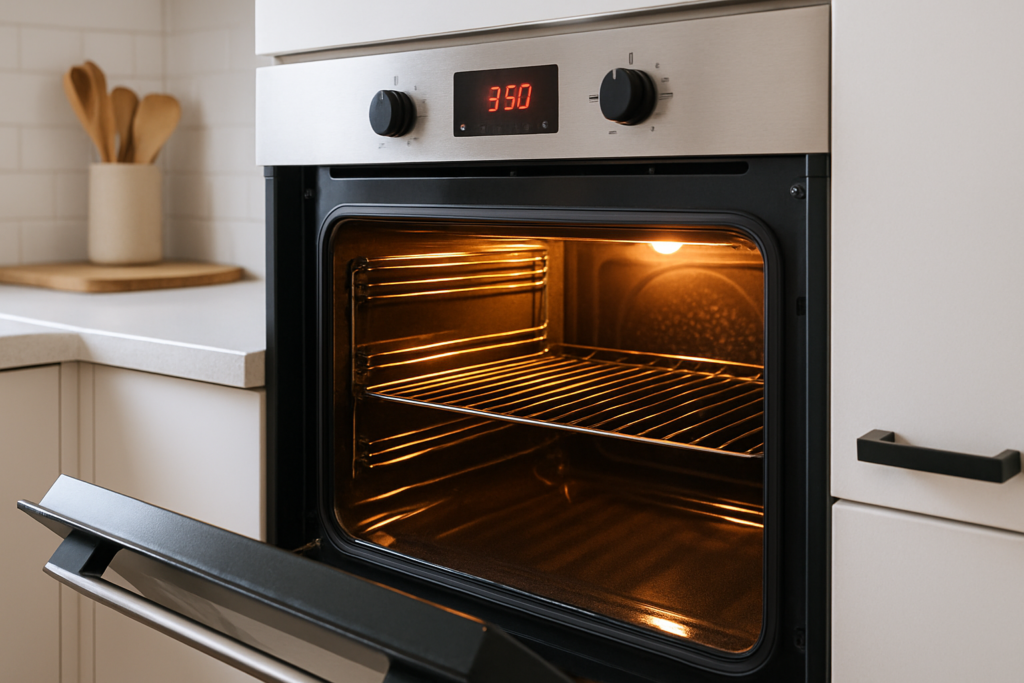
You’re baking a casserole and notice your oven never seems to shut off. The heating element stays on, the temperature climbs past your setting, or the fan runs nonstop. This isn’t just annoying. It wastes energy, ruins your food, and could signal a bigger problem with your appliance.
Most ovens that won’t stop running have one of three issues: a faulty thermostat, a broken temperature sensor, or blocked airflow. Let’s break down each problem and what you can actually do about it.
Thermostat Malfunction: The Usual Suspect
Your oven’s thermostat is the brain that tells the heating element when to turn on and off. When it fails, it can’t read the internal temperature correctly. The result? Your oven thinks it’s always too cold, so it keeps heating.
You’ll notice this problem when your oven overshoots the temperature you set by 25 degrees or more. A pizza set to 425°F might come out charred because the actual temp hit 475°F. The thermostat might also be stuck in the “on” position mechanically, which means it never signals the element to cut power.
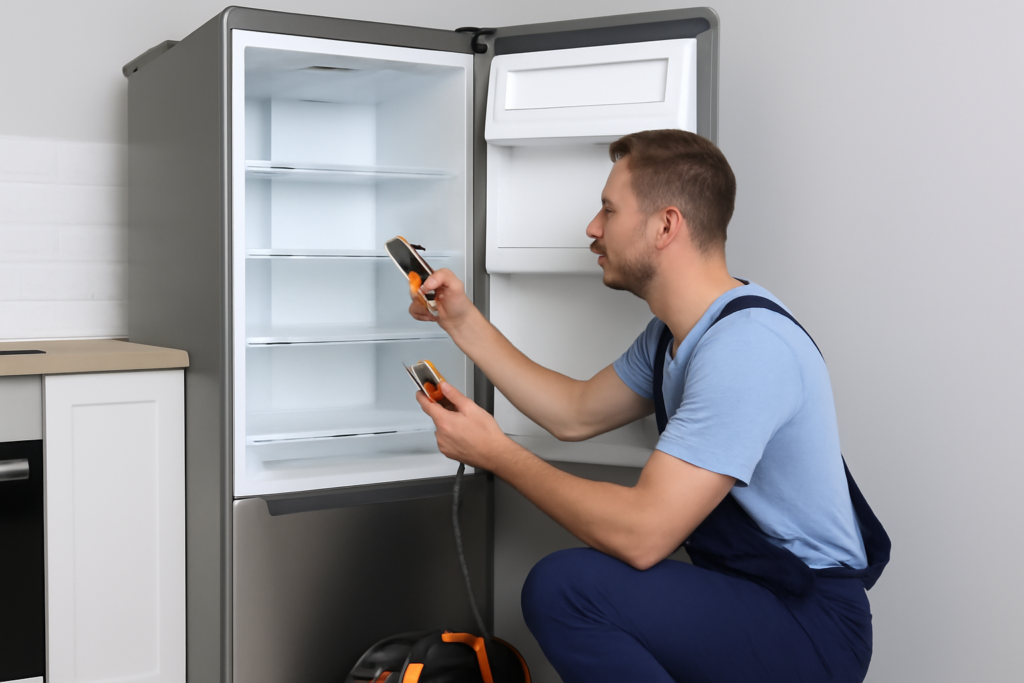
Testing a thermostat requires a multimeter and some technical know-how. You’ll need to access the back panel of your oven and check for continuity. Most home cooks should call a repair tech for this one, but the part itself isn’t terribly expensive to replace if you’re handy.

Oven Thermostat Replacement
Essential if your temperature readings are wildly inaccurate or your oven never cycles off
Temperature Sensor Problems
Modern ovens use a temperature sensor (also called an RTD sensor) instead of or alongside a traditional thermostat. This thin probe sits inside the oven cavity and sends resistance readings to the control board. When it goes bad, your oven can’t regulate heat properly.
A failing sensor typically shows resistance outside the normal range of 1,000 to 1,100 ohms at room temperature. You can test this yourself with a multimeter. Unplug your oven, locate the sensor (usually at the back wall of the oven cavity), disconnect it, and measure the resistance.
The sensor might also be physically damaged. Check for cracks, corrosion, or spots where the protective sheath has worn away. Even a small amount of grease buildup can throw off readings. Clean it gently with a damp cloth, but don’t use abrasive cleaners that could damage the protective coating.
Replacing a temperature sensor is one of the easier oven repairs. Most sensors cost between competitively priced and competitively priced online, and you can swap them out in about 15 minutes with just a screwdriver. Make sure you get the right model number for your specific oven brand.
Airflow and Ventilation Issues
Your oven needs proper airflow to regulate temperature. Blocked vents force the oven to work harder and run longer to maintain heat. The cooling fan, which prevents the control panel from overheating, might also run constantly if vents are obstructed.
Check the vents at the top and bottom of your oven door. Grease and food debris love to accumulate here. Pull out your oven (after unplugging it) and inspect the rear vents too. Pet hair, dust, and kitchen grime can create a thick mat that blocks air circulation.
The convection fan in self-cleaning or convection ovens can also malfunction. This fan should cycle on and off based on temperature needs. When it runs nonstop, you’ll hear constant noise even when the oven isn’t actively heating. A stuck relay on the control board usually causes this, and you’ll need a pro to diagnose it properly.

Oven Heating Element
If your heating element shows signs of damage or won’t cycle off, replacement is often the simplest fix
Clean your oven’s interior regularly with a quality oven cleaner to prevent buildup that interferes with sensors and airflow. Avoid harsh chemicals near the temperature sensor itself.
Frequently Asked Questions
Can I still use my oven if it won’t stop running?
You can use it short-term, but watch it closely. Manually turn off the breaker or unplug it when you’re done cooking. Don’t leave it unattended or run the self-clean cycle. An oven that won’t shut off is a fire hazard and will drive up your electric bill fast.
How much does it cost to fix an oven that runs constantly?
A service call typically runs competitively priced to competitively priced for diagnosis, plus parts and labor. A simple sensor replacement might total competitively priced to competitively priced. A control board replacement can hit competitively priced to competitively priced. For ovens older than 10 years, compare repair costs against buying a new unit. Many repairs end up costing 40-50% of a new oven’s price.
This article contains affiliate links. We may earn a small commission at no extra cost to you.