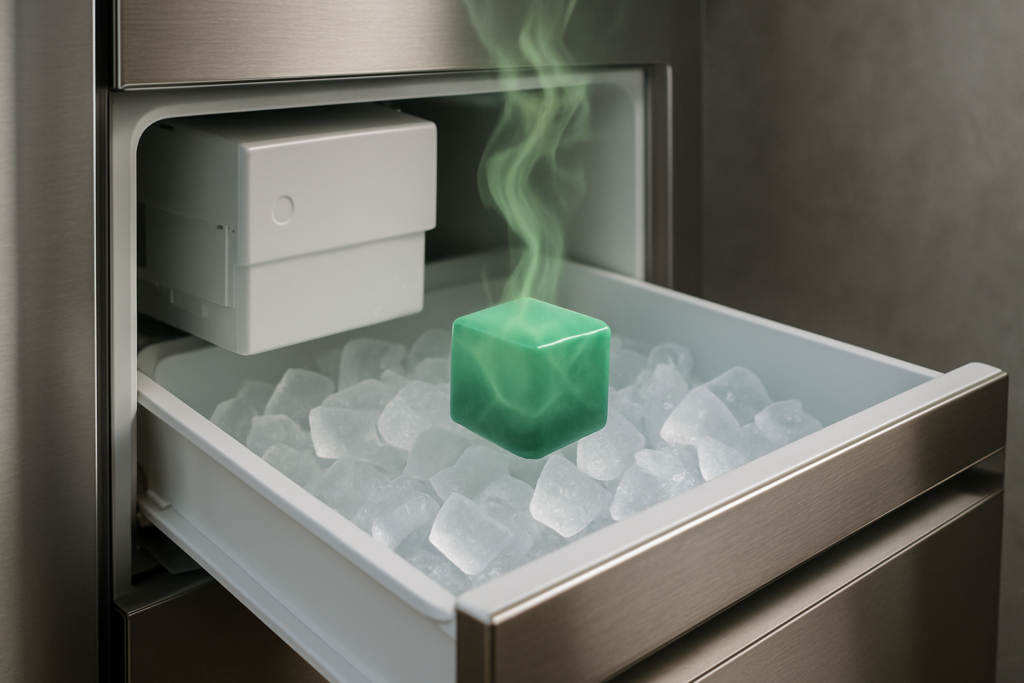
Few things are more off-putting than grabbing a fresh glass of ice only to notice a funky smell wafting up from your drink. Your ice maker should produce clean, odorless ice, but sometimes it becomes a source of mysterious and unpleasant odors that ruin everything from your water to your cocktails.
The culprit behind smelly ice usually isn’t the ice maker itself, but what’s happening around it. From absorbed food odors to bacterial buildup, several factors can turn your convenient ice supply into something you’d rather avoid. Let’s break down exactly why this happens and what you can do to get back to fresh-smelling ice.
The Main Culprits Behind Ice Maker Odors
Ice is basically frozen water, and water is incredibly good at absorbing smells and flavors from its surroundings. Your freezer is a confined space packed with various foods, and those onions, fish, or leftover pizza are broadcasting their aromas constantly.
When your ice sits in the bin for days or weeks, it acts like a sponge for these odors. The longer ice stays in the bin, the more smells it picks up. This is especially true if you don’t use ice frequently or if your freezer isn’t sealed properly.
Another major source is the water supply itself. If your tap water has a sulfur smell, mineral content, or chlorine taste, those characteristics will show up in your ice. Sometimes the issue isn’t even the current water quality but old water that’s been sitting in the supply line for too long.
Bacterial and mold growth inside the ice maker components can also create musty or sour smells. The ice bin, water reservoir, and internal tubing can all harbor microorganisms if they’re not cleaned regularly. Even though freezing temperatures slow bacterial growth, they don’t stop it entirely.
Deep Cleaning Your Ice Maker
Before you do anything else, empty your ice bin completely and throw out all the old ice. Don’t try to salvage it. Start fresh.
Remove the ice bin and wash it thoroughly with warm water and dish soap. Pay special attention to corners and crevices where mold can hide. For stubborn odors, make a solution of one tablespoon of baking soda per quart of warm water and let the bin soak for 15-20 minutes.
Wipe down the entire ice maker assembly with a solution of equal parts water and white vinegar. Use a soft cloth or sponge to clean the ice chute, dispensing mechanism, and any exposed parts. A specialized ice maker cleaning solution can tackle tough buildup more effectively than DIY mixtures.

Ice Maker Cleaning Kit
Complete kits include both cleaning solution and sanitizer for professional-level results at home
Don’t forget about the water filter. Most refrigerators with ice makers have a water filter that needs replacing every six months. An old, clogged filter can’t remove contaminants effectively, and those impurities end up in your ice. Check your refrigerator’s manual for the specific filter model you need.
After cleaning, run the ice maker through 2-3 cycles and discard that ice. This flushes out any cleaning solution residue and ensures the next batch is truly clean.
Addressing Water Supply Issues
Your water supply line can be a hidden source of bad smells. If you’ve recently had plumbing work done or if your home has been vacant for a while, stagnant water in the lines can develop odors.
Run your kitchen faucet for several minutes to flush the supply line. Let it run until the water is cold and any musty smell disappears. This simple step often resolves odor problems immediately.
For homes with well water or persistent water quality issues, installing a premium water filter makes a noticeable difference. Standard filters catch basic contaminants, but upgraded versions handle sulfur, iron, and other common well water problems.
Check the water supply line itself for kinks or damage. A crimped line can trap water and allow bacterial growth. Replace the line if it’s more than five years old or shows any signs of wear. The small investment in a new line can save you from ongoing odor headaches.
Preventing Future Odor Problems
Dump your ice bin completely at least once a month, even if you haven’t noticed any smells yet. Regular turnover prevents odor absorption before it becomes a problem. This is especially important if you don’t use ice frequently.
Store strong-smelling foods in airtight containers. Those leftovers might be sealed well enough to prevent leaks, but they’re still releasing odors into the air. High-quality food storage containers with rubber gaskets do the best job of containing smells.
Keep an open box of baking soda in your freezer, but not directly next to the ice maker. Position it on a different shelf to absorb ambient odors without sitting close enough to the ice bin that the baking soda smell transfers to your ice.
Wipe down your ice bin with a vinegar solution every two weeks. This quick maintenance step takes less than five minutes but prevents buildup of minerals, bacteria, and absorbed odors. Make it part of your regular kitchen cleaning routine.

Freezer Organization Bins
Proper freezer organization keeps smelly foods away from your ice maker and improves air circulation
When to Consider Replacement Parts
Sometimes cleaning isn’t enough. If you’ve tried everything and odors persist, certain components may need replacement.
The ice bin itself can develop microscopic cracks or permanent odor absorption after years of use. Replacement bins aren’t expensive and can completely solve lingering smell issues. Check your refrigerator’s model number and order the exact replacement part from the manufacturer or find compatible options through an ice maker replacement parts search.
Water filters are the most commonly neglected component. Even if you replaced yours six months ago, the filter might be working overtime if you have particularly hard or contaminated water. Consider replacing it every three to four months instead of the standard six-month interval.
The entire ice maker assembly can wear out over time. Plastic components degrade, seals fail, and internal tubing develops biofilm that’s impossible to clean. Most refrigerator ice makers last 3-6 years with regular use. If yours is older and constantly causing problems, replacement might be more cost-effective than continued troubleshooting.
Special Situations and Advanced Solutions
Some homes face unique challenges that require specific approaches. If you’re on well water with high sulfur content, standard carbon filters won’t cut it. You’ll need a specialty filter designed to handle hydrogen sulfide. These filters use different media that chemically neutralizes sulfur compounds.
For homes with extremely hard water, mineral buildup inside the ice maker can trap bacteria and create persistent odors. In these cases, descaling the ice maker with a citric acid solution every few months prevents mineral accumulation. Mix two tablespoons of citric acid powder with a quart of warm water and use it to wipe down all accessible parts.
If your refrigerator is in a garage or basement where temperature fluctuations are common, the ice maker works harder and components wear faster. Consider whether the location is contributing to your problems. Refrigerators in unconditioned spaces often develop more issues with ice quality.
Some newer refrigerators have self-cleaning ice makers that run automated cleaning cycles. If your model has this feature, activate it monthly. Consult your owner’s manual for specific instructions, as the process varies by manufacturer.
Frequently Asked Questions
How often should I clean my ice maker?
Clean your ice maker thoroughly every 3-6 months, depending on usage and water quality. Quick wipe-downs of the ice bin should happen every two weeks. Replace your water filter every six months without exception, or more frequently if you notice taste or odor changes. Monthly complete ice bin dumps help prevent odor buildup between deep cleanings.
Why does my ice smell like garlic or onions?
Ice absorbs odors from uncovered or poorly sealed food in your freezer. Garlic and onions are particularly potent and their aromatic compounds easily transfer through the air. Store all strong-smelling foods in airtight containers and keep them away from the ice maker area. Dumping your current ice and improving food storage usually solves this issue within a day or two.
Can old ice make you sick?
While properly frozen ice is generally safe, ice that’s been sitting for months can harbor bacteria and mold spores that survive freezing. These microorganisms become active when the ice melts in your drink. Ice that smells bad or tastes off should be thrown out immediately. Regular ice turnover and cleaning prevent health concerns related to contaminated ice.
Is it normal for new ice to taste like plastic?
New refrigerators and ice makers often produce ice with a plastic taste for the first few batches. This comes from manufacturing residues and new plastic components. Run the ice maker through 4-5 complete cycles and discard that ice. Flush the water line thoroughly before making ice. The plastic taste should disappear after clearing out the initial production. If it persists beyond a week, check that all protective films were removed during installation.
This article contains affiliate links. We may earn a small commission at no extra cost to you.