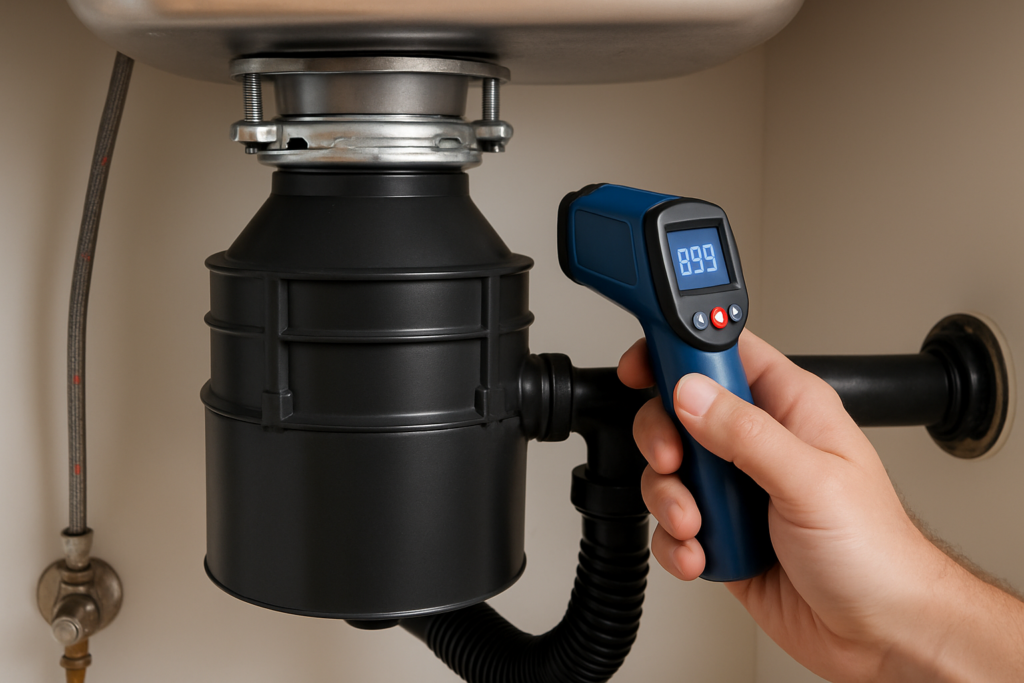
You’ve just tossed food scraps down the drain, flipped the switch, and your garbage disposal is making noise, but something feels off. Wait, you’re reading about cooling problems? Let’s clear this up right away: garbage disposals don’t have cooling systems. They’re simple mechanical grinders that don’t require refrigeration.
If you’re experiencing cooling issues in your kitchen, you’re likely dealing with a refrigerator or freezer problem, not your disposal. However, since you’re here, we’ll address both: common garbage disposal issues you might actually be facing, and genuine cooling problems with appliances that do need to stay cold.
Understanding What’s Really Going Wrong
Garbage disposals can overheat, jam, or fail to grind properly. These are the real issues homeowners face with these units. When a disposal motor gets too hot from overuse or a jam, it’ll shut off automatically thanks to a thermal overload switch.
If your disposal stopped working suddenly, check for the red reset button on the bottom of the unit under your sink. Press it once the motor has cooled down (give it 10-15 minutes). This solves about 60% of disposal “failures” without any tools needed.
Common Garbage Disposal Problems and Fixes
The Disposal Is Jammed
This happens when something hard gets stuck in the grinding chamber. You’ll hear a humming sound, but the flywheel won’t turn. Never stick your hand down there, even with the power off.
Most disposals have a hex socket on the bottom. You’ll need an Allen wrench (usually 1/4 inch) to manually rotate the flywheel and free whatever’s stuck. Insert the wrench into the socket and turn it back and forth until the flywheel moves freely.

Garbage Disposal Wrench Set
A dedicated wrench set makes unjamming your disposal much easier than hunting for the right Allen key
If your disposal didn’t come with a wrench, a standard Allen key set will work. Some units also have insertion points on top where you can use a broom handle or similar tool to rotate the impellers.
Leaking From the Bottom
Bottom leaks usually mean the internal seals have failed. Unfortunately, this isn’t economical to repair. Garbage disposals typically last 8-12 years, and if yours is leaking from the body itself, replacement makes more sense than trying to rebuild it.
Side leaks where the drain pipes connect are a different story. Tighten the connections or replace the rubber gaskets. Leaks at the top where the disposal meets the sink usually mean the mounting assembly needs to be resealed with plumber’s putty.
Won’t Turn On At All
First, check that circuit breaker. Disposals draw significant power and can trip breakers, especially older ones. After verifying power is reaching the unit, try the reset button.
If the motor still won’t start and you don’t hear any humming, the motor itself may have burned out. At this point, you’re looking at replacement rather than repair for most home models.
When Your Refrigerator Isn’t Cooling
Let’s address what you might have meant to search for: refrigerator cooling problems. These are far more common concerns, and they do involve actual cooling systems.
Airflow Restrictions
Your fridge needs to breathe. Check the vents inside the refrigerator compartment (usually at the back or top). If they’re blocked by food items, cold air can’t circulate properly. Leave at least an inch of clearance.
The condenser coils (located underneath or behind the unit) need airflow too. When these coils get caked with dust and pet hair, your fridge works harder and cools less efficiently. Pull the fridge out and vacuum those coils every six months. This simple maintenance can extend your appliance’s life by years.
Door Seal Problems
A worn gasket lets cold air escape constantly. Close the door on a dollar bill. If you can pull it out easily, your seal isn’t tight enough. You can sometimes revive stiff gaskets by cleaning them with warm soapy water and applying a thin layer of petroleum jelly.
Replacing door gaskets costs much less than a new fridge, and it’s a DIY-friendly project for most models. Order the specific gasket for your refrigerator’s make and model.
Compressor and Fan Issues
The compressor is your fridge’s heart. It should run periodically and you’ll hear it kick on with a gentle hum. If it’s running constantly or not at all, you’ve got problems.
Listen for the evaporator fan inside the freezer compartment. It should run whenever the compressor does. If the fan is dead, frost builds up and blocks airflow. Replacing an evaporator fan is moderately difficult but doable for someone comfortable with basic appliance repair.
Compressor replacement, on the other hand, often costs as much as a new refrigerator. Get quotes from repair services before committing.
Prevention Beats Repair Every Time
For your garbage disposal, run cold water before, during, and for 15 seconds after grinding. Cold water solidifies grease so it can be chopped up and flushed away. Hot water melts grease, which then coats your pipes.
Avoid putting fibrous vegetables (celery, asparagus), potato peels, coffee grounds, and pasta down the disposal. These either wrap around the impellers or expand with water and cause clogs further down.

InSinkErator Evolution Excel
This high-end disposal handles almost anything you throw at it and runs much quieter than budget models
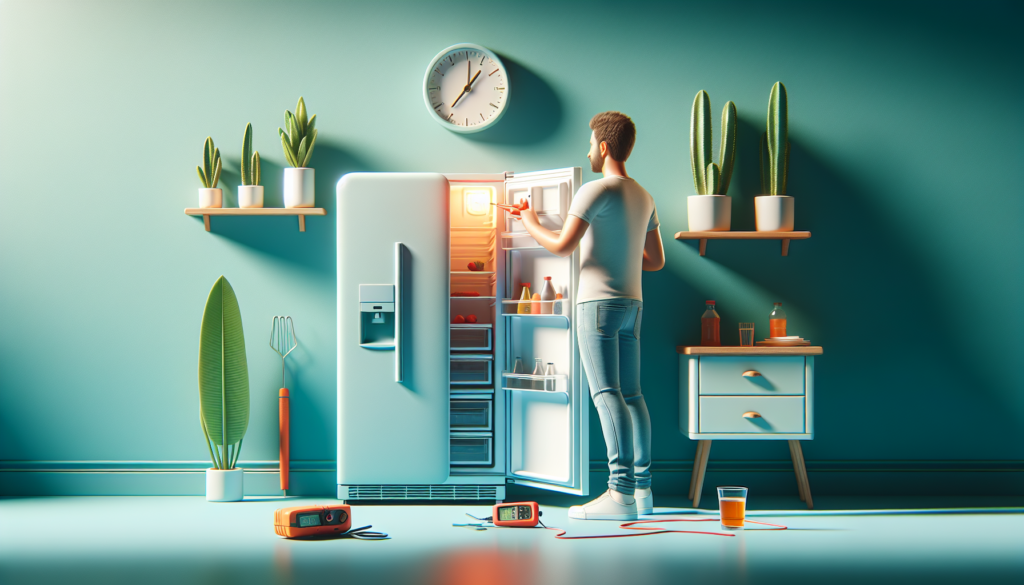
For refrigerators, keep them between 37-40°F and freezers at 0°F. Use an appliance thermometer to verify your settings are accurate. The built-in dial might say “3” but that doesn’t tell you the actual temperature.
When to Call a Professional
Electrical issues with either appliance warrant a pro. If you’ve reset breakers and checked obvious problems but still have no power, don’t start poking around with a multimeter unless you know what you’re doing.
For disposals, if you’ve cleared jams and reset the unit but it still hums without turning, the motor might be seized. A plumber can confirm this in minutes.
Refrigerator repairs involving refrigerant, compressors, or sealed systems require EPA certification to handle legally. Find a reputable appliance repair service rather than attempting these yourself.
Frequently Asked Questions
Can I use ice cubes to sharpen my garbage disposal blades?
This is a myth. Garbage disposals don’t have blades; they have blunt impellers that push food against a grinding ring. Ice won’t sharpen anything, though it can help dislodge buildup. For cleaning and freshening, try grinding citrus peels instead.
Why is my refrigerator freezing food in the fresh food compartment?
Your temperature control is probably set too cold, or the damper control that regulates cold air from the freezer is stuck open. Adjust the temperature setting first. If that doesn’t help, the damper mechanism might need replacement.
How long should a garbage disposal last?
Quality matters here. Budget disposals (1/3 to 1/2 HP) last 5-8 years with normal use. Mid-range models (3/4 HP) push 10-12 years. Premium disposals like the InSinkErator Evolution series can last 15 years or more. Higher horsepower and better build quality mean longer life and fewer jams.
This article contains affiliate links. We may earn a small commission at no extra cost to you.