That grinding, rattling, or high-pitched whining coming from under your sink isn’t something you should ignore. A noisy garbage disposal usually signals a mechanical problem that can range from a simple fix to a component that needs replacement. The good news is that most disposal noise issues are actually pretty easy to diagnose once you know what to listen for.
Before you call a plumber or rush out to buy a new unit, understanding what’s causing the racket can save you time and money. Let’s break down the most common culprits behind disposal noise and walk through the fixes that actually work.
Common Causes of Garbage Disposal Noise
Different sounds point to different problems. A metallic grinding usually means something hard is stuck in the grinding chamber. A humming without any grinding action indicates a jammed flywheel. High-pitched squealing often comes from worn bearings or motor issues.
Start by turning off the disposal at the breaker before you investigate anything. Shine a flashlight down the drain to check for obvious obstructions like utensils, bottle caps, or chunks of bone. You’d be surprised how often a stray spoon is the entire problem.
How to Manually Rotate the Flywheel
When your disposal hums but won’t grind, the flywheel is jammed. Most units have an Allen wrench socket on the bottom center of the disposal. Insert a 1/4-inch Allen wrench and turn it back and forth to break up whatever’s causing the jam.
If your model doesn’t have this socket, you can use a garbage disposal wrench inserted from the top. This tool grips the impellers and lets you manually rotate the grinding assembly. Keep turning until the flywheel spins freely in both directions.

Garbage Disposal Wrench Set
Essential for manually unjamming disposals without bottom access ports
After you’ve freed the jam, press the red reset button on the bottom of the unit before testing it. This thermal overload switch trips when the motor overheats from straining against a jam.
Worn Mounting Hardware and Loose Components
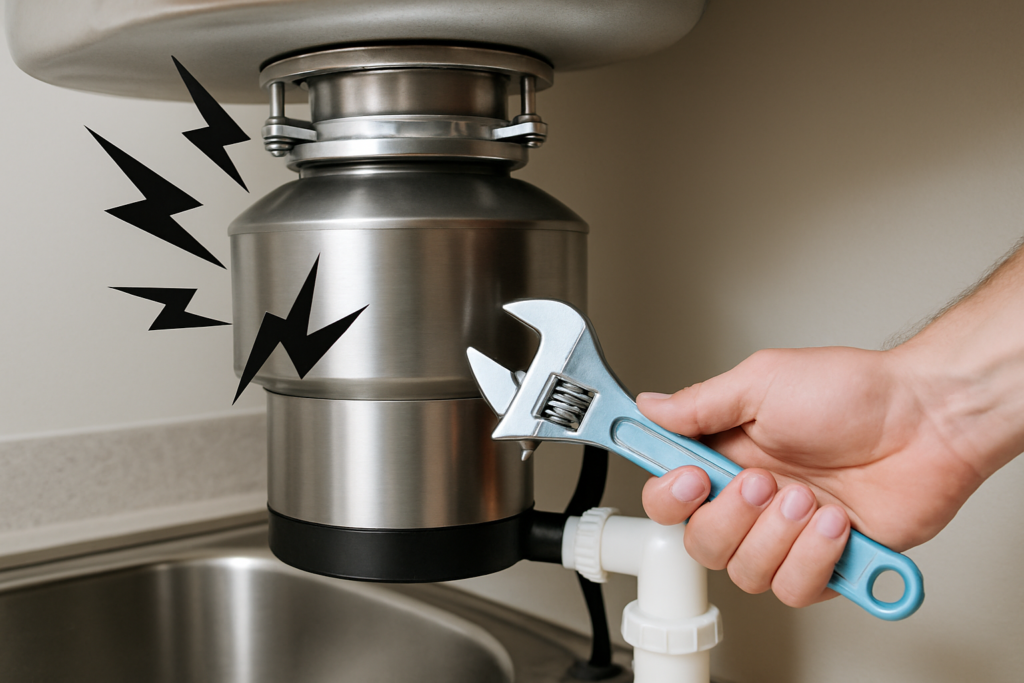
Rattling or vibrating sounds often come from loose mounting bolts rather than the disposal itself. Check the three-bolt mount where the disposal connects to the sink drain. These can work loose over time, especially if you’ve had a jam that caused the unit to struggle.
Tighten the mounting screws in a star pattern to ensure even pressure. Don’t overtighten, or you’ll crack the mounting flange. A firm snug is all you need.
The grinding ring and impeller plate can also develop play as they wear. If tightening the mount doesn’t stop the rattling, you might need to replace the grinding components. These parts are available for most InSinkerator and Waste King models, though sometimes it makes more sense to replace the entire unit if it’s over 10 years old.
Bearing Failure and Motor Issues
A high-pitched squealing or metal-on-metal scraping points to bearing problems. The disposal motor has upper and lower bearings that support the flywheel shaft. When these wear out, you’ll hear noise even when the disposal is empty.
Unfortunately, bearing replacement isn’t practical for most homeowners. The disposal needs to be completely disassembled, and replacement bearings can be hard to source for residential units. If your disposal is squealing from bad bearings, replacement is usually the better option.
Listen for the sound when the disposal is running empty. Bearing noise stays constant, while noise from loose parts or debris changes pitch as the disposal runs. This helps you distinguish between fixable issues and terminal motor problems.

InSinkerator Badger 5 Garbage Disposal
Reliable 1/2 HP unit that’s easy to install and handles most household waste without complaint
When Foreign Objects Get Past the Splash Guard
Small hard objects like popcorn kernels, fruit pits, or fragments of broken glass can wedge between the flywheel and the grinding ring. These create a persistent grinding or clicking sound that won’t go away even after you clear obvious debris.
Turn off the power and use pliers or tongs to remove anything you can see. For items you can’t reach, try the manual rotation technique mentioned earlier. Spinning the flywheel back and forth often dislodges stuck pieces.
Some particles might require you to disconnect the disposal and access the grinding chamber from below. Before you go this route, try running ice cubes and cold water through the unit. The ice acts as an abrasive that can knock loose small debris while sharpening the impellers.
Preventive Maintenance to Reduce Noise
Running cold water for 10-15 seconds after grinding food helps flush debris completely through the system. Hot water can actually cause problems by melting fats that then solidify in your pipes downstream.
Grind citrus peels once a month to clean the grinding chamber and neutralize odors. The natural oils also help condition the rubber components. Avoid fibrous materials like celery or corn husks, which wrap around the flywheel and cause jams.
Check and tighten the mounting assembly every six months. This simple step prevents most rattling issues before they start. You can use a sink flange wrench to make the job easier if you have limited space under the sink.
Frequently Asked Questions
Why does my garbage disposal hum but not spin?
A humming sound without grinding action means the motor is running but the flywheel is jammed. Something is preventing the grinding assembly from rotating. Use an Allen wrench in the bottom socket to manually turn the flywheel and break up the jam. Press the reset button afterward and test the unit with cold water running.
Can I run my disposal if it’s making noise?
Don’t continue running a disposal that’s making unusual grinding or metal-on-metal sounds. You could damage the motor or grinding components. Turn it off immediately, cut power at the breaker, and investigate the cause. Running it while something is wrong almost always makes the problem worse and more expensive to fix.
How long should a garbage disposal last before it gets noisy?
Quality disposals from brands like InSinkerator and Waste King typically last 10-15 years with proper use and maintenance. Budget models might only give you 5-7 years. Excessive noise from worn bearings or a failing motor after 8-10 years usually means it’s time for replacement rather than repair, especially since new units have become more affordable and efficient.
This article contains affiliate links. We may earn a small commission at no extra cost to you.