Your beautiful hardwood floors can transform any home, but one wrong move and you might be looking at permanent damage that costs thousands to repair. Many homeowners unknowingly sabotage their floors daily with cleaning habits that seem harmless but slowly destroy the wood’s finish and structure.
After seeing countless ruined floors from well-meaning owners, I’ve compiled the most damaging mistakes people make. These aren’t just minor slip-ups – they’re floor killers that can turn your investment into an expensive headache.
1. Drowning Your Floors in Water
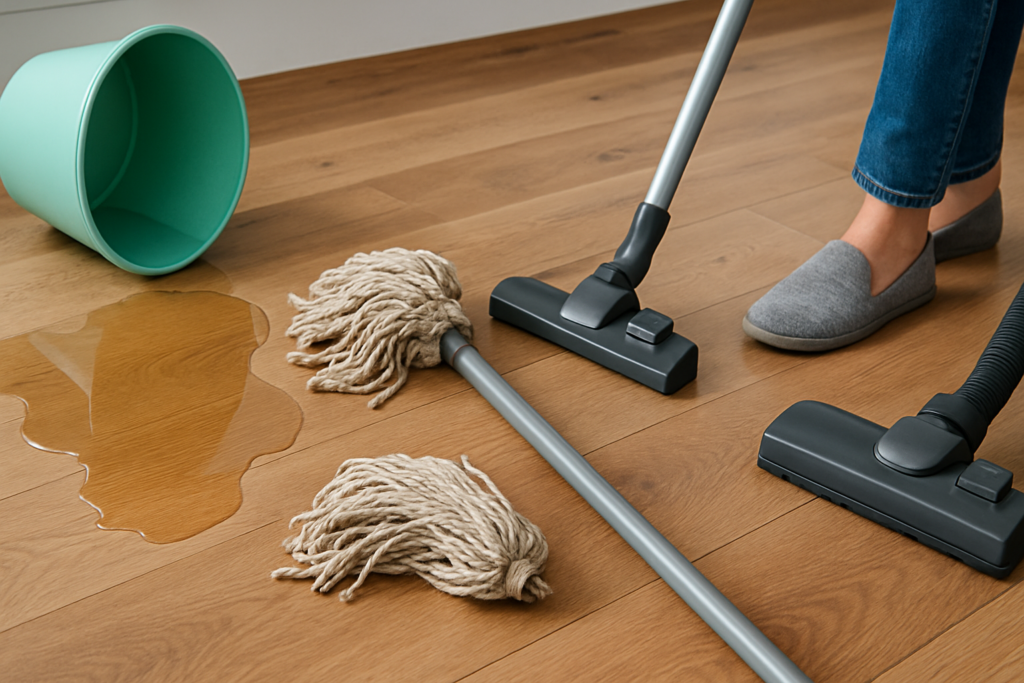
Water is hardwood’s worst enemy, yet people routinely soak their floors thinking more water equals cleaner results. This is the fastest way to cause warping, cupping, and finish damage that can’t be undone.
When you use a soaking wet mop or dump water directly on the floor, it seeps into the wood grain and between boards. The wood expands, contracts, and eventually develops permanent damage. I’ve seen floors completely ruined after just a few overly wet cleanings.
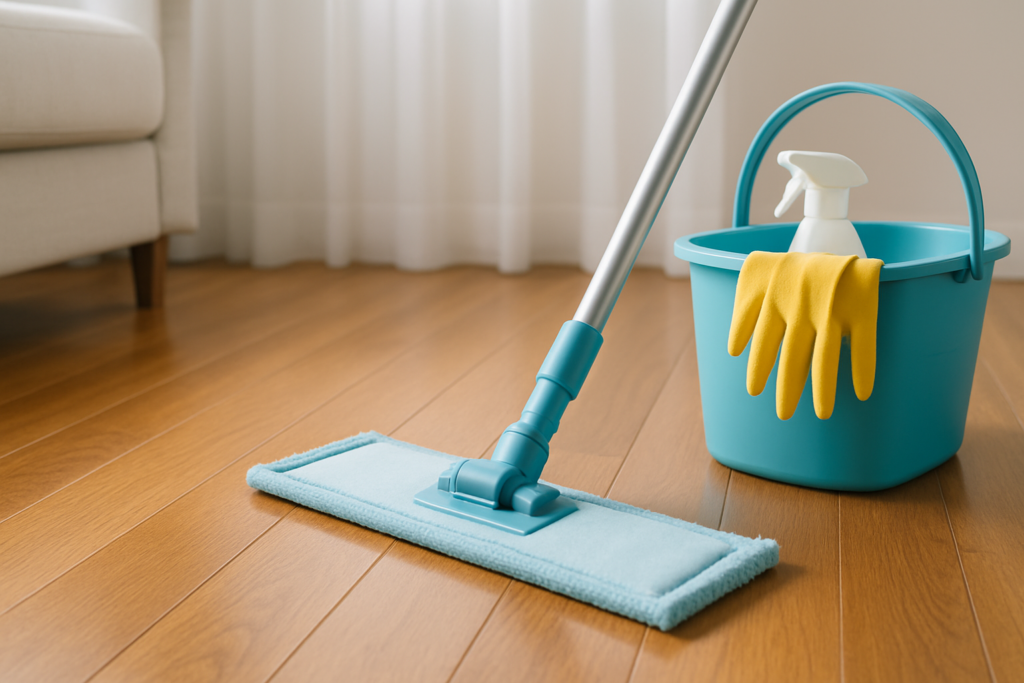
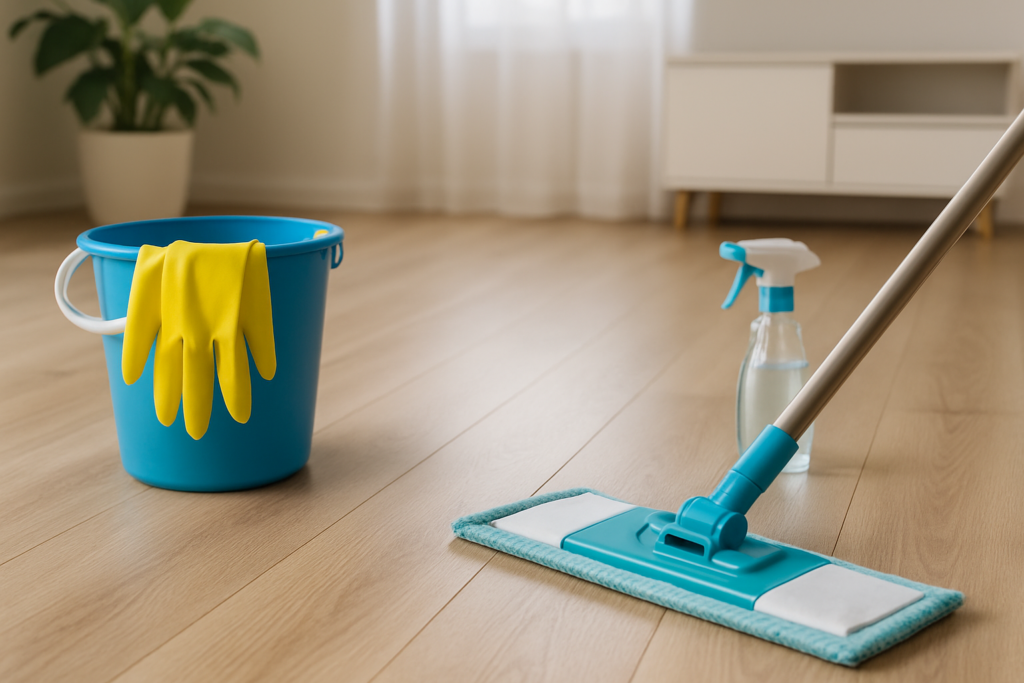
Instead, use the damp mop method. Wring out your mop until it’s barely damp, or better yet, use a spray mop system that controls moisture application. The floor should never have standing water or feel wet to the touch after cleaning.
Bona Spray Mop
This spray mop system gives you complete moisture control and comes with hardwood-safe cleaner.
2. Using All-Purpose Cleaners and Dish Soap
That bottle of all-purpose cleaner under your sink might work wonders on countertops, but it’s slowly destroying your hardwood finish. Most all-purpose cleaners contain harsh chemicals that break down polyurethane finishes over time.
Dish soap is another common culprit. While gentle on hands, it leaves a residue that builds up and creates a dull, streaky appearance. Murphy’s Oil Soap, despite its popularity, also leaves residue that attracts dirt and makes floors look worse over time.
Stick to cleaners specifically formulated for hardwood floors. These products maintain the proper pH balance and won’t damage your finish. Bona Hardwood Floor Cleaner and Minwax Hardwood Floor Reviver are both excellent choices that clean without residue.
3. Skipping Entry Mats and Rugs
Every step on your hardwood floors without proper matting brings in dirt, sand, and debris that act like sandpaper on your finish. This microscopic grit gets ground into the wood with each footstep, creating thousands of tiny scratches that dull the surface.
Place quality mats both outside and inside every entrance to your home. The outside mat catches the big stuff, while the inside mat picks up what the first one missed. Make sure your inside mats are large enough that people take at least two steps on them.
High-traffic areas like hallways and in front of kitchen sinks also need protection. Use area rugs in these spots to prevent wear patterns from developing.
4. Wrong Furniture Pads or No Pads at All
Moving furniture without proper pads creates deep scratches and gouges that often require professional repair. Even small movements like pulling out chairs can cause damage if you’re not protected.
Avoid cheap stick-on felt pads that fall off after a few weeks. They give you a false sense of security right before your dining room chairs start gouging the floor. Also skip the small round pads that don’t distribute weight properly.
Use furniture pads that actually stay in place and provide adequate coverage. For heavy furniture, choose furniture sliders with hard plastic bottoms that distribute weight evenly. For chairs, invest in nail-on chair glides that won’t come off.
Nail-On Chair Glides
These stay attached permanently and provide smooth movement without scratching.
5. Ignoring Humidity Levels
Wood naturally expands and contracts with humidity changes, but extreme fluctuations cause serious problems. Too much moisture leads to cupping and warping, while too little causes gaps and cracking.
Most people only think about humidity in summer, but winter heating systems can drop indoor humidity dangerously low. This causes boards to shrink and create gaps that collect dirt and debris.
Maintain indoor humidity between 30-50% year-round. Use a whole-house humidifier in winter and ensure proper ventilation in summer. A simple digital hygrometer helps you monitor levels accurately.
6. Vacuuming with the Wrong Attachment
Using a vacuum with a rotating brush or beater bar on hardwood floors creates more problems than it solves. These attachments are designed for carpet and can scratch your floor finish with every pass.
The rotating brush picks up debris but also flings it around, potentially scratching the wood. Even worse, small stones or debris can get caught in the brush and create deep gouges as you vacuum.
Always use the hard floor setting on your vacuum or switch to a bare floor attachment. Better yet, use a canister vacuum with a soft brush attachment specifically designed for hardwood. Many homeowners swear by stick vacuums designed for hardwood floors for daily maintenance.
7. Letting Spills Sit
Water rings under glasses are just the beginning. Any liquid left sitting on hardwood can penetrate the finish and stain the wood permanently. Pet accidents, wine spills, and even water from wet shoes can cause lasting damage if not addressed immediately.
The “I’ll clean it later” mentality has ruined more floors than natural disasters. Even water can leave permanent black stains if it sits long enough to penetrate through the finish.
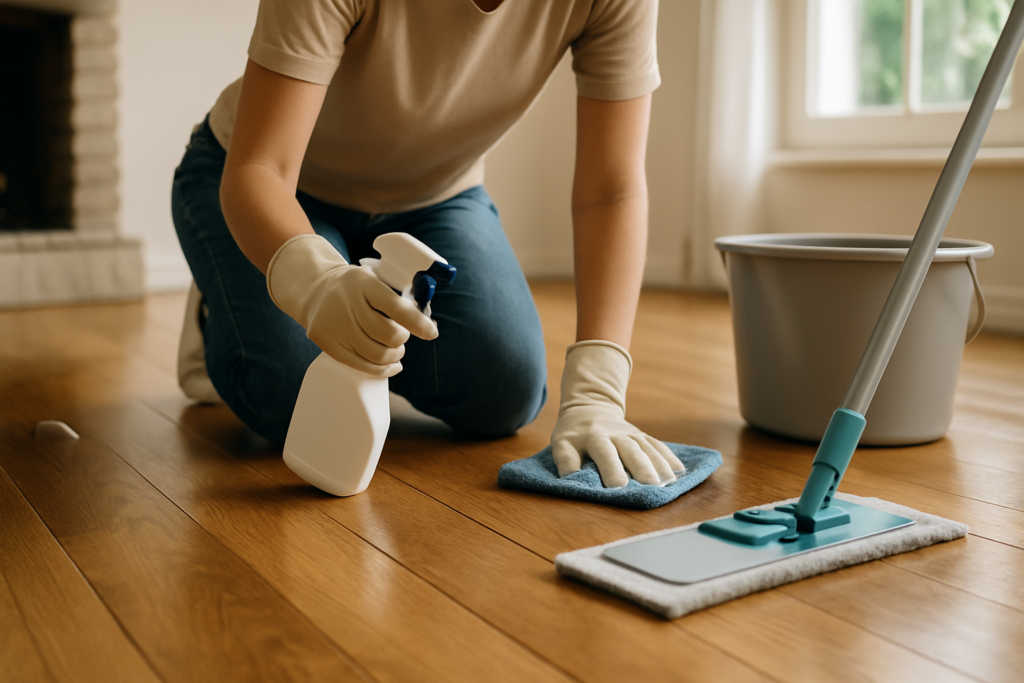
Clean every spill immediately, no matter how small. Keep microfiber cloths handy for quick cleanup. For sticky spills, use a hardwood floor cleaner rather than scrubbing with water.
8. Walking in High Heels and Street Shoes
High heels concentrate enormous pressure into tiny points, creating dents and gouges that can’t be sanded out without refinishing the entire area. A 120-pound person in stilettos exerts over 2,000 pounds per square inch of pressure with each step.
Street shoes bring in more than just dirt. Rock salt in winter, tar from parking lots, and chemicals from lawns all transfer to your floors and can cause permanent discoloration.
Establish a no-shoes policy or provide indoor slippers for guests. If going shoeless isn’t practical, at least avoid high heels and encourage people to wipe their feet thoroughly.
Indoor Shoe Storage Bench
Makes it easy for family and guests to remove shoes at the door while providing convenient storage.
9. Over-Cleaning and Daily Mopping
More cleaning isn’t always better. Daily mopping with any product gradually breaks down your floor’s finish, even if you’re using the right cleaner. This leads to dull spots, uneven sheen, and premature wear.
Each cleaning session removes a microscopic layer of finish. Do this daily and you’ll need refinishing years sooner than necessary. Plus, over-cleaning can leave residue buildup that attracts more dirt.
Sweep or vacuum daily, but only mop when floors actually need it. For most homes, weekly mopping is sufficient. High-traffic areas might need twice weekly attention, but daily mopping is overkill unless you’re dealing with specific messes.
10. Using Steam Mops and Steam Cleaners
Steam mops seem like the perfect solution for chemical-free cleaning, but steam is just superheated water that penetrates deeper into your floors than regular water ever could. Most flooring manufacturers void their warranties if steam cleaners are used.
Steam forces moisture into seams between boards and can cause the finish to cloud or peel. The heat can also cause thermal expansion that leads to gaps and warping.
Stick to traditional damp mopping with appropriate cleaners. Your floors will last longer and maintain their appearance without the risk of steam damage.
Microfiber Mop and Bucket Set
The traditional approach that gives you complete control over moisture levels while effectively cleaning.
Frequently Asked Questions
How often should I refinish my hardwood floors?
Most hardwood floors need refinishing every 7-10 years with normal use, but this depends heavily on your maintenance routine. Floors that are properly cared for can go 12-15 years between refinishing, while neglected floors might need attention in just 3-5 years. Look for worn areas where the wood shows through the finish as your signal to call professionals.
Can I use vinegar and water to clean hardwood floors?
No, vinegar is acidic and will gradually damage your floor’s finish, causing it to become dull and cloudy over time. While some people swear by vinegar solutions, they’re actually causing slow damage that becomes apparent after months or years of use. Stick to pH-neutral cleaners designed specifically for hardwood.
Is it normal for hardwood floors to show scratches?
Light surface scratches are normal with daily use, especially in high-traffic areas. However, deep scratches that catch your fingernail indicate improper care or protection. Most light scratches can be minimized with proper floor polish, while deep scratches require professional repair or refinishing.
What’s the best way to remove scuff marks from hardwood floors?
For light scuff marks, try rubbing them out with a clean tennis ball or pencil eraser. For stubborn marks, use a small amount of hardwood floor cleaner on a microfiber cloth and rub gently. Avoid abrasive cleaners or scrubbing, which can damage the finish. If scuffs won’t come out with gentle methods, they may have penetrated the finish and require professional attention.
This article contains affiliate links. We may earn a small commission at no extra cost to you.