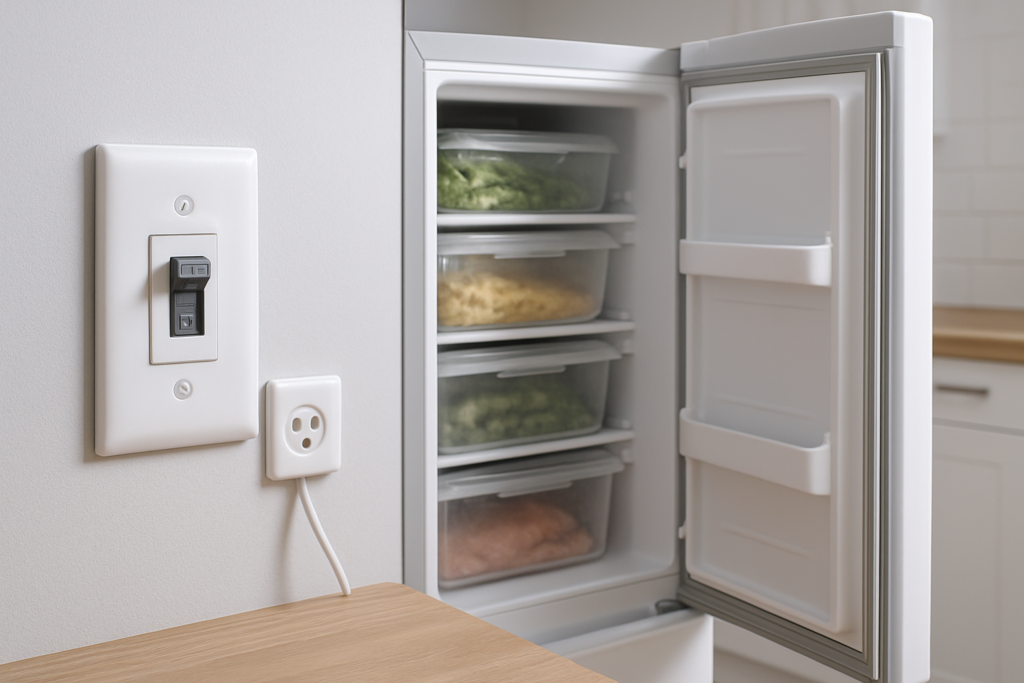
There’s nothing quite like the frustration of discovering your freezer has tripped the circuit breaker again. You reset it, everything seems fine, and then a few hours later you’re back to square one with melting ice cream and spoiling food. This isn’t just an inconvenience. It’s a sign that something’s wrong with either your freezer or your electrical system.
Understanding why this happens can save you from costly repairs, prevent food waste, and maybe even avoid a house fire. Let’s break down the most common causes and what you can actually do about them.
Understanding Electrical Load Basics
Your home’s electrical system works on a simple principle: each circuit can only handle a certain amount of current before the breaker trips to protect the wiring. Most residential circuits are rated for either 15 or 20 amps, and freezers typically draw between 6 and 12 amps during normal operation.
The problem isn’t usually the steady-state operation. It’s the startup surge. When your freezer’s compressor kicks on, it can momentarily draw 3 to 5 times its normal operating current. For a freezer that normally pulls 8 amps, that startup spike could hit 40 amps for a fraction of a second.
Most breakers are designed to handle these brief surges without tripping. But if your freezer is sharing a circuit with other appliances, or if something else is going wrong, you’ll keep resetting that breaker.
Shared Circuits Are Often the Culprit
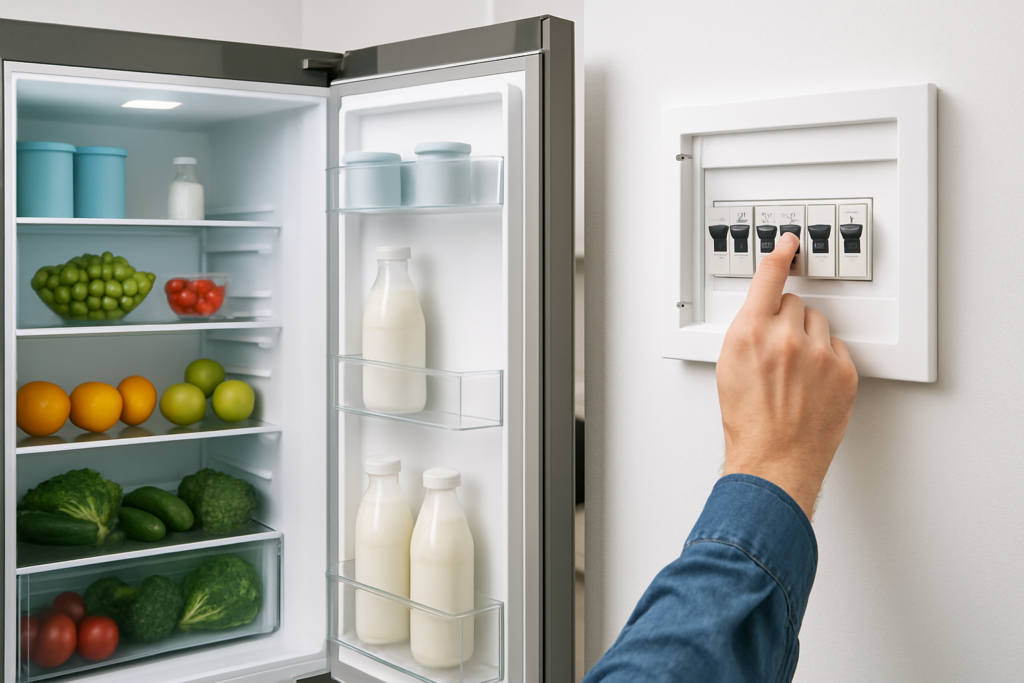
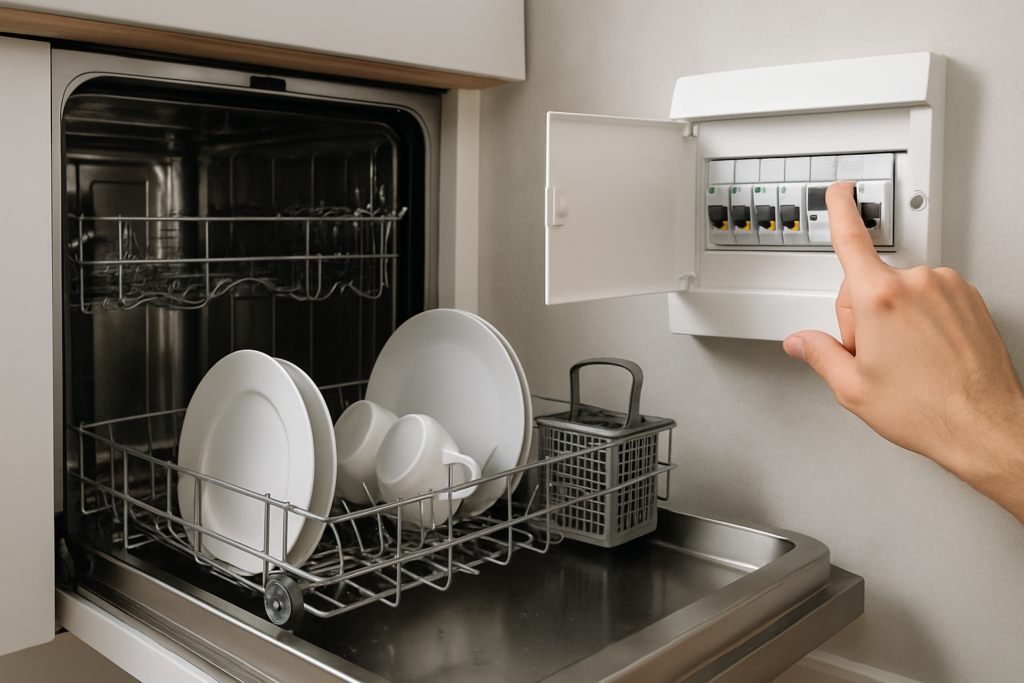
Walk over to your breaker panel and check which outlets are on the same circuit as your freezer. You might be surprised. Many homes built before 2000 have kitchen and garage outlets sharing circuits in ways that seem random.
If your freezer shares a circuit with a microwave, space heater, or even just a few lighting fixtures, you’re asking for trouble. The combined load during startup can easily exceed the breaker’s rating. This is especially common in garages where people plug in freezers, power tools, and electric vehicle chargers without thinking about circuit capacity.
The fix here is simple but potentially expensive: run a dedicated circuit for your freezer. This means hiring an electrician to install a new circuit from your panel directly to an outlet used only by the freezer. It’s the most reliable solution and will prevent future problems.
Faulty Compressor Motors
Compressor motors don’t last forever. Most are designed for 10 to 15 years of service, but they can fail earlier depending on how hard they work. A failing compressor motor draws more current than it should, particularly during startup.
You’ll notice other symptoms beyond tripping breakers. The freezer might run constantly, make unusual grinding or clicking noises, or fail to maintain proper temperature. Sometimes the compressor will feel excessively hot to the touch (be careful checking this).
When a compressor motor’s bearings start wearing out, the increased friction means it needs more current to turn. This extra current draw can push you over the edge and trip your breaker. You might also notice the compressor struggling to start, cycling on and off repeatedly in what’s called “short cycling.”

Freezer Thermometer
Keep one of these inside to monitor whether your freezer is actually maintaining proper temperature during these issues.
Testing Your Compressor
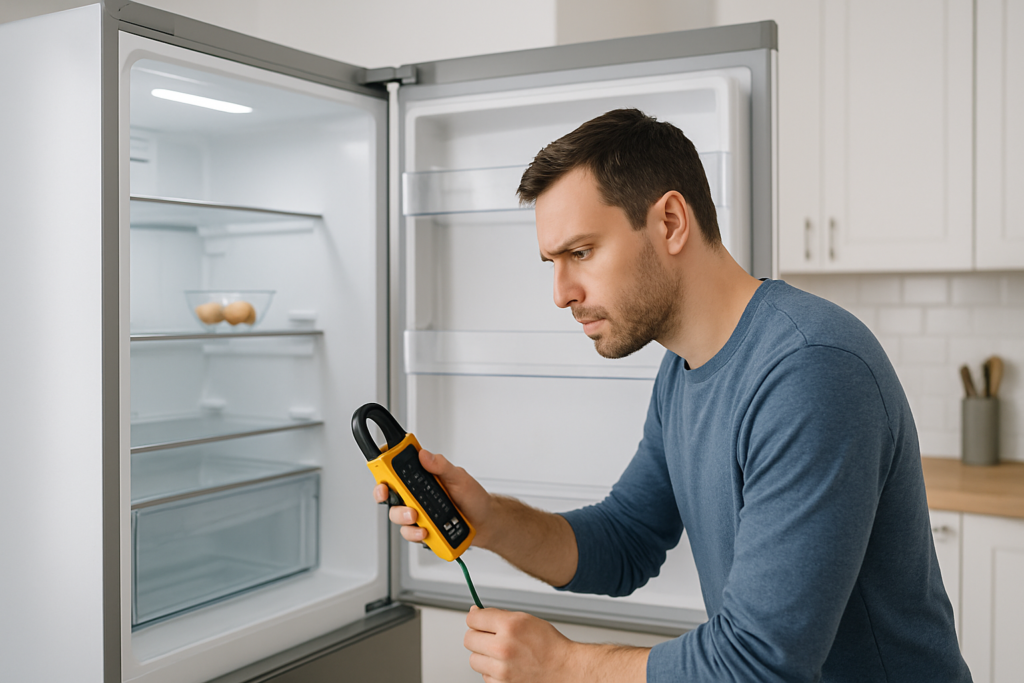
Before you replace a compressor (which often costs more than buying a new freezer), you should confirm it’s actually the problem. Using a clamp-on ammeter, you can measure the actual current draw during startup and compare it to the nameplate rating on your freezer.
Most freezer nameplates list both the running amps and the locked rotor amps (LRA). The LRA is the maximum current during startup. If you’re measuring significantly higher than the LRA, your compressor is definitely failing.
A qualified appliance technician can also check the compressor’s capacitor, which helps provide the extra oomph needed during startup. Failed capacitors are cheaper to replace than compressors and cause similar symptoms.
Wiring Problems You Can’t Ignore
Old or damaged wiring creates resistance, and resistance generates heat. As wiring deteriorates, it can’t safely carry the current it once could. This is especially common in homes built in the 1970s or earlier with aluminum wiring.
Check the outlet your freezer plugs into. Remove the cover plate (with the breaker off) and look at the connections. Discolored or melted plastic, burn marks, or loose wire connections are red flags. These signs mean the outlet has been overheating, possibly for years.
Backstabbed outlets (where wires are pushed into holes in the back rather than secured under screw terminals) are notorious for failing over time. The spring connections weaken, creating resistance and heat. If you find a backstabbed outlet powering your freezer, replace it with a properly wired one using the screw terminals.
Extension Cords Are Not a Solution
Running your freezer on an extension cord is asking for problems. Even heavy-duty extension cords add resistance to the circuit, and most aren’t rated for the sustained loads freezers require. The added resistance means voltage drop, which forces the compressor motor to draw even more current to do its job.
I’ve seen extension cords literally melt from the heat of powering a freezer. If your freezer is too far from an outlet, the right answer is installing a new outlet closer to where you need it, not daisy-chaining extension cords.
The Defrost System Connection
Many people don’t realize that frost-free freezers have electric heating elements that periodically melt accumulated frost. These defrost heaters can draw 300 to 600 watts (about 2.5 to 5 amps at 120 volts).
When the defrost heater kicks on while the compressor is running, that’s additional load on your circuit. If you’re already close to the limit, this combination can trip the breaker. The problem gets worse if the defrost timer malfunctions and runs the heater too frequently or for too long.
A failed defrost thermostat can cause the heater to run continuously instead of cycling off when it reaches temperature. This not only adds electrical load but can actually damage your freezer. You’ll notice excessive ice buildup or water pooling at the bottom of the freezer.

Appliance Thermometer with Alarm
These alert you to temperature problems before you lose hundreds of dollars in frozen food.
Testing Defrost Components
You can test your defrost system with a multimeter. The defrost heater should show continuity but not a short to ground. Typical resistance is between 10 and 50 ohms, depending on wattage. The defrost thermostat should show continuity when cold and open when warm.
If your freezer is building up excessive frost, the defrost system probably isn’t working correctly. This forces the compressor to work harder, drawing more current, which brings you back to tripping breakers.
Breaker Issues Themselves
Sometimes the breaker is the problem, not the freezer. Circuit breakers wear out, especially ones that have tripped repeatedly or are just old. The internal mechanism that’s supposed to handle surges and trip only when necessary can become oversensitive with age.
Breakers don’t have a fixed lifespan, but manufacturers generally recommend replacement after 30-40 years. In practice, breakers in high-use circuits often need replacement sooner. If your home still has the original breakers from 1985, there’s a good chance some of them are past their prime.
You can test this by swapping the freezer to a different circuit temporarily. Use a heavy-duty extension cord just for testing purposes (not as a permanent solution). If the freezer runs fine on a different circuit, your original breaker might need replacement.
Another possibility is that you have the wrong size breaker installed. Someone might have replaced a 20-amp breaker with a 15-amp breaker at some point, not realizing the circuit wiring is rated for 20 amps. Check your breaker size against what’s appropriate for the wire gauge in your walls.
Practical Steps to Fix the Problem
Start with the easiest solutions and work your way up. Unplug everything else on the same circuit and see if the freezer still trips the breaker. If it doesn’t, you know it’s a load issue and you need a dedicated circuit.
Check the freezer’s door seal. A leaking door seal makes the compressor run constantly and work harder, increasing current draw. Replace worn gaskets before assuming you need major repairs.
Clean the condenser coils. Dirty coils make the compressor work harder and run hotter, drawing more current. Most freezers have coils on the back or bottom that collect dust and pet hair. Vacuum them every six months.
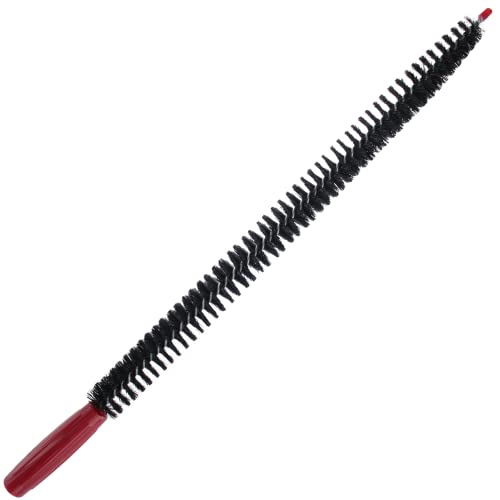
Coil Cleaning Brush
The long, thin bristles reach into tight spaces where vacuum attachments can’t fit.
Test the outlet voltage with a multimeter. Low voltage forces motors to draw more current. You should measure between 115 and 125 volts at the outlet. Anything below 110 volts indicates a wiring problem that needs professional attention.
Document when the breaker trips. Is it random, or does it happen at specific times? If it’s always around the same time, that points to the defrost cycle or something else on the circuit that runs on a schedule.
When to Call a Professional
Electrical work isn’t a DIY project if you’re not qualified. You should call an electrician if you find damaged wiring, need a new circuit installed, or if you’re uncomfortable working with your electrical panel.
For appliance-specific issues like compressor testing or defrost system repairs, an appliance repair technician is your best bet. Get quotes from multiple technicians, and compare the repair cost to replacement. For older freezers, replacement often makes more financial sense than expensive repairs.
Prevention Tips
Once you’ve solved your current problem, take steps to prevent it from happening again. Keep the area around your freezer well-ventilated. Freezers in hot garages or cramped spaces work harder and draw more current.
Avoid extreme temperature swings. A freezer in an unheated garage in Minnesota faces brutal conditions that shorten its lifespan. Consider moving it to a conditioned space if possible.
Use a surge protector designed for appliances. This won’t fix an overloaded circuit, but it will protect your freezer from voltage spikes that can damage the compressor or control boards.
Schedule regular maintenance. Clean those coils, check the door seals, and verify the internal temperature stays where it should (0°F or below). An ounce of prevention beats expensive repairs every time.
Frequently Asked Questions
Can I just use a higher amp breaker to stop the tripping?
Absolutely not. Breakers are sized to protect the wiring in your walls, not the appliance. Installing a larger breaker on undersized wiring is a fire hazard. The wire will overheat and potentially ignite inside your walls before the breaker trips. If you need more capacity, you need new wiring with the appropriate gauge, not just a bigger breaker.
Why does my freezer trip the breaker only in summer?
Heat makes compressors work harder. When ambient temperature rises, your freezer’s compressor runs longer and draws more current to maintain freezing temperatures. In a hot garage, this effect is magnified. The compressor also runs hotter internally, which increases resistance in the motor windings and further increases current draw. Summer is when marginal electrical systems finally give up.
Is it normal for a freezer to trip the breaker occasionally?
No, it’s not normal at all. A properly functioning freezer on an appropriately sized circuit should never trip the breaker. Even rare trips indicate a problem that will get worse over time. Don’t ignore it or you’ll eventually face a complete failure, probably at the worst possible moment.
How much does it cost to run a dedicated circuit for a freezer?
This varies widely based on distance from your electrical panel, local labor rates, and whether you need to run wire through finished walls. Expect anywhere from a few hundred to over a thousand dollars for a professional installation. Get multiple quotes from licensed electricians. While this seems expensive, it’s cheaper than replacing a burned-out freezer or repairing fire damage.
This article contains affiliate links. We may earn a small commission at no extra cost to you.