Living in a small home means every square inch counts, and your linen closet is no exception. A chaotic jumble of mismatched sheets, towels shoved in at odd angles, and that elusive pillowcase you can never find when you need it can turn a simple task into a frustrating treasure hunt. The good news is that with a few smart organizing strategies, even the tiniest linen closet can become a model of efficiency.
You don’t need a massive walk-in closet to store your linens properly. What you need is a system that maximizes vertical space, keeps everything visible and accessible, and prevents that inevitable avalanche every time you pull out a towel. Let’s transform your linen closet from a stuffed nightmare into a space that actually works for you.
Start with a Complete Purge and Assessment
Before you buy a single organizer or implement any system, empty your entire linen closet. Yes, everything. This step is non-negotiable because you can’t organize what you haven’t evaluated.
Spread everything out on your bed or a clean floor space. You’ll probably discover you own far more towels, sheets, and random linens than you realized. Most households only need two to three sheet sets per bed and about four to six towels per person. Anything beyond that is taking up valuable real estate.
Check for stains, tears, or items you haven’t used in over a year. Donate or repurpose anything that doesn’t make the cut. Old towels work great as cleaning rags or pet bedding. Once you’ve pared down your collection, you’ll have a much clearer picture of what storage solutions you actually need.
Build a Labeling System That Actually Works
A proper labeling system isn’t just about making things look pretty. It’s about creating a system where everyone in your household can find what they need and, more importantly, put things back where they belong.
Invest in a good label maker or create your own labels with cardstock and clear tape. Label each shelf with its designated contents: guest towels, bath towels, queen sheets, king sheets, pillowcases, and so on.

Shelf Dividers for Linen Closet
These keep stacks of linens from toppling over and create clear boundaries between categories.
Take your labeling one step further by creating a color-coded system. Assign each bedroom a specific color, then mark sheet sets with colored safety pins or small fabric tags. This way, when you pull sheets from the dryer, you instantly know which bedroom they belong to without having to measure or guess.
For families with kids, picture labels work wonders. Print small photos of towels, washcloths, and sheets, then laminate them for durability. Even young children can return items to the correct spot when they have visual cues to guide them.
Master the Art of Vertical Space Optimization
Small linen closets typically have far more vertical space than they have width or depth. Most people waste the upper two feet of their closet because they can’t easily reach it or see what’s stored there.
Install additional shelving to create more usable layers. Adjustable shelving systems let you customize the height between shelves based on what you’re storing. Towels need less vertical space than comforters, so tailor your shelves accordingly.
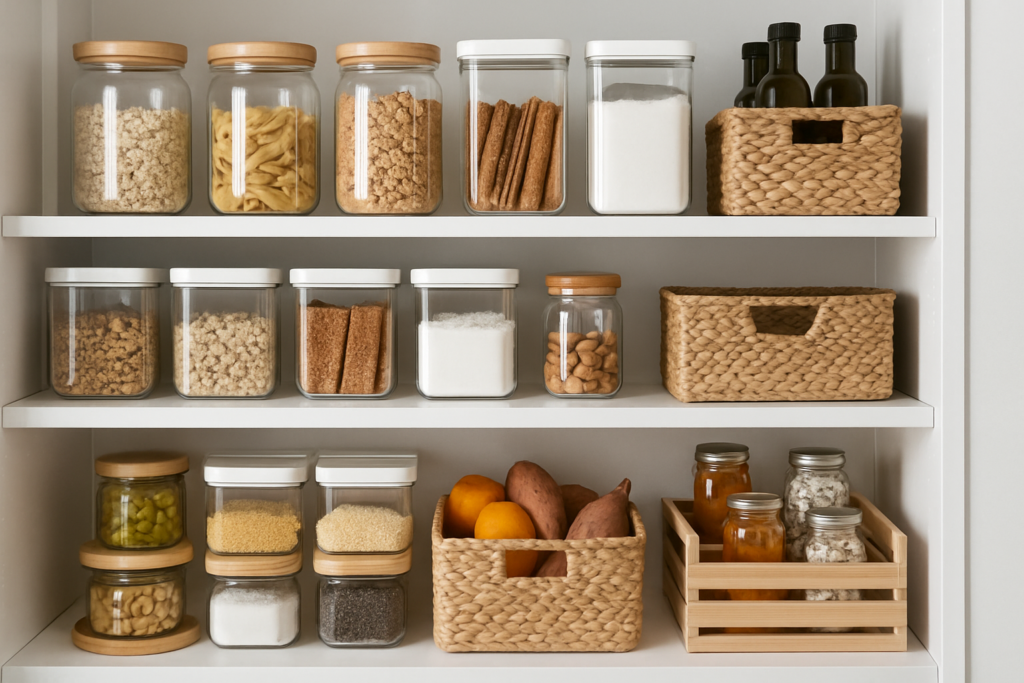
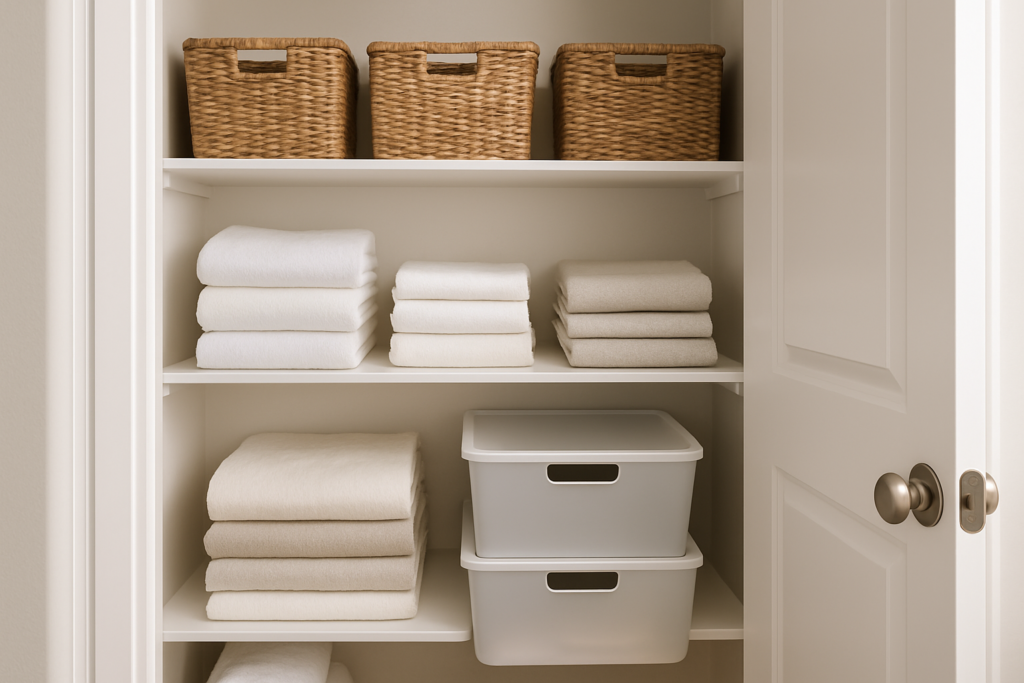
Use stackable storage bins to create mini-compartments within your shelves. Clear bins work best because you can see contents at a glance. Store seasonal items or rarely used linens (like tablecloths and holiday-specific items) in the highest bins.
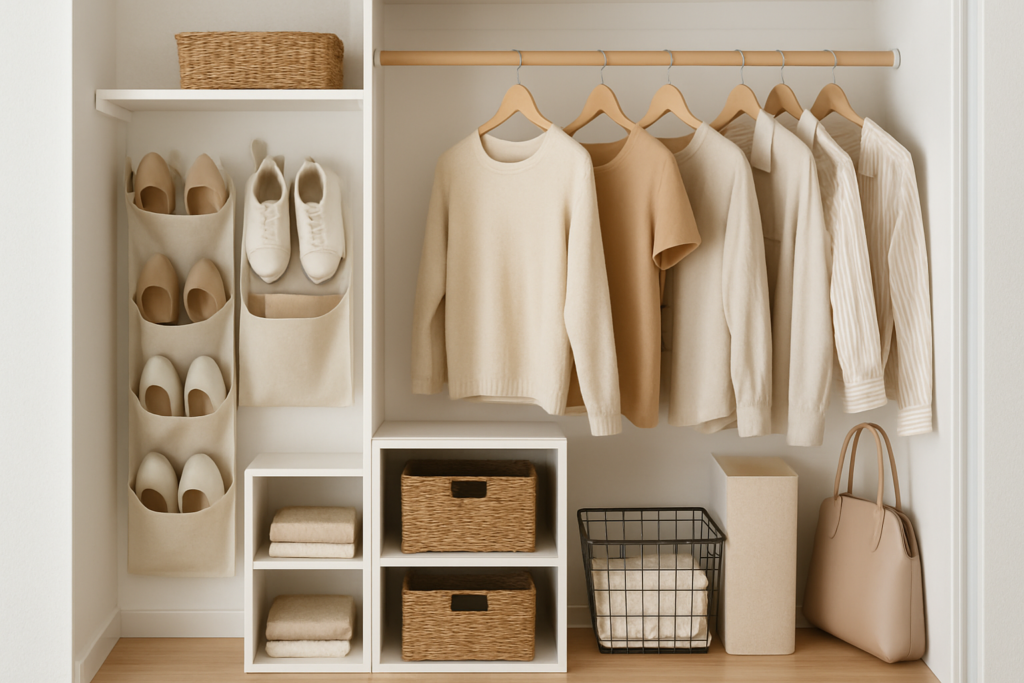
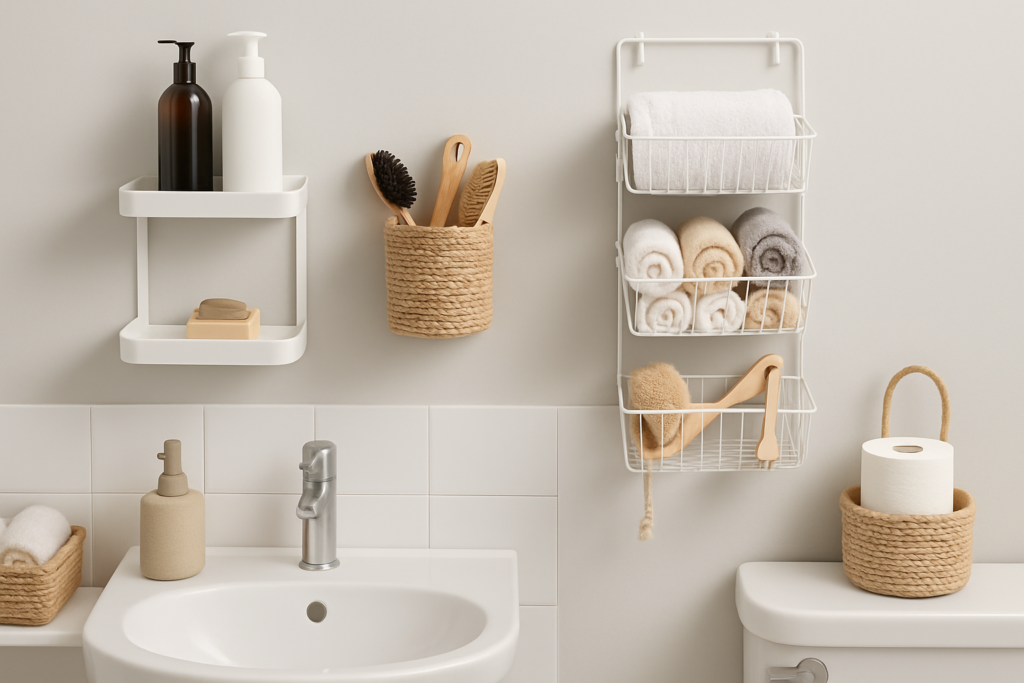
Consider adding an over-the-door organizer on the inside of your closet door. These hanging organizers with multiple pockets are perfect for storing smaller items like washcloths, hand towels, or cleaning supplies that would otherwise get lost among larger linens.
The Great Towel Debate: Rolling vs. Folding
This debate has divided households for generations, but the answer depends on your specific closet configuration and priorities.
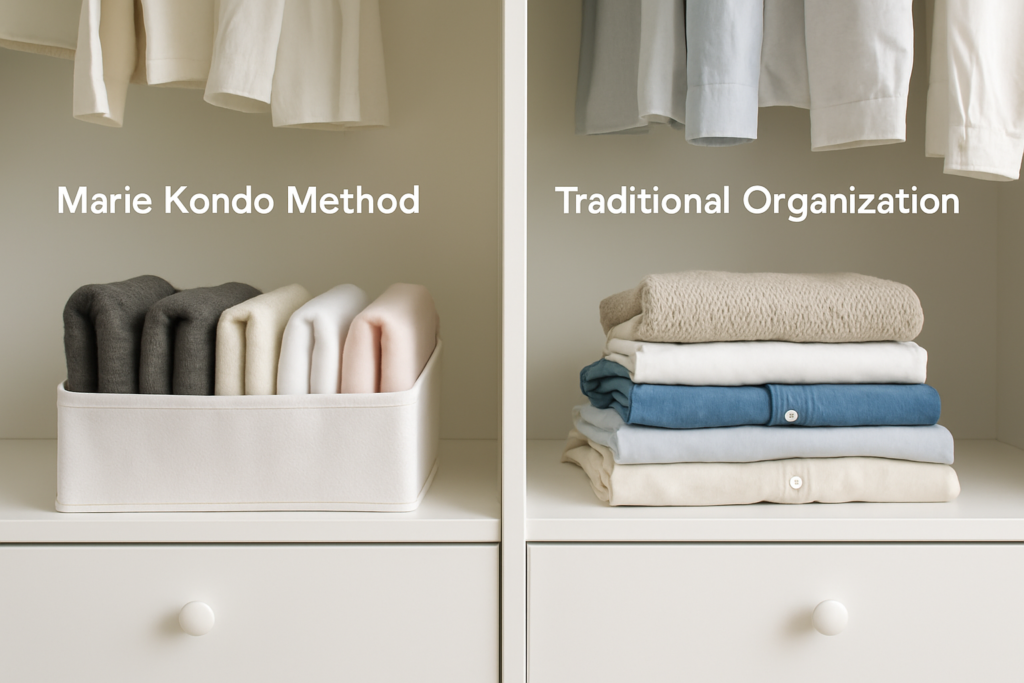
Folding towels in thirds and stacking them creates a neat, spa-like appearance. This method works best when you have deep shelves and want to maximize vertical stacking. You can fit more towels in the same space, and they look particularly tidy when arranged with edges facing out. The downside is that pulling a towel from the middle of a stack can disturb the entire pile.
Rolling towels saves significant space in shallow closets or when using bins and baskets. Rolled towels stand upright like files in a drawer, making every single towel visible and accessible without disrupting others. This method is particularly useful in very small closets where you can’t afford to have towels tumbling out every time you grab one.

Fabric Storage Baskets
Perfect for holding rolled towels upright while keeping your closet looking organized and cohesive.
For most small homes, rolling wins. You’ll save about 20 to 30 percent more space, and the ease of access means you’re more likely to maintain the system long-term. Plus, rolled towels work beautifully in baskets or bins, adding a decorative element to your functional storage.
Vacuum Storage Bags for Bulky Seasonal Items
Comforters, heavy blankets, and winter bedding take up an absurd amount of space for items you only use part of the year. This is where vacuum storage bags become absolute lifesavers.
These bags compress bulky items to about one-third of their original size by removing excess air. You can fit an entire queen comforter in the space that previously held a folded bath towel. Store these compressed bags on your highest shelf or even under beds if your linen closet is truly cramped.
A few tips for success with vacuum bags: make sure items are completely dry before sealing to prevent mildew, label each bag clearly with contents, and check them every few months to ensure they haven’t lost their seal. Keep a handheld vacuum nearby for easy re-sealing when needed.
Don’t vacuum-seal items you use frequently. These bags work best for true seasonal storage or guest bedding that only comes out a few times per year. The compression process can create wrinkles, so you might need to toss items in the dryer for a quick fluff before use.
Implementing the Rotating Stock Method
Borrowed from retail and food service industries, the rotating stock method ensures you use all your linens evenly rather than wearing out your favorites while others sit untouched.
Place freshly laundered sheets and towels at the bottom or back of each stack. Always pull from the top or front. This rotation prevents certain items from becoming perpetually neglected while extending the life of your entire linen collection.
Mark one corner of each sheet set with the date you started using it (a small piece of masking tape works). This helps you identify which sets are wearing out faster and need replacement. You’ll also notice if certain sheets never rotate through, which means you probably own more than you need.
Keep Everything Fresh with Strategic Scent Solutions
Even the most organized linen closet can develop that musty, closed-up smell. Combat this with scent sachets placed strategically throughout your shelves.
Make your own sachets by filling small fabric pouches with dried lavender, cedar chips, or your favorite dried herbs. Tuck one sachet between each stack of linens. Replace them every three to four months to maintain freshness.

Lavender Sachets for Closets
Natural, long-lasting scent that keeps linens smelling fresh without harsh chemicals.
Alternatively, cedar blocks offer natural moth protection while adding a pleasant, subtle scent. Sand them lightly with fine-grit sandpaper every few months to refresh their potency.
Avoid heavily perfumed dryer sheets or commercial air fresheners in your linen closet. These synthetic scents can transfer to your sheets and irritate sensitive skin. They also tend to fade quickly, leaving you with a chemical smell rather than genuine freshness.
For persistent odor problems, place an open box of baking soda on one shelf. It absorbs moisture and neutralizes odors naturally. Replace it monthly for best results.
Create Zones Within Your Closet
Even tiny linen closets benefit from designated zones that group similar items together and match frequency of use with accessibility.
Your eye-level shelves should hold items you use daily: current bath towels, the sheet sets in regular rotation, and frequently needed extras. Reserve this prime real estate for your everyday essentials.
Lower shelves work well for kids’ linens if you want them to access items independently. Store heavier items like extra blankets here too, since lifting them from lower positions is easier than wrestling them down from overhead.
Upper shelves are perfect for those vacuum-sealed seasonal items, guest bedding, or specialty linens like tablecloths you only use for holidays. Group these occasional-use items together so you’re not hunting through multiple areas when you do need them.
Consider dedicating one small section to cleaning supplies and extra toiletries if you don’t have a separate storage area. Just keep them contained in a portable caddy so they don’t spread chaos through your organized linen space.
Maintain Your System with Weekly Check-Ins
The best organizing system in the world fails without maintenance. Schedule a quick five-minute check-in every week, ideally on laundry day.
Straighten stacks, return any items to their proper zones, and assess what’s running low. This regular maintenance prevents small messes from becoming overwhelming reorganization projects. You’ll also catch problems early, like a leaking toiletry item or a shelf that needs adjusting.
Involve everyone in your household. Walk family members through your system once, then hold them accountable for maintaining it. When everyone understands the logic behind where things go, they’re much more likely to cooperate.
Do a deeper quarterly review where you reassess what’s working and what isn’t. Maybe you need to adjust shelf heights, add another bin, or admit that the fancy folding method you implemented just isn’t sustainable for your lifestyle. Good organization evolves with your needs.
Frequently Asked Questions
How many sheet sets should I actually keep per bed?
Two to three sets per bed is the sweet spot for most households. Keep one set on the bed, one clean set in the closet ready to go, and optionally a third set if you have kids prone to accidents or pets that sleep on beds. More than three sets per bed rarely gets used and just takes up valuable closet space. The exception is if you have frequent houseguests and maintain a dedicated guest room with its own rotation.
What’s the best way to store sheets so they don’t get wrinkled?
Fold sheets neatly while they’re still slightly warm from the dryer and store them flat rather than crammed into tight spaces. The single best trick is to store each complete sheet set inside one of its own pillowcases, creating a tidy bundle that keeps everything together and prevents pieces from getting separated. This method also protects the sheets from dust and reduces wrinkles since they’re not under the pressure of heavy stacks. For extra wrinkle prevention, place a piece of acid-free tissue paper between folded layers.
How often should I replace towels and sheets?
Quality towels typically last one to three years with regular use and proper care. Replace them when they become thin, develop a permanent musty smell even after washing, or lose their absorbency. Sheets last slightly longer, around two to four years, but should be replaced when fabric becomes thin, elastic loses stretch, or stains won’t come out. Washing sheets weekly and towels after three to four uses extends their lifespan. Higher thread count doesn’t always mean longer life, proper care matters more than initial quality.
Can I store other items in my linen closet besides linens?
Absolutely, especially in small homes where every storage area needs to multitask. Toiletries, cleaning supplies, extra toilet paper, and first aid supplies all make sense in a linen closet since you typically access these items in the same context as fresh towels and sheets. Just maintain clear zones and use containers to keep non-linen items separate and contained. Avoid storing anything that could leak, damage fabric, or attract pests. Skip storing medications unless the closet stays cool and dry, as bathroom humidity can degrade their effectiveness.
This article contains affiliate links. We may earn a small commission at no extra cost to you.