Your dishwasher might look clean on the outside, but there’s a good chance the parts you can’t see are coated in grime, mineral deposits, and food particles. While most people remember to rinse their plates before loading, very few actually maintain the dishwasher itself. Over time, this neglect leads to poor cleaning performance, funky smells, and even expensive repairs.
The hidden components of your dishwasher work harder than you think. When spray arms get clogged, door gaskets accumulate mold, or heating elements collect mineral buildup, your dishes come out spotty and your machine runs less efficiently. Let’s tackle the maintenance tasks that actually make a difference.
Unclogging Your Spray Arms
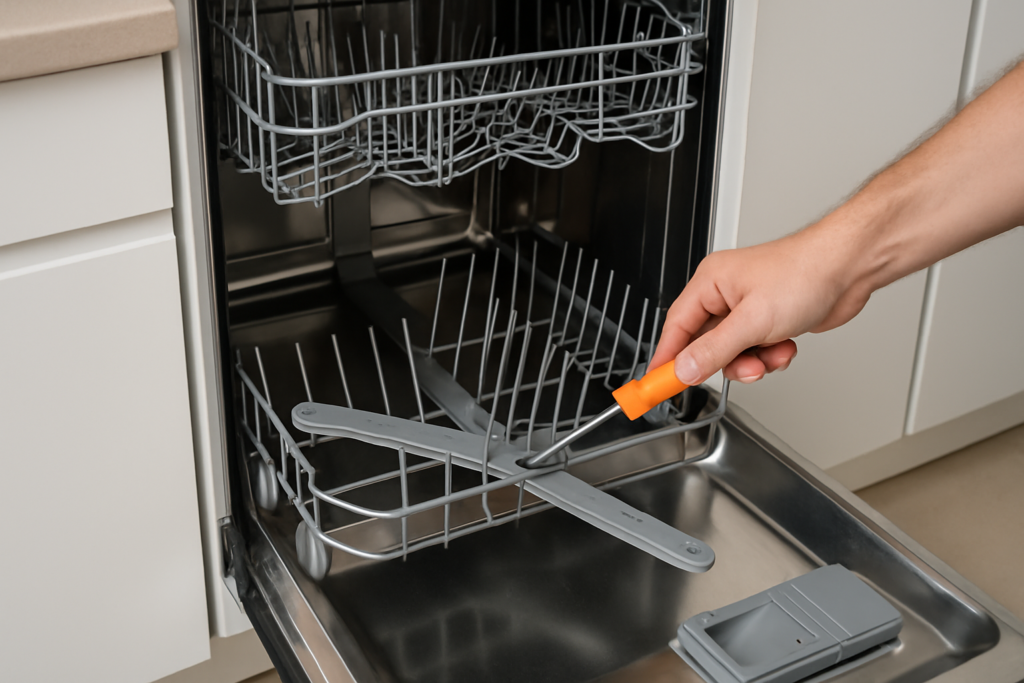
The spray arms are responsible for blasting water onto your dishes, but their tiny holes get blocked with hard water deposits and food debris. Remove both the upper and lower spray arms by twisting or unclipping them (check your manual if they won’t budge). Hold them up to the light and you’ll probably see several holes that are partially or completely blocked.
Use a toothpick or straightened paperclip to clear each hole individually. Rinse the arms under hot water and shake them vigorously to dislodge any debris inside. For stubborn mineral deposits, soak the spray arms in white vinegar for 30 minutes before scrubbing.
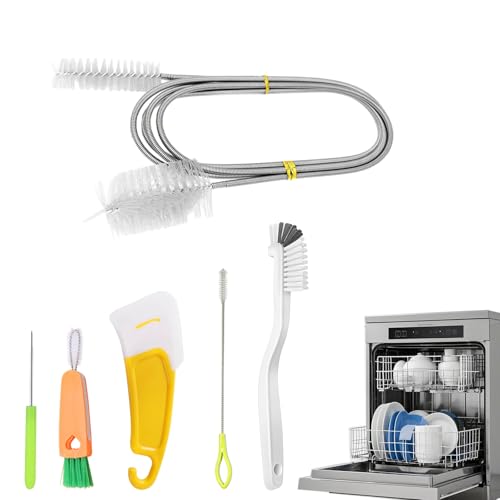
Dishwasher Cleaning Kit
These kits include specialty brushes designed specifically for spray arm holes and hard-to-reach areas
Once you’ve cleared all the holes, reinstall the spray arms and run an empty cycle. You should notice immediately improved water pressure and better cleaning results.
Deep Cleaning the Door Gasket
That rubber seal around your dishwasher door traps moisture, food particles, and soap residue. It’s a breeding ground for mold and mildew, which explains the musty smell you’ve been ignoring.
Pull back the gasket folds and wipe thoroughly with a mixture of warm water and dish soap. Use an old toothbrush to scrub the crevices where gunk accumulates. For visible mold, make a paste with baking soda and water, apply it to the affected areas, let it sit for 10 minutes, then scrub and rinse.
Don’t forget to wipe down the door itself, especially the bottom edge where water pools. This whole process takes less than five minutes but prevents major odor problems down the line.
Checking the Float Switch and Heating Element
The float switch is a small plastic dome in the bottom of your dishwasher that prevents overflow. It needs to move freely up and down. Remove any debris around its base and lift it a few times to make sure it’s not stuck. A jammed float switch can cause error codes or prevent your dishwasher from filling properly.
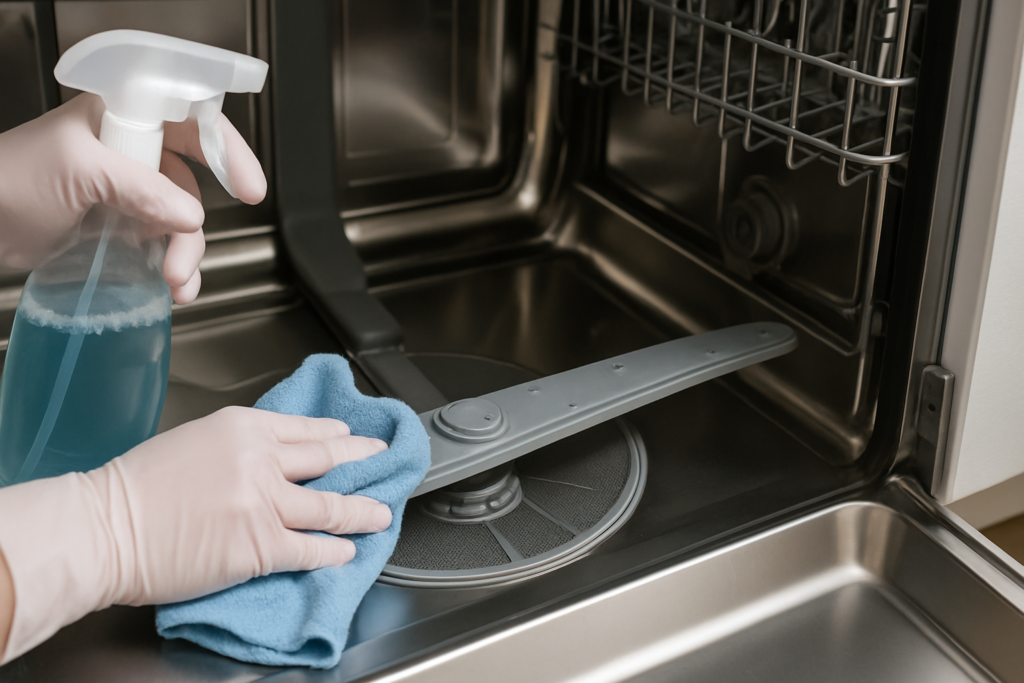
The heating element, usually a metal coil at the bottom of the tub, gets coated with hard water minerals over time. This reduces its efficiency and extends drying times. Wipe it down with a cloth soaked in white vinegar to dissolve mineral buildup. For heavy scaling, you can use a citric acid descaler specifically made for dishwashers.
Never use abrasive scrubbers on the heating element. You’ll damage the coating and potentially create a fire hazard.
Your Monthly Maintenance Routine
Set a monthly reminder to check your dishwasher’s filter. Most models have a removable filter at the bottom that catches large food particles. Twist it out, rinse under hot water, and scrub away any grease buildup with dish soap.
Run an empty cycle with two cups of white vinegar placed in a dishwasher-safe bowl on the top rack. This dissolves mineral deposits throughout the system. Follow up with a sprinkle of baking soda on the bottom of the tub and run a short hot cycle to freshen everything up.

Dishwasher Cleaner Tablets
Monthly use of these tablets helps prevent buildup before it becomes a problem
Inspect the drain area for any debris that might have slipped past the filter. Even small items like toothpicks or fruit stickers can cause drainage problems.
Troubleshooting Common Error Codes
Most dishwasher error codes relate to water flow issues. If you’re seeing error messages about filling, draining, or heating problems, check your recently cleaned components first. A clogged spray arm or jammed float switch often triggers these codes.
Error codes related to heating usually mean mineral buildup on the element or a faulty temperature sensor. After descaling the heating element, reset your dishwasher by turning off the circuit breaker for 5 minutes. This clears temporary error codes and allows the system to recalibrate.
For persistent error codes, consult your manual’s diagnostic section. Many manufacturers include specific troubleshooting steps for each code. Before calling for service, verify that your maintenance is up to date. Technicians report that nearly 40% of service calls could be avoided with proper cleaning.
Frequently Asked Questions
How often should I clean my dishwasher’s spray arms?
Check them every three months and clean as needed. Homes with hard water should inspect monthly since mineral deposits accumulate faster. You’ll know it’s time when your dishes start coming out with spots or food residue even after a full cycle.
Can I use bleach to clean my dishwasher’s interior?
Only if you have a plastic interior tub. Never use bleach on stainless steel interiors as it causes discoloration and damage. Stick with white vinegar and baking soda for regular cleaning, or use manufacturer-approved dishwasher cleaning products designed for your specific model.
This article contains affiliate links. We may earn a small commission at no extra cost to you.