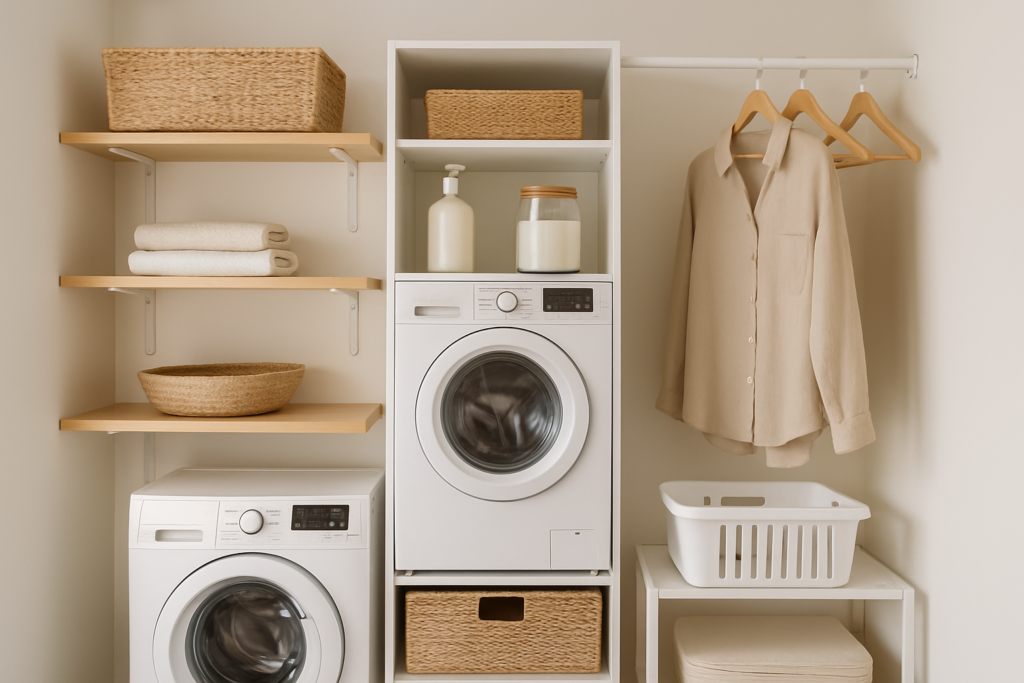
Your laundry room might be tiny, but that doesn’t mean it has to be chaotic. Whether you’re dealing with a cramped closet or a narrow space tucked between your kitchen and garage, smart organization can transform even the smallest laundry area into a functional powerhouse. The key lies in making every inch count and creating systems that actually work with your daily routine.
Small laundry spaces often become dumping grounds for everything from cleaning supplies to random household items. This creates a frustrating cycle where you can’t find what you need and simple tasks take twice as long. With the right approach, you can create dedicated zones for washing, drying, folding, and storage without expanding your square footage.
Let’s explore practical solutions that maximize efficiency while keeping your sanity intact. These strategies work whether you’re organizing a closet-sized space or optimizing a shared laundry area in an apartment building.
Maximize Your Vertical Space
Most people completely underutilize the space above their washer and dryer. This prime real estate can house months’ worth of supplies and create valuable storage without cluttering your floor space.
Install sturdy shelving or cabinets that extend all the way to the ceiling. You’ll want something that can handle the vibration from your machines, so skip the flimsy particleboard options. Metal wire shelving or solid wood shelves mounted with heavy-duty brackets work best.
Store your most-used items at eye level and keep seasonal or bulk supplies up high. Place detergent, fabric softener, and stain removers where you can easily grab them while loading the washer. Reserve the top shelves for backup supplies or items you only use occasionally.
SONGMICS 3-Tier Metal Wire Shelving Unit
Sturdy construction that handles washer vibration while maximizing vertical storage space.
Consider adding hooks or a pegboard system to one wall for frequently used tools. Hang your measuring cup, stain removal brush, and lint roller where they’re visible and accessible. This prevents these small items from getting lost in drawers or behind larger containers.
Create an Efficient Folding Station
A dedicated folding area prevents clean clothes from piling up on your bed or getting wrinkled in baskets. Even in tight spaces, you can carve out a functional folding zone with some creative thinking.
If you have a top-loading washer, the lid makes an instant folding surface when it’s not in use. For front-loading machines, consider installing a fold-down table or countertop that extends over the machines. When folded up against the wall, it takes up almost no space.
Another space-saving option is a rolling cart that can serve double duty. Use the top surface for folding and the shelves below for sorted clothes or laundry supplies. When you’re not doing laundry, roll it into a corner or use it for storage in another room.
Keep folding tools within arm’s reach of your folding station. A small basket or drawer organizer can hold items like fabric softener sheets, hangers, and safety pins. This setup lets you complete the entire folding process in one spot without hunting for accessories.
Organize Supplies for Easy Access
Laundry supplies tend to multiply and take over available space if you don’t establish clear boundaries. Creating designated homes for different categories of products will keep everything tidy and help you track what you have.
Group similar items together using clear containers or bins. Keep all stain removal products in one container, fabric care items in another, and cleaning supplies separate from laundry products. Clear containers let you see what’s running low at a glance.
Use the inside of cabinet doors for additional storage. Over-door organizers or small shelves can hold frequently used items like stain sticks, lint rollers, or dryer sheets. This trick works especially well in closet laundry rooms where every surface counts.
Simple Houseware Over Door Hanging Organizer
Perfect for closet laundry rooms where you need to maximize door space for supplies storage.
Label everything, especially if you share the space with roommates or family members. When everyone knows where items belong, the system maintains itself much better. Use a label maker or simple masking tape and markers for a budget-friendly option.
Improve Your Workflow
The most organized space in the world won’t help if the workflow doesn’t make sense. Think about how you actually use your laundry room and arrange things to support that natural flow.
Position your hampers or sorting baskets near the entrance so you can drop off dirty clothes easily. If you sort clothes before washing, set up multiple containers for whites, darks, and delicates. Stackable baskets work well for this and can fit in narrow spaces beside your machines.
Place your detergent and other washing supplies within easy reach of the washer’s control panel. You shouldn’t have to walk across the room or dig through cabinets while you’re loading a wash cycle. A small shelf or caddy right above or beside the washer keeps everything handy.
Create a designated spot for clothes that need special attention. A small basket for items requiring stain treatment or hand washing prevents these pieces from getting mixed back in with regular laundry. Place this basket somewhere visible so you remember to deal with these items promptly.
Solutions for Closet-Sized Spaces
Closet laundry rooms present unique challenges, but they also offer some advantages. The enclosed space can hide clutter, and you can use every wall surface for storage without worrying about aesthetics.
Install a tension rod across the width of the closet above your machines. This creates instant hanging space for delicate items or clothes that come out of the dryer wrinkle-free. You can also hang a shoe organizer from this rod to hold small supplies.
Use the space between your stacked washer and dryer for a pull-out drawer or shelf. This narrow space is perfect for storing dryer sheets, fabric softener, or cleaning cloths. Many appliance manufacturers make accessories specifically designed to fit this gap.
Consider bi-fold doors or a curtain instead of a traditional swinging door. These options take up less floor space when open, giving you more room to maneuver while loading and unloading machines. In rental situations, a tension-mounted curtain can provide privacy without permanent modifications.
Whitmor Over the Washer Storage
Designed specifically for tight laundry spaces with maximum storage in minimal footprint.
Shared Space Strategies
Apartment buildings and shared living situations require different organizational approaches. You need systems that are portable, clearly marked, and considerate of other users.
Invest in a rolling laundry cart that can transport everything you need from your apartment to the laundry room in one trip. Include your detergent, fabric softener, stain remover, and folding tools. This prevents multiple trips and ensures you have everything on hand.
Use a mesh laundry bag or basket to transport wet clothes from the washer to the dryer. This prevents dripping in shared hallways and keeps your clothes contained. Choose one with handles that won’t dig into your hands when carrying heavy, wet items.
Bring a large towel or sheet to use as a temporary folding surface. Shared laundry rooms often have limited counter space, but you can spread your towel on top of another machine or table to create a clean folding area. This also protects your clean clothes from whatever might be on shared surfaces.
Set a timer on your phone and return promptly when your cycles finish. This courtesy keeps the machines available for others and prevents your clothes from sitting in machines where they might get wrinkled or removed by impatient neighbors.
Smart Storage Hacks
Small laundry rooms require creative storage solutions that maximize every available inch. These clever hacks can add significant storage capacity without major renovations.
Magnetic containers stick to the sides of your washer and dryer, providing convenient storage for small items like safety pins, buttons, or loose change. This keeps these tiny items from getting lost and puts dead space to work.
A narrow rolling cart can fit in the gap between your washer and the wall. These slim carts typically measure only 6-8 inches wide but offer multiple shelves for supplies. They roll out for easy access and tuck away when not needed.
Use the space under a utility sink by adding a tension rod for hanging supplies or installing narrow shelving. This area often gets ignored but can hold a surprising amount of cleaning products or extra towels.
Hang a shoe organizer on the back of your laundry room door to create instant storage pockets. These clear pockets are perfect for individual stain removal products, fabric softener sheets, or other small items that tend to get buried in larger containers.
Essential Tools and Supplies
Having the right tools on hand makes laundry tasks faster and more efficient. Focus on versatile items that serve multiple purposes and don’t take up excessive space.
A good stain removal brush handles most fabric cleaning tasks and takes up minimal drawer space. Look for one with different brush textures for various fabric types.
Keep a small container of baking soda in your supplies for odor removal and stain treatment. It’s inexpensive, versatile, and takes up less space than multiple specialized products.
A retractable clothesline can provide temporary drying space when needed and stores in a tiny footprint. Install mounting hardware on opposite walls, and you can extend the line across your laundry room when you need extra drying space.

Household Essentials Retractable Clothesline
Extends 12 feet for extra drying space then retracts completely out of the way.
A mesh drying rack that hangs from a shower curtain rod or hook provides space for delicates without taking up floor space. These fold completely flat when not in use.
Maintenance and Upkeep
An organized laundry room only stays functional if you maintain the systems you’ve created. Build simple maintenance habits into your routine to prevent chaos from creeping back in.
Do a quick tidy-up after each laundry session. Put supplies back in their designated spots, wipe down surfaces, and remove any items that don’t belong in the laundry room. This five-minute habit prevents clutter from accumulating.
Review your supply levels monthly and consolidate partially used containers. This prevents you from buying duplicates and keeps your storage containers from overflowing with half-empty bottles.
Clean your lint trap after every dryer load, not just for safety but to maintain the organized feel of your space. A clean, well-maintained laundry room encourages you to keep up with your organizational systems.
Reassess your organization quarterly. As your needs change or you discover what works and what doesn’t, be willing to adjust your systems. The goal is functionality, not perfection.
Frequently Asked Questions
How much storage space do I really need above my washer and dryer?
Plan for at least 18-24 inches of clearance above your dryer for proper ventilation, then add storage above that point. A typical household needs about 3-4 cubic feet of storage for laundry supplies, which translates to roughly 2-3 shelves of storage space. Remember to keep frequently used items within easy reach and store backup supplies higher up.
What’s the best way to prevent small items from falling behind the washer and dryer?
Install a thin shelf or use a magnetic strip along the gap between your machines and the wall. Many people also place a slim rolling cart in this space that can be pulled out for cleaning. For permanent solutions, consider having a handyperson install a narrow cabinet that fills the gap completely.
How can I add folding space without permanent modifications to a rental?
A rolling cart with a flat top surface works perfectly as a mobile folding station. Over-the-toilet bathroom cabinets can also fit over washers and dryers in many configurations, providing both storage and a folding surface. Folding TV trays or a small folding table can also provide temporary workspace when needed.
What should I do if my laundry room doubles as storage for other household items?
Create distinct zones using separate shelving units or storage containers. Keep laundry supplies closest to your machines and designate other areas for different categories. Use clear labels and consider different colored containers for each category. The key is preventing these items from mixing together and creating visual chaos.
This article contains affiliate links. We may earn a small commission at no extra cost to you.