Walking into a child’s room can feel like navigating an obstacle course of toys, books, clothes, and mysterious craft supplies scattered across every surface. You’re not alone if you’ve tried countless organization systems only to find everything back in chaos within days. The key isn’t finding the perfect storage solution, it’s creating systems your kids can actually use and maintain themselves.
When children can easily put things away without adult help, cleanup becomes less of a battle and more of a habit. These 10 organization systems focus on making everything accessible, visible, and simple enough for little hands to manage independently.
1. Picture Perfect Labeling System
Skip the written labels that non-readers can’t use. Instead, create a visual labeling system using photos or simple drawings of what belongs in each container. Take pictures of the actual toys, print them out, and laminate them for durability.
Stick these photo labels on the front of bins, drawers, and shelves at your child’s eye level. A picture of blocks goes on the block bin, a photo of dress-up clothes marks the costume container, and so on. This system works for toddlers through early elementary age, giving them complete independence in cleanup time.
For added durability, consider using laminating pouches to protect your labels from sticky fingers and spills.
Clear Storage Bins with Lids
Perfect for creating visible, labeled storage that kids can easily access and maintain.
2. The One-Bin-Per-Category Rule
Avoid the temptation to create overly specific categories. Instead of separate bins for cars, trucks, and motorcycles, use one “vehicles” container. Too many categories overwhelm children and make cleanup feel impossible.
Start with broad categories like blocks, dolls, art supplies, and dress-up clothes. You can always subdivide later if a category becomes too large. This approach teaches kids to think in groups while keeping the system manageable.
Choose bins that aren’t too deep. Children give up quickly when they can’t see or reach items at the bottom of tall containers.
3. Low and Accessible Storage Solutions
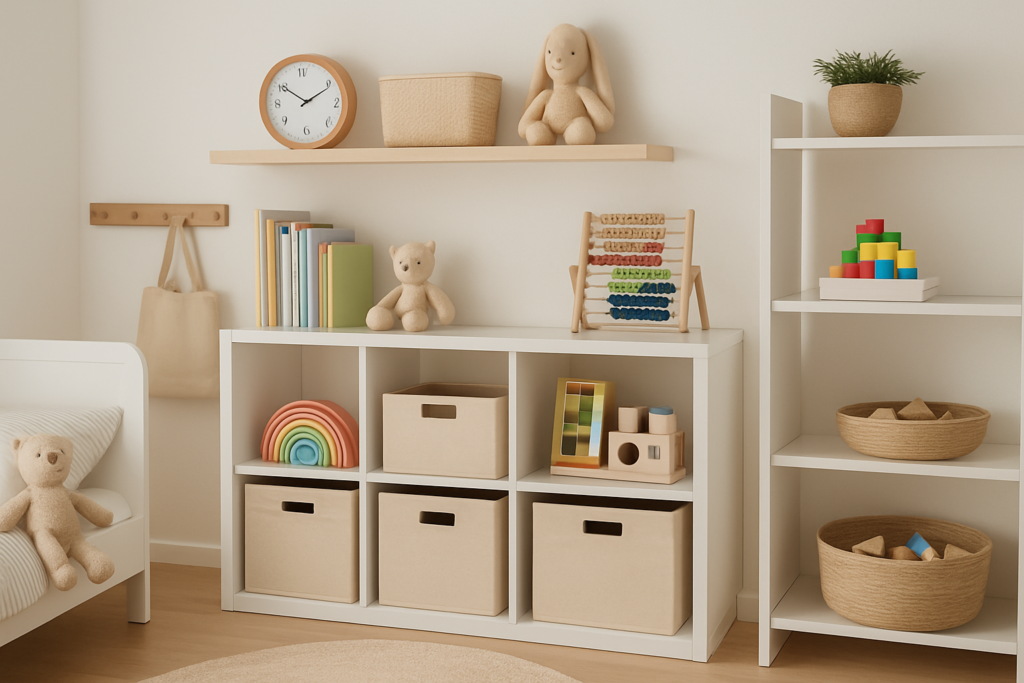
Everything your child uses regularly should be stored at their height or lower. This means ditching tall bookcases and high shelves in favor of low, wide storage units.
Cube organizers work exceptionally well because they create individual spaces for different categories while keeping everything within reach. Position them so the top row is at your child’s shoulder height or below.
For clothing, install closet rods at your child’s height and use lower dresser drawers for daily items. Reserve high storage for seasonal items or things you want to control access to.
Fabric Storage Cubes
Soft-sided cubes that fit perfectly in cube organizers and won’t hurt little fingers during cleanup.
4. Toy Rotation Magic
Instead of overwhelming your child with every toy they own, implement a rotation system. Keep about one-third of toys accessible while storing the rest in bins or closets.
Every two to three weeks, rotate the toys. Put away the current set and bring out different ones. This system keeps toys feeling fresh and new while dramatically reducing the amount of stuff to organize daily.
Use clear containers for stored toys so you can quickly see what’s in rotation. Label each container with the rotation date to track when items were last out.
5. The 15-Minute Pickup Timer
Transform cleanup from an overwhelming chore into a manageable activity by setting a timer for 15 minutes. This creates urgency and makes the task feel finite.
For younger children, start with 10 minutes or even 5 minutes. The goal is success, not perfection. When kids can consistently handle shorter cleanup sessions, gradually increase the time.
Make it fun by playing energetic music or turning it into a game. Race against the clock or see who can put away the most items before the timer rings.
6. Zone-Based Organization
Create specific zones for different activities rather than mixing everything together. Establish a reading corner with books and comfortable seating, an art station with supplies easily accessible, and a building area for blocks and construction toys.
Each zone should have its own storage that makes sense for that activity. Art supplies stay in the art zone, books remain in the reading area, and building toys don’t migrate to other spaces.
This system teaches children to associate activities with specific spaces and makes cleanup more logical. When art time ends, everything goes back to the art zone.
7. Age-Appropriate Strategies
Toddlers (Ages 2-4)
Keep it simple with large, soft containers and very broad categories. Focus on “toys go in the toy box” rather than detailed sorting. Use songs and games to make cleanup enjoyable rather than focusing on perfection.
School Age (Ages 5-10)
Introduce more categories and responsibility. Children this age can handle detailed labeling systems and understand consequences for not maintaining their space. Create checklists they can follow independently.
Tweens and Teens (Ages 11+)
Shift toward systems they help design. Ask for their input on what works and what doesn’t. Focus on storage that matches their developing sense of style while maintaining functionality.
Rolling Storage Cart
Mobile storage that can move between zones and adapt as your child’s needs change.
8. The One-Toy-Out Rule
Teach children to put away one toy before taking out another. This prevents the overwhelming accumulation that makes cleanup feel impossible.
Start by modeling this behavior yourself and gently reminding children to follow the rule. It takes time to become a habit, but once established, it dramatically reduces daily mess.
For children who resist this rule, try a modified version: no more than three toys out at once, or everything must fit in one designated play area.
9. Clothing Systems That Work
Simplify clothing storage by focusing on what children actually need access to. Keep daily clothes in easy-to-reach drawers and use simple dividers to separate categories.
For younger children, consider a week’s worth of outfits pre-selected and easily accessible. This reduces decision fatigue and morning battles while teaching organization skills.
Use drawer dividers to keep categories separated and make it easier for children to put clean clothes away properly.
10. Weekly Reset Routine
Establish a weekly “reset” time when you and your child go through the room together. This isn’t daily cleanup but a deeper organization session that gets everything back to baseline.
During reset time, relocate items that have wandered to wrong zones, assess what’s working in your systems, and make adjustments as needed. This prevents small organizational breakdowns from becoming major overhauls.
Keep reset sessions short and collaborative. Ask your child what’s working well and what feels difficult about maintaining their space.
Over-the-Door Shoe Organizer
Repurpose for small toys, art supplies, or accessories to maximize vertical storage space.
Making It Stick
The most beautiful organization system fails if it’s too complicated for daily life. Start with one or two systems from this list rather than trying to implement everything at once. Let your child master simple systems before adding complexity.
Remember that organization skills develop over time. What works for your child now will need adjustments as they grow and their interests change. Stay flexible and willing to modify systems based on what you observe actually happening in their space.
Celebrate successes, even small ones. When your child successfully uses a system independently, acknowledge their effort. Positive reinforcement builds habits much more effectively than criticism about what’s not working.
Frequently Asked Questions
How do I get my child to actually use these organization systems?
Start by involving them in creating the systems rather than imposing your ideas. Let them choose which toys go in which bins and where containers should be placed. When children feel ownership over their organization system, they’re much more likely to maintain it. Also, make sure systems are truly accessible for their age and height.
What if my child has too many toys for these systems to work?
This usually indicates it’s time for a decluttering session before implementing organization systems. Work with your child to donate toys they’ve outgrown or no longer enjoy. Then implement toy rotation to keep the active toy collection manageable. Most children play better with fewer choices available anyway.
How often should I expect to help with cleanup and organization?
Your involvement should decrease over time as systems become habits. Initially, plan to work alongside your child during cleanup while they learn the systems. Gradually transition to supervision, then to checking results, and finally to independence. Most children can maintain simple systems independently by age 7 or 8, though they’ll still need occasional guidance and support.
This article contains affiliate links. We may earn a small commission at no extra cost to you.