Your entryway sets the tone for your entire home, but it’s also where chaos tends to gather. Shoes pile up by the door, coats get tossed on chairs, and bags end up scattered across the floor. Within days of tidying up, the mess returns like clockwork.
The good part is that organizing your entryway doesn’t require a complete renovation or a massive budget. With the right furniture pieces and systems in place, you can create a space that actually works for your daily routine. Whether you’re dealing with a cramped apartment entry or a spacious mudroom, these practical ideas will help you maintain order from the moment you walk through the door.
Small Entryway Solutions: Making Every Inch Count
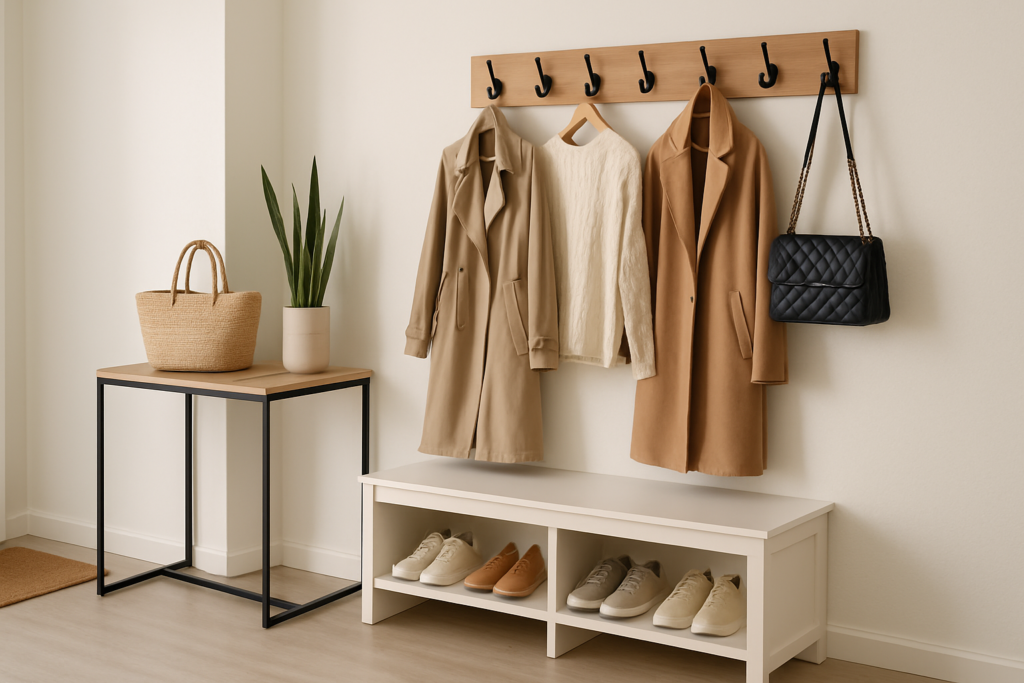
When you’re working with limited square footage, vertical space becomes your best friend. A slim wall-mounted coat rack with shelf takes up virtually no floor space while providing hooks for coats and a top shelf for keys and mail. Mount it at a height that works for everyone in your household, including kids who need to hang up their own jackets.
For shoe storage in tight spaces, an over-the-door organizer or a narrow shoe cabinet works better than traditional shoe racks. The slim shoe cabinet designs that tilt forward are particularly clever because they store shoes at an angle, letting you fit 12 to 16 pairs in a cabinet that’s only about 8 inches deep.

Narrow Entryway Bench with Storage
Perfect for tight spaces where you need seating and hidden storage without sacrificing floor space
A small bench with storage underneath serves double duty. You can sit down to put on shoes while keeping extra pairs, pet supplies, or seasonal items tucked away inside. Look for benches that are 12 to 15 inches deep if you’re really tight on space. They provide enough support for sitting without making your entryway feel cramped.
Maximizing Wall Space
Don’t let your walls go to waste. Install a pegboard system that lets you reconfigure hooks and shelves as your needs change. You can hang bags on some pegs, add small baskets for gloves and hats on others, and include a shelf for frequently used items.
Floating shelves placed above your coat hooks create landing spots for hats, sunglasses, and small bags. Keep them shallow (6 to 8 inches) so they don’t protrude too far into your walking space. Three small shelves work better than one large one because you can stagger them at different heights for visual interest and practical access.
Large Entryway Organization: Creating Functional Zones
When you have more room to work with, you can create dedicated zones for different family members or different types of items. A large hall tree with storage bench becomes a one-stop station where everyone can hang coats, store shoes, and stash bags.
Consider a locker-style storage unit if you have multiple people in your household. Each person gets their own cubby with hooks, a shelf, and a bottom compartment for shoes. This system works particularly well for families with kids because it assigns clear ownership and makes cleanup responsibilities obvious.
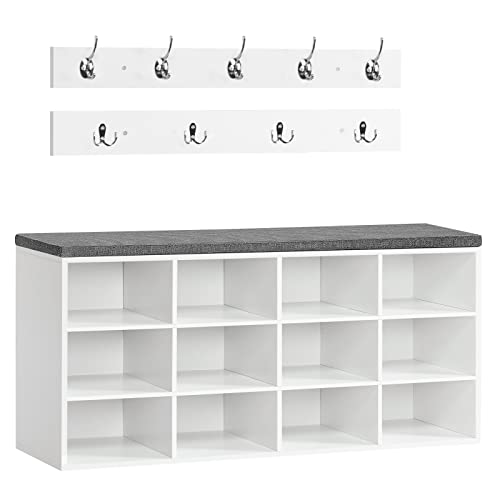
Entryway Storage Cubby Organizer
Individual cubbies keep each family member’s items separated and make daily routines smoother
A full-sized bench (at least 48 inches long) gives you room to comfortably sit and provides substantial storage underneath. Some designs include pull-out baskets or lift-top lids that reveal large compartments perfect for storing winter gear during summer months or vice versa.
The Power of Built-In Looking Furniture
Large entryways can accommodate furniture pieces that look built-in but aren’t. A combination of a storage bench, wall-mounted cabinets, and a coat rack system can create that custom mudroom appearance without the renovation cost. Choose pieces in matching finishes to create a cohesive look.
Add a console table behind your bench if you have the depth. This creates a surface for decorative items, a catch-all tray for keys and mail, and additional storage if you choose a console with drawers or lower shelves. The layered look adds sophistication while maintaining function.
Smart Shoe Storage Strategies
Shoes are often the biggest clutter culprit in entryways. The average person wears about 20% of their shoes 80% of the time, which means you don’t need to store every pair near the door. Keep only the current season’s frequently worn shoes in your entryway and move the rest to bedroom closets.
A shoe storage bench with cushion hides shoes from view while providing a comfortable spot to sit. For larger families, tiered shoe racks that sit on the floor or mount on walls keep pairs organized and easy to identify at a glance.
Boot trays are essential during wet seasons. Place them on the floor under your coat hooks to catch drips from wet shoes and boots. Choose trays with raised edges and a textured bottom to trap water effectively. You’ll want one that’s at least 30 inches long to accommodate multiple pairs.
Seasonal Rotation Systems
Set up a seasonal rotation to prevent shoe overload. When fall arrives, move sandals and light sneakers to deeper storage and bring out boots and closed-toe shoes. Use labeled bins or boxes to make the swap quick and maintain organization throughout the year.
For households with kids, a low shoe rack or cubby system at child height encourages independence. When children can reach their own shoes and have a clear spot to put them away, you’ll spend less time nagging about cleanup.
Coat and Jacket Management
Too many hooks create visual clutter, but too few means coats end up on furniture. Plan for 1.5 hooks per person who regularly uses the entryway. This accounts for the reality that people sometimes layer a jacket over a coat or need space for bags and scarves.
Space hooks at least 4 inches apart to prevent crowding. When hooks are too close together, coats overlap and create a messy appearance even when properly hung. Double hooks give you flexibility for lighter items like bags or dog leashes without taking up additional wall space.

Heavy Duty Wall Mounted Coat Hooks
Strong enough to handle heavy winter coats and multiple items without sagging or pulling away from the wall
A coat closet near your entryway solves many problems, but not everyone has one. A freestanding coat rack tree provides hanging space without installation and can be moved if you rearrange your space. Look for models with a weighted base to prevent tipping when loaded with heavy coats.
Dealing with Wet Outerwear
Wet coats need special consideration. Hanging a soaked raincoat on a regular hook can lead to water damage on walls or puddles on the floor. Install a few hooks over a boot tray or waterproof mat where wet items can drip safely. Some entryway benches come with slatted tops that allow air circulation for drying wet items.
During winter months, keep a basket of gloves, hats, and scarves within easy reach. A wire basket attached to the wall or sitting on a shelf stays visible, making it easy to grab what you need on your way out and toss items back in when you return.
Bag Storage Solutions
Bags, backpacks, and purses often become floor clutter because there’s nowhere designated to put them. Large hooks work better for bags than small ones. Look for hooks that extend at least 3 inches from the wall to accommodate bulky backpacks.
A set of fabric storage bins in cubbies or on shelves can hold bags that don’t hang well. This works particularly well for gym bags, lunch boxes, and smaller purses that would fall off hooks. Label bins if multiple people share the space.
For households where everyone carries a daily bag, assign each person their own hook or cubby at an appropriate height. Kids’ backpacks go on lower hooks, adult work bags on higher ones. This simple system prevents the daily question of where things belong.
Charging Station Integration
Many bags now carry devices that need charging. Add a small charging station to your entryway setup with a power strip tucked inside a drawer or basket. This lets you plug in phones, tablets, and other devices as soon as you walk in, so they’re ready to go the next morning.
Keep charging cables organized with cable clips or a small organizer box. Nothing looks messier than a tangle of cords, and nothing is more frustrating than searching for the right cable when you’re rushing out the door.
Maintenance Tips for Long-Term Organization
Even the best organizational system falls apart without regular maintenance. Set a weekly five-minute timer to reset your entryway. Put away items that migrated from other rooms, wipe down surfaces, and return shoes to their proper spots.
Do a seasonal deep clean and reorganization four times per year. This is when you swap out seasonal items, donate shoes no one wears anymore, and assess whether your current system still works for your family’s needs. Life changes, and your organization should adapt.
Install a small wastebasket in or near your entryway. This simple addition prevents the accumulation of receipts, junk mail, and other paper clutter that tends to pile up on surfaces. A slim design tucks behind doors or next to furniture without being obtrusive.
Teaching the Household
The best organizational system won’t work if your household doesn’t use it. Make sure everyone knows where items belong and understands the system. For younger kids, use picture labels on bins and cubbies to make cleanup clear and achievable.
Create a simple rule: nothing comes in the door without having a designated home. When you bring in a new pair of shoes, an old pair goes into the donation box. This one-in, one-out policy prevents gradual accumulation that overwhelms your space.
Decorative Elements That Serve Double Duty
Your entryway organization doesn’t have to look purely utilitarian. A decorative mirror with hooks serves functional purposes while adding style. Mirrors make small spaces feel larger and let you check your appearance before heading out.
Choose baskets and bins in materials and colors that complement your home’s decor. Woven baskets add warmth, while fabric bins in coordinating colors tie into your color scheme. Function and style don’t have to be separate concepts.
A small rug or runner defines your entryway space and protects flooring from dirt and moisture. Choose one that’s machine washable or easy to clean, since it will see heavy traffic. Outdoor rugs work well indoors for high-traffic entryways because they’re designed to withstand weather and wear.
Frequently Asked Questions
How do I organize an entryway with no closet?
Focus on vertical storage with wall-mounted hooks, shelves, and cabinets. A hall tree or coat rack provides hanging space, while a storage bench handles shoes and accessories. Use the back of your entry door for additional storage with over-the-door organizers or hooks. The key is maximizing wall space since you don’t have a closet to hide items.
What’s the best way to keep entryway organization child-friendly?
Install hooks and storage at heights children can reach independently. Use picture labels on bins so kids know where items belong without needing to read. Choose durable materials that can handle rough treatment, and assign each child a specific color or cubby to eliminate confusion about ownership. Make the system simple enough that cleanup takes less than a minute.
How many shoes should I keep in my entryway?
Keep only current-season shoes that get worn regularly, typically three to five pairs per person. This includes everyday shoes, athletic shoes, and one dressier option. Everything else should be stored in bedroom closets or seasonal storage bins. Rotate your selection as seasons change to prevent overcrowding.
What depth bench do I need for a functional entryway?
A bench should be at least 15 inches deep for comfortable seating while putting on shoes. If you have the space, 18 to 20 inches provides even better support. For very small entryways, you can get away with 12 inches, but it won’t be as comfortable. Make sure there’s at least 18 inches of clearance in front of the bench so you have room to maneuver.
This article contains affiliate links. We may earn a small commission at no extra cost to you.