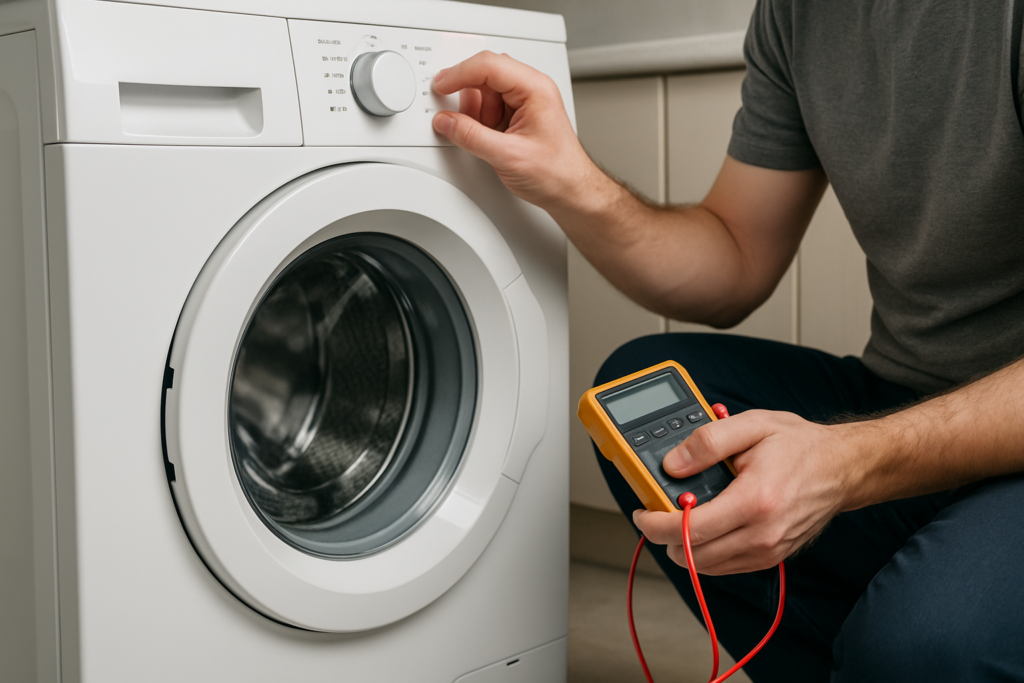
Few things are more frustrating than loading your washing machine with a week’s worth of laundry, turning the dial, and getting absolutely nothing. No lights, no sounds, no reassuring hum of water filling the drum. Just silence.
Before you start shopping for a new washer or call an expensive repair technician, you should know that most “won’t turn on” issues have simple fixes you can tackle yourself. I’ve seen everything from tripped breakers to faulty door latches stop a perfectly good machine dead in its tracks. Let me walk you through the most common culprits and how to fix them.
Start With the Obvious: Check Your Power Supply
I know this sounds basic, but you’d be surprised how often the problem is something simple. Your washing machine needs a solid power connection, and several things can interrupt that.
First, make sure the power cord is fully plugged into the outlet. Give it a firm push to ensure it’s seated properly. Vibration from previous wash cycles can sometimes loosen the connection. While you’re at it, check the outlet itself by plugging in something else, like a lamp or your phone charger, to verify it’s working.
Next, head to your electrical panel and check the circuit breaker. Washing machines draw significant power, especially during the heating and spinning cycles. A tripped breaker will be in the middle position, not fully on or off. Flip it completely off, then back on again. If it trips immediately when you try to run the washer, you’ve got a more serious electrical issue that needs professional attention.
Some homes have GFCI outlets in the laundry area, especially if it’s in a basement or garage. These outlets have small reset buttons right on them. If the button is popped out, press it back in to restore power.
Try a Hard Reset on Your Washing Machine
Modern washing machines are essentially computers with drums attached. Like any computer, they can freeze, glitch, or get stuck in an error state that prevents them from starting.
Performing a hard reset is easy and solves problems more often than you’d think. Unplug the washing machine from the wall outlet and leave it unplugged for at least one full minute. This allows the machine’s internal capacitors to fully discharge and clears the control board’s memory.
After waiting, plug it back in and try turning it on. Many machines will run through a brief initialization sequence when power is restored. You might see lights flash or hear clicking sounds. This is normal.
For some models, particularly newer Samsung and LG washers, there’s a specific reset procedure. Check your owner’s manual, but it usually involves pressing and holding specific button combinations for several seconds. The manual will also tell you if there’s a hidden diagnostic mode that can reveal error codes.
Inspect the Door Latch and Lid Switch
Front-load washers won’t start if the door isn’t securely latched. Top-loaders have a similar safety mechanism with the lid switch. These safety features prevent water from spilling out during operation, but when they fail, your machine won’t do anything.
For front-loaders, open and close the door firmly. You should hear a distinct click when it latches properly. Look inside the door opening for the metal latch mechanism. Wipe away any detergent buildup or debris that might prevent it from engaging fully.
Sometimes the door seal itself gets in the way. Pull the rubber gasket back slightly and check for coins, socks, or other items wedged around the latch area. I once found a guitar pick blocking a door latch on my machine.
Top-loaders have a small plastic tab on the underside of the lid that presses a switch when you close it. Open the lid and locate this tab. Press the switch manually with your finger. You should hear or feel a click. If the switch seems stuck or doesn’t click, it may need replacement.
A faulty door latch assembly or lid switch is one of the most common reasons washers won’t start. Replacing these parts is usually simple and doesn’t require special tools.

Washing Machine Door Latch
Essential replacement part if your front-loader won’t recognize a closed door
Check for Blown Fuses or Thermal Fuses
Many washing machines have internal fuses that protect the control board from power surges. When these blow, the machine appears completely dead. No lights, no response to button presses, nothing.
You’ll need to access the control panel to check these fuses. Unplug the machine first (this is critical for your safety). Remove the top panel or control panel cover by unscrewing the screws holding it in place. Consult your model’s service manual if you’re not sure where the screws are located.
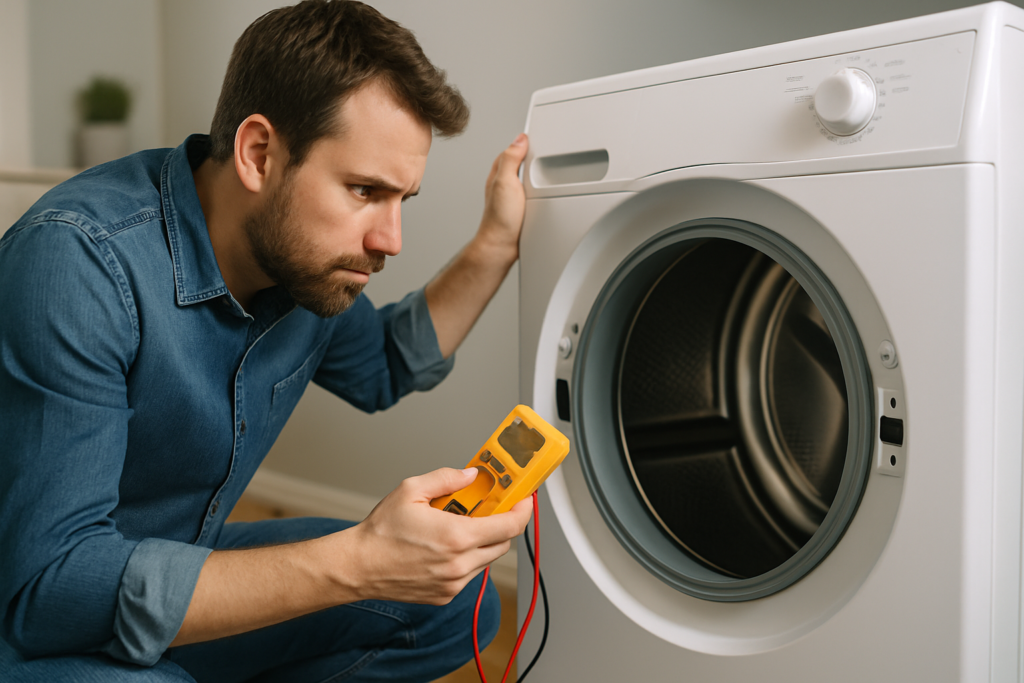
Look for small cylindrical fuses that resemble the ones you’d find in a car. They might be clear or ceramic. A blown fuse will often have visible burn marks or a broken filament inside. You can also test them with a multimeter set to continuity mode.
Thermal fuses are another story. These are safety devices that permanently fail if the machine overheats. Unlike regular fuses, you can’t reset them. You’ll need to replace a blown thermal fuse with an exact match for your model number.
When you replace fuses, don’t just swap them and move on. Fuses blow for a reason, usually because something else is wrong. Check for damaged wiring, corroded connections, or signs of water damage around the control board.
Examine the Control Board and User Interface
The control board is your washing machine’s brain, and the user interface (the buttons and display) is how you communicate with it. Either can fail and prevent the machine from turning on.
With the machine unplugged and the panel removed, visually inspect the control board. Look for burn marks, swollen capacitors (they’ll bulge at the top), or any signs of water damage. Even a small amount of moisture can corrode connections and cause failures.
Check all the wire connectors leading to and from the control board. They should be firmly seated. Gently wiggle each connector to make sure it’s secure. Corrosion on these connectors can interrupt the electrical signal.
The user interface panel can fail separately from the main control board. If you can see lights or a display but the machine won’t respond to button presses, the interface might be the problem. Some buttons can wear out or get stuck, preventing the start cycle from engaging.
Testing these components properly requires a multimeter and some technical knowledge. If you’re not comfortable working with electronics, this is where calling a repair tech makes sense. Control boards can be expensive to replace unnecessarily.
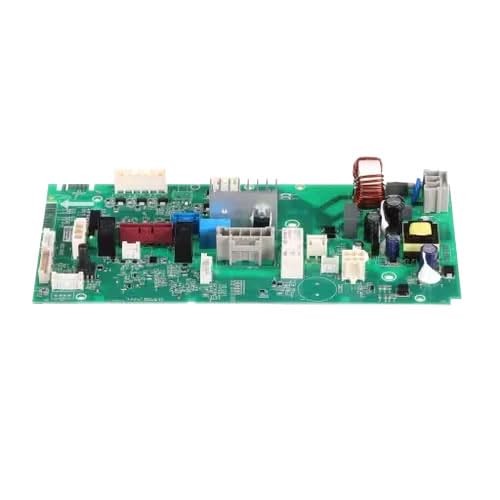
Washing Machine Control Board
Search by your specific model number to find the correct replacement board
Look at the Timer and Start Switch
Older washing machines use mechanical timers instead of electronic control boards. These timers can wear out over time, especially if you frequently change settings mid-cycle.
You can usually hear a timer working. Turn the dial slowly and listen for clicking sounds. Each click represents the timer advancing to the next position. If you don’t hear clicks, or if certain positions feel stuck or loose, the timer may be faulty.
The start switch (or button) itself can also fail. This happens more often on machines that see heavy use. When you press start, you should feel resistance and hear a click. If the button feels mushy or doesn’t click, it might not be making proper contact internally.
Testing these components requires disconnecting wires and using a multimeter to check for continuity. The specific testing procedure varies by model, so grab your service manual before diving in.
Consider the Motor and Drive Components
Sometimes the machine appears to receive power (lights come on, display works) but won’t actually start the wash cycle. This could point to a failed motor, pump, or drive belt.
Listen carefully when you press start. Do you hear any sound at all? A humming noise without movement suggests the motor is trying to run but can’t turn the drum. This often means a seized bearing, broken belt, or failed motor.
For belt-driven washers, you can usually access the belt by removing the back panel. Check if the belt is broken, loose, or has slipped off the pulleys. A broken belt is an easy fix you can do yourself with a replacement belt for your model.
Direct-drive washers (more common in newer models) don’t have belts. Instead, the motor connects directly to the drum through a coupling. These couplings can break, especially if you regularly overload the machine. You’ll need to tip the machine or remove the cabinet to access and inspect the coupling.
A completely failed motor is less common but does happen. Motors usually give warning signs before dying completely, like burning smells, excessive noise, or intermittent operation. Motor replacement is expensive, sometimes approaching the cost of a new machine.
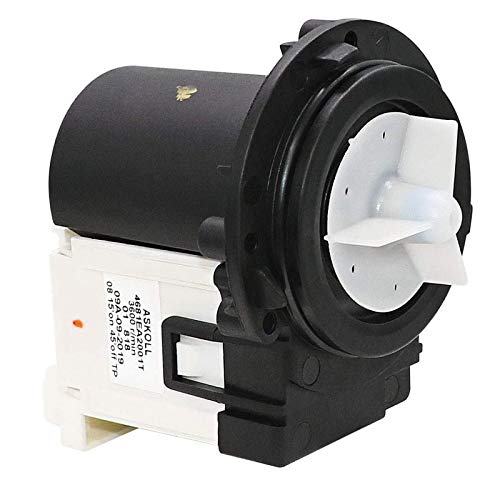
Washing Machine Drain Pump
Often fails in machines that won’t start due to a stuck drain cycle error
When to Call a Professional
Some washing machine repairs are perfect DIY projects. Others require specialized tools, technical knowledge, or the ability to safely work with high-voltage electrical components.
Call a professional if you’ve checked the basics (power, reset, door latch) and the machine still won’t turn on. Also get help if you find water damage inside the control panel area, smell burning plastic, or notice any sparking or buzzing sounds.
Electrical issues beyond a simple breaker reset should be handled by a qualified electrician. Don’t mess around with your home’s wiring unless you know exactly what you’re doing.
Before calling for service, write down your washer’s model and serial number. These are usually on a sticker inside the door or on the back panel. Having this information ready will help the technician diagnose the problem faster and bring the right parts.
Get quotes from multiple repair companies if possible. Prices can vary significantly, and some places charge a diagnostic fee that gets waived if you approve the repair. Ask if they warranty their work too.
Frequently Asked Questions
Why does my washing machine have power but won’t start the cycle?
When lights work but the wash cycle won’t begin, the most common causes are a faulty door latch (front-loaders) or lid switch (top-loaders), a failed start button, or an error code preventing operation. Check that the door or lid closes completely and listen for the latch clicking. Also try unplugging the machine for a minute to clear any error codes from memory.
Can a washing machine’s thermal fuse be reset?
No, thermal fuses are one-time safety devices that cannot be reset. Once a thermal fuse blows due to overheating, you must replace it with a new one. More importantly, you need to figure out why the machine overheated in the first place. Common causes include a blocked vent, failed cooling fan, or motor running too hot from overloading.
How do I know if my washing machine’s control board is bad?
Signs of a failed control board include no lights or display when plugged in, error codes that won’t clear after a reset, buttons that don’t respond, or the machine starting and stopping randomly. Visual inspection might reveal burn marks, swollen capacitors, or corrosion. However, properly diagnosing a control board usually requires testing with a multimeter.
Is it worth fixing a washing machine that won’t turn on?
It depends on the machine’s age and the repair cost. If your washer is less than seven years old and the repair costs less than half the price of a comparable new machine, fixing it usually makes sense. For older machines or expensive repairs (like motor or transmission replacement), buying new often provides better value. Factor in improved energy efficiency of newer models too.
This article contains affiliate links. We may earn a small commission at no extra cost to you.