Few things are more frustrating than tossing a load of wet clothes into your dryer, hitting the start button, and… nothing. No rumble, no heat, no action. Before you panic and call a repair technician, take a breath. Most dryer no-start issues have simple causes that you can diagnose and fix yourself, often in under an hour.
This guide walks you through the most common reasons your dryer won’t turn on, from basic power issues to component failures. We’ll cover what to check, how to test it, and when you can fix it yourself versus when you need professional help.
Check the Power Supply First
Before you start taking your dryer apart, verify it’s actually getting power. This sounds obvious, but power supply problems cause about 40% of dryer no-start calls, and they’re the easiest to fix.
Start by checking if the dryer is plugged in securely. If you recently moved it for cleaning or maintenance, the plug might have loosened. Electric dryers use either a 3-prong or 4-prong plug rated for 240 volts, and these heavy plugs can work themselves loose over time.
Next, check your home’s circuit breaker panel. Electric dryers use a double-pole breaker (it takes up two slots), and sometimes only one side trips. This can make the breaker look like it’s still on when it’s actually half-tripped. Flip the breaker completely off, then back on to reset it properly.
For gas dryers, remember they still need 120-volt power for the motor and controls. Check the standard outlet it plugs into and the circuit breaker for that outlet.
Test and Replace Blown Thermal Fuses
If your dryer has power but still won’t start, a blown thermal fuse is the most likely culprit. This safety device cuts power to the dryer if it overheats, preventing fires. Once it blows, it needs replacement.
The thermal fuse usually sits on the blower housing or near the heating element. You’ll need to remove the dryer’s back or front panel to access it. Unplug the dryer first (seriously, don’t skip this step), then locate the small, oval-shaped component with two wire terminals.
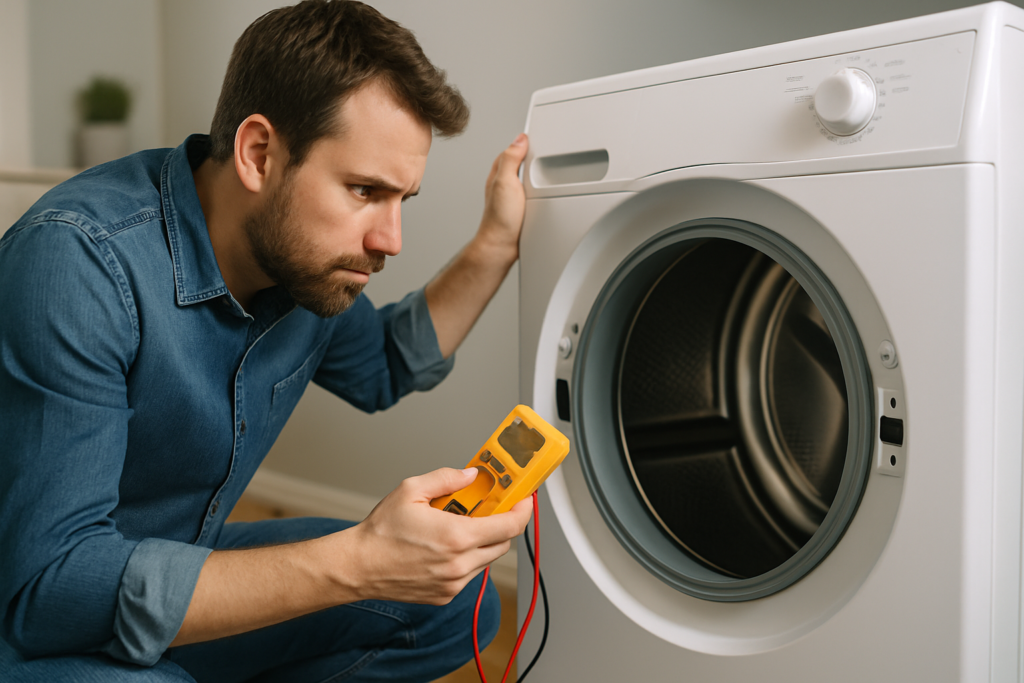
Use a multimeter set to the lowest resistance setting to test continuity. Touch one probe to each terminal. A working fuse shows near-zero resistance, while a blown fuse shows infinite resistance (no reading). If it’s blown, you’ll need to replace it.

Dryer Thermal Fuse
An essential safety component that’s easy to replace yourself with basic tools
Here’s the important part: thermal fuses blow for a reason, usually restricted airflow. Before you button everything back up, clean your lint trap, check the exhaust vent for blockages, and make sure the vent hose isn’t kinked. Otherwise, you’ll just blow another fuse.
Door Switch and Start Switch Problems
Your dryer won’t run if it thinks the door is open. The door switch is a small component mounted inside the door frame that clicks when you close the door. When this switch fails, your dryer thinks the door is always open, even when it’s latched tight.
Press the door switch manually (with the door open and dryer unplugged). You should hear and feel a distinct click. If it feels mushy or doesn’t click, it’s probably bad. You can also test it with a multimeter for continuity, just like the thermal fuse.
The start switch can also wear out, especially if you’ve been pounding on it harder and harder to get the dryer going. If the switch feels loose, doesn’t click properly, or you have to press it multiple times, replacement is usually simple. Most start switches attach with a couple of screws and a wire harness connector.
Both parts are specific to your dryer model, so you’ll need your model number (usually on a sticker inside the door frame) to order the right replacements.
Drive Motor and Belt Failures
If your dryer hums but the drum doesn’t turn, you’re likely dealing with a broken belt. If it’s completely silent with no hum at all, the motor itself might be dead.
The drive belt wraps around the drum and connects to the motor pulley. Over years of use, it can stretch, crack, or snap. Open the dryer (usually by removing the front or top panel) and check if the belt is intact and properly seated on the drum and pulleys.
A broken belt is visible immediately. The drum will spin freely by hand if the belt is broken. Replacing it involves threading the new belt around the drum, under the idler pulley, and around the motor pulley in a specific pattern. Check a diagram for your specific model before you start.

Dryer Drive Belt
Model-specific belts wear out every 5-10 years and are among the most common dryer repairs
If the belt is fine but the motor won’t run, you’ll hear either complete silence or a humming sound when you press start. Motors can seize up from bearing failure or burn out electrically. Motor replacement is more involved, and you might want to consider professional help for this one, especially if your dryer is older and might have other issues lurking.
Control Board and Timer Issues
Modern dryers use electronic control boards that can fail, though this is less common than the mechanical issues we’ve covered. If your dryer shows no lights, no display, or the controls seem unresponsive, the board might be fried.
Before replacing an expensive control board, try a hard reset. Unplug the dryer for five minutes, then plug it back in. This clears the board’s memory and can resolve glitches from power surges or static buildup.
For older dryers with mechanical timers, the timer motor can wear out. You’ll usually hear clicking but the timer won’t advance through the cycle. Timer issues require replacement of the entire timer assembly, which varies widely by model.
Control board diagnostics can get complicated. Many newer dryers have built-in diagnostic modes you can access by pressing specific button combinations. Check your owner’s manual or search online for your model’s diagnostic mode. These can display error codes that pinpoint the exact problem.
Frequently Asked Questions
Why does my dryer trip the circuit breaker when I turn it on?
A dryer that immediately trips the breaker usually has a short circuit somewhere. The heating element is the most common culprit. These coils can develop breaks that touch the metal housing, creating a direct short to ground. Disconnect the heating element and try running the dryer. If it doesn’t trip, you’ve found your problem. You can find replacement heating elements specific to your dryer model online.
How long should a dryer last before these parts start failing?
Most dryers last 10-13 years with regular use. Thermal fuses and belts typically wear out first, around the 5-10 year mark depending on how often you use the dryer. Door switches and start switches can last the life of the machine or fail within a few years, it really depends on usage. Motors usually last 12-15 years unless they’re overworked by restricted airflow.
Can I run my dryer without a thermal fuse temporarily?
Absolutely not. The thermal fuse is a critical safety device that prevents dryer fires. Running without it puts your home at serious risk. These fuses are inexpensive and easy to replace, there’s no good reason to bypass them. If you keep blowing thermal fuses, you have an underlying problem (usually vent blockage) that needs fixing anyway.
This article contains affiliate links. We may earn a small commission at no extra cost to you.