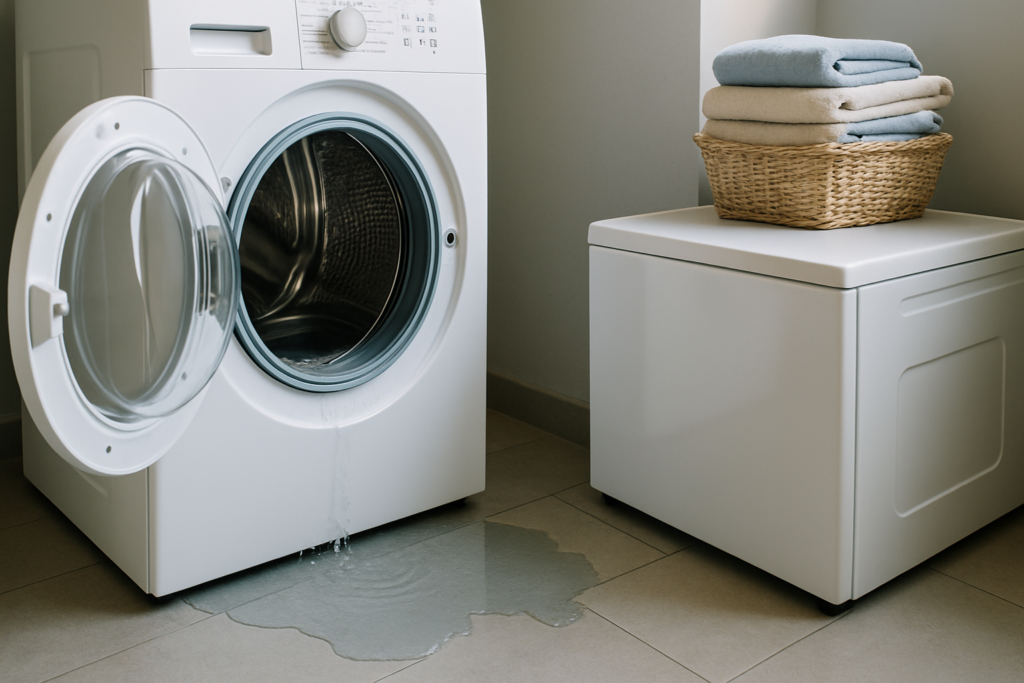
Finding a puddle of water under your dryer is confusing and alarming. After all, dryers are supposed to remove moisture, not leak it everywhere. But dryer water leaks are more common than you’d think, and they usually point to a handful of fixable issues.
Most dryer leaks happen in condensing dryers or when venting problems cause moisture to back up. The good news is that you can troubleshoot and fix most of these problems yourself with basic tools and a little patience. Let’s walk through the most common causes and how to solve them.
Understanding Why Dryers Leak Water
Before you start tearing your dryer apart, it helps to understand what’s happening. Traditional vented dryers push hot, moist air outside through a vent. Condensing dryers (common in apartments and ventless models) convert that moisture into water that drains away or collects in a reservoir.
When either system fails, water ends up where it shouldn’t be. The leak might come from a blocked vent causing condensation, a disconnected drain hose, a failed door seal, or a clogged condensation system.
Your first step is figuring out which type of dryer you have. Check if there’s a vent hose running to an exterior wall. If not, you likely have a condensing dryer with a water reservoir or drain connection.
Check Your Vent System First
Even traditional vented dryers can leak water if the vent system is blocked or damaged. When hot, humid air can’t escape properly, it condenses inside the dryer or vent hose and drips back into your laundry room.
Disconnect the vent hose from the back of your dryer and inspect it. Look for kinks, crushing, or visible blockages. Pull out any lint you can reach by hand. For a thorough cleaning, you’ll want a dryer vent cleaning brush kit that can reach deep into the ductwork.
Check where the vent exits your house too. Bird nests, lint buildup, and damaged vent caps can all restrict airflow. A clogged exterior vent is one of the most common reasons for condensation issues.

Dryer Vent Cleaning Brush Kit
Long flexible brushes that reach deep into vents to remove lint and blockages effectively.
After cleaning, run your dryer and feel the air coming from the exterior vent. It should be strong and hot. Weak airflow means you still have a blockage somewhere in the system.
Inspect Condensing Dryer Components
Condensing dryers have additional parts that can cause leaks. These machines collect moisture in a removable tank or drain it directly into your plumbing system.
Start by checking the water collection tank if your model has one. It might be full, cracked, or not seated properly. Empty it completely and inspect for cracks or damage. Reinstall it carefully, making sure it clicks into place.
For dryers with direct drain connections, follow the drain hose from the dryer to where it connects to your plumbing. Look for kinks, disconnections, or clogs. The hose should have a smooth downward slope without any loops that trap water. You can disconnect the hose and flush it with water to clear any blockages.
The condensation chamber itself can also get clogged with lint and fabric softener residue. Most models let you access this chamber for cleaning. Check your manual for specific instructions, but it usually involves removing a panel and rinsing the condenser under running water.
Examine Door Seals and Gaskets
A damaged door seal can let moisture escape during the drying cycle, especially on the floor near the front of the machine. Run your hand around the entire door gasket looking for tears, cracks, or areas where it’s pulled away from the drum.
Press on the seal while the door is closed. It should feel firm and create a continuous barrier. Any gaps mean moisture can escape.
Replacing a door seal isn’t difficult but requires the right part for your specific model. You’ll need your dryer’s model number, usually found on a sticker inside the door or on the back panel. Order a replacement dryer door seal that matches your brand and model exactly.
Most seals snap or clip into place without tools, though some require removing a few screws. Clean the mounting surface thoroughly before installing the new seal to ensure a proper fit.
Look at Internal Moisture Sensors
Many modern dryers use moisture sensors to detect when clothes are dry. When these sensors fail or get covered in fabric softener residue, the dryer might run longer than needed or stop prematurely, both of which can contribute to moisture problems.
The sensors are usually two metal bars inside the drum, often near the lint trap. Clean them with rubbing alcohol and a soft cloth. Built-up residue acts as an insulator and prevents accurate readings.
While you’re at it, clean your lint trap housing too. Remove the lint screen and use a vacuum crevice tool to remove accumulated lint from the cavity. This improves airflow and helps prevent moisture problems.

Lint Trap Cleaning Brush
Specialized brush that reaches into lint trap cavities to remove hidden buildup.
When to Call a Professional
Some dryer leaks point to more serious internal problems. If you’ve checked all the common causes and still have water pooling, you might be dealing with a failed heating element, a cracked drum, or problems with the dryer’s internal ventilation system.
Persistent leaks in condensing dryers sometimes mean the condenser unit itself has failed. This is a major component that usually requires professional replacement.
Water appearing from underneath the dryer (rather than the front or sides) could indicate problems with your home’s plumbing if you have a direct-drain setup. A plumber might need to check the drain connection and ensure proper venting.
Strange noises, burning smells, or error codes appearing alongside the leak are red flags that need professional attention right away.
Frequently Asked Questions
Can a clogged lint trap cause water leaks?
Not directly, but a severely clogged lint trap restricts airflow just like a blocked vent. This forces moisture to condense inside the dryer instead of venting outside. Clean your lint trap after every load and deep clean the trap housing monthly to prevent this issue.
Why does my dryer only leak sometimes?
Intermittent leaks often happen with heavy or oversized loads that take longer to dry. The extended cycle time produces more moisture than usual. This can overwhelm a partially blocked vent or a condensation system that’s starting to fail. The problem shows itself with big loads but might not appear with smaller, quicker cycles.
Is it safe to use a leaking dryer?
You shouldn’t use a dryer that’s actively leaking water. Beyond the obvious slip hazard and potential water damage to your floor, a leak indicates a malfunction that could get worse. Restricted airflow from clogged vents can cause overheating and even fire hazards. Stop using the dryer until you identify and fix the source of the leak.
This article contains affiliate links. We may earn a small commission at no extra cost to you.