You’re loading the dishwasher after dinner, press start, and suddenly your kitchen goes dark. The breaker’s tripped again. This frustrating scenario happens more often than you’d think, and it’s usually your dishwasher crying out for help.
A dishwasher that keeps tripping the circuit breaker isn’t just annoying. It’s a warning sign that something’s wrong with either the appliance itself or your home’s electrical system. Let’s break down why this happens and what you can do about it.
Understanding Your Dishwasher’s Power Requirements
Most dishwashers draw between 10 and 15 amps during operation. Your typical kitchen circuit is rated for 15 or 20 amps, which should be plenty under normal circumstances. But here’s where things get tricky.
When your dishwasher first starts up, particularly when the heating element kicks in, it experiences a power surge that can briefly spike well above its normal draw. If your circuit is already handling other appliances, or if the breaker itself has weakened over time, that surge can push things over the edge.
You’ll often notice the breaker trips at specific points in the wash cycle. This usually happens when the heating element activates for the wash or dry cycle. That’s your first clue that electrical overload is the culprit.
Common Causes and How to Fix Them
Overloaded Circuit
The simplest explanation is often the right one. Your dishwasher should ideally be on its own dedicated 15 or 20-amp circuit. Many older homes have dishwashers sharing a circuit with countertop outlets, garbage disposals, or other appliances.
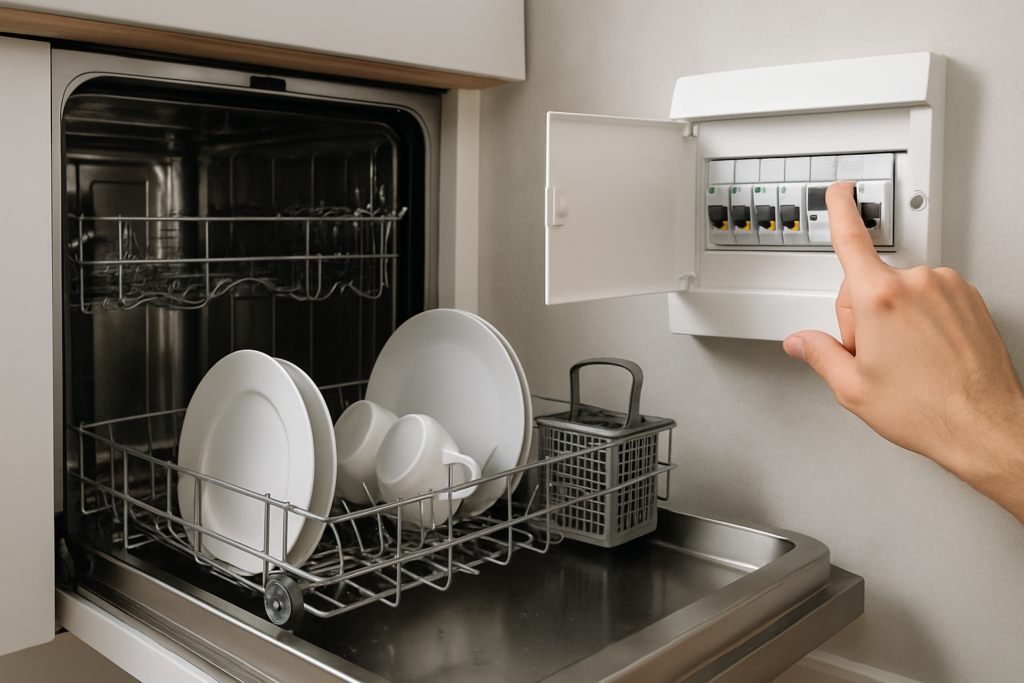
Check what else is plugged in on the same circuit. You can do this by flipping the breaker that controls your dishwasher and seeing what else loses power. If you find your coffee maker, microwave, or other high-draw appliances sharing that circuit, you’ve found your problem.
The fix requires running a dedicated circuit for the dishwasher. This isn’t a DIY job unless you’re a licensed electrician. Expect to pay for professional rewiring, but it’s the only permanent solution for this particular issue.
Faulty Heating Element
The heating element in your dishwasher does double duty. It heats water during the wash cycle and provides heat for drying. When this component starts to fail, it can develop a short circuit or draw excessive current.
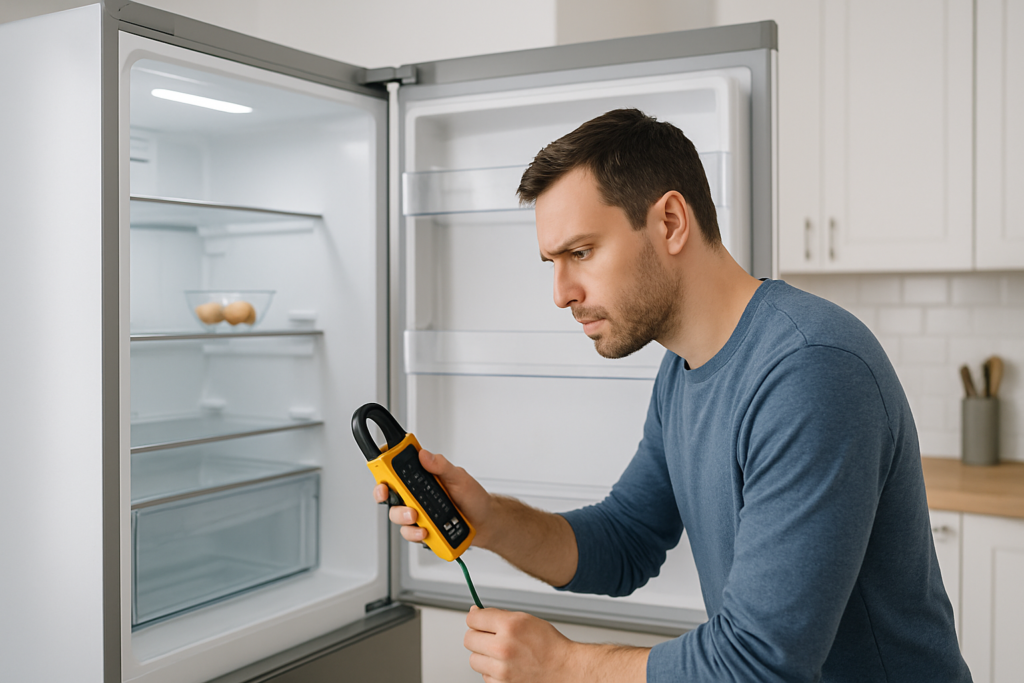
You can test the heating element with a multimeter. Disconnect power to the dishwasher first, then access the heating element (usually at the bottom of the tub). Set your multimeter to measure resistance. A working element typically reads between 15 and 30 ohms. Zero ohms means it’s shorted, while infinite resistance means it’s burnt out.
Replacing a heating element isn’t terribly complicated for someone comfortable with basic repairs. But since you’re dealing with both water and electricity, many homeowners prefer calling a technician.

Multimeter for Appliance Testing
Essential tool for diagnosing electrical issues in any home appliance
Worn or Damaged Wiring
The wiring inside your dishwasher faces a tough environment. Heat, moisture, and vibration gradually wear down insulation. When wires make contact with metal parts or each other, you get a direct short that immediately trips the breaker.
Look for signs of damage in the wiring harness near the motor and heating element. Melted insulation, exposed copper, or burn marks are dead giveaways. This kind of damage won’t fix itself and requires either repair or replacement of the affected wiring.
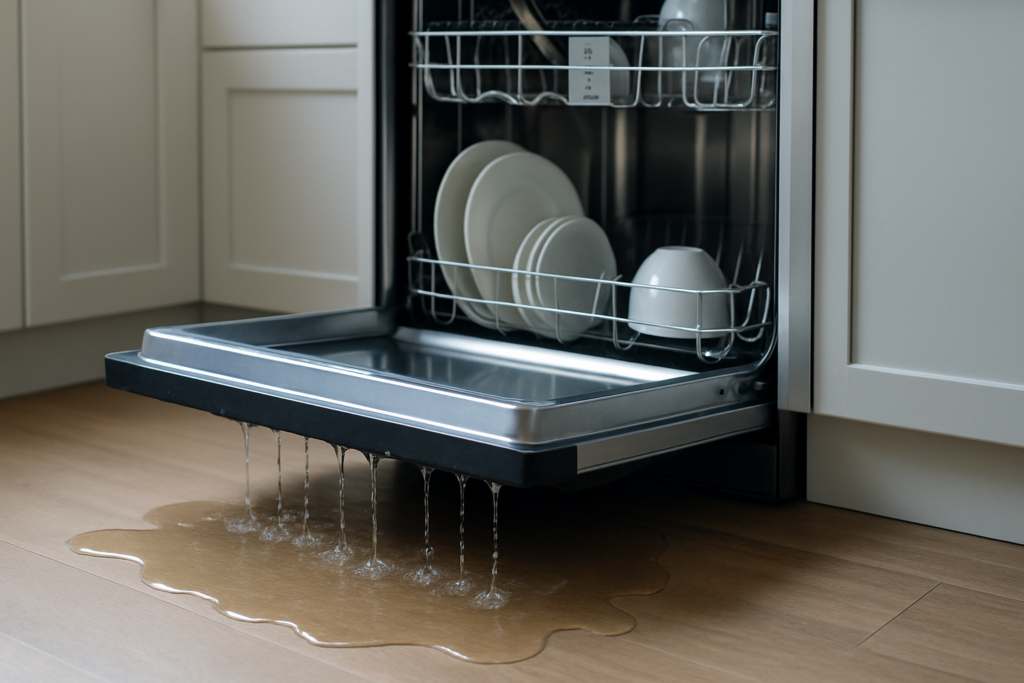
Water leaks inside the dishwasher can also reach electrical components, creating shorts. Check the bottom pan for standing water, which might indicate a leak that’s causing your electrical problems.
Failed Motor or Pump
The motor that powers your dishwasher’s pump assembly can fail in ways that cause excessive current draw. Internal shorts, seized bearings, or winding failures all lead to the same result: your breaker trips to protect the circuit.
Listen to your dishwasher before it trips the breaker. Grinding noises, humming without water movement, or the motor struggling to start all point to pump or motor problems. These components work hard during every cycle, and they do eventually wear out.
Motor replacement is definitely in professional repair territory. The labor costs plus the part itself often approach half the cost of a new dishwasher, which is why many people opt to replace rather than repair when motors fail.
Defective Door Latch or Switch
This one surprises people, but a faulty door latch assembly can cause breaker trips. The door switch tells the dishwasher when it’s safe to operate. When this switch fails, it can create shorts or send confusing signals that cause electrical problems.
Test the door latch by checking if the dishwasher starts with the door properly closed. A latch that’s going bad might work intermittently, allowing the dishwasher to start but causing problems during the cycle.
What About the Circuit Breaker Itself?
Sometimes the breaker is the problem, not the dishwasher. Circuit breakers weaken over time, especially if they’ve tripped repeatedly. A breaker rated for 15 amps might start tripping at 12 or 13 amps after years of service.
If your dishwasher worked fine for years and suddenly started tripping the breaker without any other changes, have an electrician test the breaker. Replacing a worn breaker is relatively inexpensive compared to major appliance repairs.
Never “upgrade” to a higher amp breaker without checking that your wiring can handle it. A 15-amp breaker on 14-gauge wire exists for a reason. Installing a 20-amp breaker on undersized wire creates a serious fire hazard.
DIY Troubleshooting Steps
Before calling for help, try these steps. First, reset the breaker and run the dishwasher empty without any detergent. If it completes the cycle, the problem might be intermittent or related to how you’re loading it.
Check the dishwasher filter and spray arms for clogs. A blocked filter forces the motor to work harder, potentially drawing more current. Clean the filter according to your manual’s instructions.

Dishwasher Cleaning Tablets
Regular cleaning prevents buildup that can stress electrical components
Inspect the power cord and junction box where the dishwasher connects to your home’s wiring. Look for any visible damage, loose connections, or signs of overheating. Tighten any loose wire nuts or terminal connections you find.
Try running the dishwasher at different times of day. If it trips the breaker mainly during peak usage times when other appliances are running, you’ve confirmed an overload issue.
Frequently Asked Questions
Can I just keep resetting the breaker?
Absolutely not. A tripping breaker is a safety device doing its job. It’s protecting your home from potential electrical fires. Each time you reset it without fixing the underlying problem, you’re gambling with your safety. Get to the root cause.
How much does it cost to fix a dishwasher that trips the breaker?
It depends entirely on the cause. A simple circuit overload fix might just require rearranging what’s plugged in where. A heating element replacement runs a few hundred dollars with labor. Motor replacement or rewiring your kitchen circuit can cost significantly more. Get a diagnosis before committing to repairs, and compare that cost to replacement if your dishwasher is more than seven years old.
Why does my dishwasher only trip the breaker sometimes?
Intermittent problems usually point to a component that’s failing but hasn’t completely died yet. It might be a heating element with a partial short that only makes contact when it expands from heat. Or a motor with bearings that seize up when they’re in a particular position. These issues get worse over time, so catch them early while repair is still an option.
This article contains affiliate links. We may earn a small commission at no extra cost to you.