Standing in ankle-deep water while trying to shower is one of the most frustrating bathroom experiences. A clogged shower drain can turn your relaxing morning routine into a soggy nightmare. The good news is that most shower drain clogs are caused by hair, soap scum, and mineral deposits that you can tackle without calling a plumber or reaching for harsh chemical drain cleaners.
Those commercial drain cleaners might seem like a quick fix, but they can damage your pipes over time and create toxic fumes in your bathroom. Plus, they rarely work as well as advertised on stubborn hair clogs. The smart approach involves mechanical removal methods and natural cleaning solutions that are safer for your pipes, your health, and the environment.
With the right tools and techniques, you can clear most shower drain clogs in under 30 minutes and set up a maintenance routine to prevent future blockages. Let’s explore the most effective methods that actually work.
Understanding What Causes Shower Drain Clogs
Hair is the primary culprit behind most shower drain blockages. When you wash your hair, loose strands naturally fall out and wash down the drain. Over time, these hairs tangle together and catch other debris like soap residue, dead skin cells, and mineral deposits from hard water.
Soap scum plays a supporting role by coating the hair clumps and making them stick to the drain walls. Traditional bar soaps are particularly problematic because they contain fats that combine with minerals in hard water to create a sticky residue. Even liquid body washes and shampoos contribute to this buildup over time.
Hard water minerals like calcium and magnesium create additional layers of buildup that help trap hair and soap residue. If you notice white or greenish deposits around your drain, you’re dealing with mineral buildup that’s making your clog problem worse.
Essential Tools for Mechanical Drain Cleaning
Before you start any drain cleaning project, gather the right tools. Mechanical removal is your first line of defense and often the most effective approach for hair clogs.
Drain Snakes and Hair Removal Tools
A basic drain snake or hair removal tool is your most valuable weapon against shower clogs. The Zip-It Bath and Sink Hair Snare features barbed edges that grab onto hair clumps as you pull it back up through the drain.

Zip-It Bath and Sink Hair Snare
This disposable plastic tool with barbed edges effectively grabs hair clogs without damaging pipes
For more stubborn clogs, consider upgrading to a longer drain auger. The FlexiSnake Drain Millipede Hair Clog Tool extends up to 18 inches and has micro-hooks along its entire length to capture more debris in a single pass.
Manual Removal Techniques
Start by removing the drain cover if possible. Many shower drains have removable covers held in place by screws or clips. Use a screwdriver or your fingers to lift the cover and expose the drain opening.
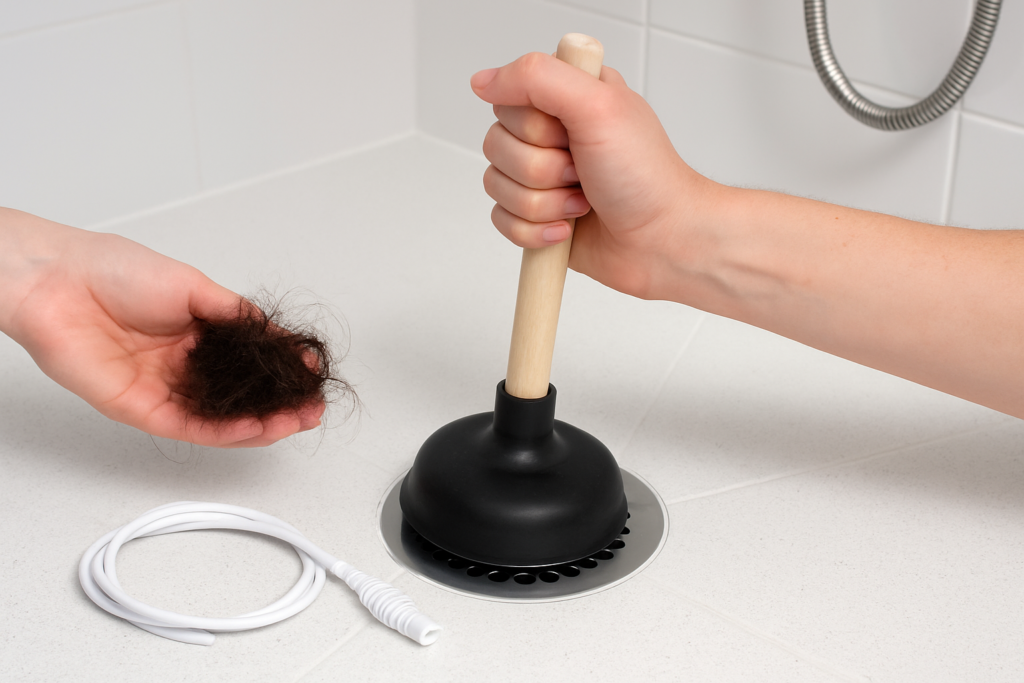
Put on rubber gloves and remove any visible hair or debris by hand first. This gross but necessary step often clears minor clogs immediately. Use needle-nose pliers to grab hair clumps that are just out of reach.
Insert your drain snake slowly, rotating it as you push it deeper into the pipe. When you feel resistance, you’ve likely hit the clog. Twist the snake to catch the hair mass, then slowly pull it back up. You might need to repeat this process several times to clear the entire blockage.
Natural Drain Cleaning Solutions
After mechanically removing the bulk of the clog, natural cleaning solutions can dissolve remaining soap scum and mineral deposits while freshening your drain.
Baking Soda and Vinegar Method
This classic combination creates a fizzing reaction that helps break down organic matter and soap residue. Pour one cup of baking soda down the drain, followed immediately by one cup of white vinegar. Cover the drain with a wet cloth or stopper to contain the reaction.
Let the mixture work for 30 minutes, then flush with hot water. The chemical reaction between the alkaline baking soda and acidic vinegar helps dissolve soap scum while the fizzing action can dislodge small debris particles.
For extra cleaning power, heat the vinegar to just below boiling before pouring it over the baking soda. The hot temperature increases the reaction intensity and helps melt soap buildup more effectively.
Hot Water and Dish Soap Treatment
Sometimes the simplest solutions work best. Bring a large pot of water to a rolling boil and add several squirts of grease-cutting dish soap like Dawn or Palmolive. The combination of hot water and degreasing agents can dissolve soap scum and loosen hair clogs.
Pour the soapy water down the drain in two or three stages, allowing each pour to work for a few minutes. The hot water helps dissolve greasy buildup while the dish soap lubricates the pipes and helps wash debris away.
Follow up with cold water to help solidify any remaining grease so it washes away instead of re-depositing further down the pipe.
Enzyme-Based Drain Cleaners
Enzyme cleaners use beneficial bacteria to literally eat organic matter like hair, soap scum, and skin cells. Unlike harsh chemical cleaners, enzymes are completely safe for your pipes and septic systems.
The Green Gobbler Enzyme Drain Cleaner contains multiple strains of bacteria that break down different types of organic clogs. Pour the recommended amount down your drain before bedtime and let it work overnight for best results.
Green Gobbler Enzyme Drain Cleaner
Uses beneficial bacteria to naturally break down hair and organic matter without damaging pipes
Enzyme cleaners work slowly but thoroughly, and they continue working for hours after application. They’re particularly effective for maintaining clear drains and preventing future clogs when used monthly.
Step-by-Step Drain Unclogging Process
Follow this systematic approach to tackle your shower drain clog effectively. Start with the gentlest methods and escalate as needed.
Initial Assessment and Preparation
Remove any standing water from your shower using a cup or small bucket. This gives you better access to the drain and prevents diluting your cleaning solutions. Clear the shower area of bottles, soap, and other items that might get in your way.
Take a flashlight and examine the drain opening. You can often see hair clogs near the surface that are easy to remove manually. Note whether water drains slowly or not at all, as this helps determine how severe the blockage is.
Mechanical Removal First
Always start with mechanical removal before using any cleaning solutions. Remove the drain cover and pull out visible hair and debris by hand. Insert your drain snake or hair removal tool, working it slowly deeper into the pipe.
Pull the tool out periodically to remove accumulated hair and debris. Clean the tool between insertions to maintain its effectiveness. Continue this process until the tool comes out relatively clean.
Test your progress by running hot water down the drain. If water flows freely, you’ve solved the problem. If drainage is still slow, proceed to cleaning solutions.
Apply Natural Cleaning Solutions
Start with the baking soda and vinegar method for general cleaning and deodorizing. If you suspect heavy soap buildup, try the hot soapy water treatment first. For ongoing maintenance or stubborn organic clogs, use an enzyme cleaner.
Always follow each treatment with plenty of hot water to flush loosened debris through the system. Cold water can cause soap and grease to re-solidify in your pipes.
Prevention Strategies for Long-Term Success
Preventing clogs is much easier than clearing them. A few simple habits and tools can keep your shower drain flowing freely for months between deep cleanings.
Install a Drain Strainer
A quality drain strainer catches hair before it can form clogs while still allowing water to flow freely. The TubShroom Revolutionary Tub Drain Protector fits inside your drain and catches hair around its circumference while maintaining good water flow.
TubShroom Revolutionary Tub Drain Protector
Fits inside the drain to catch hair before it causes clogs while maintaining excellent water flow
Clean your drain strainer weekly by removing trapped hair and rinsing it under hot water. This simple maintenance task prevents 90% of shower drain clogs from forming.
Weekly Maintenance Routine
Establish a simple weekly routine to keep your drains clear. Every Sunday, remove visible hair from the drain area and pour hot water down the drain to flush away soap residue and minor debris.
Monthly, use an enzyme cleaner treatment to break down organic buildup before it becomes problematic. This proactive approach prevents major clogs and keeps your drains smelling fresh.
Consider switching to liquid soaps and sulfate-free shampoos, which create less residue than traditional bar soaps and harsh detergents. Body washes designed for sensitive skin typically contain fewer clog-forming ingredients.
Hard Water Considerations
If you have hard water, mineral buildup accelerates clog formation. Use the vinegar treatment monthly to dissolve calcium and magnesium deposits. The acidity in vinegar effectively breaks down mineral buildup that traps hair and soap scum.
Consider installing a water softener if hard water causes ongoing problems throughout your home. Softer water reduces soap scum formation and makes your cleaning efforts more effective.
When to Call a Professional
Most shower drain clogs respond well to these DIY methods, but some situations require professional intervention. If you’ve tried multiple approaches without success, the blockage might be deeper in your plumbing system than you can reach.
Call a plumber if water backs up into other drains when you run your shower, as this indicates a main line blockage. Also seek professional help if you notice sewage odors, which can signal serious plumbing problems.
Recurring clogs despite regular maintenance might indicate pipe damage, tree root infiltration, or other structural issues that require professional diagnosis and repair.
Frequently Asked Questions
How often should I clean my shower drain?
Clean your shower drain weekly by removing visible hair and debris, and perform a deep cleaning monthly using natural solutions or enzyme cleaners. If you have long hair or multiple people using the shower daily, you might need to clean more frequently. Installing a drain strainer reduces the need for frequent deep cleaning.
Are enzyme cleaners safe for all types of pipes?
Yes, enzyme cleaners are safe for all pipe materials including PVC, metal, and older cast iron pipes. They use beneficial bacteria to break down organic matter naturally without the corrosive chemicals found in traditional drain cleaners. Enzyme cleaners are also safe for septic systems and the environment.
Can I use baking soda and vinegar in pipes that have been treated with chemical drain cleaners?
Wait at least 24 hours after using chemical drain cleaners before applying natural solutions. Chemical residue can react unpredictably with vinegar or other natural cleaners. Flush the system thoroughly with hot water between different types of treatments to prevent potentially dangerous chemical reactions.
What should I do if the clog is too deep for my drain snake to reach?
Try an enzyme cleaner treatment and let it work overnight, as enzymes can reach deeper into your pipes than mechanical tools. You can also rent or purchase a longer drain auger from a hardware store. If these methods fail, the blockage likely requires professional equipment like a hydro-jetter or professional-grade snake to clear effectively.
This article contains affiliate links. We may earn a small commission at no extra cost to you.