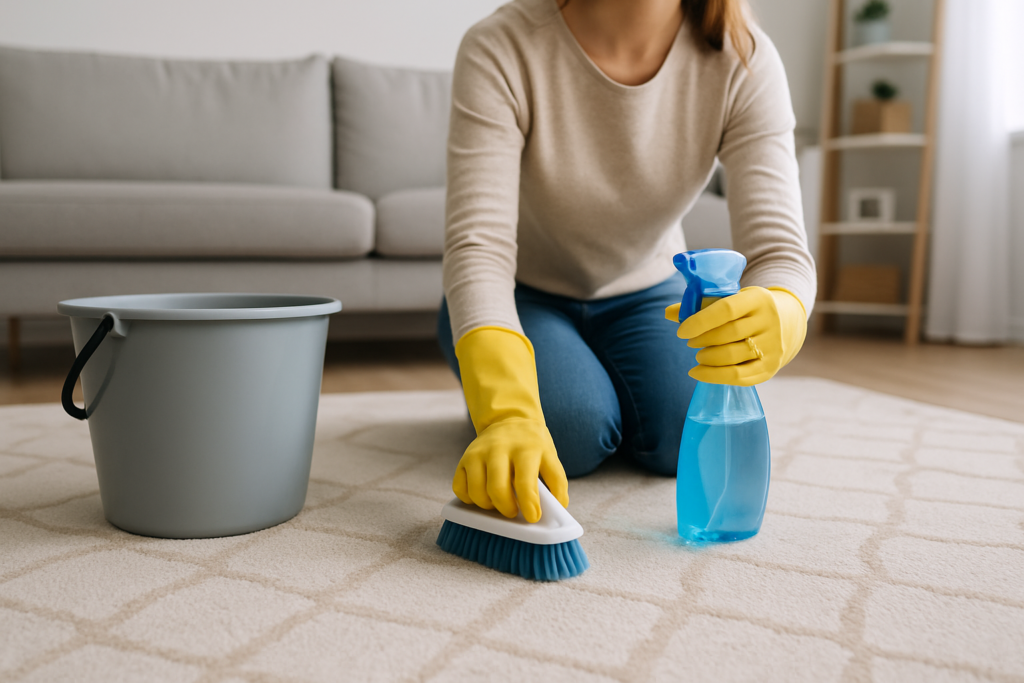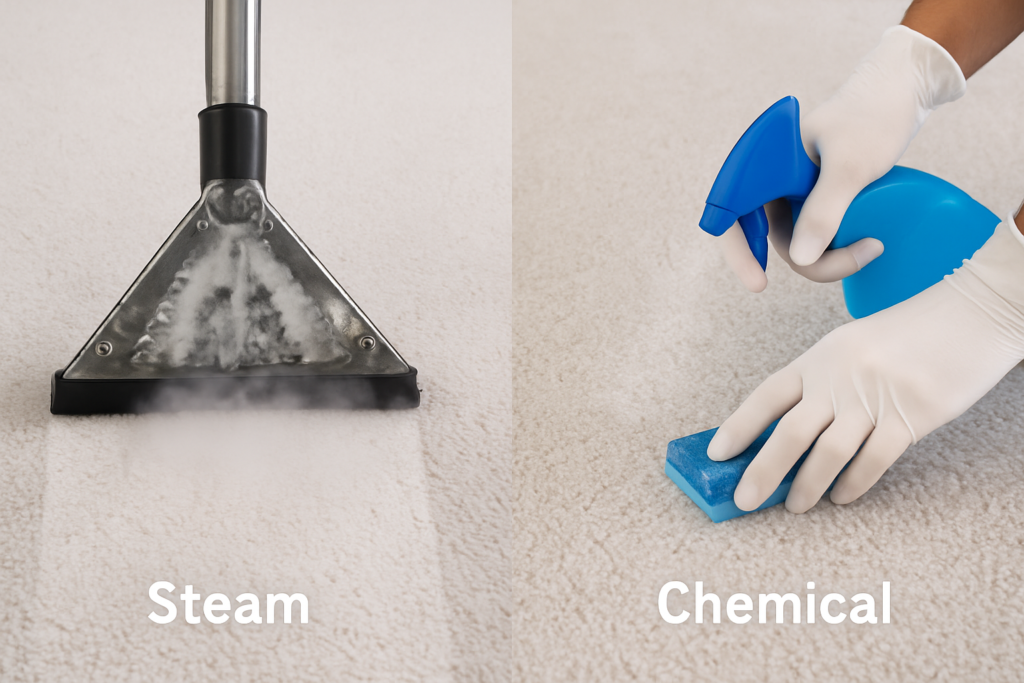
Your carpet looks dirty, and you’re standing in the cleaning product aisle feeling overwhelmed. Two main options dominate the market: steam cleaning and chemical cleaning. Both promise spotless results, but which one actually delivers without compromising your family’s health?
If you or your family members deal with allergies, asthma, or chemical sensitivities, this decision becomes even more critical. The wrong choice could leave you with clean carpets but breathing problems, or worse, carpets that still harbor allergens despite your best efforts.
Let’s break down both methods so you can make an informed decision based on your specific needs, budget, and health considerations.
Understanding Steam Cleaning
Steam cleaning, also called hot water extraction, uses heated water (typically 150-200°F) to penetrate carpet fibers. The process involves injecting hot water into your carpet, then immediately extracting it along with dissolved dirt and debris.
Most professional steam cleaners add a small amount of mild detergent to boost cleaning power. However, many machines work effectively with just water, making this method particularly appealing for chemical-sensitive households.
The high temperature does most of the heavy lifting. Heat breaks down grease, kills bacteria, and loosens embedded particles that regular vacuuming can’t reach.
How Steam Cleaning Works
The process starts with pre-vacuuming to remove surface debris. Then the steam cleaner sprays hot water (sometimes with mild detergent) deep into carpet fibers under pressure. Within seconds, a powerful vacuum extracts the water along with dissolved dirt.
Professional-grade equipment can heat water to higher temperatures and extract more moisture than consumer models. This means faster drying times and more thorough cleaning.
Understanding Chemical Carpet Cleaning
Chemical cleaning relies on specialized detergents, solvents, and cleaning agents to break down stains and soil. These products target specific types of dirt: enzymes for organic stains, surfactants for greasy soil, and oxidizers for color-based stains.
This method often involves pre-treating stained areas, applying cleaning solutions, agitating the carpet, then extracting or neutralizing the chemicals. Some systems use dry compounds that absorb soil, while others use liquid solutions similar to steam cleaning but at lower temperatures.
Chemical cleaning excels at tackling stubborn stains that heat alone can’t handle. Pet urine, wine, blood, and set-in dirt often require specific chemical formulations to break down completely.
Effectiveness Comparison
For general soil removal and maintenance cleaning, steam cleaning wins. The combination of heat and water extraction removes most common dirt, dust mites, and allergens effectively. Studies show that water heated above 140°F kills dust mites and many bacteria without additional chemicals.
Chemical cleaning takes the lead for specific stain removal. Enzyme cleaners break down protein-based stains like blood and food. Oxygen bleaches tackle color stains. Specialized solvents dissolve grease and oil that water alone can’t touch.
For deep-set odors, particularly pet-related issues, chemical cleaning often provides superior results. Enzyme-based cleaners actually digest odor-causing bacteria rather than just masking smells.
Bissell CrossWave Pet Pro All-in-One Wet Dry Vacuum
Combines steam and mild cleaning solution for pet owners who want effective cleaning with minimal chemicals
Allergen Removal
Steam cleaning removes more allergens from carpet fibers. The high temperature kills dust mites and their eggs, while the water extraction removes pollen, pet dander, and other airborne particles that settle into carpets.
Chemical cleaning can be effective for allergen removal, but some cleaning products may leave residues that trigger sensitivities. However, certain enzyme cleaners specifically target pet allergens and can neutralize them more effectively than steam alone.
Safety Considerations
Steam cleaning poses minimal safety risks. The main concerns are burns from hot equipment and potential mold growth if carpets stay damp too long. Most steam cleaning uses only water or very mild detergents with minimal chemical exposure.
Chemical cleaning carries more safety considerations. Many carpet cleaning chemicals can irritate skin, eyes, and respiratory systems. Some products contain volatile organic compounds (VOCs) that continue off-gassing after cleaning.
If you have young children or pets who spend time on the floor, steam cleaning reduces their exposure to chemical residues. Babies and toddlers are particularly vulnerable since they put their hands in their mouths frequently.
Chemical Sensitivity Concerns
People with multiple chemical sensitivity (MCS) or severe allergies often can’t tolerate traditional carpet cleaning chemicals. Even “green” or “natural” cleaning products can trigger reactions in highly sensitive individuals.
Steam cleaning with just water eliminates this concern entirely. You can achieve good cleaning results without introducing any new chemicals into your living space.
Environmental Impact
Steam cleaning has a smaller environmental footprint. Using primarily water means fewer chemicals entering wastewater systems and reduced packaging waste from cleaning products.
The energy required to heat water does create some environmental impact, but it’s generally less than the manufacturing and disposal costs of chemical cleaning products.
Chemical cleaning’s environmental impact varies widely depending on the products used. Phosphate-based cleaners can harm aquatic ecosystems. Petroleum-derived surfactants aren’t biodegradable. However, plant-based and enzyme cleaners offer more eco-friendly alternatives.
Hoover PowerDash Pet Compact Carpet Cleaner
Budget-friendly option that works well with minimal cleaning solution for light chemical sensitivity
Cost Analysis
Steam cleaning typically costs less over time. Once you own a steam cleaner, your ongoing costs are minimal, just water and occasional mild detergent. Professional steam cleaning services are also generally more affordable than chemical treatments.
Chemical cleaning has higher ongoing costs. Specialty stain removers, pre-treatment products, and cleaning solutions add up quickly. Professional chemical cleaning often costs more due to the specialized products and training required.
However, if you’re dealing with severe stains or odors, chemical cleaning might save money by solving problems that steam cleaning can’t address, avoiding carpet replacement.
DIY vs Professional Costs
Consumer-grade steam cleaners are widely available and effective for regular maintenance. Professional equipment provides deeper cleaning but isn’t always necessary for typical households.
Chemical cleaning often requires professional application for best results. DIY chemical cleaning can damage carpets if you use wrong products or concentrations.
When to Choose Steam Cleaning
Steam cleaning works best for regular maintenance cleaning, general soil removal, and allergen reduction. Choose this method if anyone in your household has chemical sensitivities, asthma, or allergies.
It’s also ideal for households with babies, young children, or pets who spend lots of time on the carpet. The minimal chemical exposure makes it safer for vulnerable family members.
Steam cleaning excels in situations where you need frequent cleaning. The low ongoing costs make regular cleaning financially practical.
Specific Steam Cleaning Scenarios
Use steam cleaning for dusty carpets, general dirt accumulation, and dust mite problems. It’s particularly effective on synthetic carpet fibers that can handle high heat and moisture.
Steam cleaning works well for maintaining carpet appearance between professional deep cleanings. Regular steam cleaning can extend your carpet’s life by preventing soil buildup.
When to Choose Chemical Cleaning
Chemical cleaning becomes necessary for stubborn stains, set-in odors, and specific soil types that don’t respond to water and heat alone. Pet accidents, wine spills, blood stains, and greasy food spills often require targeted chemical treatment.
If your carpets have been neglected for years, chemical pre-treatment followed by extraction may be necessary to restore them to acceptable condition.
Chemical cleaning also works better on certain carpet types. Wool carpets, for example, can shrink or fade with high-heat steam cleaning but respond well to appropriate chemical treatments.

Bissell Professional Pet Stain and Odor Remover
Enzyme-based formula that’s gentler than harsh chemicals but more effective than steam alone for pet issues
Emergency Stain Situations
Fresh stains often require immediate chemical treatment to prevent permanent setting. Red wine, blood, and pet urine need specific chemical formulations to break down completely before they bond with carpet fibers.
Chemical cleaning also handles odor problems that steam cleaning can’t solve. Bacterial odors, smoke damage, and chemical spills may require specialized neutralizing agents.
Combination Approach
Many professional cleaners use both methods strategically. They pre-treat stains chemically, then follow with steam cleaning for overall soil removal. This approach maximizes effectiveness while minimizing chemical exposure.
You can adopt this strategy at home. Use targeted chemical treatments for specific problems, then maintain your carpets with regular steam cleaning.
For households with both stain challenges and chemical sensitivities, this balanced approach often provides the best results. Address problem areas chemically when necessary, but rely on steam cleaning for routine maintenance.
Making Your Decision
Steam cleaning wins for most households, especially those with health concerns. It’s safer, more cost-effective long-term, and handles 80% of carpet cleaning needs effectively.
Choose chemical cleaning when you face specific challenges that steam alone can’t handle: severe stains, persistent odors, or heavily soiled carpets that need restoration.
Consider your family’s health status, carpet condition, and cleaning frequency when making this decision. There’s no universal right answer, but understanding these factors helps you choose wisely.
Shark Navigator Lift-Away Professional Steam Cleaner
Versatile steam cleaner that works on multiple surfaces without requiring cleaning solutions
Frequently Asked Questions
Can I use steam cleaning on all carpet types?
Most synthetic carpets handle steam cleaning well, but natural fibers like wool or silk may shrink or fade. Check your carpet’s care label or test a hidden area first. Berber and loop-pile carpets can also be sensitive to excessive moisture and heat.
How often should I professionally clean my carpets?
Most carpet manufacturers recommend professional cleaning every 12-18 months for average households. Homes with pets, children, or high traffic may need cleaning every 6-12 months. Regular vacuuming and spot cleaning can extend time between professional services.
Will chemical cleaning leave harmful residues?
Quality chemical cleaning should remove most residues through proper rinsing and extraction. However, some products may leave traces that attract dirt or trigger sensitivities. Always ensure adequate ventilation and ask cleaning services about their rinsing processes.
Which method dries faster?
Chemical cleaning often dries faster because it typically uses less water than steam cleaning. Steam cleaning can leave carpets damp for 6-24 hours, while chemical cleaning may dry in 2-8 hours. Proper ventilation and dehumidification speed both methods.
This article contains affiliate links. We may earn a small commission at no extra cost to you.