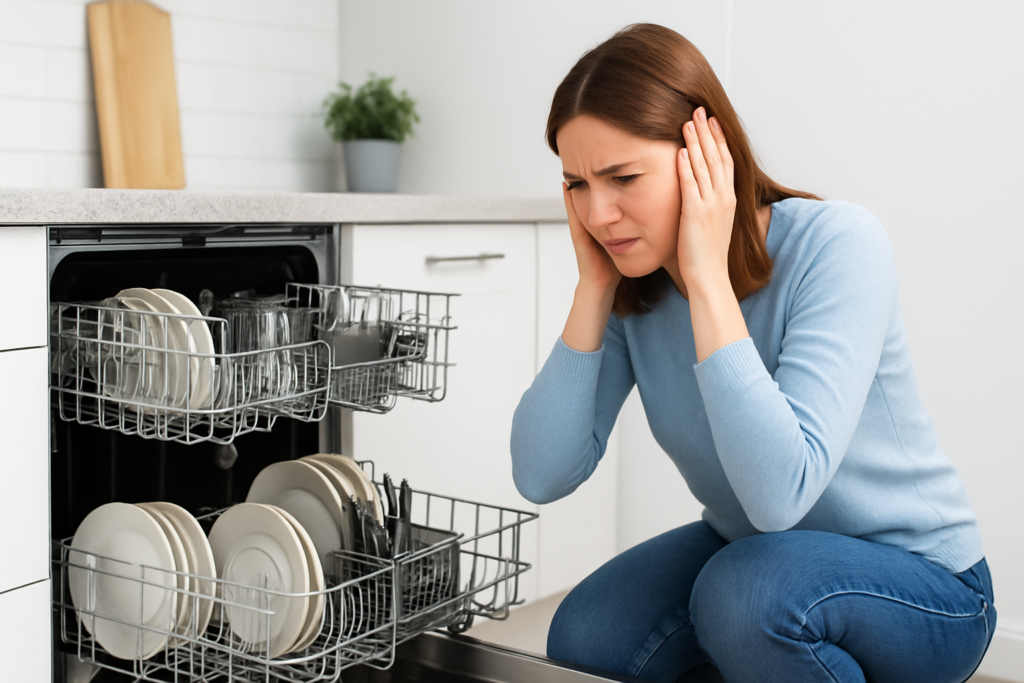
There’s nothing quite like the jarring sound of a dishwasher that’s suddenly decided to audition for a heavy metal band. One day it’s humming along quietly, the next it’s grinding, banging, or whirring so loudly you can hear it from upstairs. The good news is that most dishwasher noises point to specific, fixable problems.
Understanding what’s causing the racket can save you hundreds of dollars in unnecessary service calls. Most of these issues are mechanical and surprisingly straightforward to diagnose once you know what to listen for. Let’s break down the most common culprits and what you can do about them.
The Grinding Sound: Pump or Bearing Problems
A grinding noise usually means something’s interfering with your dishwasher’s pump or the motor bearings are wearing out. The pump circulates water during the wash cycle, and if debris gets lodged in there, you’ll hear a distinct grinding or buzzing sound.
Start by checking the drain area at the bottom of your dishwasher. Remove the lower rack and look for the filter assembly (it’s usually a cylindrical piece you can twist and lift out). You’d be surprised what ends up down there: broken glass, bits of plastic from food containers, even small bones from chicken dinners.
Clean the dishwasher filter thoroughly under running water. Use an old toothbrush to get into the mesh. While you’re at it, check the drain sump area underneath where the filter sits. Shine a flashlight in there and remove any debris you can see.

Dishwasher Cleaning Tablets
Monthly deep cleaning tablets help prevent buildup that leads to noise and odors
If cleaning doesn’t solve the problem, the pump itself might be failing. Dishwasher pumps typically last 5-10 years depending on usage. Replacing a pump involves disconnecting the unit, removing the lower access panel, and swapping out the component. It’s a moderately difficult DIY job, but many homeowners tackle it successfully.
Rattling and Clanking: Spray Arm Issues
That rattling sound during the wash cycle often comes from the spray arms. These are the spinning components that distribute water throughout the dishwasher. When they’re loose, damaged, or hitting dishes, they create quite a commotion.
Check both the upper and lower spray arms. They should spin freely without wobbling. Look for cracks in the plastic or missing pieces. Hard water buildup can also clog the spray holes, causing uneven water distribution and unusual spinning patterns that create noise.
Many spray arms simply snap on and off, making them easy to inspect and clean. Soak them in white vinegar for 30 minutes to dissolve mineral deposits. Use a toothpick to clear out any clogged holes.
Also check that dishes aren’t blocking the spray arms from spinning. Tall pots, cookie sheets, or improperly loaded plates are common offenders. Run an empty cycle to see if the noise persists.
Humming or Buzzing: Water Inlet Valve Problems
A loud humming or buzzing sound, especially at the beginning of a cycle, typically indicates an issue with the water inlet valve. This component controls water flow into your dishwasher. When it starts to fail or gets partially clogged with sediment, it makes noise as water tries to pass through.
The inlet valve is located behind the lower front panel, where the water supply line connects to your dishwasher. You can access it by removing the toe kick panel at the bottom of the unit.
Before assuming the valve needs replacement, check your home’s water pressure. Low water pressure (below 20 psi) can cause the valve to make noise as it struggles to let water in. You can test this with a simple pressure gauge attached to an outdoor faucet.
Hard water areas often see sediment buildup in inlet valves. Some homeowners install inline water filters to reduce this problem. Replacing the inlet valve is a relatively simple fix that takes about 30 minutes once you’ve accessed it.
Squealing During the Drain Cycle: Drain Pump Issues
A high-pitched squeal or whine when your dishwasher drains points to the drain pump. This is a separate component from the wash pump, and it’s responsible for evacuating dirty water at the end of each cycle.
The drain pump can develop problems when small items get past the filter. Check for any obstructions in the drain path. You’ll need to remove the filter and look into the sump area with a flashlight. Sometimes a small piece of broken dish or a twist tie from a bread bag gets wedged in there.
Listen carefully to identify when exactly the noise occurs. If it’s right at the end of the cycle as water drains out, you’ve confirmed it’s the drain pump. These pumps have impellers (small propellers) that can get damaged or worn over time.

Dishwasher Drain Pump Replacement
Universal pumps fit many models and can restore quiet operation when the original fails
Drain pump replacement is more involved than some other repairs but still manageable for confident DIYers. You’ll need to tip the dishwasher back or lay it on its side to access the pump from underneath. Always disconnect power and water before attempting this.
Knocking or Banging: Water Hammer Effect
If you hear a loud knocking or banging sound when the dishwasher fills with water or when it shuts off the water flow, you might be dealing with water hammer. This happens when water flowing through pipes suddenly stops, creating a shockwave that reverberates through your plumbing.
Water hammer isn’t actually a dishwasher problem but a plumbing issue. It occurs more frequently in homes with high water pressure or older plumbing systems without proper air chambers or arrestors.
You can verify this by listening for similar sounds when you turn off other faucets quickly in your home. The fix involves installing water hammer arrestors on the supply line feeding your dishwasher. These small devices absorb the shockwave and eliminate the noise.
A plumber can install arrestors in about an hour. Some homeowners tackle this themselves if they’re comfortable working with pipe connections. Just remember to turn off the water supply before starting any work.
Motor Noise: When to Call a Professional
Sometimes the motor itself is the source of unusual sounds. A failing motor might produce grinding, humming, or buzzing noises that don’t match the other patterns described above. Motors generally last 7-12 years with regular use.
Motor problems are tricky because the symptoms can mimic other issues. However, if you’ve ruled out the pump, spray arms, inlet valve, and drain system, the motor is likely the culprit. A motor that’s struggling will often cause the dishwasher to run longer than normal or fail to complete cycles.
Replacing a dishwasher motor is one repair where calling a professional makes sense for most people. The labor involved is significant, and the cost of the motor itself is substantial. In many cases, if your dishwasher is more than 8 years old and needs a new motor, you’re better off replacing the entire unit.
Get quotes from at least two appliance repair services. Compare the repair cost to the price of a new dishwasher. Modern dishwashers are more energy-efficient, so factor in potential utility savings over the next few years.
Prevention: Keeping Your Dishwasher Quiet
Regular maintenance prevents many noise problems before they start. Clean your filter every two weeks if you use your dishwasher daily. Monthly is fine for less frequent users.
Run a cleaning cycle with dishwasher cleaning tablets once a month. These remove grease and mineral buildup from internal components, including places you can’t easily reach.
Scrape dishes before loading but don’t pre-rinse. Modern dishwashers are designed to handle food particles, and pre-rinsing can actually reduce cleaning performance. Just remove large chunks, bones, and non-food items like stickers or twist ties.
Check spray arms monthly for clogs. A quick inspection takes 30 seconds and can prevent bigger problems down the road. Make sure they spin freely and all holes are clear.
Frequently Asked Questions
Why does my dishwasher make noise only at certain times during the cycle?
Different components activate at different stages of the wash cycle. Noise at startup usually indicates inlet valve issues. Grinding during the wash points to pump problems. Squealing at the end suggests drain pump trouble. Pay attention to exactly when the noise occurs to pinpoint the source.
Can I still use my dishwasher if it’s making noise?
It depends on the noise. Minor rattling from spray arms hitting dishes won’t damage anything. Grinding or squealing from pumps means something’s wrong, and continued use could make the problem worse. When in doubt, stop using it until you’ve identified and addressed the cause.
How much does it typically cost to fix a noisy dishwasher?
DIY repairs range from free (cleaning debris) to the cost of replacement parts like pumps or valves. Professional service calls start competitively priced for diagnosis, plus parts and labor. Simple fixes might total competitively priced-competitively priced, while motor replacement could run competitively priced-competitively priced. Always get quotes before approving repairs.
Is it normal for older dishwashers to get louder over time?
Some increase in noise level is normal as components wear. However, sudden or dramatic changes in noise indicate a specific problem that needs attention. Dishwashers shouldn’t sound like they’re destroying themselves. Regular maintenance can keep even older units running relatively quietly.
This article contains affiliate links. We may earn a small commission at no extra cost to you.